
Numbers 11:25-29 is about the spirit of prophecy being bestowed upon seventy elders by God through Moses, emphasizing that prophetic gifts are not restricted to a chosen few and can be distributed among a community.
25 Then the Lord came down in the cloud and spoke to him, and took some of the Spirit that was on him and put it on the seventy elders. And as soon as the Spirit rested on them, they prophesied. But they did not continue doing it.
26 Now two men remained in the camp, one named Eldad, and the other named Medad, and the Spirit rested on them. They were among those registered, but they had not gone out to the tent, and so they prophesied in the camp.
27 And a young man ran and told Moses, “Eldad and Medad are prophesying in the camp.”
28 And Joshua the son of Nun, the assistant of Moses from his youth, said, “My lord Moses, stop them.”
29 But Moses said to him, “Are you jealous for my sake? Would that all the Lord’s people were prophets, that the Lord would put his Spirit on them!”
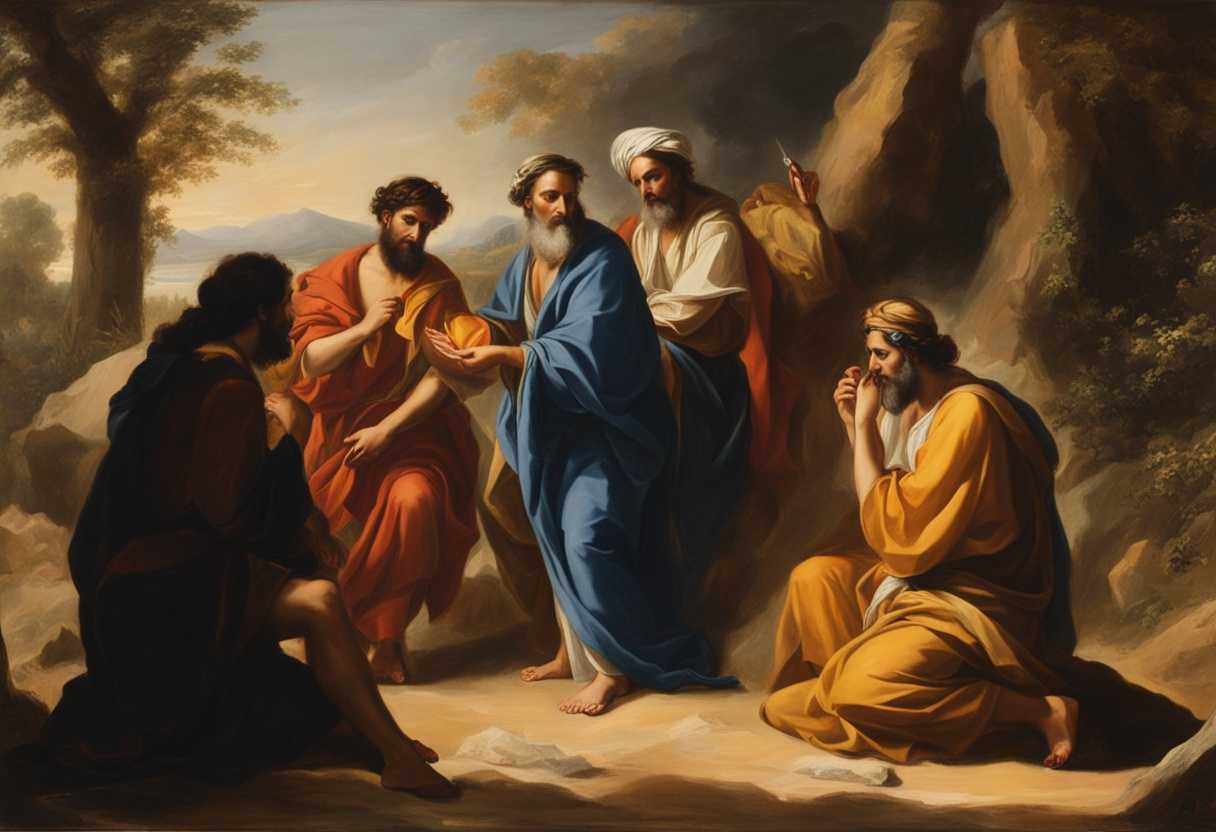
Setting the Scene for Numbers 11:25-29
In Numbers chapter 11, Moses is leading the Israelites through the wilderness towards the Promised Land. The scene unfolds with Moses and seventy elders of Israel gathered around the Tabernacle. These elders were chosen by Moses to assist him in governing and leading the people. The Israelites had been complaining about the lack of meat in their diet, prompting Moses to seek help and guidance from God.
As the elders are gathered, the Spirit of the Lord descends upon them in a powerful and visible way. They begin to prophesy, speaking the words that God puts in their mouths. However, two men named Eldad and Medad, who were also chosen among the seventy, did not come to the Tabernacle with the others. Despite this, the Spirit of the Lord falls upon them as well, and they begin to prophesy in the camp.
Joshua, who was Moses’ assistant and a faithful follower, is concerned about Eldad and Medad prophesying outside the designated area. He brings this to Moses’ attention, but Moses responds with humility and wisdom, expressing his desire that all of God’s people would prophesy. This scene highlights the power and sovereignty of God, as well as Moses’ leadership and desire for the spiritual well-being of the Israelites.
What is Numbers 11:25-29 about?
This verse holds a deep spiritual message that speaks to the limitless power of God’s spirit. It emphasizes the idea that with the guidance and empowerment of God’s spirit, one can surpass any limitation or boundary that may stand in their way. Just imagine the feeling of being filled with a divine energy that propels you beyond what you thought was possible. It’s like having a constant source of strength and courage that knows no bounds, inspiring you to reach greater heights and overcome any obstacle that comes your way.
Furthermore, the verse encourages us to embrace the diverse expressions of faith that exist in the world. It reminds us that even though we may have different beliefs or practices, we are all connected by our shared spirituality and connection to a higher power. How amazing would it be to live in a world where we celebrate and learn from the various ways in which people express their faith? It’s a powerful reminder of the beauty and richness that comes from understanding and respecting the differences that make us unique while recognizing the common thread of faith that unites us all.
Understanding what Numbers 11:25-29 really means
The Book of Numbers, a part of the Torah, recounts the Israelites’ journey through the wilderness, facing hardships and challenges along the way. In Numbers 11, the Israelites grumble about their difficulties, and Moses, feeling overwhelmed by the weight of leadership, seeks divine guidance. God instructs Moses to gather seventy elders to share the burden of leadership, a pivotal moment in the narrative.
When “The Lord came down in the cloud and spoke to him,” it symbolized God’s direct intervention and presence, highlighting His active role in guiding and supporting His people. The act of Moses sharing “some of the Spirit that was on him” with the seventy elders demonstrates the distribution of divine empowerment, emphasizing that leadership and spiritual gifts can be shared among many individuals. As the elders “prophesied, but did not do so again,” it showcased a temporary moment of divine inspiration, validating their new roles in the community.
Moses’ response to Joshua’s concern about Eldad and Medad prophesying outside the camp, “Are you jealous for my sake?” reveals his humility and desire for all of God’s people to be spiritually empowered. This interaction highlights the importance of humility in leadership and the encouragement of others’ spiritual growth without envy or competition. The passage resonates with themes of shared leadership, empowerment of others, and humility, which hold relevance in contemporary contexts such as churches, organizations, and families.
Drawing parallels with other biblical passages like Exodus 18:17-23, Joel 2:28-29, and Acts 2:17-18, we see a consistent message of God’s plan to empower His people and distribute spiritual gifts widely. These connections emphasize the continuity of God’s intention to equip and enable His followers for various roles and responsibilities. By reflecting on these teachings, we can learn valuable lessons about fostering inclusive communities, recognizing and nurturing the gifts of others, and embracing shared leadership for collective growth.
Consider a scenario where a pastor in a small church delegates tasks to a group of trusted members, akin to Moses sharing leadership with the seventy elders. As these members step into new roles, they discover hidden talents and actively contribute to the church’s mission, leading to a flourishing congregation. This anecdote illustrates how shared leadership and empowerment can result in a vibrant and effective community, mirroring the essence of Numbers 11:25-29.
In conclusion, Numbers 11:25-29 imparts wisdom on shared leadership, the distribution of spiritual gifts, and the humility required to support others’ growth. By embodying these principles, we can cultivate stronger, more inclusive communities that reflect God’s desire for His people to work together in harmony and mutual empowerment.
How can we cultivate a spirit of humility?
To cultivate a spirit of humility, we can reflect on the fact that every gift and talent we have is given to us by God. Recognizing that our abilities and blessings come from a source outside of ourselves can help us remain grounded and avoid becoming prideful. We can nurture a humble attitude by regularly acknowledging our dependence on God and expressing gratitude for what we have been given.
Another way to cultivate humility is by focusing on serving others rather than seeking recognition for ourselves. This involves putting the needs of others before our own and approaching interactions with a mindset of love and compassion. When we prioritize humility and service, we shift our focus away from our own accomplishments and status, leading to a more humble and selfless approach to life.
Additionally, seeking feedback and guidance from others can help us grow in humility. Being open to constructive criticism and willing to learn from those around us can foster a spirit of humility by recognizing that we don’t have all the answers and can benefit from the perspectives of others. Embracing a teachable attitude and being willing to admit when we are wrong can further develop humility in our hearts.
Application
Embrace the unexpected twists and turns of God’s plan, just like Eldad and Medad did. Be open to the unpredictable ways in which God works miracles in your life and the lives of those around you. Don’t confine God’s power to your own understanding – let Him surprise you with His mysterious ways. Will you step outside your comfort zone and welcome the unexpected moves of God with open arms today?

Reverend Michael Johnson is an experienced Church Minister with a profound expertise in spirituality and guidance. With a serene presence and a compassionate heart, he has faithfully served his congregation for over 20 years, leading them on a spiritual journey towards inner peace and enlightenment. Reverend Johnson’s extensive knowledge of religious philosophies and profound understanding of human nature have made him a trusted confidant and mentor to many, as he seamlessly weaves his profound wisdom into life teachings. Reverend Johnson’s calming demeanor and empathetic nature continue to uplift and heal souls, nurturing a sense of unity and tranquility within his community.