
Numbers 13:30-33 is about the Israelite spies exploring the land of Canaan, where they saw giants, felt like grasshoppers in comparison, and doubted their ability to conquer the land promised to them by God.
30 But Caleb quieted the people before Moses and said, “Let us go up at once and occupy it, for we are well able to overcome it.”
13 But the men who had gone up with him said, “We are not able to go up against the people, for they are stronger than we.”
13 And there we saw the Nephilim (the sons of Anak, who come from the Nephilim), and we seemed to ourselves like grasshoppers, and so we seemed to them.”
33 And there we saw the Nephilim (the sons of Anak, who come from the Nephilim), and we seemed to ourselves like grasshoppers, and so we seemed to them.”
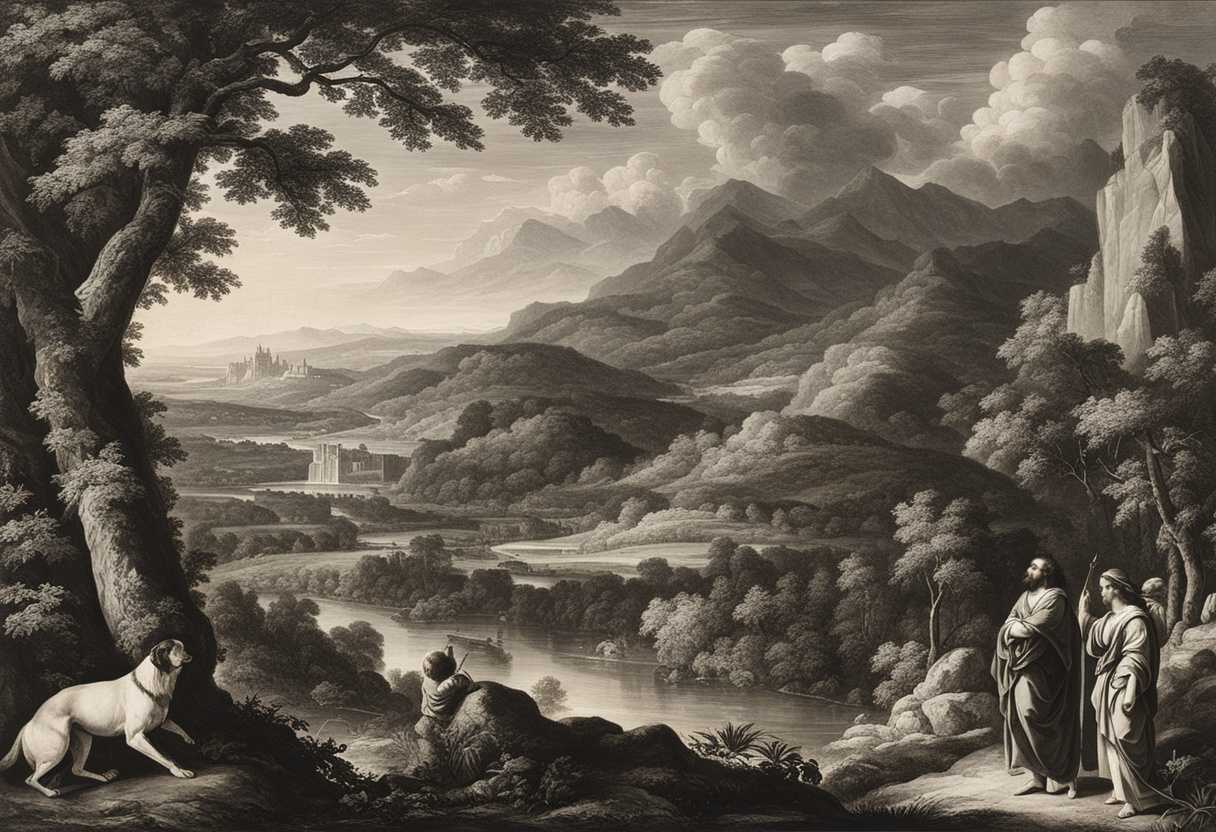
Setting the Scene for Numbers 13:30-33
In Numbers chapter 13, Moses sends out twelve spies, one from each tribe of Israel, to explore the land of Canaan, which God had promised to give to the Israelites. Among the spies is Caleb, representing the tribe of Judah, and Joshua, representing the tribe of Ephraim. The scene unfolds as the spies return from their forty days of reconnaissance, carrying with them a cluster of grapes so large that it takes two men to carry it on a pole between them.
As the twelve spies stand before Moses, Aaron, and the entire congregation of Israel, they begin to give their report. The atmosphere is tense as they describe the land they have seen, its abundance, and its formidable inhabitants. The majority of the spies express fear and doubt, painting a grim picture of giants and fortified cities that they believe are impossible to conquer. However, Caleb steps forward, his voice filled with conviction and faith, as he tries to reassure the people that they can indeed possess the land promised to them by God.
The scene is set against the backdrop of the wilderness, with the Israelite camp stretching out behind them and the vast expanse of the promised land lying ahead. The tension is palpable as the fate of the Israelites hangs in the balance, with the people torn between fear and faith, between trusting in God’s promises and succumbing to their doubts.
What is Numbers 13:30-33 about?
Caleb and Joshua’s attitudes contrast sharply with those of the other Israelites in this verse. While the majority of the people are gripped by fear and focus on the obstacles ahead, Caleb and Joshua demonstrate unwavering faith in God’s promise. They trust that God will deliver on His word and lead them to the land He has promised, regardless of the challenges they may face. We reflect on this narrative, prompting us to consider our own responses when confronted with difficulties or uncertainties in our lives. Do we allow fear to dictate our actions, or do we trust in God’s faithfulness and promises? Caleb and Joshua serve as inspirational examples of steadfast faith and courage, showing us that when we trust in God wholeheartedly, we can overcome any obstacle that comes our way. Let us cultivate a Caleb and Joshua-like faith in our own lives by taking this verse as a lesson – a faith that stands strong in the face of giants, trusting in God’s sovereignty and provision. We should shift our focus from the challenges before us to the promises of God, knowing that with Him on our side, we need not fear any obstacle that lies ahead.
Understanding what Numbers 13:30-33 really means
In Numbers 13:30-33, we witness a pivotal moment as the Israelites stand at the threshold of the Promised Land. Moses dispatches twelve spies to scout Canaan, and upon their return, a stark division emerges in their reports. Caleb, a beacon of faith and leadership, urges the people to seize the land, affirming their ability to conquer it through God’s strength. In contrast, the other spies succumb to fear, viewing themselves as insignificant compared to the inhabitants of Canaan. This dichotomy between Caleb’s unwavering faith and the other spies’ trepidation sets the stage for a profound lesson on trust and perception.
Caleb’s resolute declaration to “go up at once and occupy” the land embodies a steadfast trust in God’s promises, transcending the intimidating circumstances before them. His unwavering faith serves as a timeless example for believers, prompting reflection on our responses to challenges that loom large in our lives. Do we, like Caleb, approach obstacles with a confidence rooted in God’s faithfulness, or do we allow fear to cloud our vision and diminish our faith?
The spies’ contrasting perspectives highlight a fundamental choice between faith and fear that resonates with contemporary audiences. In a world rife with uncertainties and trials, the narrative of Caleb and the spies compels us to examine our own responses to adversity. Are we inclined to see ourselves as conquerors through God’s strength, or do we shrink back in fear, perceiving ourselves as inadequate in the face of challenges?
Drawing parallels to modern scenarios, consider the image of a small business owner navigating a competitive market dominated by industry giants. Similar to the spies’ perception of themselves as “grasshoppers,” the owner may feel dwarfed by formidable competition. Yet, by embracing faith, innovation, and perseverance, they can emulate Caleb’s unwavering trust in God’s provision and overcome seemingly insurmountable odds. This anecdote underscores the enduring relevance of Numbers 13:30-33 in inspiring believers to confront daunting circumstances with a spirit of faith and resilience.
Ultimately, Caleb’s unwavering faith challenges us to shift our focus from our limitations to God’s boundless power. By aligning our perspective with God’s promises and strength, we can confront life’s challenges with unwavering confidence and courage. This passage serves as a poignant reminder to view our circumstances through the lens of faith, recognizing opportunities for God’s miraculous intervention and provision in our lives. Just as Caleb’s faith emboldened the Israelites to face the unknown with trust, may we too embrace a perspective grounded in God’s unfailing promises and power.
What giants are preventing us from entering our promised land?
The giants that are preventing us from entering our promised land are symbolic of the obstacles and challenges that stand in the way of us reaching our full potential and the blessings that God has in store for us. Just like the Israelites faced physical giants in the land of Canaan, we too face spiritual, emotional, and mental “giants” that can intimidate and discourage us.
These giants represent our fears, doubts, insecurities, and the mindset that we are not capable of overcoming the obstacles in front of us. They can make us feel small, powerless, and insignificant in comparison. However, just as God promised the Israelites victory over the giants in the land, He also promises to be with us and help us conquer our own giants.
Instead of focusing on the size and strength of the giants, we should focus on the power and faithfulness of God. We can overcome any giant that stands in our way and claim the blessings and victories that He has prepared for us by trusting in Him, staying steadfast in our faith, and believing in His promises.
Application
Just like Caleb faced giants and stayed faithful, let’s tackle our own modern-day challenges with unwavering belief. Trust in the path laid out for you and remain resilient in the face of obstacles. Will you, like Caleb, boldly step forward in faith, confident that your journey is guided by a greater purpose?

Reverend Michael Johnson is an experienced Church Minister with a profound expertise in spirituality and guidance. With a serene presence and a compassionate heart, he has faithfully served his congregation for over 20 years, leading them on a spiritual journey towards inner peace and enlightenment. Reverend Johnson’s extensive knowledge of religious philosophies and profound understanding of human nature have made him a trusted confidant and mentor to many, as he seamlessly weaves his profound wisdom into life teachings. Reverend Johnson’s calming demeanor and empathetic nature continue to uplift and heal souls, nurturing a sense of unity and tranquility within his community.