
Numbers 19:9 is about the significance of the ashes of a red heifer as a purifying agent, symbolizing the importance of ritual cleanliness and the atonement for sin within the community of Israel.
9 And a man who is clean shall gather up the ashes of the heifer and deposit them outside the camp in a clean place. And they shall be kept for the water for impurity for the congregation of the people of Israel; it is a sin offering.
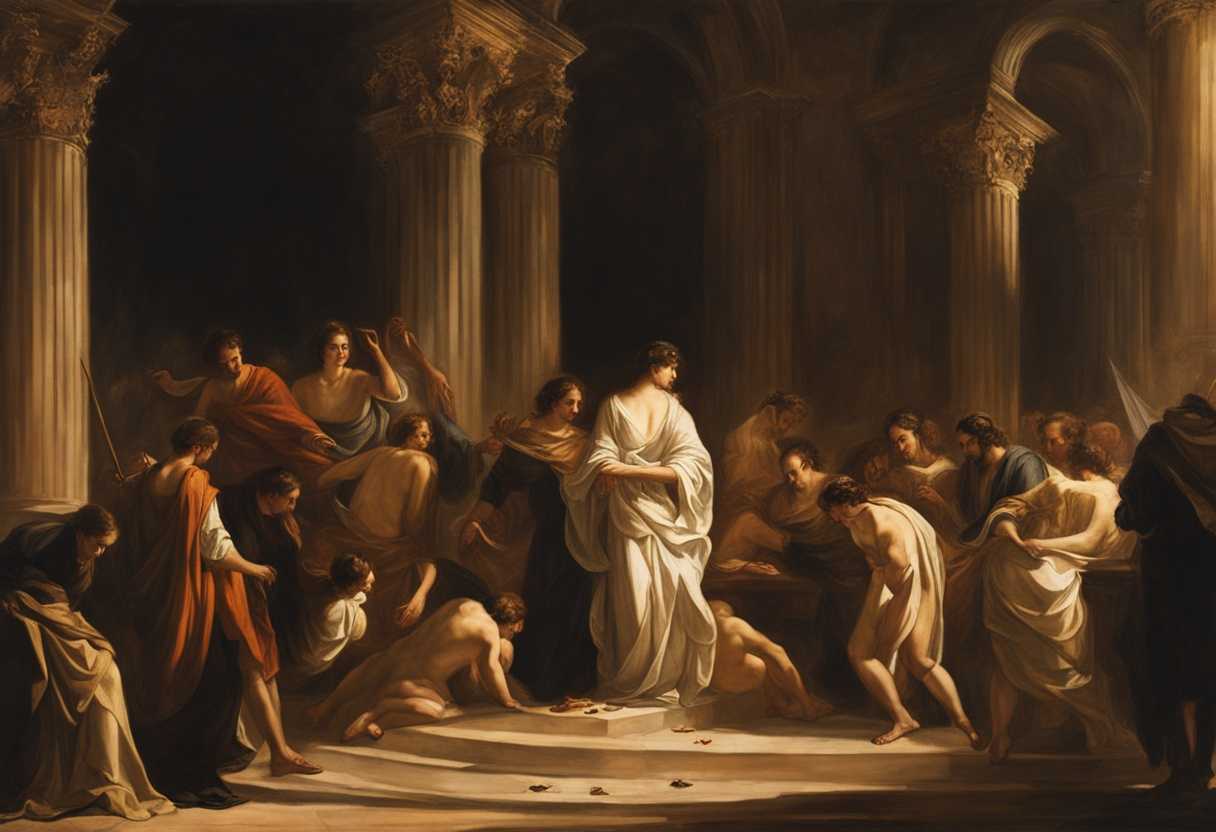
Setting the Scene for Numbers 19:9
In the arid wilderness of the Sinai Peninsula, a group of Israelites gathered in a designated area outside their camp, the sun casting long shadows as it began its descent in the sky. The air was thick with the scent of dust and the faint aroma of burnt offerings, remnants of the sacrifices made to the Lord. This was a moment of solemnity and purification, as the people prepared to engage in a ritual that was both sacred and necessary for maintaining their communal holiness. Among them stood Eleazar, the son of Aaron, the high priest, who was tasked with overseeing the proceedings. His robes, adorned with intricate designs and symbols of the priesthood, fluttered gently in the warm breeze, a stark contrast to the ruggedness of the surrounding landscape.
The Israelites had come to this place out of necessity, as they were instructed to gather the ashes of a red heifer, a rare and unblemished animal that had been sacrificed in accordance with divine command. This ritual was crucial for the purification of those who had come into contact with death, a state that rendered them ceremonially unclean. The ashes, mixed with water, would be used to cleanse the people, allowing them to re-enter the community and participate in worship. As Eleazar stood before the gathered crowd, he could see the faces of his fellow Israelites, a mix of anxiety and hope etched upon them. They were a people who had endured much, wandering through the desert, and the promise of purification offered a glimpse of renewal and restoration.
Surrounding the scene were the vast, undulating dunes of sand, punctuated by sparse patches of scrub and the occasional acacia tree, providing a semblance of shade. The camp was alive with the sounds of children playing and the distant murmur of families preparing their evening meals. The flickering flames of campfires began to dot the landscape as the sun dipped lower, casting a golden hue over the encampment. In this moment, the Israelites were reminded of their covenant with God, the importance of obedience to His laws, and the hope that lay in the promise of a future in the land flowing with milk and honey. The ashes of the red heifer, a symbol of sacrifice and atonement, would soon serve as a tangible reminder of their journey toward holiness and community.
What is Numbers 19:9 about?
Numbers 19:9 invites us into a unique and thought-provoking aspect of the ancient Hebrew purification rituals. This verse recounts the preparation of ashes from a red heifer, which carries profound symbolism in the context of sin and purification. You may ask yourself, why was the color red significant? Red often symbolized both sacrifice and the reality of sin in ancient times. The use of a red heifer underscores that this ritual was serious and connected to the heart of communal and individual morality. Isn’t it fascinating how something as specific as the ashes of a red cow can represent such a tremendous need for spiritual cleansing?
The ashes derived from the red heifer were not merely for physical purification but also symbolized the deeper need for spiritual renewal among the people. The notion of cleansing implies an acknowledgment of impurity and guilt—an admission that we all carry imperfections that require attention. Don’t you find it interesting that these ancient practices still resonate today? Our modern rituals of seeking forgiveness and renewal mirror them in many ways. Whether through confession, making amends, or simply reflecting on our actions, we engage in forms of purification. Thus, Numbers 19:9 prompts us to consider our own pathways to cleansing and how we can metaphorically burn away the impurities in our lives, emerging renewed and ready to strive for a better version of ourselves. How can we use this ancient lesson to inspire our contemporary journeys toward healing and wholeness?
Understanding what Numbers 19:9 really means
In Numbers 19:9, we encounter a profound aspect of Israelite ritual that centers on the ashes of a red heifer. These ashes were not merely remnants of a sacrifice; they held significant meaning in the context of purification rituals for those who had come into contact with death. This verse invites us to consider the importance of ritual purity within the Israelite community, a theme that resonates deeply with our spiritual lives today.
The book of Numbers chronicles the Israelites’ journey through the wilderness, detailing the laws that governed their community. The ashes of the red heifer symbolize a necessary cleansing and restoration, essential for maintaining holiness among the people. This ritual underscores God’s desire for His people to be set apart, emphasizing that purity is not just a physical state but a spiritual imperative. How often do we reflect on our own need for spiritual cleanliness in our lives?
When we look at related biblical passages, such as Hebrews 9:13-14, we see a striking connection between these ancient rituals and the ultimate sacrifice of Christ. The author of Hebrews draws a parallel, illustrating that while the blood of animals could purify the flesh, it is the blood of Christ that purifies our conscience. This transition from the old covenant to the new highlights the depth of God’s plan for redemption. Psalm 51:7 further echoes this theme, as it speaks of being cleansed and made whiter than snow, reinforcing the idea that purification is a vital aspect of our relationship with God.
In today’s world, where moral ambiguity and spiritual confusion abound, the concept of purification remains incredibly relevant. Just as the Israelites needed to be cleansed to approach God, we too must seek spiritual renewal to align our lives with His will. Many individuals grapple with guilt and shame stemming from past actions. Understanding the process of purification can offer hope and a pathway to healing. Have you ever considered how the act of seeking forgiveness can lead to profound transformation in your life?
Imagine a person burdened by significant mistakes—perhaps in relationships or personal choices. They may feel trapped by their past, much like the Israelites who faced the consequences of their sins. Yet, through a journey of faith, this individual can experience a transformation akin to the purification process described in Numbers. By letting go of their past and embracing a new identity in Christ, they find freedom and purpose. Isn’t it inspiring to think about the potential for renewal in our own lives?
The phrase “ashes of the heifer” serves as a powerful symbol of sacrifice and the possibility of new life emerging from death. It reminds us that our past mistakes can lead to growth and renewal. Similarly, “purification for sin” emphasizes the necessity of confronting our shortcomings. We cannot ignore our failings; instead, we must seek God’s forgiveness and cleansing. How might acknowledging our imperfections lead us closer to God?
In conclusion, Numbers 19:9 stands as a poignant reminder of the significance of spiritual purity and the lengths to which God goes to restore His people. As we reflect on this verse, let us embrace the opportunity for renewal and commit to living lives that reflect God’s holiness and grace. What steps can you take today to pursue a deeper sense of spiritual purity in your own life?
How can I find purity in my everyday life?
To find purity in your everyday life, start by cultivating a sense of mindfulness and awareness in all your actions, thoughts, and interactions. Approach each day with the intention of maintaining cleanliness, not just physically but also emotionally and spiritually. Surround yourself with environments and people that uplift and inspire you, helping you stay grounded in your pursuit of purity. This can mean decluttering your space or choosing to engage with those who share similar values, promoting a harmonious atmosphere conducive to personal growth.
Another key aspect is to regularly reflect on your choices and behaviors. Certain habits or influences may contribute to impure thoughts or actions. You can take proactive steps towards creating a lifestyle that aligns with your goals of purity by acknowledging areas that may need improvement. This might involve setting boundaries with certain activities or individuals and making conscious choices that foster a clearer, more focused mindset.
Finally, establish routines that promote spiritual well-being, such as regular practices of meditation, prayer, or reading inspiring literature. These rituals can serve as anchors in your daily life, providing moments of clarity and rejuvenation that support a pure state of being. Nurturing your inner self empowers you to navigate the complexities of daily life with a heart and mind that strive for purity in every step you take.
Application
Just like maintaining a healthy work-life balance keeps you at your best, your spiritual life needs attention too. Think of purity as the fuel that powers your engine—without it, you can’t go far. Take a moment today to identify what might be weighing you down and consider how you can cleanse your heart, like decluttering your workspace. What small spiritual habits can you build into your daily routine to prepare yourself for service? Will you choose to embark on this journey of self-reflection and renewal? Are you ready to honor your true calling?

Reverend Michael Johnson is an experienced Church Minister with a profound expertise in spirituality and guidance. With a serene presence and a compassionate heart, he has faithfully served his congregation for over 20 years, leading them on a spiritual journey towards inner peace and enlightenment. Reverend Johnson’s extensive knowledge of religious philosophies and profound understanding of human nature have made him a trusted confidant and mentor to many, as he seamlessly weaves his profound wisdom into life teachings. Reverend Johnson’s calming demeanor and empathetic nature continue to uplift and heal souls, nurturing a sense of unity and tranquility within his community.