
Numbers 22:39-41 is about how God uses unlikely messengers, even a donkey talking to Balaam, to convey his divine message and show that He can use anyone or anything to communicate His will to humankind.
39 Then Balaam went with Balak, and they came to Kiriath-huzoth.
40 And Balak sacrificed oxen and sheep, and sent for Balaam and for the princes who were with him.
41 And in the morning Balak took Balaam and brought him up to Bamoth-Baal, and from there he saw a fraction of the people.
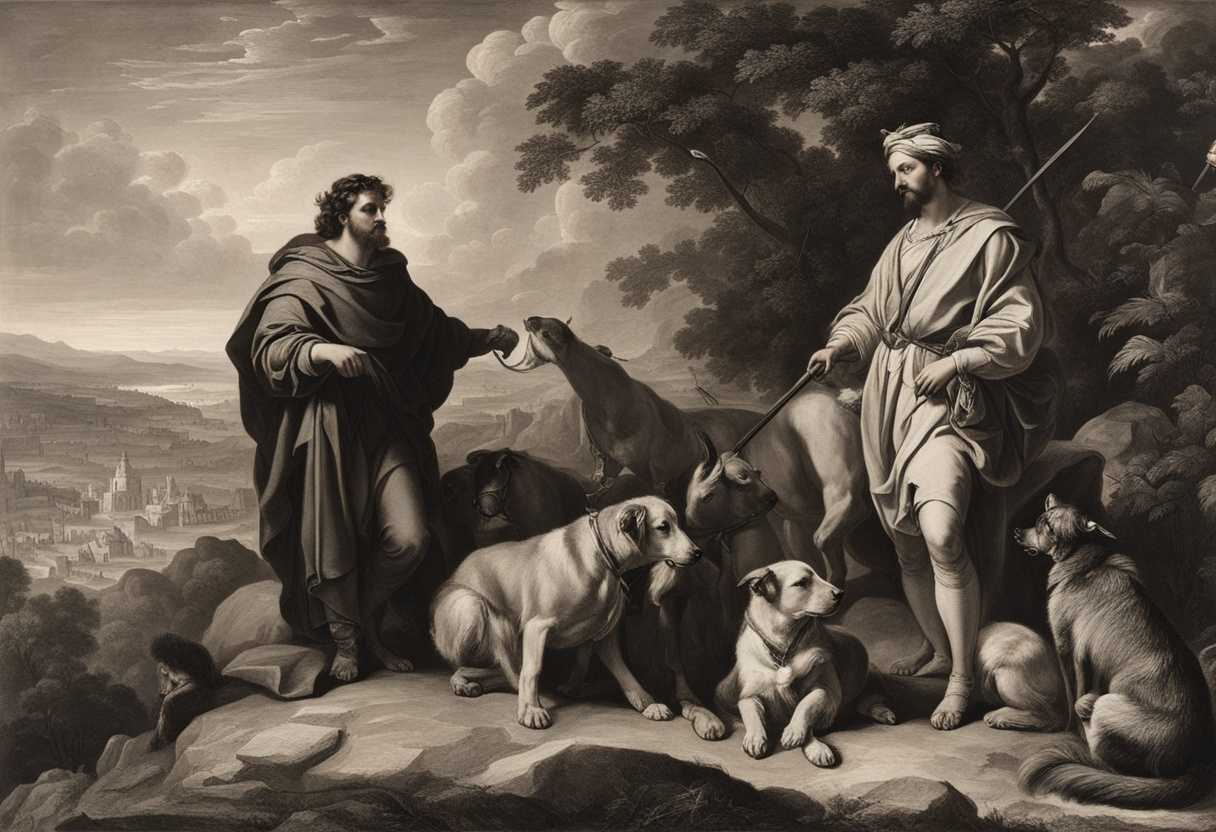
Setting the Scene for Numbers 22:39-41
As the sun began to set over the vast plains of Moab, Balaam, a renowned diviner, found himself standing atop a hill overlooking the Israelite camp. With him was Balak, the king of Moab, who had summoned Balaam to curse the Israelites out of fear of their growing numbers and strength. The two men had journeyed together to this vantage point to observe the Israelites from a distance.
Below them, the Israelite camp sprawled out in an orderly fashion, with the tabernacle of the Lord at its center. The camp was alive with activity as families prepared their evening meals and livestock grazed peacefully in the surrounding fields. Balaam and Balak watched in silence, taking in the sight of the chosen people of God, unaware of the conversation that was about to unfold between them.
As the evening shadows lengthened, Balaam turned to Balak and prepared to deliver his prophetic message. The scene was set for a pivotal moment in the biblical narrative, where the fate of the Israelites hung in the balance, and the words of a diviner would hold great significance.
What is Numbers 22:39-41 about?
Balaam accompanies Balak to view the Israelites from a distant location in this verse. This simple act of observation carries deeper implications in the broader narrative of the Bible. Balaam, a diviner, was initially summoned by Balak to curse the Israelites. However, despite Balak’s attempts to sway him, Balaam remained steadfast in his commitment to only speak what God instructed him to say. So, as they journeyed together to view the Israelites, it symbolized not just a physical movement but also a spiritual and moral journey for Balaam. Balaam reflects a sense of obedience in searching for God’s will and purpose in the situation he finds himself in by following along with Balak to observe the Israelites. This act also showcases the tension between worldly desires and divine intervention that many of us face in our own lives. We, as teachers, can use this verse to prompt reflection and discussion on themes such as obedience, faith, and discernment in our own journeys. How often do we find ourselves torn between what the world expects of us and what our inner moral compass guides us towards? What does it mean to stay true to our values and beliefs, even when faced with pressure or external influences? Exploring these questions can help us delve into the complexities of human nature and the constant need for spiritual guidance and clarity in our decision-making processes.
Understanding what Numbers 22:39-41 really means
In the narrative of Balaam found in Numbers 22:39-41, we witness a compelling account of a non-Israelite prophet caught between human desires and divine commands. Balaam’s journey to meet Balak, the king of Moab, sheds light on the intricate interplay between God’s sovereignty and human will. Despite God’s initial prohibition against cursing the Israelites, Balaam complies with Balak’s summons, showcasing the struggle between obedience to God and the allure of earthly rewards.
As Balaam accompanies Balak to Kiriath Huzoth, a place synonymous with pagan worship and sacrificial rituals, we are confronted with the stark contrast between the ways of God and the practices of the world. The urgency displayed by Balak in hastening Balaam’s journey to Bamoth Baal underscores his misguided attempts to manipulate divine favor through external means, revealing a profound misunderstanding of God’s power and authority.
The phrases “Balaam went with Balak” and “On the next morning” serve as poignant reminders of the tension between human agency and God’s sovereignty. Despite Balaam’s initial compliance with Balak’s wishes, we see throughout the narrative how God ultimately intervenes to redirect Balaam’s actions towards blessing rather than cursing. This redirection highlights the futility of opposing God’s will and the ultimate triumph of His purposes.
In exploring related biblical passages such as Deuteronomy 23:5, 2 Peter 2:15-16, and Revelation 2:14, we glean valuable insights into the consequences of straying from God’s commands and the enduring impact of one’s choices on both individuals and communities. Balaam’s story serves as a cautionary tale, warning believers against the pitfalls of greed, error, and spiritual compromise.
The relevance of Balaam’s narrative to contemporary audiences is striking. Just as Balaam faced the temptation of wealth and honor, individuals today grapple with various enticements that challenge their integrity and faithfulness to God. The story underscores the importance of spiritual discernment, urging believers to align their actions with God’s will and resist the allure of immediate gratification at the expense of long-term blessings.
In a modern context, the analogy of a business leader facing ethical dilemmas akin to Balaam’s predicament offers a tangible illustration of the enduring relevance of this biblical account. The leader’s choice to prioritize integrity over material gain mirrors Balaam’s eventual realization that true success lies in aligning with God’s principles, even in the face of adversity.
Ultimately, the narrative of Balaam in Numbers 22:39-41 serves as a compelling reminder for readers to trust in God’s plan, resist the temptations of immediate gratification that conflict with divine principles, and remain faithful and obedient in the midst of challenging circumstances. It prompts introspection on the choices we make in light of God’s sovereignty and the enduring consequences of our actions on our spiritual journey.
How can we remain faithful when others stray?
One way we can remain faithful when others stray is by staying focused on our own relationship with God. We should not allow the actions or choices of others to sway us from our path of righteousness. We can avoid being led astray by the actions of others by continually seeking God’s will for our lives and remaining steadfast in our faith.
Additionally, we should surround ourselves with fellow believers who can encourage and support us in our faith journey. We can find strength and encouragement to remain faithful even when others around us choose a different path by building a community of like-minded individuals who share our commitment to following God. This unity in faith can help us stay grounded in our beliefs and withstand any temptations or pressures to stray.
Lastly, we must remember that ultimately, our faithfulness is between us and God. We are accountable for our own choices and actions, regardless of what others may decide to do. We can trust that God will guide us and give us the strength to remain faithful even in the face of adversity by keeping our focus on pleasing and honoring Him above all else.
Application
Let’s navigate the roadmap of our lives like skilled workers, following God’s instructions with unwavering commitment. Our journey is not a solo mission; it’s a collaborative effort with the divine. Are we prepared to submit to His guidance and walk confidently in His footsteps, both at work and home, dodging distractions along the way?

Reverend Michael Johnson is an experienced Church Minister with a profound expertise in spirituality and guidance. With a serene presence and a compassionate heart, he has faithfully served his congregation for over 20 years, leading them on a spiritual journey towards inner peace and enlightenment. Reverend Johnson’s extensive knowledge of religious philosophies and profound understanding of human nature have made him a trusted confidant and mentor to many, as he seamlessly weaves his profound wisdom into life teachings. Reverend Johnson’s calming demeanor and empathetic nature continue to uplift and heal souls, nurturing a sense of unity and tranquility within his community.