
Numbers 34:16-29 is about the division of the Promised Land among the tribes of Israel, demonstrating that God’s promise to give them the land was being fulfilled and emphasizing the importance of boundaries and inheritance within the community.
16 The Lord spoke to Moses, saying,
17 These are the names of the men who shall divide the land to you for inheritance: Eleazar the priest and Joshua the son of Nun.
18 And you shall take one chief from every tribe to divide the land for inheritance.
19 and the name of the third shall be Zebulun.
20 And of the tribe of the people of Judah and the tribe of the people of Simeon were taken as their own.
21 And the tribal heads of the people of Israel shall allocate the land for inheritance according to the number of names.
22 And the leaders of the two tribes that are to be given to the Levites for inheritance, the leaders of these two tribes shall be with the Levites when the land is apportioned for inheritance.
23 And of the people of the half-tribe of Manasseh, 21,000,
24 the tribal chief of the Naphtalites, Ahira the son of Enan.
25 And the chief of the fathers of the clans of the Gileadites, Jezer the son of Machir, was the chief of the Gileadites.
26 “Of the people of Joseph, namely of the people of Ephraim, their generations, by their clans, by their fathers’ houses, according to the number of names, from twenty years old and upward, every man able to go to war:
27 And the prince of the tribe of the people of the children of Dan, Bukki the son of Jogli.
28 And from Mahanaim it shall go on to Zedad,
29 These are the men whom the Lord commanded to divide the inheritance for the people of Israel in the land of Canaan.
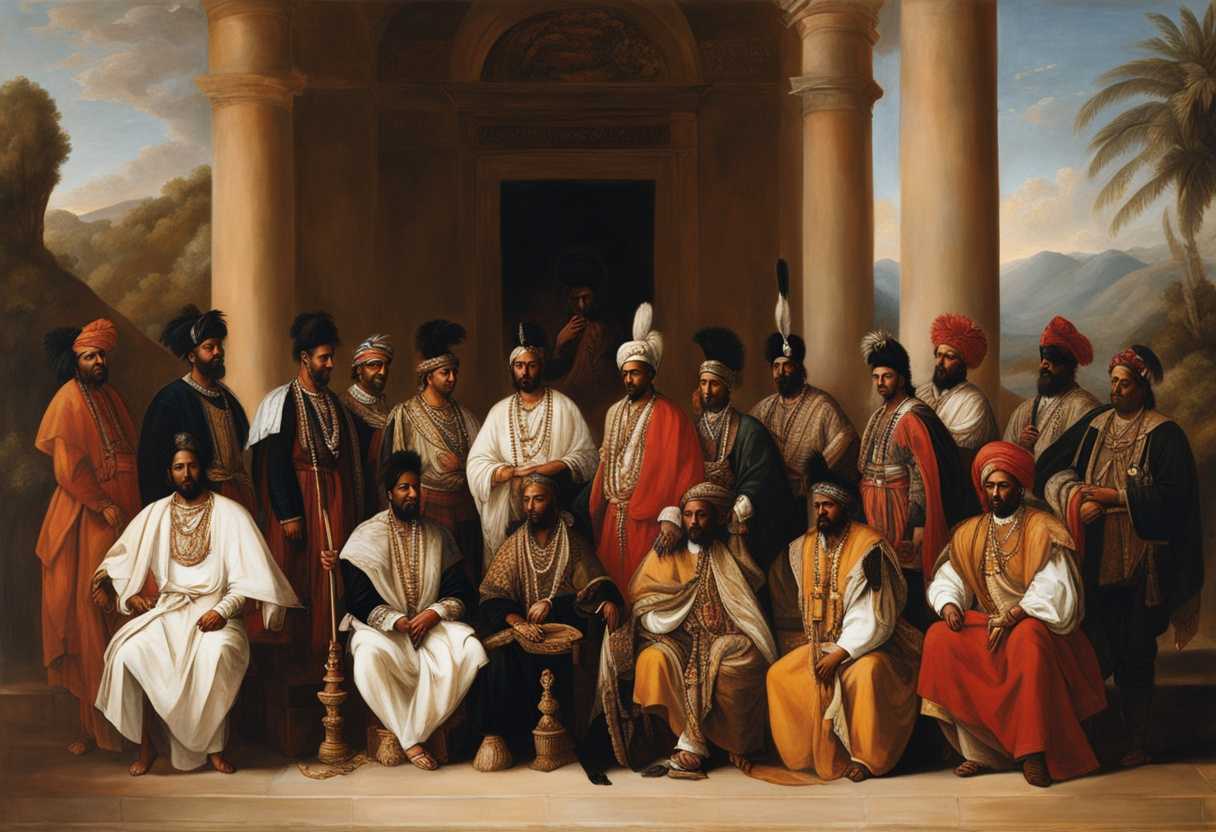
Setting the Scene for Numbers 34:16-29
The scene in Numbers 34:16-29 takes place as Moses is dividing the land of Canaan among the tribes of Israel before they enter the Promised Land. In this particular passage, the names of the leaders of each tribe are listed as they are appointed to oversee the distribution of the land. The leaders mentioned include Eleazar the priest, Joshua son of Nun, and one leader from each of the twelve tribes of Israel.
The setting is likely a solemn and significant gathering, with Moses leading the assembly and appointing these leaders to carry out the division of the land. The leaders would have been chosen based on their wisdom, leadership qualities, and faithfulness to God. The atmosphere is charged with anticipation as the Israelites are on the brink of entering the land that was promised to them by God.
Surrounding this scene are the vast plains and hills of Canaan, a land flowing with milk and honey. The leaders appointed are standing before Moses, ready to take on the responsibility of ensuring that each tribe receives their rightful inheritance. The weight of this task is palpable as they prepare to lead the Israelites into the land that God had promised to their ancestors.
What is Numbers 34:16-29 about?
God instructs Moses to delegate the responsibility of dividing the land among the tribes of Israel to leaders in this verse. This instruction shows us the importance of leadership, organization, and delegation in achieving communal goals. God recognizes the need for structure and order in the distribution of resources and responsibilities among the people. God ensures the fair and efficient division of land by appointing leaders to oversee this process.
Have you ever been part of a group project where roles were not clearly defined, and chaos ensued? The importance of appointing leaders in this verse serves as a reminder that effective leadership is vital for the success of any collective endeavor. We too must acknowledge the significance of leadership in our own communities and organizations, just as God instructed Moses to choose leaders to facilitate the division of land. Capable individuals entrusted with specific tasks ensure that goals are met, resources are allocated equitably, and unity is maintained among the people.
Understanding what Numbers 34:16-29 really means
This passage in Numbers 34:16-29 details the leaders chosen by God to oversee the distribution of the Promised Land among the tribes of Israel. The names of these leaders are specifically listed, highlighting the significance of orderly distribution and the role of leadership in fulfilling God’s promises. When we read “The LORD said to Moses,” we are reminded of the divine authority behind these instructions, emphasizing that they are not mere human decisions but directives from God Himself. The phrase “To divide the inheritance” signifies the realization of God’s covenant with Abraham, Isaac, and Jacob concerning the land of Canaan.
In Joshua 14:1-5, we witness the actual division of the land, showcasing the fulfillment of the instructions provided in Numbers. Deuteronomy 1:38 appoints Joshua as the leader to lead the Israelites into the Promised Land, reinforcing the theme of divinely appointed leadership. Genesis 12:7 echoes God’s promise to Abraham about giving his descendants the land, a promise being fulfilled through the events described in this passage. These related biblical passages further illuminate the interconnectedness of God’s promises and the role of appointed leaders in fulfilling His plans.
The relevance of this passage extends to contemporary society, emphasizing themes of leadership and responsibility. Just as the leaders were tasked with overseeing the division of the land, modern leaders in various spheres are called to lead with integrity and accountability. The passage also serves as a reminder of the reliability of God’s promises, urging us to trust in His timing for their fulfillment. Additionally, the emphasis on order and structure in the distribution of the land underscores the importance of organization in achieving communal objectives.
To illustrate the significance of orderly leadership, consider a community garden project where families are assigned specific plots to cultivate. The project leader ensures fairness and order by allocating plots to each family, mirroring the division of the Promised Land where appointed leaders ensured each tribe received their inheritance. Just as the community garden thrives under organized leadership, so too did the Israelites prosper under the guidance of their appointed leaders.
In conclusion, the passage in Numbers 34:16-29 imparts valuable lessons on divinely guided leadership, the fulfillment of God’s promises, and the necessity of order and structure in communal endeavors. It encourages us to place our trust in God’s plans and to fulfill our roles responsibly as leaders and members of our communities.
How can we faithfully fulfill our designated roles?
We must follow the instructions and boundaries set for us in order to faithfully fulfill our designated roles. Each tribe had a designated role and territory that they were responsible for, and it was crucial for them to adhere to these boundaries and fulfill their duties within them. We can ensure that we are fulfilling our designated tasks faithfully by understanding and respecting the boundaries of our own roles and responsibilities. We should recognize the importance of collaboration and unity in fulfilling our designated roles, just as the tribes of Israel were expected to work together and support one another in order to effectively manage and govern their allotted territories. We can ensure that we are fulfilling our responsibilities to the best of our abilities by working together, sharing resources, and offering support to one another. Through cooperation and solidarity, we can uphold the integrity of our roles and accomplish our tasks with diligence and commitment.
Additionally, it is essential to approach our designated roles with a sense of accountability and stewardship, recognizing that we have been entrusted with specific responsibilities that must be carried out with sincerity and dedication. We must take ownership of our duties and strive to fulfill them to the best of our abilities, just as the tribes of Israel were accountable for cultivating and managing their assigned land. We can ensure that we are faithfully fulfilling the tasks and responsibilities entrusted to us by embracing our roles with a spirit of accountability and stewardship.
Application
Reflect on the passage from Numbers and see the significance of careful resource management. Just like the tribes divided land with precision, we must manage our blessings with intention and diligence. Let’s follow this divine example and be responsible stewards of what we have been given. Think about how you can use your talents and resources for the benefit of all. How will you take action on faithful stewardship in your life right now?

Reverend Michael Johnson is an experienced Church Minister with a profound expertise in spirituality and guidance. With a serene presence and a compassionate heart, he has faithfully served his congregation for over 20 years, leading them on a spiritual journey towards inner peace and enlightenment. Reverend Johnson’s extensive knowledge of religious philosophies and profound understanding of human nature have made him a trusted confidant and mentor to many, as he seamlessly weaves his profound wisdom into life teachings. Reverend Johnson’s calming demeanor and empathetic nature continue to uplift and heal souls, nurturing a sense of unity and tranquility within his community.