
Numbers 35:33-34 is about emphasizing the importance of upholding justice and righteousness in society by prohibiting the defilement of the land with bloodshed, as the shedding of innocent blood pollutes the land, and the only way to cleanse it is by showing mercy to those who deserve it.
33 You shall not pollute the land in which you live, for blood pollutes the land, and no atonement can be made for the land for the blood that is shed in it, except by the blood of the one who shed it.
34 You shall not defile the land in which you live, in the midst of which I dwell, for I the Lord dwell in the midst of the people of Israel.”
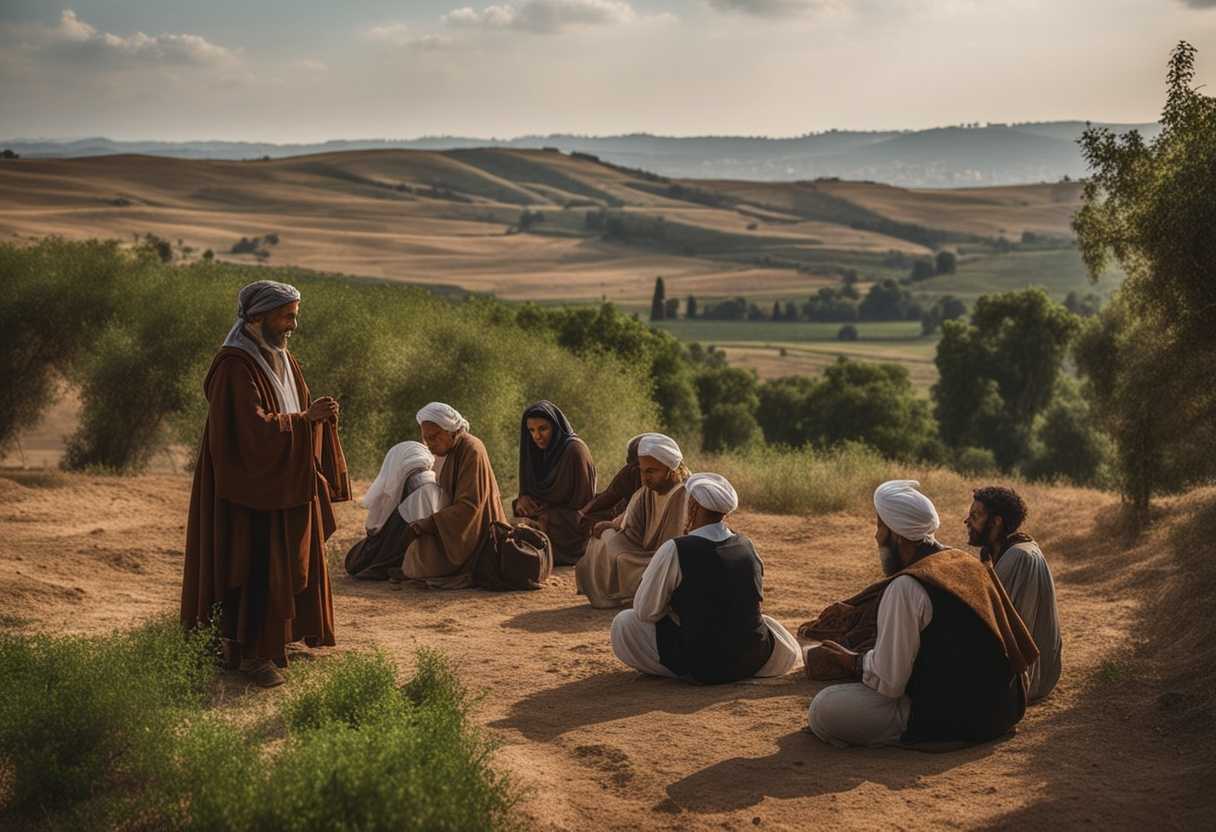
Setting the Scene for Numbers 35:33-34
The scene in Numbers 35:33-34 takes place in the camp of the Israelites as they journey through the wilderness towards the Promised Land. The Israelites have just received the laws regarding unintentional manslaughter and the consequences for shedding innocent blood. Moses, the leader of the Israelites, is addressing the community, emphasizing the importance of upholding justice and not defiling the land where they dwell. The atmosphere is solemn as the gravity of these laws sinks in among the people.
Surrounding Moses are the elders of the tribes, who have gathered to hear his words and ensure that the community understands the significance of these laws. The people are attentive, knowing that these regulations are crucial for maintaining order and righteousness in their midst. The camp is set up in an orderly fashion, with the tabernacle at its center, symbolizing the presence of God among His people.
As Moses speaks, the sun begins to set, casting a warm glow over the camp. The sounds of the wilderness can be heard in the distance, a reminder of the challenges they face on their journey. The gravity of the moment is palpable, as the Israelites realize the importance of following these laws to honor God and protect the sanctity of the land they have been promised.
What is Numbers 35:33-34 about?
This verse is a powerful statement emphasizing the importance of justice and accountability for serious crimes such as murder and the defilement of the land. It highlights the gravity of these offenses and the notion that bloodshed is required to cleanse the land and restore balance. The mention of atonement only being possible through blood shows the severity of the consequences for such heinous crimes and the notion that there can be no forgiveness or redemption without true justice being served.
Have you ever pondered the weight of justice and its necessity in maintaining order and righteousness in society? This verse challenges us to reflect on the value of accountability and the repercussions of our actions. It prompts us to consider the deeper implications of seeking justice for heinous crimes and the idea that true atonement requires more than mere words or gestures – it requires real, tangible actions to make amends and restore balance. We are reminded of the importance of upholding justice and righteousness in our own lives and in the world around us as we contemplate these words.
Understanding what Numbers 35:33-34 really means
The Book of Numbers, a part of the Pentateuch attributed to Moses, contains instructions for the Israelites on cities of refuge and the sanctity of the land. “Do not pollute the land where you are” emphasizes maintaining purity, not just physically but morally and spiritually. “Bloodshed pollutes the land” underscores the gravity of murder, highlighting the sacredness of life and the defilement caused by wrongful death. The concept that atonement for bloodshed requires the shedding of the murderer’s blood speaks to justice and retribution. “Do not defile the land where you live and where I dwell, for I, the Lord, dwell among the Israelites” stresses God’s presence and the community’s need for holiness.
In Genesis 4:10, “The voice of your brother’s blood is crying to me from the ground,” reinforces the cry for justice from bloodshed. Leviticus 18:25 shows the consequences of defiling the land, as it vomited out its inhabitants. Psalm 106:38 depicts how shedding innocent blood desecrates the land. These passages connect the defilement of the land with the shedding of innocent blood, emphasizing the need for justice and purity.
The relevance of these verses today is striking, as they remind us of the timeless importance of upholding sanctity and justice in our communities. In a world marred by violence and injustice, these verses call us to honor the sanctity of life and the imperative of justice. The idea that our actions can defile or sanctify our surroundings underscores our responsibility to our environment and community.
Consider a small town rocked by a tragic murder. The community unites not for vengeance but to restore order and sanctity, reflecting the biblical principle that justice is essential for healing and cleansing a community. These verses from Numbers prompt us to contemplate the impact of our actions on our environment and stress the significance of justice and purity. They urge us to live in a way that honors God’s presence among us and to strive for a community that mirrors His holiness.
How can we ensure justice for victims of violence?
Justice for victims of violence can be ensured by holding the perpetrators accountable for their actions. Those who commit acts of violence must face consequences that are fair and just in order to prevent further harm to others. A balance can be achieved that promotes peace and safety within a community by creating a justice system that punishes wrongdoers and provides support and healing for the victims. Remembering the sanctity of life and the importance of seeking justice for those who have been wronged is essential in cases of violence. A sense of justice can be restored to the individual and the community as a whole by prioritizing the well-being of the victim and working towards holding the perpetrator responsible. Through compassion, empathy, and a commitment to upholding moral principles, a just and equitable society can be cultivated where victims of violence are seen, heard, and supported in their journey towards healing and restoration.
Application
Let us rise as warriors of justice in this modern battlefield of morality. Just as we fiercely protect our work and nourish our families, let us also defend the sanctity of life and uphold the rights of the innocent. The call to advocate for justice is a personal one, a duty that demands our action. Will you stand up and be the voice for the voiceless?

Reverend Michael Johnson is an experienced Church Minister with a profound expertise in spirituality and guidance. With a serene presence and a compassionate heart, he has faithfully served his congregation for over 20 years, leading them on a spiritual journey towards inner peace and enlightenment. Reverend Johnson’s extensive knowledge of religious philosophies and profound understanding of human nature have made him a trusted confidant and mentor to many, as he seamlessly weaves his profound wisdom into life teachings. Reverend Johnson’s calming demeanor and empathetic nature continue to uplift and heal souls, nurturing a sense of unity and tranquility within his community.