
Proverbs 22:8 is about the principle that those who sow injustice and reap trouble will ultimately find themselves consumed by the very evil they have propagated.
8 Whoever sows injustice will reap calamity,
and the rod of his fury will fail.
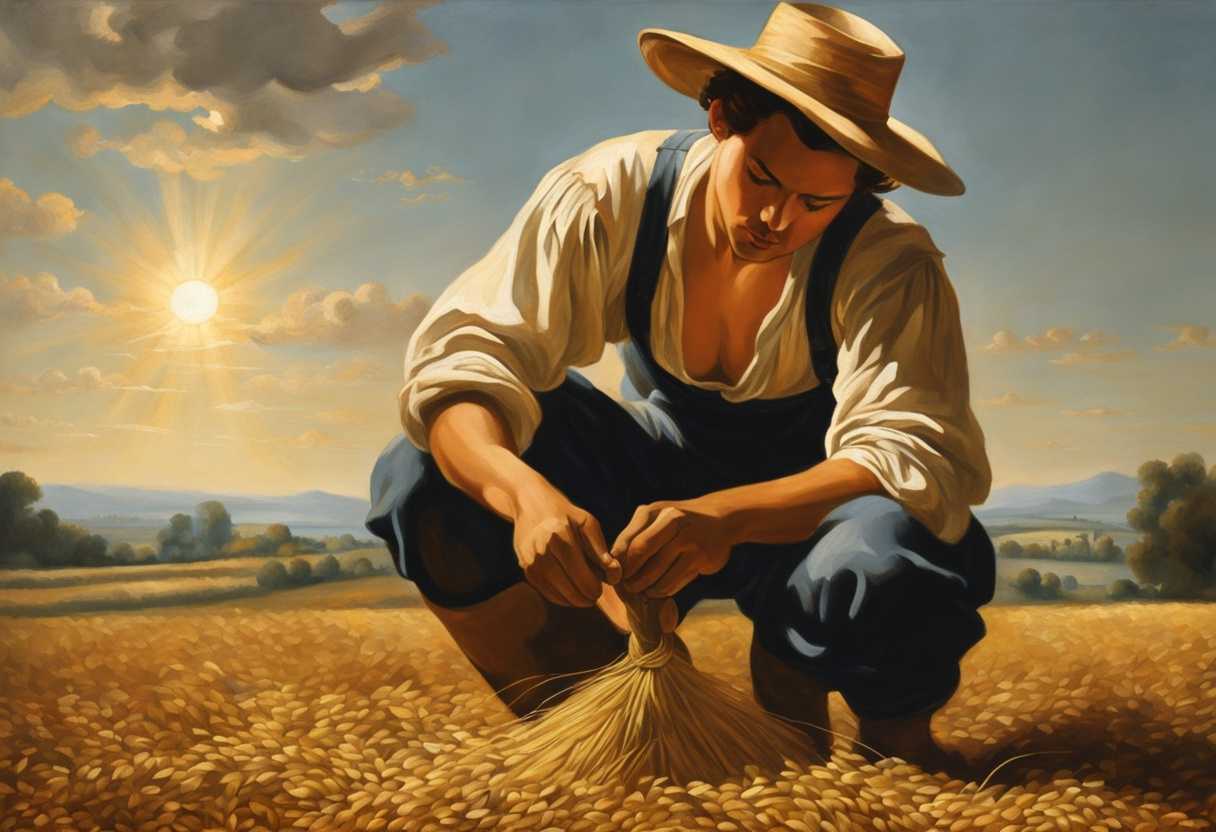
Setting the Scene for Proverbs 22:8
In the bustling marketplace of ancient Jerusalem, a diverse group of individuals has gathered. Among them are merchants, farmers, and travelers from distant lands, all coming together to buy, sell, and trade their goods. The air is filled with the sounds of haggling, laughter, and the clinking of coins as transactions take place under the scorching sun.
In the midst of the crowd stands a wise elder, known for his knowledge of scripture and his ability to impart wisdom to those who seek it. People from all walks of life have gathered around him, eager to hear his teachings and gain insight into the ways of the world. His words are like a soothing balm to their weary souls, offering guidance and comfort in a world filled with uncertainty.
As the elder speaks, his audience listens intently, hanging on his every word. He imparts the timeless wisdom found in Proverbs chapter 22, reminding them of the importance of humility, integrity, and kindness in their dealings with others. His words resonate deeply with those gathered, inspiring them to strive for righteousness and goodness in all that they do.
What is Proverbs 22:8 about?
This verse emphasizes the concept of cause and effect, especially when it comes to moral choices and actions. It highlights the idea that those who choose to sow seeds of injustice and behave in ways that harm others will eventually face the consequences of their actions. Sowing injustice metaphorically plants seeds that will eventually lead to calamity or disaster in one’s own life. This could be seen as a warning against engaging in activities that harm others, as it ultimately leads to negative repercussions for the individual.
Imagine a farmer who chooses to sow thorns instead of seeds for crops. Would he not eventually find himself surrounded by thorns, unable to escape the consequences of his actions? Similarly, by choosing to sow injustice, one is setting themselves up for a future filled with calamity and trouble. The verse also mentions that the “rod of his fury will fail,” suggesting that attempts to control or harm others through anger and injustice will ultimately backfire. It serves as a powerful reminder that our actions have consequences, and we must choose wisely how we treat others and navigate our interactions with the world around us.
Understanding what Proverbs 22:8 really means
Proverbs 22:8 is a verse that speaks to the consequences of one’s actions, particularly focusing on the outcomes of sowing injustice. This verse is part of the wisdom literature in the Bible, which provides practical guidance for living a righteous and fulfilling life. “Whoever sows injustice” uses agricultural imagery to describe the act of committing unjust deeds. Just as a farmer plants seeds expecting a harvest, those who engage in injustice are planting seeds that will yield a certain kind of harvest. “Reaps calamity” signifies that the harvest of injustice is calamity, meaning that those who commit unjust acts will eventually face disastrous consequences, highlighting the principle of cause and effect in moral behavior. “The rod they wield in fury will be broken” suggests that the tools or means by which the unjust person enforces their will—often through anger or violence—will ultimately be rendered ineffective or destroyed.
In Galatians 6:7-8, it is stated, “Do not be deceived: God cannot be mocked. A man reaps what he sows. Whoever sows to please their flesh, from the flesh will reap destruction; whoever sows to please the Spirit, from the Spirit will reap eternal life.” This passage reinforces the idea that our actions have consequences, whether good or bad. Hosea 10:13 echoes a similar sentiment, “But you have planted wickedness, you have reaped evil, you have eaten the fruit of deception,” emphasizing the negative outcomes of planting wickedness and deceit. The principle of reaping what you sow is timeless and universally applicable. In today’s world, where injustice can be seen in various forms—whether in personal relationships, business practices, or societal structures—this verse serves as a reminder that unjust actions will eventually lead to negative consequences. It encourages individuals to act justly and with integrity, knowing that their actions will have long-term effects.
Consider the story of a business owner who cuts corners and exploits employees to maximize profits. Initially, the business may thrive, but over time, the unethical practices lead to high employee turnover, legal issues, and a tarnished reputation. Eventually, the business suffers significant losses and may even collapse. This real-life scenario illustrates the principle that sowing injustice leads to calamity. Proverbs 22:8 serves as a powerful reminder of the moral law of cause and effect. It encourages us to live justly and righteously, knowing that our actions have consequences. By reflecting on this verse and related scriptures, we can gain wisdom and guidance for leading a life that honors God and benefits others.
How can we avoid the consequences of sinful actions?
We can avoid the consequences of sinful actions by understanding that our choices have consequences. When we choose to engage in activities that go against what is right and moral, we are setting ourselves up for negative outcomes. Therefore, it is important to be mindful of our actions and to make choices that align with righteousness and goodness.
Additionally, seeking forgiveness and repentance for our sins can help alleviate the consequences of our actions. We can work towards cleansing our souls and moving away from the negative repercussions of our sins by acknowledging our wrongdoings, asking for forgiveness from God, and taking steps to make amends.
Furthermore, by striving to lead a life of virtue, practicing self-discipline, and surrounding ourselves with positive influences, we can strengthen our spiritual defenses against the temptations of sin. Fostering a strong moral compass and relying on our faith and beliefs can help guide us towards making choices that will lead to positive outcomes and avoid the consequences of sinful actions.
Application
Dear friends, let us heed the wisdom of Proverbs 22:8 and consider the impact of our choices. Will you sow seeds of kindness and virtue in your daily interactions, nurturing a garden of positivity in the world around you? Or will you let the weeds of wrongdoing choke out the potential for goodness? Pause, reflect, and decide – for each choice you make today shapes the path you walk tomorrow.

Reverend Michael Johnson is an experienced Church Minister with a profound expertise in spirituality and guidance. With a serene presence and a compassionate heart, he has faithfully served his congregation for over 20 years, leading them on a spiritual journey towards inner peace and enlightenment. Reverend Johnson’s extensive knowledge of religious philosophies and profound understanding of human nature have made him a trusted confidant and mentor to many, as he seamlessly weaves his profound wisdom into life teachings. Reverend Johnson’s calming demeanor and empathetic nature continue to uplift and heal souls, nurturing a sense of unity and tranquility within his community.