
1 The Lord is my shepherd; I shall not want.
2 He makes me lie down in green pastures. He leads me beside still waters.
3 He restores my soul. He leads me in paths of righteousness for his name’s sake.
4 Even though I walk through the valley of the shadow of death, I will fear no evil, for you are with me; your rod and your staff, they comfort me.
5 You prepare a table before me
in the presence of my enemies;
you anoint my head with oil;
my cup overflows.
6 Surely goodness and mercy shall follow me all the days of my life, and I shall dwell in the house of the Lord forever.
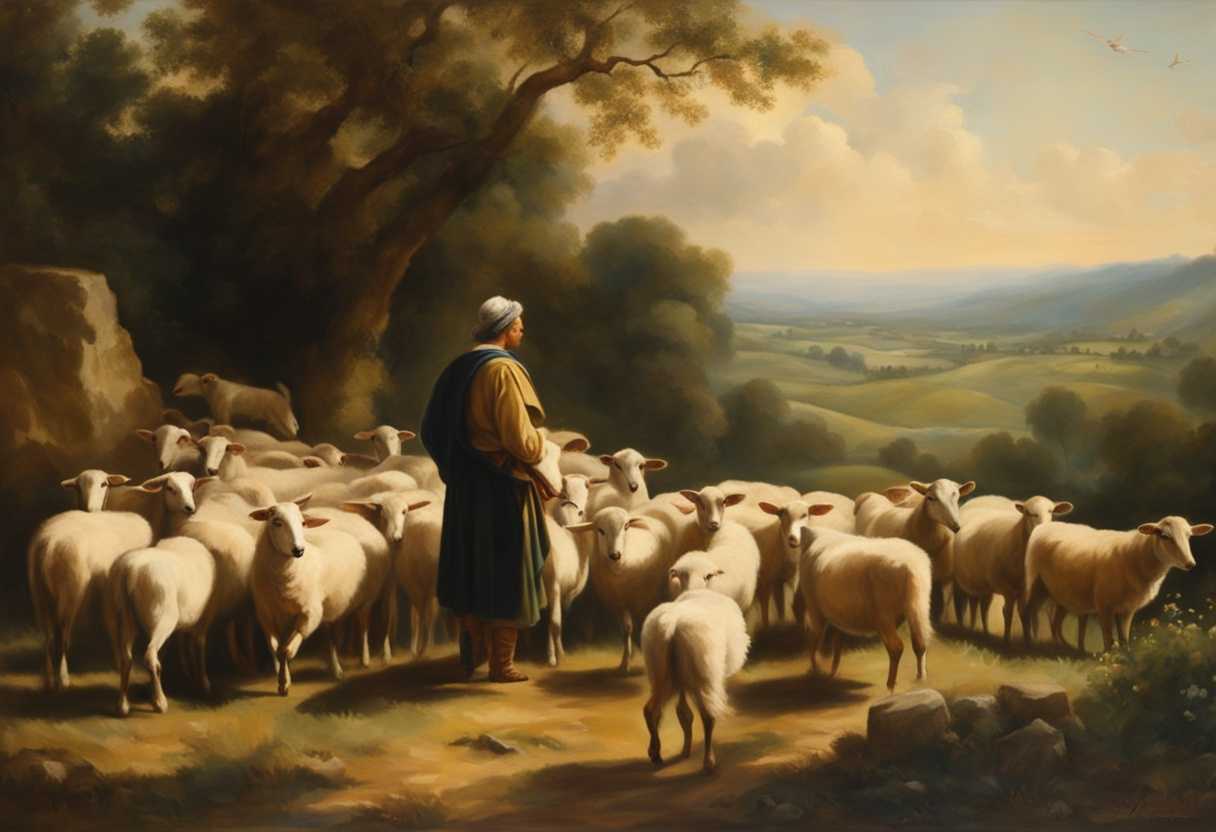
The True Meaning of Psalms 23
The Book of Psalms is a collection of sacred songs and prayers attributed to King David, the second king of ancient Israel. David, a shepherd-turned-king, had a deep understanding of the human condition and a profound relationship with God. David reflects on the Lord as his shepherd in Psalm 23, guiding and protecting him through the trials and tribulations of life. This beloved passage offers a comforting message of God’s unwavering care and provision, even in the face of darkness and adversity. As we delve into this chapter, we will witness David’s unwavering faith and the reassurance he finds in the Lord’s steadfast presence.
The imagery of the shepherd and the sheep resonates throughout the Bible, from the book of Genesis, where Jacob tends his flocks, to the New Testament, where Jesus declares himself the “good shepherd” (John 10:11). This powerful metaphor underscores the intimate relationship between the divine and the human, and the profound trust and security that can be found in the Lord’s guidance.
Psalms 23:1-2
Verse 1 of Psalms 23 starts with David’s declaration, “The Lord is my shepherd, I lack nothing.” Here, David uses the analogy of a shepherd to describe his relationship with God. A shepherd in biblical times would care for and protect his flock, ensuring they lacked nothing, making shepherding a common and respected profession. David acknowledges God’s provision, guidance, and protection in his life by calling God his shepherd.
This imagery of God as a shepherd is profound in its symbolism, highlighting God’s care and guidance towards His people. In Isaiah 40:11, it says, “He tends his flock like a shepherd: He gathers the lambs in his arms and carries them close to his heart; he gently leads those that have young.”” This imagery showcases the tender care and love that God has for His people, guiding them through the challenges of life just as a shepherd tends to his flock.
Moving on to verse 2, David states, “He makes me lie down in green pastures, he leads me beside quiet waters.” Here, David depicts the peaceful and abundant provision God offers to those who follow Him. The green pastures and quiet waters symbolize rest, nourishment, and refreshment that God provides for His people. Water in the Bible often symbolizes life, cleansing, and spiritual renewal. Jesus refers to Himself as a source of living water in John 4:14, saying, “But whoever drinks the water I give them will never thirst.” Indeed, the water I give them will become in them a spring of water welling up to eternal life.” Through this metaphor, we understand that God’s care and provision are not only physical but also spiritual, leading us towards eternal life and fulfillment. Psalms 23:1-2 emphasizes the intimate relationship between God and His people, portraying God as a loving and caring shepherd who provides, guides, and protects. This passage reassures believers that in God, they will lack nothing, find rest in His provision, and be led towards spiritual nourishment and renewal. It reminds us of God’s constant presence and care throughout our journey, offering comfort and assurance in all circumstances.
Psalms 23:3-4
The verse in Psalms 23:3-4 breaks down into two crucial sections that encompass significant themes and imagery. Let’s delve into each part for a deeper understanding in the context of the entire Psalm.
Verse 3: “He restores my soul. He leads me in paths of righteousness for his name’s sake.”
Here, the Psalmist is expressing the restoration of the soul by the divine Shepherd. The act of restoration suggests renewal and rejuvenation, indicating a spiritual healing and revival. This can be seen as a reflection of the Lord’s grace and mercy, where He brings comfort and healing to His people, guiding them back to a state of wholeness. The imagery of being led in paths of righteousness underscores the importance of following God’s ways and living a virtuous life. The word “righteousness” often appears in the Bible as a call to live in alignment with God’s will, to act justly and walk in integrity. Following the paths of righteousness honors God and brings glory to His name. Proverbs 3:6 echoes this idea, “In all your ways acknowledge him, and he will make straight your paths.””
Verse 4: “Even though I walk through the valley of the shadow of death, I will fear no evil, for you are with me; your rod and your staff, they comfort me.”
This verse is perhaps one of the most famous and powerful in the entire Psalm. The valley of the shadow of death symbolizes moments of darkness, trials, and tribulations that we may face in life. It represents times of great fear, uncertainty, and danger. However, the Psalmist declares that even in the midst of these challenges, there is no need to fear because God is present. The assurance of God’s presence brings comfort and courage, acting as a beacon of hope in the face of adversity. The mention of the rod and staff further emphasizes the idea of God’s protection and guidance. Shepherds in biblical times used their rod to protect the flock from predators and used the staff to guide and support the sheep. This imagery highlights God’s role as our Shepherd, who defends us from harm and leads us on the right path. This concept is echoed in Isaiah 41:10, “Fear not, for I am with you; be not dismayed, for I am your God; I will strengthen you, I will help you, I will uphold you with my righteous right hand. Psalms 23:3-4 encapsulates themes of spiritual renewal, guidance in righteousness, courage in the face of adversity, and the comforting presence of God. It serves as a timeless reminder of God’s faithfulness, protection, and grace, offering solace and strength to all those who seek refuge in Him.
Psalms 23:5-6
God prepares a table before me in the presence of my enemies. You anoint my head with oil; my cup overflows. Surely goodness and love will follow me all the days of my life, and I will dwell in the house of the Lord forever.”
Firstly, let’s dissect the important sections of this verse. The imagery of God preparing a table before the speaker in the presence of their enemies is powerful. A table laden with food in biblical times symbolized provision, hospitality, and blessings from God. Even in the face of adversaries or challenges, God’s abundance and favor are evident, showcasing His care and protection towards His people. This section of the verse highlights the idea of God’s provision and protection, even in difficult times, echoing the promise in Romans 8:31 that if God is for us, who can be against us?
Moving on, the mention of anointing the speaker’s head with oil signifies God’s blessing and consecration upon them. Anointing with oil was a common practice in the Bible, used to set apart individuals for a special purpose or to signify God’s favor on them. The anointing in this context represents God’s favor, empowerment, and guidance in the speaker’s life. This act of anointing also connects to the tradition of anointing in the Old Testament, where kings, priests, and prophets were anointed for their respective roles. It reflects the idea that believers are set apart and empowered by God for His purposes, as seen in 1 John 2:27. The image of the cup overflowing symbolizes the abundance of God’s blessings in the speaker’s life. Just as a cup that overflows with liquid is more than full, God’s blessings exceed what we need or can imagine. This overflowing cup represents God’s generosity, grace, and provision towards His people. It mirrors the promise in Ephesians 3:20 that God is able to do immeasurably more than all we ask or imagine according to His power that is at work within us.
Finally, the concluding statement in verse 6 brings the passage to a beautiful close. The assurance that goodness and love will follow the speaker all the days of their life speaks to the unwavering, faithful presence of God throughout one’s journey. This promise encapsulates the overarching theme of God’s steadfast love and faithfulness towards His people, as seen in Lamentations 3:22-23. The verse ends with the powerful declaration of eternal dwelling in the house of the Lord, signifying the believer’s ultimate hope and destiny of being in God’s presence forever, as promised in Revelation 21:3. God’s provision, protection, blessing, and eternal presence in the lives of His children are testified in Psalms 23:5-6. It reassures believers of God’s faithfulness, goodness, and love that will accompany them throughout their earthly journey, leading them to an eternal dwelling in His presence.
After Psalms 23
The comforting words of Psalms 23 remind us of the Lord’s guidance and protection in our lives in this chapter. We reflect on the imagery of the shepherd caring for his sheep, reassuring us of God’s constant presence and provision for us. Let us hold on to these words of faith and trust as we journey through the challenges and uncertainties of life. We can carry the message of Psalms 23 in our hearts as we close this chapter, knowing that we can find peace and strength in the Lord. We will explore further in the next chapter the ways in which God leads us and sustains us through the valleys and mountaintops of our lives. We will continue to seek His guidance and trust in His unfailing love as we move forward in our faith journey.

Reverend Michael Johnson is an experienced Church Minister with a profound expertise in spirituality and guidance. With a serene presence and a compassionate heart, he has faithfully served his congregation for over 20 years, leading them on a spiritual journey towards inner peace and enlightenment. Reverend Johnson’s extensive knowledge of religious philosophies and profound understanding of human nature have made him a trusted confidant and mentor to many, as he seamlessly weaves his profound wisdom into life teachings. Reverend Johnson’s calming demeanor and empathetic nature continue to uplift and heal souls, nurturing a sense of unity and tranquility within his community.