
Psalms 7:14-17 is about the righteous judgment and justice of God, for the wicked will face the consequences of their own actions while the upright will be rewarded and praised.
14 Behold, the wicked man conceives evil
and is pregnant with mischief
and gives birth to lies.
15 He makes a pit, digging it out,
and falls into the hole that he has made.
16 His mischief returns upon his own head,
and on his own skull his violence descends.
17 I will give to the Lord the thanks due to his righteousness,
and I will sing praise to the name of the Lord, the Most High.
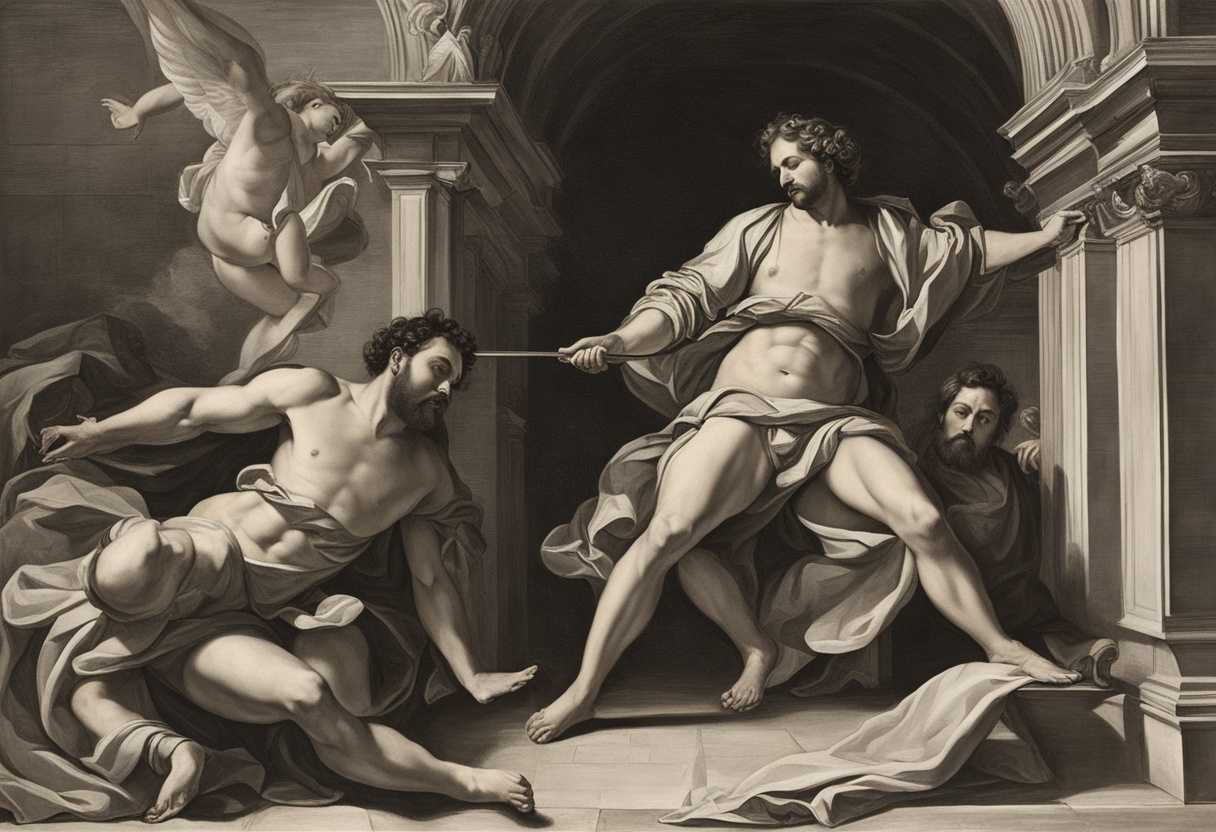
Setting the Scene for Psalms 7:14-17
In the scene described in Psalms 7:14-17, we find a group of people gathered in a spacious courtyard surrounded by tall olive trees. The setting is peaceful, with the gentle rustling of leaves providing a soothing background noise. The courtyard is adorned with colorful tapestries hanging from the walls, depicting scenes from the history of Israel.
Among those present are King David, his loyal advisors, and a group of musicians. They have come together to seek solace and guidance from the Lord after facing a series of challenges and betrayals. King David, with his harp in hand, begins to sing a heartfelt song of praise and thanksgiving to God for His righteousness and justice. The advisors listen intently, their faces reflecting a mix of awe and reverence for the king and his connection to the divine.
As the music fills the courtyard, a sense of peace descends upon the gathering, and the troubled hearts of those present are comforted by the words of the psalm. The scene is a poignant reminder of the power of faith and the importance of seeking refuge in God during times of trial and tribulation.
What is Psalms 7:14-17 about?
This verse is a powerful reminder of the concept of divine justice and righteousness. It assures us that God is just and fair, and ultimately, He will bring consequences upon those who choose to do wicked deeds. It conveys the message that living a life of righteousness, goodness, and alignment with God’s values will result in receiving rewards and blessings from Him.
Have you ever pondered the idea of divine justice and how it plays out in the world? This verse encourages us to trust in God’s ultimate plan and believe that He sees and knows everything, rewarding the righteous and punishing the wicked accordingly. It serves as a source of comfort and reassurance for those who are striving to live a virtuous life, reminding them that their efforts will not go unnoticed by God. Goodness will prevail, and the wicked will face consequences for their actions, serving as a beacon of hope in a world where injustice and wrongdoing may seem prevalent. It challenges us to reflect on our own choices and actions, encouraging us to align ourselves with righteousness and trust in God’s plan for justice to be served in His perfect timing.
Understanding what Psalms 7:14-17 really means
Introduction
Psalms 7:14-17 is a powerful passage that speaks to the consequences of wickedness and the justice of God. It serves as a reminder of the moral order established by God and the inevitable downfall of those who engage in evil deeds.
Context and Cross-References
Psalms 7:14-17 describes the fate of the wicked, emphasizing that their own actions will lead to their downfall. Proverbs 26:27 echoes the idea that evil actions often backfire on the perpetrator, stating, “Whoever digs a pit will fall into it; if someone rolls a stone, it will roll back on them.” Galatians 6:7 reinforces the principle of divine justice, stating, “Do not be deceived: God cannot be mocked. A man reaps what he sows.”
Relevance to People Today
The message of divine justice and the consequences of wickedness is timeless. In today’s world, where injustice and wrongdoing often seem to go unpunished, this passage reassures believers that God is aware and will bring about justice in His time. Consider the story of a corporate whistleblower who exposed corruption within their company. Initially, they faced backlash and isolation, but eventually, their courage led to significant reforms and the downfall of those involved in the corruption. This modern example illustrates how truth and justice ultimately prevail, aligning with the message of Psalms 7:14-17.
Meaningful Phrases and Detailed Explanation
“The wicked conceive evil” highlights the intentional and premeditated nature of wicked actions, suggesting that evil is not accidental but a deliberate choice. “They dig a pit and make it deep” conveys the effort and intention behind the wicked person’s actions. The deeper the pit, the more significant the effort to cause harm, yet it is this very pit that will ensnare them. “Their trouble recoils on them” emphasizes the principle of poetic justice, illustrating the self-destructive nature of evil. “His violence comes down on his own head” underscores the inevitability of divine justice, illustrating that the harm intended for others will ultimately befall the one who initiated it.
Conclusion
Psalms 7:14-17 serves as a sobering reminder of the consequences of wickedness and the certainty of divine justice. It encourages believers to trust in God’s moral order and to live righteously, knowing that evil will not go unpunished. This passage is a call to integrity and a reassurance that God sees and will act in His perfect timing.
How can we avoid falling into the traps we set for others?
To avoid falling into the traps we set for others, it is important to practice integrity and humility. When we act with honesty and treat others with respect, we are less likely to sow discord and create traps that harm others. We can prevent ourselves from causing harm to those around us by striving to do what is right and just.
It is also essential to reflect on our own actions and intentions. We can gain insight into how our actions may impact others by taking the time to evaluate our behaviors and motives. This self-awareness can help us avoid setting traps for others unintentionally and encourage us to act in ways that promote harmony and goodwill.
Furthermore, seeking forgiveness and reconciliation is crucial in breaking the cycle of setting traps for others. We can demonstrate accountability and work towards repairing any harm that has been caused by acknowledging our mistakes and making amends. Through genuine repentance and a commitment to change, we can strive to create a more compassionate and understanding environment for ourselves and those around us.
Application
Dear friend, let Psalm 7:14-17 be your compass in the stormy seas of life. Let integrity and righteousness be the anchors that keep you steady amidst the chaos of the world. Embrace the call to uphold goodness and justice, let your actions reflect your unwavering faith. Will you dare to be a beacon of light in a world that often dwells in darkness?

Reverend Michael Johnson is an experienced Church Minister with a profound expertise in spirituality and guidance. With a serene presence and a compassionate heart, he has faithfully served his congregation for over 20 years, leading them on a spiritual journey towards inner peace and enlightenment. Reverend Johnson’s extensive knowledge of religious philosophies and profound understanding of human nature have made him a trusted confidant and mentor to many, as he seamlessly weaves his profound wisdom into life teachings. Reverend Johnson’s calming demeanor and empathetic nature continue to uplift and heal souls, nurturing a sense of unity and tranquility within his community.