
Psalms 7:6-9 is about seeking God’s righteous judgment and protection in times of adversity and trusting in His ability to discern the hearts of all people, rewarding the righteous and punishing the wicked accordingly.
6 Arise, O Lord, in your anger;
lift yourself up against the fury of my enemies;
awake for me; you have appointed a judgment.
7 Let the assembly of the peoples be gathered about you;
over it return on high.
8 The Lord judges the peoples; judge me, O Lord, according to my righteousness and according to the integrity that is in me.
9 Oh, let the evil of the wicked come to an end, and may you establish the righteous— you who test the minds and hearts, O righteous God!
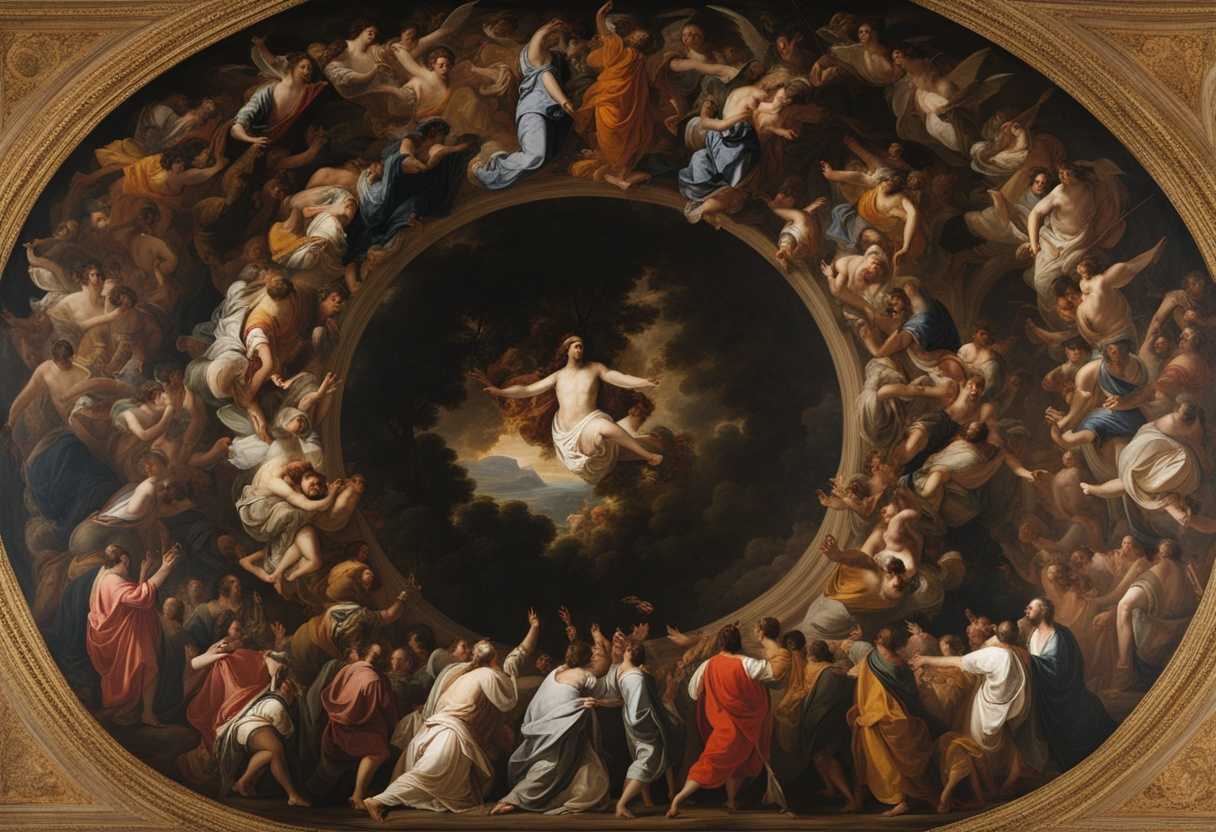
Setting the Scene for Psalms 7:6-9
In the scene described in Psalms 7:6-9, we find King David seeking refuge in a cave as he is being pursued by his enemies. The atmosphere is tense and filled with uncertainty as David cries out to God for justice and protection. The cave is dimly lit, with the sound of dripping water echoing off the walls, creating a somber and isolated setting.
David is not alone in the cave; his loyal followers, including his mighty men, are gathered around him. These brave warriors have stood by David through thick and thin, ready to defend him at a moment’s notice. Their presence brings a sense of solidarity and strength to the dire situation they find themselves in.
As David pours out his heart in prayer, his followers listen intently, their faces reflecting a mix of determination and concern. The flickering light of a small torch casts shadows on the rugged faces of these men, highlighting the gravity of the moment. Despite the danger that surrounds them, there is a sense of faith and trust in God’s deliverance that permeates the cave, uniting them in their shared hope and reliance on the Almighty.
What is Psalms 7:6-9 about?
This verse emphasizes the idea of divine justice and accountability. It acknowledges that God is the ultimate judge who discerns between the righteous and the wicked. It conveys a sense of assurance that those who live upright lives will be defended and protected by God, while those who engage in wrongdoing will face consequences for their actions.
Think about it this way – it’s like having a moral compass that guides us towards righteousness. This verse serves as a reminder that our actions have consequences, and that ultimately, justice will prevail. So, when faced with difficult decisions or challenging situations, we can take comfort in the belief that God’s justice will ultimately prevail and that righteousness will be upheld. We can strive to live in a way that aligns with what is right and just in our own lives. We not only honor God but also contribute to a world where goodness and morality are upheld by doing so. So, let us be mindful of our actions and choices, knowing that God is watching over us and will ultimately judge us based on the content of our character and the purity of our hearts.
Understanding what Psalms 7:6-9 really means
Introduction
In Psalms 7:6-9, we find a heartfelt plea for divine justice and protection from enemies. This Psalm is attributed to David, a man after God’s own heart, who often sought God’s intervention in times of distress.
Verse Breakdown and Commentary
“Arise, O Lord, in your anger; rise up against the rage of my enemies.” This verse is a fervent call for God to take action against those unjustly persecuting the psalmist. It reflects a deep trust in God’s righteous anger and His ability to defend the innocent. In Exodus 15:7, we see a similar theme of God overthrowing those who oppose Him, emphasizing His justice. Romans 12:19 also reminds us to leave room for God’s wrath, trusting in His ultimate justice.
“Awake, my God; decree justice.” This phrase underscores the psalmist’s belief in God as the ultimate judge who will bring about justice. It shows a reliance on divine intervention rather than seeking personal vengeance. Isaiah 33:22 highlights the Lord as our judge, lawgiver, and king, emphasizing His role in delivering justice. Psalm 9:7-8 further reinforces the idea of God ruling with righteousness and equity.
“Let the assembled peoples gather around you, while you sit enthroned over them on high.” This verse paints a picture of universal recognition of God’s sovereignty and justice. It envisions all people acknowledging God as the supreme ruler. Revelation 7:9-10 and Philippians 2:10-11 depict a similar scene of every nation and tongue bowing before God, recognizing His authority.
“Let the Lord judge the peoples. Vindicate me, Lord, according to my righteousness, according to my integrity, O Most High.” This personal appeal for vindication based on integrity and righteousness emphasizes the importance of living a life pleasing to God. It encourages trust in God to recognize and reward integrity. 1 Samuel 26:23 and Proverbs 21:3 further emphasize God’s recognition and reward of righteousness.
Relevance to People Today
This passage reminds us to trust in divine justice, especially in a world where injustice often seems prevalent. It encourages individuals to live with integrity, trusting that God sees and will vindicate them. Consider the story of someone wrongfully accused at work who maintained integrity and was eventually vindicated, choosing to trust in God’s justice rather than seeking revenge.
Conclusion
In conclusion, Psalms 7:6-9 teaches us to trust in God’s justice and live with integrity. Let us reflect on our lives and consider how we can embody these principles. May we seek God’s justice and protection in all aspects of our lives. Amen.
How can we surrender our will to God’s judgement?
Surrendering our will to God’s judgment is an act of humility and faith. This involves acknowledging that we are not the ultimate judges of our circumstances or the actions of others, but that God’s wisdom and justice far surpass our own. We demonstrate our belief in His sovereignty and righteousness by accepting God’s judgment with trust and submission. The psalmist in this verse calls upon God to vindicate him against his enemies. This act of entrusting his case to God reflects a surrender of his will to God’s judgment. It is an expression of faith in God’s ability to see the truth of the situation and to act justly on his behalf. The psalmist demonstrates a willingness to submit to the divine will by relinquishing control and placing his trust in God.
When we surrender our will to God’s judgment, we let go of the need to control outcomes and instead place our faith in His perfect understanding and justice. This act of surrender is a powerful way to deepen our trust in God and draw closer to Him. It is a reminder that God’s ways are higher than our ways, and that His plans for us are ultimately for our good.
Application
Embrace the divine protection and wisdom that Psalm 7:6-9 speaks of. Trust in God as your shield and seek His guidance in times of trouble. Let God be your guiding light in this tumultuous world. Lean on Him, find solace and strength in His presence. Will you choose to embrace God’s guidance and protection today?

Reverend Michael Johnson is an experienced Church Minister with a profound expertise in spirituality and guidance. With a serene presence and a compassionate heart, he has faithfully served his congregation for over 20 years, leading them on a spiritual journey towards inner peace and enlightenment. Reverend Johnson’s extensive knowledge of religious philosophies and profound understanding of human nature have made him a trusted confidant and mentor to many, as he seamlessly weaves his profound wisdom into life teachings. Reverend Johnson’s calming demeanor and empathetic nature continue to uplift and heal souls, nurturing a sense of unity and tranquility within his community.