
Revelation 20:12-15 is about the final judgment of all people according to their deeds, where the Book of Life is opened, those not found written in it are thrown into the lake of fire, and death and Hades are also cast into the lake of fire, symbolizing the ultimate separation from God for those who have not accepted Him.
12 And I saw the dead, great and small, standing before the throne, and books were opened. Then another book was opened, which is the book of life. And the dead were judged by what was written in the books, according to what they had done.
13 And the sea gave up the dead who were in it, Death and Hades gave up the dead who were in them, and they were judged, each one of them, according to what they had done.
14 Then Death and Hades were thrown into the lake of fire. This is the second death, the lake of fire.
15 And if anyone’s name was not found written in the book of life, he was thrown into the lake of fire.
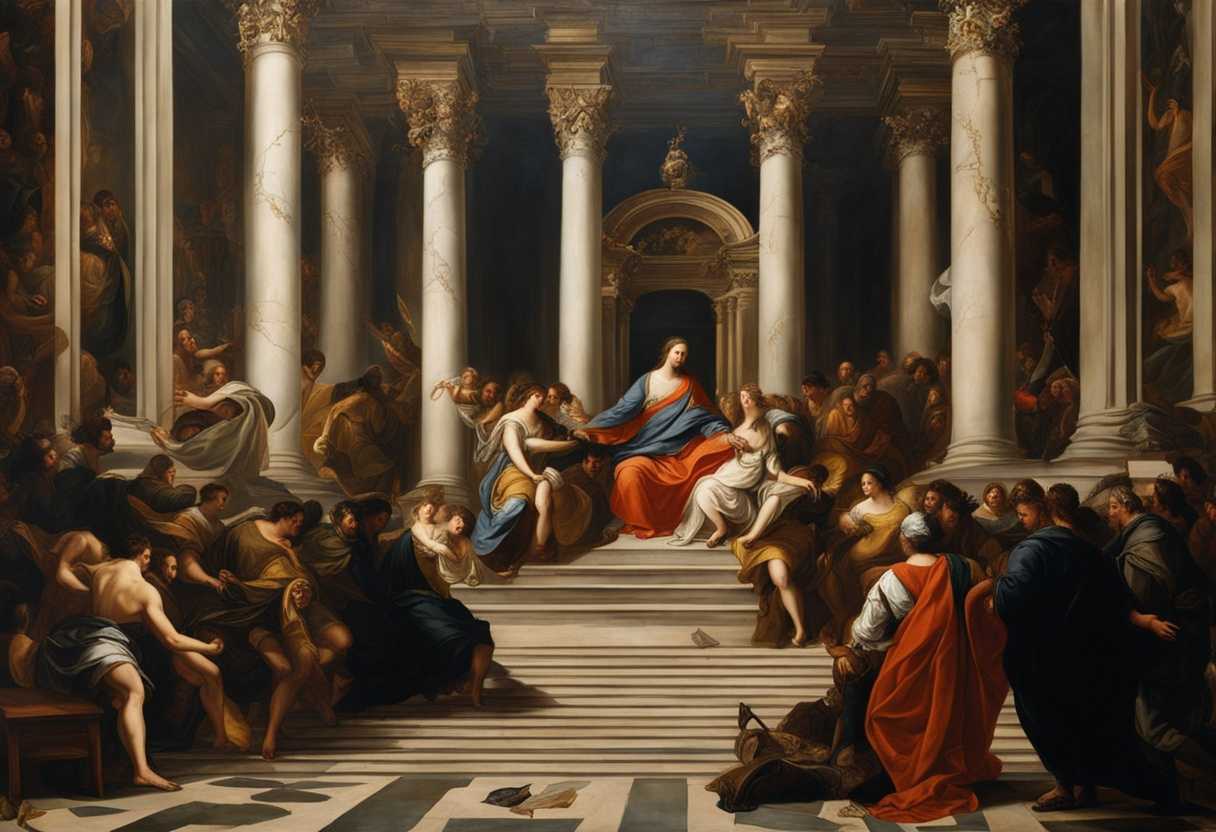
Setting the Scene for Revelation 20:12-15
In Revelation chapter 20, we find ourselves in a momentous scene where all the dead, great and small, are standing before the throne of God for judgment. The setting is awe-inspiring, with a vast multitude gathered in a grand and solemn assembly. The atmosphere is charged with anticipation and reverence as each individual awaits their fate.
Among those present are the righteous who have been redeemed by the blood of the Lamb, as well as the unrepentant sinners who rejected God’s grace. The names of the faithful are written in the Book of Life, securing their place in the eternal kingdom, while those who chose to follow their own desires are cast into the lake of fire, facing eternal separation from God.
The scene is filled with a sense of finality and justice, as each person’s deeds are laid bare before the Almighty. The surroundings are described as heavenly and divine, with the throne of God radiating light and power, symbolizing His sovereignty and authority over all creation. This moment in Revelation 20 captures the ultimate culmination of God’s plan for humanity, where every soul is held accountable for their choices and actions.
What is Revelation 20:12-15 about?
The verse describes the concept of final judgment. It speaks of a moment where the deceased are evaluated based on their actions as recorded in the books. This evaluation is crucial to determine the fate of each individual, leading to them being assigned to the lake of fire based on their deeds. This imagery of the books symbolizes the meticulous recording of every action and choice made throughout a person’s life, emphasizing the importance of accountability and responsibility. We reflect on this verse, pondering the significance of our deeds and the impact they have on our eternal destiny. Have our actions aligned with values of kindness, compassion, and integrity, or have they strayed towards selfishness, cruelty, and dishonesty? The idea of facing judgment based on our deeds might evoke a sense of introspection and self-examination. Are we living a life that we would be proud to present before the ultimate judge, or do we need to make changes and strive towards a more virtuous path? This verse ultimately serves as a reminder of the weight of our choices and the consequences they carry. It prompts us to consider how we can lead a life that is in harmony with our values and beliefs while also inspiring others to do the same. Let us strive to cultivate a legacy of goodness and righteousness that will stand the test of time and be worthy of a favorable judgment in the end.
Understanding what Revelation 20:12-15 really means
Revelation 20:12-15 presents a vivid picture of the final judgment, where every individual, regardless of status, will stand before the throne of God to be judged according to their deeds. This passage is a crucial part of the Book of Revelation, unveiling the ultimate victory of good over evil and the establishment of God’s eternal kingdom. In a world where accountability often seems elusive, this depiction of divine judgment offers reassurance that justice will prevail in the end.
Drawing parallels with other biblical passages like Daniel 7:10, which also speaks of books being opened in a heavenly court, and Matthew 25:31-46, where Jesus foretells the separation of the righteous and the unrighteous, Revelation 20:12-15 underscores the significance of our actions in shaping our eternal destiny. The theme of judgment based on deeds is further reinforced in Romans 2:6, where Paul affirms that God will repay each person according to their deeds, emphasizing the importance of moral conduct.
The timeless relevance of this passage lies in its encouragement for self-reflection and moral uprightness. It serves as a poignant reminder that our actions, whether seen or unseen by others, carry eternal consequences. Consider the individual who leads a life of humble service, unnoticed by the world; Revelation 20:12-15 assures them that their deeds are not overlooked but are valued by God, offering solace and motivation to continue in righteousness.
Key phrases within this passage, such as “The dead were judged according to what they had done as recorded in the books,” highlight the thoroughness of God’s judgment. Every action, no matter how insignificant it may seem, is meticulously recorded and will be taken into account. The mention of the Book of Life signifies those who have received eternal life through faith in Christ, emphasizing the dual aspect of judgment where deeds matter, but salvation is ultimately found in being inscribed in the Book of Life.
The solemn warning that follows, stating that those not found in the Book of Life will be cast into the lake of fire, underscores the gravity of rejecting God’s offer of salvation. It urges individuals to respond personally to the gospel, ensuring that their names are inscribed in the Book of Life through faith in Jesus Christ. Revelation 20:12-15 serves as a sobering reminder of the final judgment, prompting us to live with an eternal perspective, mindful that our actions and faith play a pivotal role in determining our ultimate destiny. It calls us to pursue righteousness, seek justice, and place our trust in Christ, securing our place in the Book of Life for eternity.
How can we ensure our names are in the Book of Life?
To ensure our names are in the Book of Life, we must live a life of faith and obedience to God. This entails accepting Jesus Christ as our Savior and following His teachings. We can have our names written in the Book of Life by acknowledging our need for salvation and inviting Jesus into our hearts. It is through our relationship with Jesus that our names are recorded in the Book of Life, as He is the one who intercedes on our behalf before God.
Furthermore, we must strive to live a life in accordance with God’s will, showing love, kindness, and forgiveness to others. Our names will remain in the Book of Life as we walk in faith and seek to live a life that honors God. It is a continual process of repentance, seeking forgiveness, and growing in our relationship with Jesus that ensures our names are kept in the Book of Life. Our faith in Jesus and our actions reflecting that faith secure our names in the Book of Life for eternity.
Application
Reflect on your life as if it were a report on your desk at work or a performance review in your home. Are you meeting the standards for a promotion in the afterlife? Take this as a wakeup call to be mindful of your choices every day. Will you commit to living in a way that reflects your innermost beliefs and values, aiming for a higher purpose?

Reverend Michael Johnson is an experienced Church Minister with a profound expertise in spirituality and guidance. With a serene presence and a compassionate heart, he has faithfully served his congregation for over 20 years, leading them on a spiritual journey towards inner peace and enlightenment. Reverend Johnson’s extensive knowledge of religious philosophies and profound understanding of human nature have made him a trusted confidant and mentor to many, as he seamlessly weaves his profound wisdom into life teachings. Reverend Johnson’s calming demeanor and empathetic nature continue to uplift and heal souls, nurturing a sense of unity and tranquility within his community.