
Revelation 5:6-10 is about Jesus as the sacrificial Lamb who is worthy to open the scroll and bring salvation to humanity through his sacrifice, leading to praise and worship from all creation.
6 And between the throne and the four living creatures and among the elders I saw a Lamb standing, as though it had been slain, with seven horns and with seven eyes, which are the seven spirits of God sent out into all the earth.
7 And he went and took the scroll from the right hand of him who was seated on the throne.
8 And when he had taken the scroll, the four living creatures and the twenty-four elders fell down before the Lamb, each holding a harp, and golden bowls full of incense, which are the prayers of the saints.
9 And they sang a new song, saying, “Worthy are you to take the scroll and to open its seals, for you were slain, and by your blood you ransomed people for God from every tribe and language and people and nation,
10 and you have made them a kingdom and priests to our God, and they shall reign on the earth.”
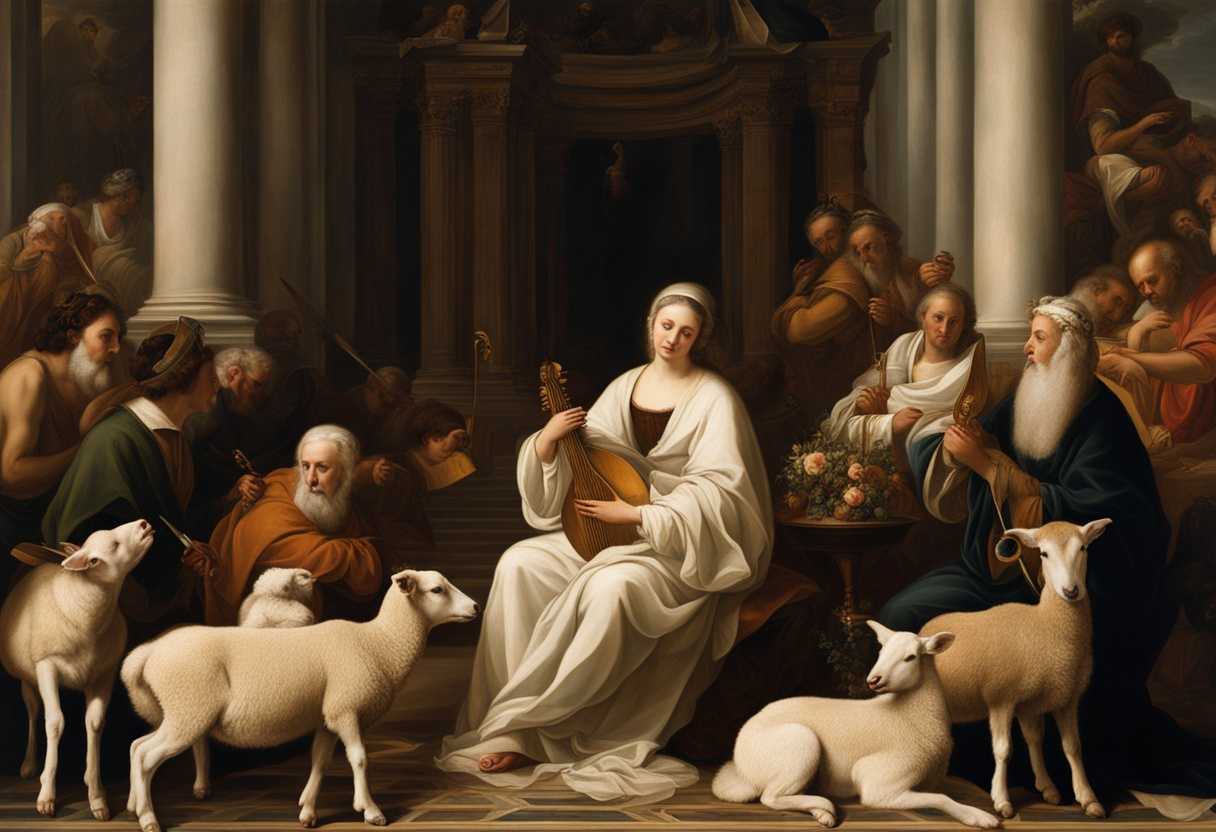
Setting the Scene for Revelation 5:6-10
In Revelation chapter 5, the scene opens in the throne room of God in heaven. The room is filled with a radiant light, and the air is thick with the fragrance of incense. Surrounding the throne are four living creatures and twenty-four elders, all bowing down in worship and adoration. The atmosphere is charged with a sense of awe and reverence as heavenly beings gather in the presence of the Almighty.
Among the gathered beings are the four living creatures, each with a different face – one like a lion, one like an ox, one like a man, and one like an eagle. These creatures represent different aspects of creation and are constantly praising God day and night. The twenty-four elders, representing the twelve tribes of Israel and the twelve apostles, are also present, wearing crowns and holding golden bowls full of incense, which are the prayers of the saints.
As the scene unfolds, a Lamb appears in the midst of the throne, looking as if it had been slain. This Lamb is none other than Jesus Christ, the Savior of the world. The Lamb takes the scroll from the right hand of God, and the heavenly beings break out into a song of praise, declaring the worthiness of the Lamb to receive power, wealth, wisdom, strength, honor, glory, and praise. The entire scene is a powerful depiction of worship and adoration, as all of creation bows before the Lamb in reverence and awe.
What is Revelation 5:6-10 about?
This verse from the book of Revelation highlights the exalted status of Jesus, who is depicted as the “Lamb of God.” This title refers to Jesus’ sacrificial death on the cross to save humanity from sin. The verse emphasizes the worthiness of Jesus to receive various elements such as power, wealth, wisdom, strength, honor, glory, and praise. Here, these qualities symbolize the all-encompassing nature of Jesus’ divine attributes and his role as the ultimate source of all good things.
Have you ever stopped to think about the magnitude of Jesus’ sacrifice and the impact it has on our lives? This verse serves as a powerful reminder of Jesus’ unmatched significance and supremacy in the Christian faith. It prompts us to reflect on the depth of our devotion to Jesus and consider how we can honor and glorify him in our daily lives. As we contemplate the meaning of this verse, let us be inspired to offer our heartfelt praise and worship to Jesus, recognizing him as the ultimate source of power, wisdom, and glory.
Understanding what Revelation 5:6-10 really means
In the Book of Revelation, penned by John during his exile on the island of Patmos, we are presented with a prophetic vision that delves into the end times and the triumph of Christ. The passage in focus unveils a striking scene where the Lamb, symbolizing Jesus Christ, takes the scroll amidst adoration from the four living creatures and the twenty-four elders.
As we delve into the imagery of the Lamb appearing as though it had been sacrificed, we are reminded of Jesus’ pivotal role in atoning for humanity’s sins. This sacrificial act is not only central to God’s redemptive plan but also underscores Jesus’ authority in the heavenly realms. The depiction of the Lamb with seven horns and seven eyes signifies complete power and knowledge, reflecting the omnipotence and omniscience of Christ, with the seven spirits of God actively at work in the world.
The symbolic act of taking the scroll from the right hand of God on the throne signifies Jesus as the sole worthy executor of God’s divine plan for redemption. The subsequent worship by the heavenly beings underscores Jesus’ supreme authority and worthiness, echoing the universal acknowledgment of His sovereignty. The new song sung in praise of the Lamb celebrates the redemptive power of Jesus’ sacrifice, which transcends all boundaries, bringing people from every corner of the earth into God’s kingdom.
This passage resonates with contemporary audiences by highlighting the universal scope of Jesus’ redemptive work, emphasizing God’s inclusive love for all. In a world fraught with uncertainties, the assurance of Jesus’ ultimate victory and the fulfillment of God’s plan offer hope and solace to believers. The response of the heavenly beings serves as a poignant reminder for us to worship wholeheartedly and to dedicate ourselves to serving God and others in gratitude for Jesus’ sacrifice.
Consider a scenario where a diverse community unites to rebuild after a calamity, each individual contributing their unique strengths. This mirrors how Jesus’ sacrifice unites people from varied backgrounds into a singular purpose of serving God and one another. Just as the community finds resilience and hope in their unity, believers draw strength and hope from the unity brought about by Jesus’ redemptive work.
In conclusion, Revelation 5:6-10 unveils profound truths about Jesus’ sacrifice, His authority, and the inclusive nature of God’s kingdom. It beckons us to worship fervently, serve diligently, and find hope in the certainty of God’s ultimate design.
What does it mean to be redeemed by Jesus?
To be redeemed by Jesus means to be saved and forgiven of our sins through His sacrifice on the cross. Jesus, depicted as a slain lamb in the passage, is the one who has purchased our freedom with His blood. We were once separated from God because of our sins, but through Jesus’ redemption, we are brought back into a right relationship with God. This redemption is a gift of grace that we receive by faith in Jesus.
Jesus’ redemption not only restores our relationship with God but also makes us a part of His kingdom and priests to serve Him. We are now able to worship and serve God freely because of the redemption provided by Jesus. It is a reminder of the great love and sacrifice Jesus made for us, demonstrating the depth of God’s love and His desire for reconciliation with humanity.
Application
Reflect on the sacrificial love of Jesus, the Lamb who gave everything for us. This powerful message invites us to embrace His grace and redemption. Let’s show our gratitude by living purposeful lives, spreading the message of hope, and joining in the work of bringing people closer to God. Will you accept the challenge to spread love and share salvation with those in your life?

Reverend Michael Johnson is an experienced Church Minister with a profound expertise in spirituality and guidance. With a serene presence and a compassionate heart, he has faithfully served his congregation for over 20 years, leading them on a spiritual journey towards inner peace and enlightenment. Reverend Johnson’s extensive knowledge of religious philosophies and profound understanding of human nature have made him a trusted confidant and mentor to many, as he seamlessly weaves his profound wisdom into life teachings. Reverend Johnson’s calming demeanor and empathetic nature continue to uplift and heal souls, nurturing a sense of unity and tranquility within his community.