
6 And between the throne and the four living creatures and among the elders I saw a Lamb standing, as though it had been slain, with seven horns and with seven eyes, which are the seven spirits of God sent out into all the earth.
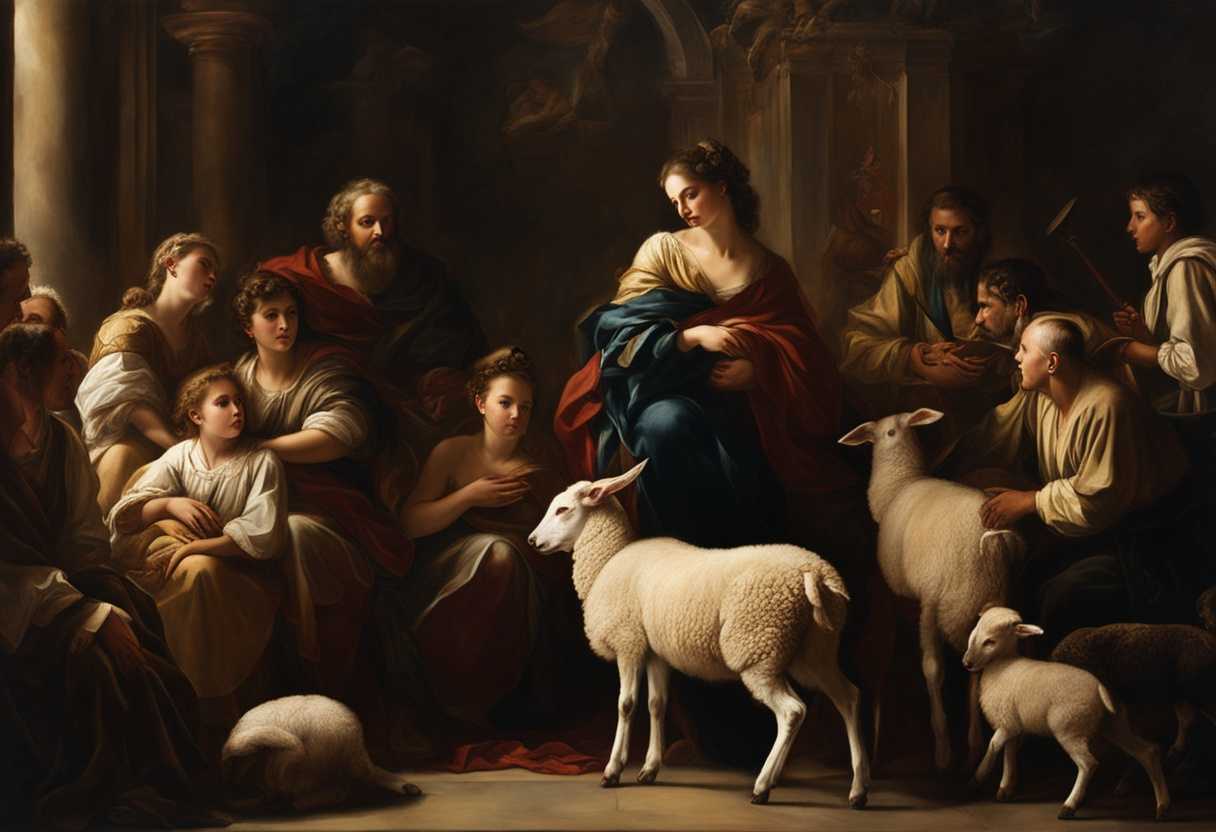
Setting the Scene for Revelation 5:6
In Revelation chapter 5, the scene opens in the throne room of heaven. The apostle John, who is the author of the book of Revelation, finds himself in a vision where he witnesses a powerful and awe-inspiring sight. Surrounding the throne are four living creatures and twenty-four elders, all bowing down in worship before the Almighty God who sits on the throne. The atmosphere is filled with a sense of reverence and majesty as heavenly beings sing praises to the Lamb who is worthy to open the scroll with seven seals.
As John continues to observe, he sees a Lamb standing at the center of the throne, looking as if it had been slain. This Lamb is none other than Jesus Christ, the Savior of the world. He approaches the throne and takes the scroll from the right hand of the one seated on the throne, signifying His authority and power over all creation. The twenty-four elders then fall down before the Lamb, each holding a harp and golden bowls full of incense, which are the prayers of God’s people.
The scene in Revelation 5 is a powerful depiction of worship and adoration in the heavenly realms. It showcases the exaltation of Jesus Christ as the Lamb who was slain but now stands victorious. The imagery of the throne room, the elders, the living creatures, and the Lamb all come together to paint a vivid picture of the glory and honor that is due to the King of kings and Lord of lords.
What is Revelation 5:6 about?
The imagery of Jesus as the Lamb of God with seven horns and seven eyes in this verse is rich with symbolic meaning. The Lamb of God represents Jesus as the sacrificial lamb who takes away the sins of the world, emphasizing his role in bringing salvation to humanity. The presence of seven horns symbolizes Jesus’s complete and perfect power and authority, while the seven eyes represent his omniscience and all-seeing nature.
Imagine the majestic sight of Jesus, the Lamb of God, radiating with power and wisdom, standing before you with eyes that see all and horns that signify his complete authority. It’s a reminder of Jesus’s divinity and his unique position as the Savior of the world. The image of the Lamb with seven horns and eyes offers comfort and reassurance that Jesus is not only powerful but also fully aware of our needs and struggles. It serves as a reminder that no matter what challenges we face, Jesus is always watching over us with unwavering strength and understanding. Take solace in this powerful image of Jesus as the Lamb of God, knowing that he is both mighty and compassionate, ready to guide and protect you.
Understanding what Revelation 5:6 really means
1. Introduction and Context
To understand Revelation 5:6, we first need to grasp the broader context of the Book of Revelation. This book is a vision given to John, full of symbolism and prophetic imagery, depicting the ultimate victory of Christ over evil. Chapter 5 specifically presents a dramatic scene in the heavenly throne room where a scroll sealed with seven seals is introduced. No one in heaven or on earth is found worthy to open it, causing John to weep. However, he is comforted by the appearance of the Lamb, who is able to open the scroll.
2. Key Phrases and Symbolism
The verse contains rich symbolism, particularly in phrases like “the Lamb,” “as though it had been slain,” and “seven horns and seven eyes.” The Lamb represents Jesus Christ, highlighting His sacrifice and victory over death. The imagery of the Lamb being slain yet standing signifies Jesus’ crucifixion and resurrection. The “seven horns” symbolize complete power, while “seven eyes” represent complete knowledge and the Holy Spirit’s presence.
3. Biblical Cross-References
Several other passages enhance our understanding of this verse. For instance, Isaiah 53:7 describes the suffering servant led like a lamb to the slaughter, a clear prophecy of Christ’s sacrifice. Also, John 1:29 refers to Jesus as “the Lamb of God who takes away the sin of the world.” These scriptures reinforce the depiction of Jesus as the sacrificial Lamb, central to God’s redemptive plan.
4. Relevance Today
The relevance of this verse today lies in its message of hope and redemption. The image of the Lamb who has triumphed through sacrifice offers profound comfort in a world often filled with uncertainty and suffering. It reassures believers that Jesus’ victory over sin and death is complete, and He holds ultimate authority.
**5. John wept because no one could open the scroll, much like you may have felt overwhelmed by life’s challenges. This verse invites us to shift our focus from our despair to the triumphant Lamb. Reflect on Christ’s sacrifice and how His victory over death provides hope and strength in our struggles.
6. Anecdote for Illustration
I recall a story of a young woman in our congregation who faced a severe health crisis. She found solace in this very passage as she battled her illness. She said that picturing Jesus as the Lamb who overcame death gave her the courage to face each day, knowing that her suffering was not the end but a part of a larger story of redemption and hope.
7. Conclusion
Revelation 5:6 is a powerful reminder of Christ’s sacrificial love and His ultimate victory. It calls us to recognize Jesus’ authority and to find hope in His triumph over sin and death. Let this verse be a beacon of encouragement as we navigate our own trials, assuring us that the Lamb who was slain is now standing in victory, ready to open the scroll and guide us through our challenges.
What does it mean to be a sacrificial lamb?
To be a sacrificial lamb means to be willing to give oneself up for the greater good or as a symbolic offering. The imagery of a sacrificial lamb in Revelation 5:6 describes Jesus Christ, who is depicted as a lamb standing as if it had been slain. This signifies Jesus’ willingness to sacrifice himself for the salvation of humanity, drawing parallels to the sacrificial lambs of the Old Testament used in atonement for sins.
The sacrificial lamb in Revelation carries deep symbolism, reflecting the sacrificial nature of Jesus’ death on the cross. Jesus willingly offers himself as the ultimate sacrifice, takes on the sins of the world, and offers redemption to all who believe in him. This act of sacrificial love is central to Christian theology and represents the ultimate expression of selflessness and service to others. The concept of self-sacrifice and redemption is embodied by being a sacrificial lamb in this context, mirroring the sacrificial love and atoning work of Jesus Christ. It signifies a willingness to endure suffering or hardship for the sake of others, reflecting a deep sense of compassion, love, and humility. The sacrificial lamb in Revelation serves as a powerful symbol of Christ’s ultimate sacrifice and the hope of salvation for all who follow him.
Application
Life throws us into countless battles, whether at work or with family. Revelation 5:6 tells us about the Lamb that stood firm. Just like the Lamb, you too can stand strong in your faith, no matter the storm. Draw your courage from that unwavering belief. Will you rise and face your challenges with unshakable faith today?

Reverend Michael Johnson is an experienced Church Minister with a profound expertise in spirituality and guidance. With a serene presence and a compassionate heart, he has faithfully served his congregation for over 20 years, leading them on a spiritual journey towards inner peace and enlightenment. Reverend Johnson’s extensive knowledge of religious philosophies and profound understanding of human nature have made him a trusted confidant and mentor to many, as he seamlessly weaves his profound wisdom into life teachings. Reverend Johnson’s calming demeanor and empathetic nature continue to uplift and heal souls, nurturing a sense of unity and tranquility within his community.