
1 After this I saw four angels standing at the four corners of the earth, holding back the four winds of the earth, that no wind might blow on earth or sea or against any tree.
2 Then I saw another angel ascending from the rising of the sun, with the seal of the living God, and he called with a loud voice to the four angels who had been given power to harm earth and sea,
3 saying, “Do not harm the earth or the sea or the trees, until we have sealed the servants of our God on their foreheads.”
4 And I heard the number of the sealed, 144,000, sealed from every tribe of the sons of Israel:
5 12,000 from the tribe of Judah were sealed,
12,000 from the tribe of Reuben,
12,000 from the tribe of Gad,
6 from the tribe of Asher 12,000 were sealed, from the tribe of Naphtali 12,000 were sealed, from the tribe of Manasseh 12,000 were sealed,
7 The first angel blew his trumpet, and there followed hail and fire, mixed with blood, and these were thrown upon the earth. And a third of the earth was burned up, and a third of the trees were burned up, and all green grass was burned up.
8 the tribe of Zebulun 12,000, the tribe of Joseph 12,000, the tribe of Benjamin 12,000 were sealed.
9 After this I looked, and behold, a great multitude that no one could number, from every nation, from all tribes and peoples and languages, standing before the throne and before the Lamb, clothed in white robes, with palm branches in their hands,
10 and crying out with a loud voice, “Salvation belongs to our God who sits on the throne, and to the Lamb!”
11 And all the angels were standing around the throne and around the elders and the four living creatures, and they fell on their faces before the throne and worshiped God,
12 saying, “Amen! Blessing and glory and wisdom and thanksgiving and honor and power and might be to our God forever and ever! Amen.”
13 Then one of the elders addressed me, saying, “Who are these, clothed in white robes, and from where have they come?”
14 I said to him, “Sir, you know.” And he said to me, “These are the ones coming out of the great tribulation. They have washed their robes and made them white in the blood of the Lamb.
15 “Therefore they are before the throne of God,
and serve him day and night in his temple;
and he who sits on the throne will shelter them with his presence.”
16 They shall hunger no more, neither thirst anymore; the sun shall not strike them, nor any scorching heat.
17 For the Lamb in the midst of the throne will be their shepherd, and he will guide them to springs of living water, and God will wipe away every tear from their eyes.
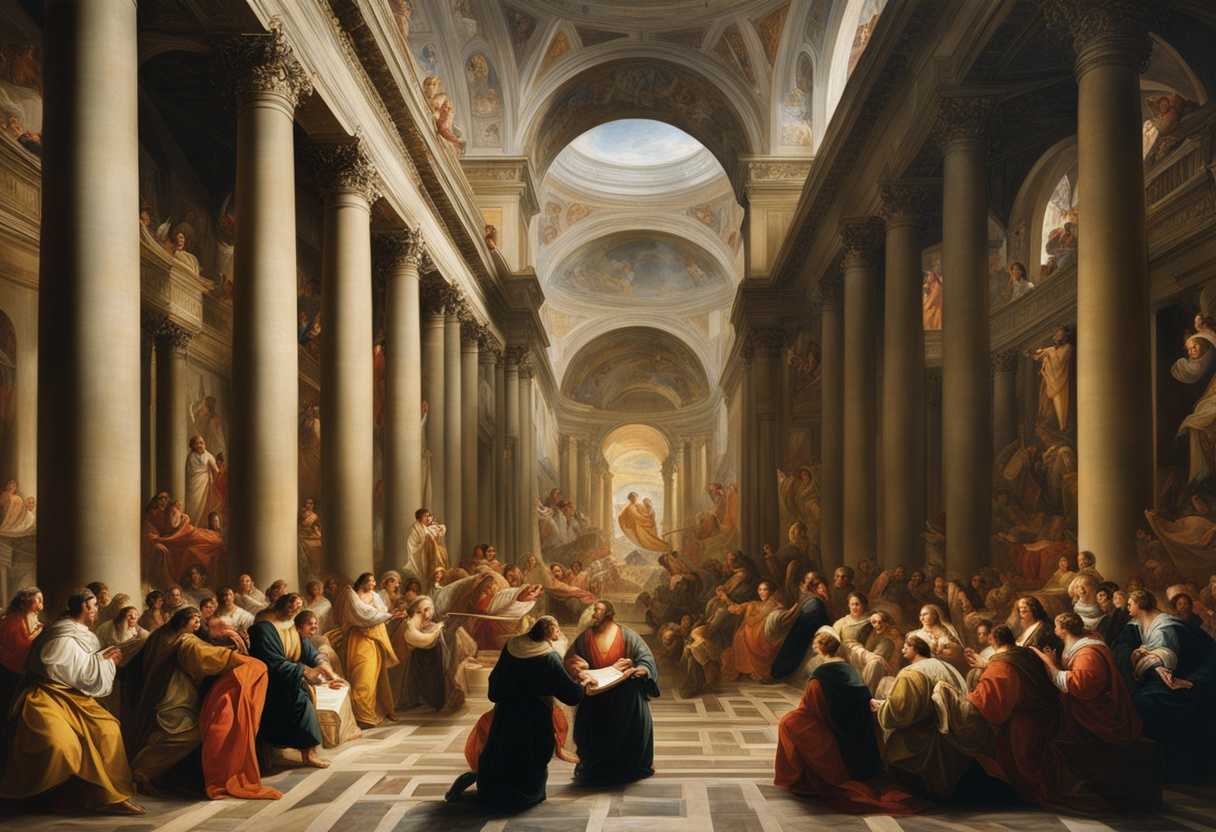
The True Meaning of Revelation 7
The Book of Revelation, the final book of the Bible, was written by the apostle John during his exile on the island of Patmos. John, one of the original twelve disciples, had a unique perspective on the life and teachings of Jesus Christ. John in this chapter provides a glimpse into the events that will unfold during the end times, offering both hope and warning to the faithful.
The chapter begins by describing the sealing of the 144,000 Israelites, a symbolic representation of God’s protection over His chosen people. This is followed by a vision of a great multitude from every nation, tribe, and tongue, standing before the throne of God and worshiping Him. These events foreshadow the ultimate triumph of God’s kingdom and the salvation of those who have remained steadfast in their faith, as promised in other biblical passages such as Ephesians 1:13-14 and 1 Peter 1:3-5. As we delve into this chapter, we will witness the unfolding of God’s plan for the world, a plan that will bring both tribulation and redemption. The events described here serve as a reminder of the importance of remaining faithful and vigilant, for the Lord’s return is near, and His judgment will be swift and just.
Revelation 7:1-3
Four angels are standing at the four corners of the earth, holding back the four winds of the earth in Revelation 7:1-3, preventing any wind from blowing on the land or sea or on any tree. This vision signifies a moment of great anticipation and preparation in the spiritual realm. The image of the four angels holding back the winds represents a temporary pause or delay in the events that are about to unfold, signifying an interlude before significant occurrences.
The wind is often symbolic in the Bible, representing power, change, or even judgment (Psalm 135:7, Jeremiah 51:1). God seems to be holding back the winds in this context, indicating a moment of divine restraint before allowing certain events to take place. This imagery serves as a reminder that God is in control of all things, even the forces of nature, and He has the authority to command them as He sees fit. It also shows His mercy and patience, giving people time to repent and turn to Him before the final judgment.
The mention of the sealing of the servants of God on their foreheads with the seal of the living God is a crucial element of this passage. The act of sealing was an ancient practice used to mark ownership, protection, or authenticity. The sealing of the servants of God in this case signifies their identification and protection as belonging to Him. This sealing serves as a mark of divine protection amidst the impending tribulations and trials that will come upon the earth.
The concept of being sealed by God is not new in the Bible. References to God’s seal as a mark of ownership and protection can be seen in the Old Testament (Deuteronomy 6:8, Isaiah 44:5). Believers in the New Testament are also mentioned as being sealed with the Holy Spirit as a guarantee of their inheritance (Ephesians 1:13-14). This seal indicates God’s ownership of His people and His commitment to preserving them through all circumstances. Revelation 7:1-3 portrays a moment of divine pause and preparation before significant events unfold. It highlights God’s sovereignty over nature and His protective care for His servants. The sealing of the servants of God symbolizes their ownership and protection by Him, emphasizing His faithfulness and commitment to those who belong to Him. This passage serves as a powerful reminder of God’s control over all things and His provision for His people in the midst of trials and tribulations.
Revelation 7:4-8
The passage in Revelation 7:4-8 describes the sealing of 144,000 servants of God, 12,000 from each of the twelve tribes of Israel. This section is particularly significant as it underscores the concept of divine election and protection of God’s chosen people during the end times. The sealing of the 144,000 can be seen as a symbol of God’s protection and preservation of believers amidst the chaos and tribulations described in the Book of Revelation.
Each of the twelve tribes mentioned in this passage has its own unique history and significance in the Bible. For example, Judah was the tribe from which King David and ultimately Jesus descended, and is often associated with leadership and kingship. The tribe of Levi was set apart for priestly duties, serving in the tabernacle and later the temple. Understanding the historical background of these tribes enriches our interpretation of this passage and emphasizes the diverse roles and functions within the people of God.
The number 144,000 has been a point of debate and speculation among scholars and theologians. Some interpret it as a symbolic number representing the totality of God’s chosen people, while others view it as a literal number of Jewish Christians who will be preserved during the end times. Regardless of the exact interpretation, the overarching message remains clear – God has a faithful remnant whom He will protect and seal as His own.
This passage reminds believers of the importance of remaining faithful to God and trusting in His sovereign plan, even in the midst of trials and tribulations. It echoes the promise of God’s faithfulness to His people throughout the Bible, such as in Psalm 91:7-8 which says, “A thousand may fall at your side, ten thousand at your right hand, but it will not come near you.”
The imagery of the sealing of the 144,000 also serves as a reminder of the ultimate victory of God over all evil and His ability to safeguard His people. It speaks to the assurance of God’s protection and provision for those who belong to Him, reinforcing the timeless message of hope and perseverance in the face of adversity.
Revelation 7:9-12
A vivid picture of a great multitude that no one could count, coming from every nation, tribe, people, and language, standing before the throne and before the Lamb is given in Revelation 7:9-12. They are dressed in white robes and holding palm branches in their hands, and they are crying out with a loud voice, “Salvation belongs to our God, who sits on the throne, and to the Lamb.”
This section highlights the ultimate victory and universal nature of God’s salvation and grace. It emphasizes that God’s redemption is not limited to a specific group of people but extends to all nations and people throughout the world. This inclusivity is a powerful reminder of God’s love for all humanity, regardless of race, ethnicity, or background. It underscores the unity in diversity that exists in the kingdom of God, where people from every corner of the earth are united in worship and praise.
The image of the multitude in white robes holding palm branches is significant. White robes symbolize purity, righteousness, and victory over sin. Those who have been washed and made clean by the blood of the Lamb are often associated with white garments in the Bible (Revelation 7:14). The palm branches are a symbol of triumph and victory, reminiscent of Jesus’ triumphal entry into Jerusalem where the crowds waved palm branches and hailed Him as the King (John 12:13).
The proclamation that “salvation belongs to our God” echoes themes found throughout the Bible. Salvation is not something that we can achieve on our own through our own efforts; it is a gift from God (Ephesians 2:8-9). The acknowledgment that salvation belongs to God alone emphasizes His sovereignty and power to save. It is a declaration of praise and gratitude for the work of redemption accomplished through the sacrifice of Jesus Christ on the cross.
Finally, the scene of worship before the throne and the Lamb reminds us of the eternal worship that takes place in heaven. It is a foretaste of the worship that believers will engage in for all eternity, praising and glorifying God for His goodness and mercy. It serves as a reminder of the ultimate goal of believers – to be in the presence of God, worshipping Him forever. Revelation 7:9-12 paints a beautiful picture of the diversity and unity of God’s people, the victory of salvation through the Lamb, and the eternal worship of God in heaven. It is a testament to the universal reach of God’s grace and the praise and adoration that He rightfully deserves from all creation.
Revelation 7:13-17
To understand the significance of Revelation 7:13-17, we need to examine a few important sections closely. The passage reads: “Then one of the elders asked me, ‘These in white robes—who are they, and where did they come from?’ I answered, ‘Sir, you know.’ And he said, ‘These are they who have come out of the great tribulation; they have washed their robes and made them white in the blood of the Lamb. Therefore, they are before the throne of God and serve him day and night in his temple; and he who sits on the throne will shelter them with his presence. Never again will they hunger; never again will they thirst. The sun will not beat down on them, nor any scorching heat. For the Lamb at the center of the throne will be their shepherd; he will lead them to springs of living water. And God will wipe away every tear from their eyes.’”
Let’s break down this passage for a deeper understanding. Firstly, the elder asks John about the people in white robes, symbolizing purity and the righteousness of God. This imagery is consistent throughout the Bible, signifying those who have been redeemed by faith and washed clean by the sacrifice of Jesus Christ. The elder explains that these individuals have triumphed through the great tribulation, a time of intense suffering and persecution for Christians. This is a common theme in apocalyptic literature, reflecting the struggles of believers and the ultimate victory God promises to those who endure.
The concept of washing robes white in the blood of the Lamb is a powerful metaphor for the purification and forgiveness of sins through Jesus’ sacrifice on the cross. This imagery connects back to passages in the Old Testament where animal sacrifices were used for atonement, but now, Christ’s blood is the ultimate and final sacrifice for all humanity. It emphasizes the central role of Jesus in the redemption and salvation of believers.
The scene described in these verses illustrates the eternal peace and security believers will experience in the presence of God. They are serving Him day and night in His temple, highlighting the continuous worship and devotion to God in the heavenly realm. This vision echoes Isaiah 49:10, which speaks of God’s care and protection for His people, ensuring that they will never hunger or thirst again, and shielding them from harm. The promise of God’s constant presence and provision reflects His faithfulness and love towards His children.
The image of the Lamb as a shepherd leading His people to springs of living water is a beautiful depiction of Jesus’ role as the guide and source of life for believers. This imagery draws from Psalm 23, where God is portrayed as a shepherd who leads, protects, and cares for His flock. The passage assures believers of the complete restoration and comfort they will experience in God’s presence by referencing God wiping away every tear from their eyes, reinforcing the hope and joy of eternal life with Him. Revelation 7:13-17 conveys a message of hope, redemption, and eternal security for believers who endure trials and tribulations on earth. It emphasizes the importance of faith in Jesus Christ as the path to salvation and reveals the ultimate victory and reward awaiting those who remain faithful. The passage serves as a reminder of God’s unwavering love, provision, and promise of eternal peace for all who place their trust in Him.
After Revelation 7
The chapter concluded with the sealing of the 144,000 from the tribes of Israel. These were the servants of God, marked with His seal on their foreheads. But the vision did not end there. John then saw a great multitude that no one could number, from every nation, from all tribes and peoples and languages, standing before the throne and before the Lamb, clothed in white robes with palm branches in their hands.
This vast throng, redeemed by the blood of the Lamb, cried out in a loud voice, “Salvation belongs to our God who sits on the throne, and to the Lamb!” The angels, the elders, and the four living creatures fell on their faces before the throne and worshiped God, saying, “Amen! Blessing and glory and wisdom and thanksgiving and honor and power and might be to our God forever and ever! Amen. The promise of salvation is not limited to any one people or nation, as I reflect on this vision of the great multitude praising God. The Lord desires that all people, from every corner of the earth, come to know Him and find eternal life through His Son. This is a message of hope that we must carry forth, that the world may see the glory of God and join in worship of the one true King.

Reverend Michael Johnson is an experienced Church Minister with a profound expertise in spirituality and guidance. With a serene presence and a compassionate heart, he has faithfully served his congregation for over 20 years, leading them on a spiritual journey towards inner peace and enlightenment. Reverend Johnson’s extensive knowledge of religious philosophies and profound understanding of human nature have made him a trusted confidant and mentor to many, as he seamlessly weaves his profound wisdom into life teachings. Reverend Johnson’s calming demeanor and empathetic nature continue to uplift and heal souls, nurturing a sense of unity and tranquility within his community.