
1 Oh that you were like a brother to me,
who nursed at my mother’s breasts.
If I found you outside, I would kiss you,
and none would despise me.
2 I would lead you and bring you into the house of my mother, and she would teach you what to say. I would give you spiced wine to drink, the juice of my pomegranate.
3 His left hand is under my head, and his right hand embraces me!
4 I adjure you, O daughters of Jerusalem, that you not stir up or awaken love until it pleases.
5 Who is that coming up from the wilderness, leaning on her beloved? Under the apple tree I awakened you. There your mother was in labor with you; there she who bore you was in labor.
6 Set me as a seal upon your heart, as a seal upon your arm, for love is strong as death, jealousy is fierce as the grave. Its flashes are flashes of fire, the very flame of the Lord.
7 Many waters cannot quench love, neither can floods drown it. If a man offered for love all the wealth of his house, he would be utterly despised.
8 We have a little sister, and she has no breasts. What shall we do for our sister on the day when she is spoken for?
9 If she is a wall, we will build on her a battlement of silver; but if she is a door, we will enclose her with boards of cedar.
10 I was a wall, and my breasts were like towers; then I was in his eyes as one who finds peace.
11 Solomon had a vineyard at Baal-hamon; he let out the vineyard to keepers; each one was to bring for its fruit a thousand pieces of silver.
12 My own vineyard is before me; you, O Solomon, may have the thousand, and the keepers of the fruit two hundred.
13 O you who dwell in the gardens, with companions listening for your voice; let me hear it.
14 Make haste, my beloved, and be like a gazelle or a young stag on the mountains of spices.
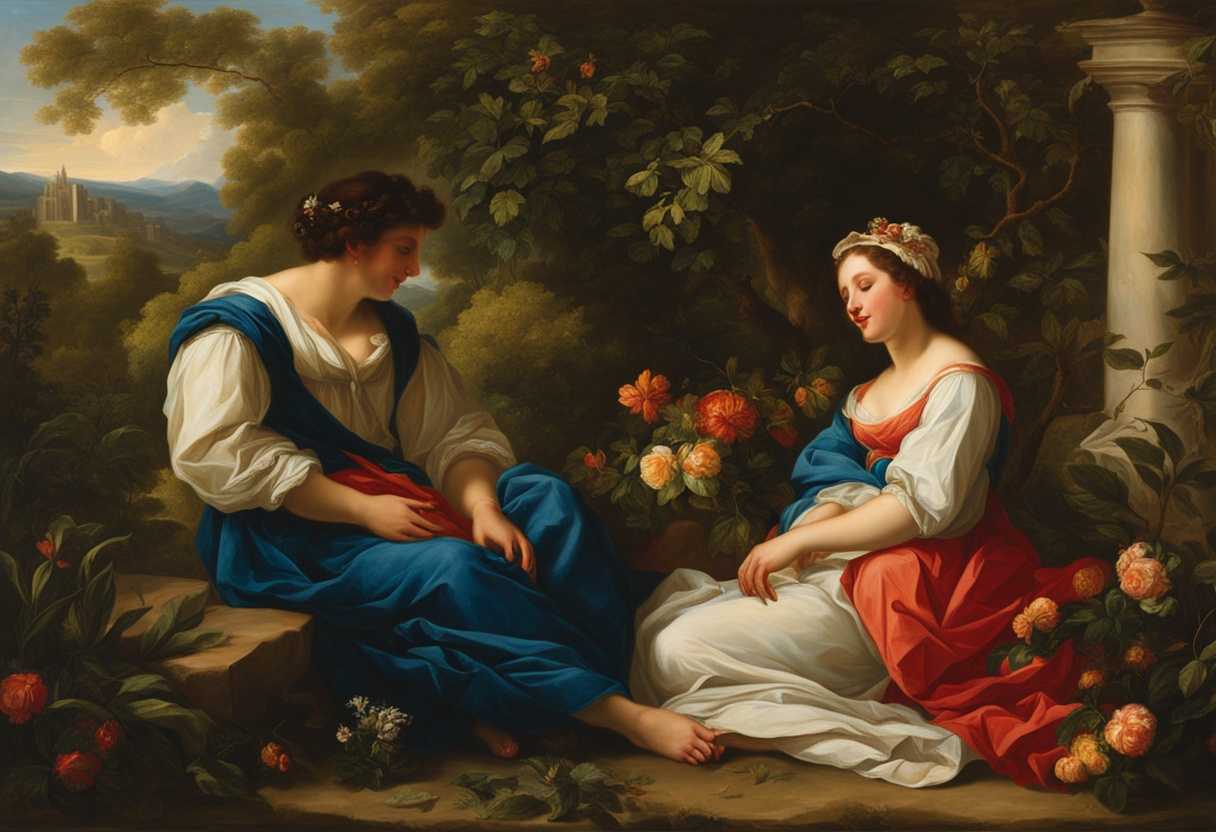
The True Meaning of Song Of Solomon 8
The Song of Solomon, also known as the Song of Songs, is a unique book in the Bible. It is believed to have been written by King Solomon, known for his great wisdom and wealth. This poetic work celebrates the beauty and intimacy of romantic love, providing a powerful metaphor for the relationship between God and his people. The lovers continue to express their deep affection for one another in this final chapter, even as they face the challenges of the world around them. The chapter foreshadows the ultimate union between the Beloved and the Lover, a union that echoes the eternal bond between Christ and the Church, as described in the New Testament (Ephesians 5:25-32). We will witness the lovers’ unwavering commitment to one another as we delve into this chapter, even in the face of adversity. Their love is a testament to the enduring power of true devotion, a reflection of the steadfast love that God has for his people, as seen in the book of Hosea (Hosea 2:19-20).
Song of Solomon 8:1-4
The verse in Song of Solomon 8:1-4 reads, “Oh that you were like a brother to me who nursed at my mother’s breasts! If I found you outside, I would kiss you, and none would despise me. I would lead you and bring you into the house of my mother— she who used to teach me. I would give you spiced wine to drink, the juice of my pomegranate. His left hand is under my head, and his right hand embraces me.”
Starting with the first part, “Oh that you were like a brother to me who nursed at my mother’s breasts!” This expression of longing and intimacy paints a picture of a deep and close relationship, like that between siblings who were raised together. Here, the use of the brother image conveys a sense of security, familiarity, and unconditional love. This relationship is one of trust, comfort, and care, akin to the bond between family members. It emphasizes the desire for a closeness that transcends boundaries and societal norms, unencumbered by criticism or judgment.
The next part, “If I found you outside, I would kiss you, and none would despise me,” speaks to a desire for public displays of affection without fear of reproach. This demonstrates the strength of the connection and the boldness of the speaker in expressing their love openly. The lack of shame or concern for others’ opinions shows a freedom and confidence in their relationship.
“I would lead you and bring you into the house of my mother— she who used to teach me.” Here, the mention of the mother brings a sense of familial approval and tradition into the picture. The speaker desires to introduce their beloved to their family, particularly to the figure who played a significant role in their upbringing and education. This act symbolizes a desire for their relationship to be affirmed and accepted by those who have shaped them.
“I would give you spiced wine to drink, the juice of my pomegranate.” This imagery of sharing food and drink conveys a sense of communion and intimacy, as these acts are often associated with celebration and sharing in biblical contexts. Offering spiced wine and the juice of a pomegranate as symbols of delight and sweetness signifies the desire for their relationship to be filled with richness and joy.
Lastly, “His left hand is under my head, and his right hand embraces me,” depicts a physical closeness and protection. The imagery of being embraced and supported by the beloved conveys a sense of security, comfort, and love. This physical touch symbolizes a deep emotional connection and a sense of being cherished and cared for. This passage from Song of Solomon in the Bible reflects the theme of love and intimacy between human beings, as well as the divine love between God and His people. The imagery used in this verse highlights the depth of emotional connection, the importance of mutual respect and admiration, and the beauty of human relationships. It also emphasizes the significance of love, trust, and companionship in the context of biblical teachings. Song of Solomon 8:1-4 showcases the sacredness and beauty of human relationships and the depth of emotional connection that can exist between individuals.
Song of Solomon 8:5-7
We can break down the verse in Song of Solomon 8:5-7 into important sections. The first part states, “Who is this coming up from the wilderness, leaning on her beloved?” This imagery reflects a journey, potentially a difficult journey through the wilderness, where the beloved is supporting and caring for the lover. This illustrates the strong bond between the lovers, symbolizing support, care, and reliance on one another. This can be seen as a metaphor for the relationship between God and His people. Throughout the Bible, we see examples of God’s people leaning on Him for strength and guidance during challenging times. The wilderness is often depicted as a place of testing and growth, where one’s faith is refined and strengthened. Just like the lover leaning on her beloved, believers are encouraged to lean on God and trust Him to see them through difficult seasons.
The verse continues, “Under the apple tree I awakened you. There your mother was in labor with you; there she who bore you was in labor.” The mention of the apple tree can symbolize a place of intimacy and growth. The reference to the mother in labor can be interpreted in a few ways. One aspect could reflect the birthing of a new beginning or a new phase in the relationship between the lovers. Another interpretation could be a nod to the pains of childbirth, symbolizing the sacrifices and struggles that come with nurturing and sustaining a relationship. This imagery may also allude to Israel as a nation, often depicted as a mother in labor, awaiting the birth of a new era, which is fulfilled in the coming of the Messiah.
The final part of the verse states, “Set me as a seal upon your heart, as a seal upon your arm; for love is as strong as death, jealousy as cruel as the grave; its flames are flames of fire, a most vehement flame.” This section emphasizes the permanence and strength of love. The imagery of a seal represents a lasting commitment and a strong bond. Love being as strong as death highlights the depth and intensity of love, surpassing even death itself. The mention of jealousy can be seen as a warning against destructive jealousy, urging for a pure and faithful love. God’s jealousy in the Bible is often associated with His desire for His people’s devotion and faithfulness, calling for wholehearted commitment. This verse ultimately emphasizes the enduring nature of love and the power it holds in uniting and sustaining relationships. A beautiful portrayal of love, commitment, and faithfulness is seen in Song of Solomon 8:5-7. The imagery used provides deep insight into the nature of relationships and the parallels that can be drawn between human love and the divine love of God for His people. The verses remind us of the importance of leaning on God during our wilderness experiences, the growth and intimacy found in relationships, and the strength and permanence of true love. Believers are encouraged to set their hearts and minds on God, embracing His love that is stronger than anything in this world, just as the lovers in Song of Solomon demonstrate their unwavering commitment.
Song of Solomon 8:8-10
A powerful declaration of the enduring nature of love is seen in Song of Solomon 8:8-10. Let’s break down this verse into sections for a more comprehensive understanding.
Verse 8 begins with the woman speaking, saying, “We have a little sister, and she hath no breasts: what shall we do for our sister in the day when she shall be spoken for?” Here, the woman is referring to a young sister who is not yet ready for marriage, symbolized by her lack of physical maturity. The concern for their younger sister’s future reflects a sense of responsibility and care within the family. This passage resonates with the theme of familial relationships and highlights the importance of looking out for one another’s well-being within the community.
Moving on to verse 9, it continues with the woman reminiscing about their sister. She asks, “If she be a wall, we will build upon her a palace of silver: and if she be a door, we will enclose her with boards of cedar.” This metaphorical language suggests that regardless of the sister’s current state of readiness for marriage, they will support her and ensure her protection and honor. The imagery of building a palace and enclosing her with boards of cedar symbolizes care, respect, and the desire to provide a secure and prosperous future for their sister.
Finally, in verse 10, we see the woman speaking to her lover, saying, “I am a wall, and my breasts like towers: then was I in his eyes as one that found favour.” Here, the woman expresses a sense of confidence and security in her relationship with her beloved. She conveys her strength, stability, and desirability by comparing herself to a strong wall and her breasts to towers. The image of a wall also suggests protection and boundaries in the relationship, emphasizing the importance of maintaining a secure and respectful love.
This passage from Song of Solomon emphasizes the themes of love, care, protection, and mutual support within relationships. It showcases the importance of family bonds and the commitment to looking out for one another’s well-being. Additionally, it underlines the significance of building a foundation of trust and security in romantic relationships, where both partners feel cherished and valued. This verse serves as a powerful reminder of the enduring nature of love and the importance of standing strong together through all circumstances.
Relating this passage to other verses in the Bible, we can see parallels in the concept of love and support within the community as mentioned in Galatians 6:2, which says, “Carry each other’s burdens, and in this way you will fulfill the law of Christ. Christians are called to support and uplift one another in times of need, just as the sisters in Song of Solomon demonstrate care and concern for their younger sibling. The imagery of building and protecting in Song of Solomon serves as a beautiful metaphor for the ways in which we should build each other up in faith and love.
Song of Solomon 8:11-12
Solomon had a vineyard at Baal-hamon; he let out the vineyard unto keepers; every one for the fruit thereof was to bring a thousand pieces of silver. My vineyard, which is mine, is before me: thou, O Solomon, must have a thousand, and those that keep the fruit thereof two hundred. King Solomon has a vineyard in Baal-hamon in the first part of this verse. The fact that Solomon owned a vineyard alludes to his wealth and power as a king. Vineyards were a symbol of prosperity and abundance in the biblical times. The mention of letting out the vineyard unto keepers for a thousand pieces of silver reflects Solomon’s business acumen and how he likely leased out his property for profitable returns. This shows Solomon’s shrewdness in managing his assets.
The second part of the verse is where the Shulammite woman, the protagonist in Song of Solomon, compares her own vineyard to Solomon’s. She asserts that her vineyard belongs to her and is before her, signifying her ownership and care for her own possessions. This could symbolize her individuality and autonomy, contrasting with the image of Solomon’s grandeur and opulence. When she states that Solomon must have a thousand and those who tend the fruit two hundred, it can be seen as a playful banter between her and Solomon. This exchange could be a metaphor for the woman standing up for herself and expressing her worth and value in relation to the king.
This passage in Song of Solomon can be interpreted in various ways. It can be seen as a reflection of the power dynamics in relationships, both between individuals and between humanity and God. The vineyard can symbolize something of great value that needs cultivating and protecting, which can represent love, faith, or one’s inner self. The exchange between Solomon and the Shulammite woman shows a negotiation of respect and boundaries, emphasizing the importance of mutual understanding and appreciation in relationships.
Relating this to other verses in the Bible, the imagery of vineyards and vineyard keepers is prevalent throughout the Scriptures. The prophet Isaiah in Isaiah 5:1-7 uses the metaphor of a vineyard to represent Israel and God as the vineyard owner. This parable demonstrates God’s care for His people and their responsibility to bear good fruit. Jesus refers to Himself as the true vine and His followers as the branches in John 15:1-8, emphasizing the importance of abiding in Him to bear fruit. These references add depth to the symbolism of vineyards in the context of Song of Solomon 8:11-12, highlighting themes of stewardship, growth, and relationship with God in the allegorical language of the Scriptures.
Song of Solomon 8:13-14
Verse 13 of Song of Solomon 8 reads: “You who dwell in the gardens with friends in attendance, let me hear your voice!”
This section of the Song of Solomon is a beautiful depiction of intimate communication and longing between lovers. Here, the beloved is asking to hear the voice of her beloved who dwells in the gardens surrounded by friends. This request for the beloved’s voice signifies a desire for connection, presence, and intimacy. The garden setting is symbolic of a place of beauty, growth, and life, which adds depth to the poetic imagery.
The mention of friends in attendance may hint at a gathering or celebration taking place in the garden. The presence of friends in this love poem could signify the support and community that surrounds the lovers, enhancing the significance of their relationship. It also alludes to the importance of relationships outside of the romantic one. The verse can be seen as a metaphor for the longing of the human soul for communion with God in a broader context. Believers yearn to hear the voice of God in their lives just as the beloved in Song of Solomon yearns to hear the voice of their lover. Psalm 42:1 echoes sentiments expressed in other parts of the Bible, such as “As the deer pants for streams of water, so my soul pants for you, my God.””
Moving on to verse 14 of Song of Solomon 8 which reads: “Come away, my beloved, and be like a gazelle or like a young stag on the spice-laden mountains. The final verse of Song of Solomon calls for the beloved to come away and be like a gazelle or a young stag on spice-laden mountains. The imagery here is vivid and evocative, conjuring up images of freedom, beauty, and vitality.
The invitation to be like a gazelle or a young stag on spice-laden mountains suggests a sense of wildness, grace, and fragrant abundance. It speaks to a desire for the beloved to embrace their true nature and experience the fullness of life in a rich and vibrant setting.
The mountains in the Bible often symbolize places of encounter with God or significant events. For example, Moses encountering God on Mount Sinai or Jesus delivering the Beatitudes on a mountainside. The spice-laden mountains in this context could represent a place of divine encounter, intimacy, and spiritual richness. The final verse of Song of Solomon encapsulates the themes of love, longing, and the beauty of a deep, intimate relationship. It serves as a poignant conclusion to the poetic exchange between the lovers throughout the book, highlighting the depth of their connection and the desire for closeness and unity. Song of Solomon explores human relationships, love, desire, and the spiritual significance of intimacy in a profound way.
After Song Of Solomon 8
The young woman had finally found her beloved, and they had shared a deep and passionate love. Yet, as the chapter drew to a close, a sense of unease crept in. For their love, though strong, was not without its challenges. The road ahead would not be an easy one, and they would need to navigate the complexities of their relationship with wisdom and grace. I, as the reverend, knew that the next chapter would reveal the true test of their devotion, and I could only hope that their love would endure.

Reverend Michael Johnson is an experienced Church Minister with a profound expertise in spirituality and guidance. With a serene presence and a compassionate heart, he has faithfully served his congregation for over 20 years, leading them on a spiritual journey towards inner peace and enlightenment. Reverend Johnson’s extensive knowledge of religious philosophies and profound understanding of human nature have made him a trusted confidant and mentor to many, as he seamlessly weaves his profound wisdom into life teachings. Reverend Johnson’s calming demeanor and empathetic nature continue to uplift and heal souls, nurturing a sense of unity and tranquility within his community.