
Titus 1:1-9 is about the qualifications and characteristics of overseers or elders in the church, emphasizing the importance of their moral integrity, ability to teach sound doctrine, and their role in leading and guiding the congregation.
1 Paul, a servant of God and an apostle of Jesus Christ, for the sake of the faith of God’s elect and their knowledge of the truth, which accords with godliness,
2 in hope of eternal life, which God, who never lies, promised before the ages began.
3 and at the proper time manifested in his word through the preaching with which I have been entrusted by the command of God our Savior;
4 To Titus, my true child in a common faith: Grace and peace from God the Father and Christ Jesus our Savior.
5 This is why I left you in Crete, so that you might put what remained into order, and appoint elders in every town as I directed you—
6 if anyone is above reproach, the husband of one wife, and his children are believers and not open to the charge of debauchery or insubordination.
7 For an overseer, as God’s steward, must be above reproach. He must not be arrogant or quick-tempered or a drunkard or violent or greedy for gain,
8 but hospitable, a lover of good, self-controlled, upright, holy, and disciplined.
9 He must hold firm to the trustworthy word as taught, so that he may be able to give instruction in sound doctrine and also to rebuke those who contradict it.
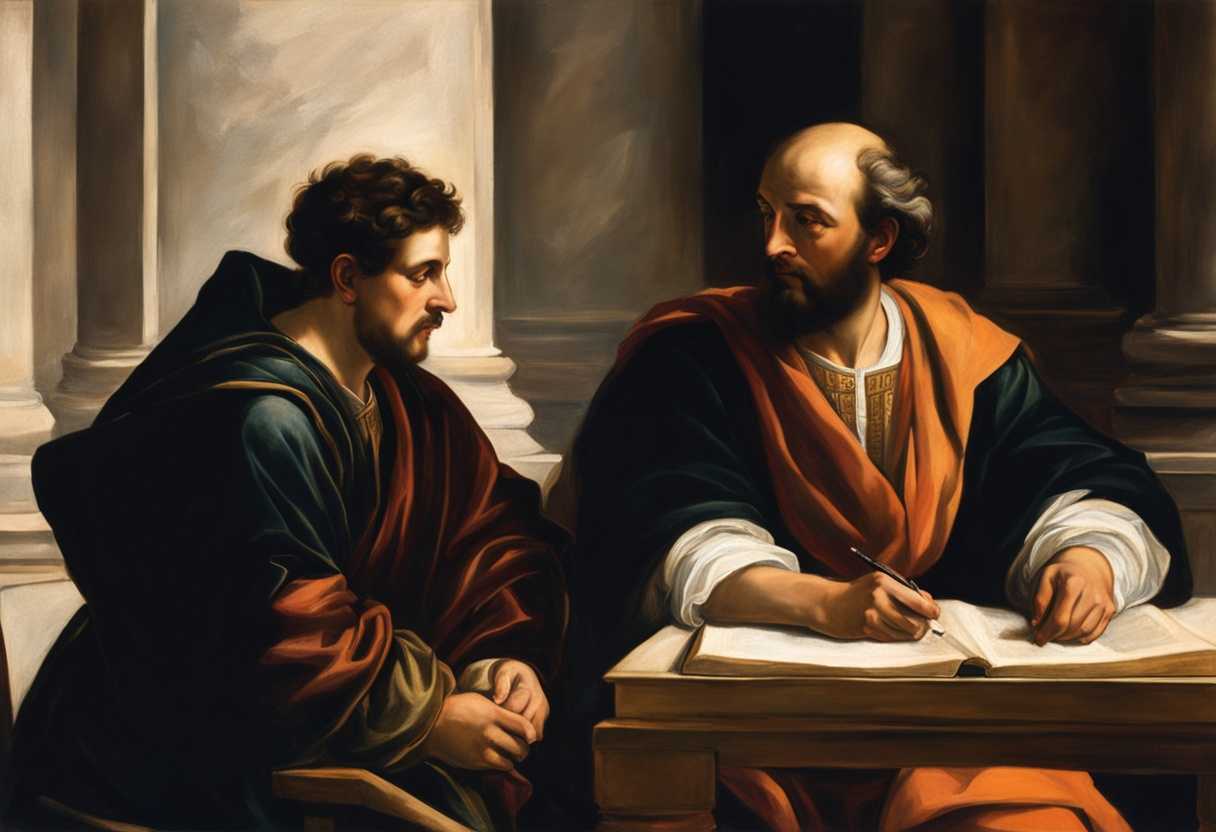
Setting the Scene for Titus 1:1-9
The scene in Titus chapter 1 opens with the apostle Paul writing a letter to Titus, a trusted companion and fellow worker in the faith. Paul had left Titus in Crete to set things in order and appoint elders in every town. As Titus reads Paul’s letter, he is surrounded by a group of Cretan believers who have gathered to hear the instructions and guidance that Paul has provided.
The room where Titus is reading the letter is simple yet welcoming, with wooden benches arranged in a circle. The warm Mediterranean sun streams through the open windows, casting a golden glow on the faces of those gathered. Among them are men and women of various ages, their faces reflecting a mix of curiosity and reverence as they listen intently to the words of the apostle Paul.
Titus, a young and zealous leader in the early Christian church, is earnestly taking in Paul’s words, knowing the weight of the responsibility that has been entrusted to him. As he reads about the qualifications for elders and the importance of sound doctrine, Titus is filled with a sense of purpose and determination to fulfill his mission in Crete. The scene is one of anticipation and solemnity, as Titus and the believers prepare to embark on the task of establishing a strong and faithful church community in Crete.
What is Titus 1:1-9 about?
This verse emphasizes the importance of selecting church leaders who possess specific qualities, such as being blameless and faithful. The church ensures that its leaders are above reproach and free from any major moral failings by appointing blameless individuals. This requirement underscores the need for leaders to exhibit integrity and moral uprightness in their personal and professional lives.
Furthermore, the emphasis on faithfulness highlights the importance of leaders who are committed and loyal to their faith, congregation, and responsibilities. Leaders who are faithful can be trusted to fulfill their duties with dedication and sincerity, leading by example and inspiring others to follow suit. This verse serves as a guideline for church communities to select leaders who not only have the necessary qualifications but also embody the values and principles of the faith they represent. Leadership within the church and its impact on the community remind us of their significance as we reflect on this verse. The church can foster a culture of integrity, trust, and commitment by carefully choosing leaders who are blameless and faithful. This verse challenges us to consider what qualities we value in our leaders and how they reflect the beliefs and teachings of our faith. We should seek individuals who embody the virtues of blamelessness and faithfulness in all aspects of their lives as we strive to appoint qualified leaders.
Understanding what Titus 1:1-9 really means
The Book of Titus, penned by the Apostle Paul to his close companion Titus, serves as a guide for church leaders, emphasizing the significance of sound doctrine and godly living. In the opening verses, Paul humbly identifies himself as a servant of God and an apostle of Jesus Christ, highlighting his dual role of service and divine commission. This declaration echoes his introduction in Romans 1:1, emphasizing his mission and calling. Paul’s apostleship aims to strengthen the faith of believers and deepen their understanding of the truth, leading to a life characterized by godliness, as seen in 2 Peter 1:3, which speaks of God’s power enabling a godly life through knowledge of Him.
The passage underscores the reliability of God’s promises, particularly the hope of eternal life, which God, who is incapable of lying, assured before time began. This assurance of eternal life serves as a foundation for believers’ faith and hope. Furthermore, Paul sets forth stringent moral and ethical standards for church leaders, emphasizing the importance of personal integrity, faithfulness in marriage, and well-behaved children. These qualifications, as outlined in 1 Timothy 3:2-7, are crucial for leaders to uphold the integrity of the church and set a godly example for the congregation.
Leaders are called to hold firmly to the trustworthy message of the gospel, enabling them to encourage others through sound doctrine and refute those who oppose it. This commitment to the truth is essential for effective teaching and defending the faith, as highlighted in 2 Timothy 2:15. The timeless nature of these qualifications for church leaders remains relevant today, especially in a world where moral compromises are prevalent. The passage challenges leaders to exemplify godly character and uphold sound doctrine, serving as beacons of light in a darkened world.
The phrase “servant of God” signifies humility and dedication to God’s service, emphasizing that true leadership in the church involves serving others rather than seeking personal gain. Knowledge of the truth is transformative, leading to a life characterized by godliness, reflecting God’s nature. Being “blameless” does not imply perfection but a life free from reproach, setting a positive example for others to follow. Leaders must hold firmly to the trustworthy message of the gospel, ensuring that their teaching aligns with biblical truth, guiding the congregation in the ways of the Lord.
By adhering to these principles, both leaders and congregants can contribute to a healthy, vibrant church that faithfully represents Christ in the world. The qualifications outlined in Titus 1:1-9 serve as a blueprint for leadership in the church, guiding individuals to live lives that honor God and impact their communities positively. As we reflect on these teachings, may we strive to embody the qualities of godly leadership and uphold the truth of the gospel in all aspects of our lives.
How can leaders live lives that reflect godliness?
Leaders can live lives that reflect godliness by embracing the faith and knowledge of the truth that is in accordance with godliness. They should have a deep understanding of God’s Word and live in a way that aligns with its teachings. This includes being examples of faith, righteousness, and humility to those they lead.
Additionally, leaders should exhibit qualities such as self-control, wisdom, honesty, and hospitality. They should be able to teach and encourage others in sound doctrine while also being able to refute those who oppose it. Leaders can effectively lead in a manner that reflects God’s heart and brings glory to Him by demonstrating these characteristics and qualities.
Application
Dear friend, in this passage, we are reminded of the vital role of selecting capable leaders in our churches. Let’s embrace the challenge of maintaining God’s expectations for those entrusted with leading His people. Like a well-oiled machine at work or a supportive family at home, leaders in our church should exemplify the qualities mentioned here. Are you willing to step up and ensure that our church leaders embody these virtues?

Reverend Michael Johnson is an experienced Church Minister with a profound expertise in spirituality and guidance. With a serene presence and a compassionate heart, he has faithfully served his congregation for over 20 years, leading them on a spiritual journey towards inner peace and enlightenment. Reverend Johnson’s extensive knowledge of religious philosophies and profound understanding of human nature have made him a trusted confidant and mentor to many, as he seamlessly weaves his profound wisdom into life teachings. Reverend Johnson’s calming demeanor and empathetic nature continue to uplift and heal souls, nurturing a sense of unity and tranquility within his community.