
1 I also am mortal, like everyone else, a descendant of the first-formed child of earth; and in the womb of a mother I was molded into flesh,
2 I loved her and sought her from my youth, and I desired to take her for my bride, and I became enamored of her beauty.
3 And I was a witty child and had received a good soul.
4 for wisdom is better than jewels, and all that you may desire cannot compare with her.
5 For no gold is better than wisdom, or any precious stones compared to her.
6 For all wisdom is from the Lord
and with him it remains forever.
7 Therefore I prayed, and understanding was given me; I called on God, and the spirit of wisdom came to me.
8 I preferred her to scepters and thrones,
and I accounted wealth as nothing in comparison with her.
9 And thus I became great and surpassed all who were before me in Jerusalem.
10 And I esteemed wisdom as nothing compared to her.
11 I learned both what is secret and what is manifest,
12 I rejoiced in them all, because wisdom leads them; but I did not know that she was their mother.
13 I learned both what is secret and what is manifest,
14 For she is a treasure greater than precious stones; nothing you desire can compare with her.
15 May God grant me to speak with judgment,
and to have thoughts worthy of what I have received,
for he is the guide even of wisdom
and the corrector of the wise.
16 I will take my rest and will consider in my dwelling place like a clear light that is spread upon the holy tabernacle.
17 I learned both what is secret and what is manifest,
18 And the excellence of wisdom is that she gives life to them that have it; and the Lord will never fail those who seek her.
19 “For wisdom is better than jewels, and all that you may desire cannot compare with her.”
20 Then I prayed, and understanding was given me; I called on God, and the spirit of wisdom came to me.
21 I learned both what is secret and what is manifest,
22 for wisdom is better than jewels, and all that you may desire cannot compare with her.
23 for it is a breath of the power of God, and a pure emanation of the glory of the Almighty; therefore nothing defiled gains entrance into her.
24 For wisdom is more mobile than any motion; because of her pureness she pervades and penetrates all things.
25 For she is a breath of the power of God,
and a pure emanation of the glory of the Almighty;
therefore nothing defiled gains entrance into her.
26 For she is the radiance of the eternal light, the spotless mirror of the power of God, and the image of his goodness.
27 It is she who is the reflection of the eternal light, the spotless mirror of the power of God, and the image of his goodness.
28 And God loves nothing more than one who lives with wisdom.
29 For she is more beautiful than the sun, and excels every constellation of the stars.
30 But God has given me the true knowledge of the things that are, to know the structure of the world and the activity of the elements;
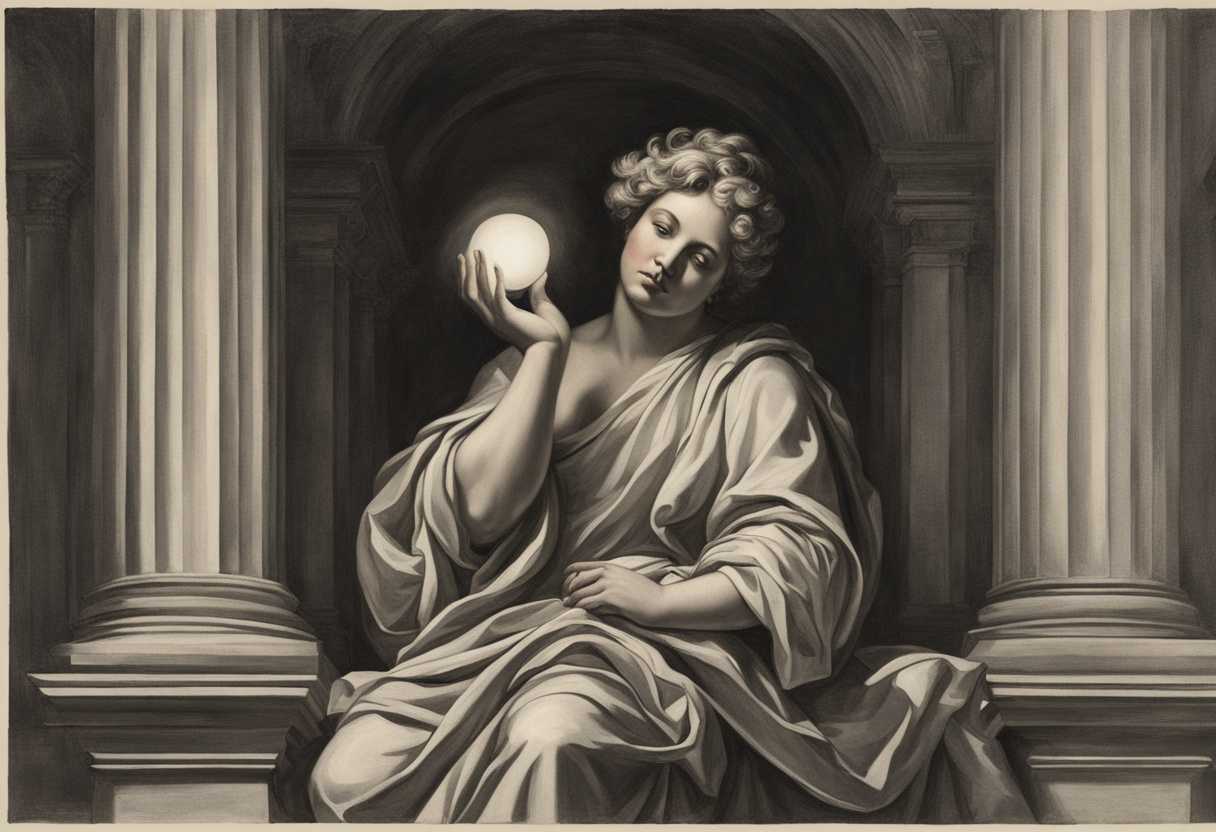
The True Meaning of Wisdom 7
This chapter of the Book of Wisdom was likely written by a Jewish scholar living in Alexandria, Egypt during the 1st century BC. He was well-versed in Greek philosophy and sought to reconcile the teachings of the Hebrew Scriptures with the ideas of the Hellenistic world. The author reflects on the nature of wisdom and its importance in the life of the righteous person in this passage. He emphasizes that true wisdom comes not from human effort alone, but as a gift from God. The chapter foreshadows the author’s later discussion of how wisdom was manifested in the lives of key biblical figures, such as Moses and the Israelite kings.
The author also draws connections between this understanding of wisdom and other biblical themes, such as the creation of the world (Proverbs 8) and the role of the Spirit of God in guiding and empowering his people (Isaiah 11:2). The author seeks to present a comprehensive vision of the wisdom that leads to a life pleasing to God by grounding his ideas in the broader context of Scripture.
Wisdom 7:1-6
King Solomon begins by reflecting on his own life and the blessings that wisdom has brought him in Wisdom 7:1-6. He acknowledges that he was a mere mortal, subject to the same weaknesses and limitations as any other human being. However, he goes on to recognize that it was God’s wisdom that ultimately set him apart from others. This wisdom, which he describes as the “breath of the power of God,” allowed him to rule his kingdom with justice and to make sound judgments.
Solomon’s acknowledgment of his mortality is a humbling reminder that even the most powerful and wise among us are still subject to the same frailties as all humanity. It demonstrates the importance of humility in the pursuit of wisdom, as one must first recognize their own limitations in order to seek out true wisdom. This sentiment is echoed in Proverbs 3:7, which states, “Do not be wise in your own eyes; fear the Lord and shun evil.”
Solomon’s recognition of God’s wisdom as the driving force behind his success serves as a powerful testament to the importance of seeking divine guidance in all aspects of life. It is a reminder that true wisdom does not come from human intelligence alone, but from a deeper connection to the divine. This idea is echoed throughout the Bible, such as in James 1:5, which encourages believers to ask God for wisdom, as He gives generously to all without finding fault. This passage serves as a reminder of the transformative power of wisdom when individuals seek it with humility and reverence for God. It challenges us to look beyond our own limitations and to seek out the wisdom that comes from above, trusting that it will guide us in making righteous decisions and living a life that honors God.
Wisdom 7:7-12
Wisdom 7:7-12 presents us with a beautiful text that speaks of the surpassing value of wisdom and knowledge. Identify the subject: “Let’s”
Rewritten sentence: Let’s break down this verse into important sections and delve deeper into their meanings.
Firstly, in verse 7, it begins with “Therefore I prayed, and understanding was given me.” This marks the importance of the act of seeking wisdom through prayer. The idea of humbly asking for wisdom from God is a recurring theme throughout the Bible. Proverbs 2:3-6 also emphasizes the importance of seeking wisdom diligently, “if you call out for insight and cry aloud for understanding, and if you look for it as for silver and search for it as for hidden treasure, then you will understand the fear of the Lord and find the knowledge of God. For the Lord gives wisdom; from his mouth come knowledge and understanding.”
Moving on to verse 8, it says, “I preferred her to scepters and thrones, and I accounted wealth as nothing in comparison with her.” This highlights the speaker’s realization that wisdom is more valuable than earthly riches and power. The Book of Proverbs frequently contrasts the advantages of wisdom with the allure of material wealth. Proverbs 16:16 reinforces this, stating “How much better to get wisdom than gold, to get insight rather than silver! The passage continues with “I loved her more than health and beauty, and I chose to have her rather than light” in verse 9.” Here, the speaker expresses a preference for wisdom over physical well-being and superficial attractiveness. This underscores the idea that true wisdom brings a greater and more lasting benefit than fleeting worldly pleasures. Proverbs 3:15-18 also speaks to the value of wisdom, stating “She is more precious than rubies; nothing you desire can compare with her. Long life is in her right hand; in her left hand are riches and honor.”
The mentioning of “light” in verse 9 can symbolize enlightenment and illumination. Light often represents knowledge and the presence of God in the Bible. Psalm 119:105 affirms this, “Your word is a lamp for my feet, a light on my path.” Choosing wisdom over light could signify an acknowledgment that true wisdom surpasses even the enlightenment gained from worldly sources.
Verse 10 further elaborates, “For the splendor of immortality is righteousness, and the prize of wisdom is to have a pure soul.” This verse can be understood as highlighting the connection between wisdom and righteousness, suggesting that true wisdom leads one to live a virtuous and morally upright life. Throughout Scripture, the link between wisdom and righteousness is emphasized. Proverbs 2:6-9 illustrates this connection, “For the Lord gives wisdom; from his mouth come knowledge and understanding. He holds success in store for the upright, he is a shield to those whose walk is blameless, for he guards the course of the just and protects the way of his faithful ones.”
Lastly, verse 12 concludes with “I learned without guile and I impart without grudging; I do not hide her wealth, for it is an unfailing treasure for mortals.” Here, the speaker expresses a willingness to share wisdom freely and generously. This attitude aligns with the biblical principle of sharing knowledge and wisdom with others selflessly. Proverbs 11:25 echoes this sentiment, “A generous person will prosper; whoever refreshes others will be refreshed. The verses in Wisdom 7:7-12 convey the immeasurable value of wisdom and knowledge, portraying them as invaluable treasures that surpass all material wealth and worldly pleasures. The passage emphasizes the importance of seeking wisdom diligently, choosing it above all else, and living a righteous life in accordance with the wisdom received. Through these timeless messages, the Biblical text calls us to prioritize spiritual wisdom and understanding in our lives, recognizing their profound significance and eternal value.
Wisdom 7:13-22
King Solomon reflects on the profound nature of wisdom in Wisdom 7:13-22, describing how he valued it above all wealth and treasures. This section is essentially a celebration of the importance and beauty of wisdom, highlighting its superiority to material possessions. Solomon begins by acknowledging that wisdom is a gift from God and that it enriches those who seek it wholeheartedly. He compares the benefits of wisdom to various material possessions, emphasizing that it surpasses them all in value.
Solomon’s reverence for wisdom is significant in the context of his life and reign. God chose Solomon, the son of King David, to succeed his father as the king of Israel. When God appeared to Solomon in a dream and offered to grant him any request, Solomon famously asked for wisdom to govern his people justly. This request pleased God, who not only granted him wisdom but also gave him wealth, honor, and long life (1 Kings 3:5-14). Solomon demonstrated his humility and understanding of what was truly important in life by prioritizing wisdom above all else.
The mention of Solomon’s wisdom in this passage also calls to mind the accounts of his wisdom found in other parts of the Bible. For example, in 1 Kings 4:29-34, we read about Solomon’s renowned wisdom, which attracted people from distant lands to seek his counsel. This wisdom was evident in his ability to handle difficult disputes and make wise judgments, earning him a reputation as one of the wisest kings in the Bible.
Furthermore, the theme of wisdom as a divine gift is echoed throughout the Bible. Wisdom, personified as a woman in the book of Proverbs attributed to Solomon, calls out to people to listen and gain understanding (Proverbs 8:1-11). The New Testament also speaks of the importance of wisdom, with James 1:5 declaring that God gives wisdom generously to those who ask for it in faith. Wisdom 7:13-22 serves as a testament to the enduring value of wisdom and the blessings that come from seeking it diligently. Through the example of King Solomon, we are reminded of the power of wisdom to guide us in making wise choices and leading a fulfilling life in accordance with God’s will. We too are encouraged to prioritize seeking wisdom above all else, knowing that it is a gift from God that enriches our lives in ways that material possessions cannot compare, just as Solomon chose wisdom as his greatest treasure.
Wisdom 7:23-30
The verse from Wisdom 7:23-30 is a beautiful passage that highlights the power and importance of Wisdom. Let’s break it down into sections for a more in-depth analysis. The text in this section describes the characteristics of Wisdom. It emphasizes that Wisdom possesses qualities such as intelligence, holiness, uniqueness, clarity, and love for the good. These attributes paint a vivid picture of what Wisdom represents – it is not just knowledge but a deeper understanding that comes from a divine source. This description aligns with other verses in the Bible that exalt the value of wisdom, such as Proverbs 4:7 – “The beginning of wisdom is this: Get wisdom. Though it cost all you have, get understanding.”
Section 2: “beneficent, humane, steadfast, sure, free from anxiety, all-powerful, overseeing all, and penetrating through all spirits that are intelligent, pure, and altogether subtle.”
This part of the verse continues to elaborate on the nature of Wisdom, portraying it as beneficent and humane. It underscores the stability and assurance that Wisdom brings, as well as its ability to oversee all and penetrate through all spirits. The mention of Wisdom being free from anxiety and all-powerful highlights its divine and unwavering nature. This portrayal of Wisdom as a guiding force aligns with other biblical passages where wisdom is depicted as a source of strength and guidance, such as Proverbs 3:13-18 which speaks of the blessings that wisdom brings to those who seek it.
Section 3: “For wisdom is more mobile than any motion; because of her pureness she pervades and penetrates all things. For she is a breath of the power of God, and a pure emanation of the glory of the Almighty; therefore nothing defiled gains entrance into her.”
This final section of the verse emphasizes the omnipresence and purity of Wisdom. It describes Wisdom as being more agile than any motion and as something that permeates and penetrates all things due to her purity. The text further asserts that nothing defiled can enter Wisdom, emphasizing the importance of righteousness and purity in seeking wisdom. This concept resonates with other biblical teachings that stress the importance of purity and integrity, such as Psalm 24:3-4 – “Who may ascend the mountain of the Lord? Who may stand in his holy place? The one who has clean hands and a pure heart. The passage from Wisdom 7:23-30 exalts the virtues of Wisdom and underscores its divine nature and significance. It serves as a reminder of the timeless message found throughout the Bible that wisdom, which comes from God, is a precious gift that brings clarity, guidance, and purity to those who seek it. The characteristics attributed to Wisdom in this passage serve as a template for believers to pursue and embody wisdom in their lives, in accordance with the will of God.
After Wisdom 7
The reverend solemnly closed the book, his brow furrowed in contemplation. “This chapter has revealed the true nature of wisdom – a divine gift that transcends earthly knowledge. Yet, the journey does not end here. We shall explore how this wisdom can guide us through the trials and tribulations of life in the next chapter. For it is only through the steadfast pursuit of this heavenly wisdom that we can hope to find true fulfillment and purpose.”

Reverend Michael Johnson is an experienced Church Minister with a profound expertise in spirituality and guidance. With a serene presence and a compassionate heart, he has faithfully served his congregation for over 20 years, leading them on a spiritual journey towards inner peace and enlightenment. Reverend Johnson’s extensive knowledge of religious philosophies and profound understanding of human nature have made him a trusted confidant and mentor to many, as he seamlessly weaves his profound wisdom into life teachings. Reverend Johnson’s calming demeanor and empathetic nature continue to uplift and heal souls, nurturing a sense of unity and tranquility within his community.