
1 Then he showed me Joshua the high priest standing before the angel of the Lord, and Satan standing at his right hand to accuse him.
2 And the Lord said to Satan, “The Lord rebuke you, O Satan! The Lord who has chosen Jerusalem rebuke you! Is not this a brand plucked from the fire?”
3 Now Joshua was standing before the angel, clothed with filthy garments.
4 And the angel said to those who were standing before him, “Remove the filthy garments from him.” And to him he said, “Behold, I have taken your iniquity away from you, and I will clothe you with pure vestments.”
5 And I said, “Let them put a clean turban on his head.” So they put a clean turban on his head and clothed him with garments. And the angel of the Lord was standing by.
6 And the angel of the Lord solemnly assured Joshua,
7 “Thus says the Lord of hosts: If you will walk in my ways and keep my charge, then you shall rule my house and have charge of my courts, and I will give you the right of access among those who are standing here.”
8 Hear now, O Joshua the high priest, you and your friends who sit before you, for they are men who are a sign: behold, I will bring my servant the Branch.
9 For behold, on the stone that I have set before Joshua, on a single stone with seven eyes, I will engrave its inscription, declares the Lord of hosts, and I will remove the iniquity of this land in a single day.
10 In that day, declares the Lord of hosts, every one of you will invite his neighbor to come under his vine and under his fig tree.”
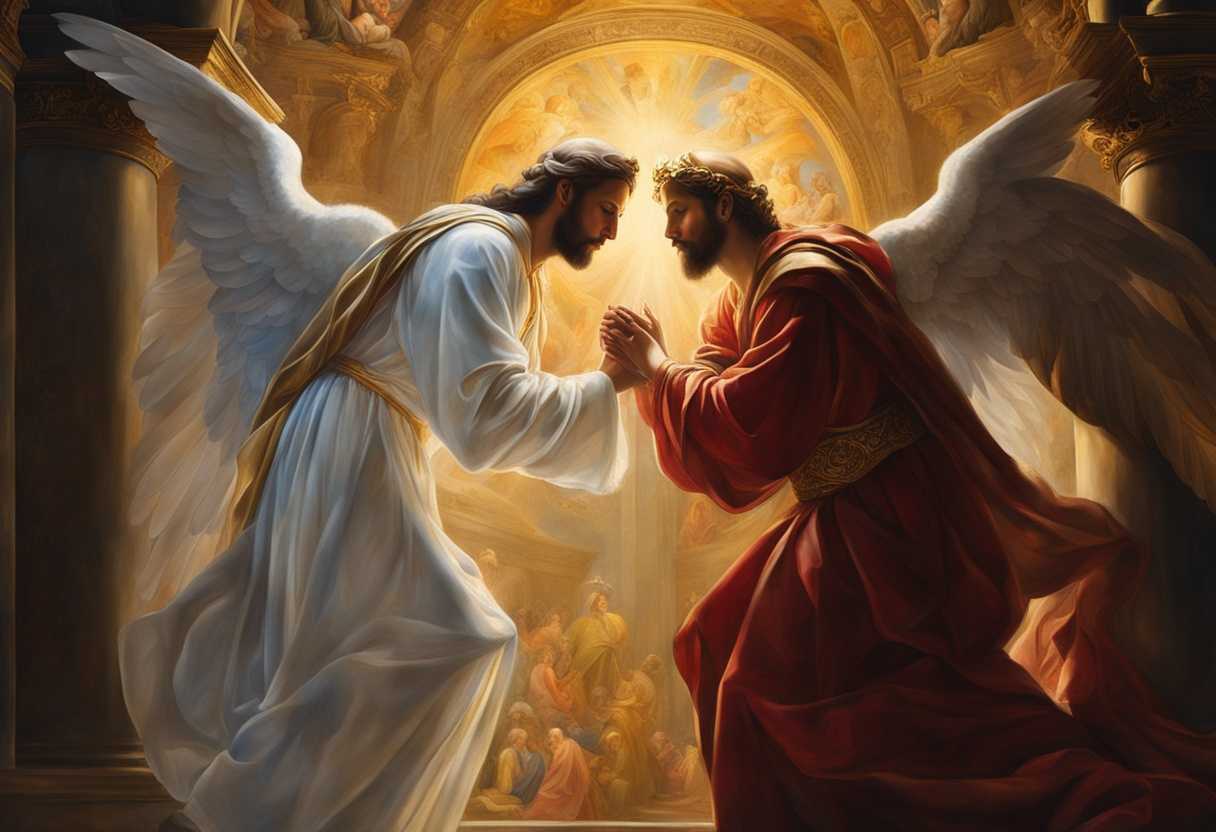
The True Meaning of Zechariah 3
The book of Zechariah was written by the prophet Zechariah, a Jewish exile who returned to Jerusalem after the Babylonian captivity. Zechariah’s visions and messages, as one of the last prophets of the Old Testament, provide crucial insight into the restoration of the Jewish people and the coming Messiah. Zechariah receives a vision of Joshua, the high priest, standing before the Angel of the Lord in this chapter. This symbolic scene reveals God’s plan to cleanse and restore the spiritual leadership of Israel. The events described here foreshadow the ultimate cleansing and forgiveness that will come through the Messiah, Jesus Christ.
Zechariah’s vision also includes a prophecy about the “Branch,” a reference to the Messiah who will one day establish His eternal kingdom. This passage connects to other Old Testament prophecies, such as Isaiah’s description of the “Suffering Servant” and Jeremiah’s promise of a new covenant. God’s unwavering commitment to His people and His plan for their redemption is evident as we study this chapter.
Zechariah 3:1-5
The passage in Zechariah 3:1-5 starts by describing a vision that the prophet Zechariah saw. The vision portrays Joshua the high priest standing before the angel of the Lord, with Satan at his right hand to accuse him. Joshua represents the people of Israel. Satan, whose name means accuser or adversary, is there to oppose, condemn, and bring charges against Joshua. This scene is reminiscent of a courtroom setting, with Satan acting as the prosecuting attorney, accusing Joshua of his sins and defilement.
However, in verse 2, the Lord rebukes Satan, reminding him that Joshua is a brand plucked from the fire, a metaphorical representation of salvation and redemption. This act of rebuking Satan signifies God’s sovereignty and authority over all accusations and opposition. A beautiful demonstration of God’s grace and mercy is seen in the following verses. Joshua, who is clothed in filthy garments symbolizing sin and unworthiness, is given a change of clothes in verse 3. The angel of the Lord commands that Joshua’s filthy garments be removed and replaced with rich robes, signifying forgiveness, righteousness, and being made clean before God.
This scene reflects the Christian doctrine of justification – the act of God declaring sinners righteous through faith in Christ. God symbolically removes Joshua’s sin and grants him a new identity as one who is justified and righteous before Him by changing his filthy garments to rich robes. This transformation highlights the theme of redemption and restoration, showing that God can cleanse and restore even the most defiled and sinful to a state of purity and favor.
Furthermore, the passage in Zechariah 3:5 emphasizes the call and responsibility placed on Joshua. He is encouraged to walk in the ways of the Lord, keep His charge, and govern His house, with the promise of divine evaluation to come. This portrays the importance of faithfulness, obedience, and loyalty to God’s commands, as well as the reward that follows for those who remain steadfast in their commitment to Him. Zechariah 3:1-5 conveys powerful messages of redemption, grace, mercy, justification, and divine calling. It points to the ultimate sacrifice of Jesus Christ, who cleanses us from our sins and clothes us with His righteousness. It reminds us that God is the ultimate judge who vindicates His people and calls them to a life of holiness and obedience. This passage serves as a profound encouragement for believers to trust in God’s transformative power and walk in His ways wholeheartedly.
Zechariah 3:6-10
The angel of the Lord opens the passage in Zechariah 3:6-10 by giving a charge to Joshua the high priest. The charge is significant as Joshua is standing before the angel of the Lord, representing the nation of Israel. Satan is also present in this encounter to accuse Joshua. Satan’s mission is to thwart the purposes of God and to accuse and bring condemnation upon God’s chosen people. However, the Lord rebukes Satan in this scene, demonstrating His authority and protection over His people. This passage highlights the spiritual warfare that exists, where there is a battle for the souls of God’s chosen ones.
Joshua’s attire is also mentioned in this passage. He is dressed in filthy garments, symbolic of Israel’s sins and impurity. Despite Joshua’s sinful state, the Lord chooses to cleanse him and replace his filthy garments with rich robes. This act symbolizes the spiritual cleansing and restoration that God offers to His people. It is a powerful reminder of God’s grace, mercy, and desire to restore His people to a place of righteousness and holiness.
The Lord then speaks a powerful message to Joshua, emphasizing that if he walks in the Lord’s ways and keeps His commands, he will govern the Lord’s house and have charge over His courts. This declaration signifies God’s restoration of Joshua’s role as high priest and leader of the people. It also serves as a reminder of the importance of obedience and faithfulness in serving God. The promise of authority and responsibility is conditional upon Joshua’s obedience and faithfulness to God’s will. The Lord introduces the Branch in the conclusion of this passage, who is a foreshadowing of the Messiah, Jesus Christ. The Branch is described as the one who will come and remove the iniquity of the land in a single day. This prophecy points to the redemptive work of Jesus Christ on the cross, where He atoned for the sins of humanity through His sacrificial death. The Branch is a symbol of hope and restoration, demonstrating God’s plan for ultimate redemption and salvation through His Son. Zechariah 3:6-10 addresses themes of spiritual warfare, cleansing, restoration, obedience, and the promise of redemption through the Messiah in a powerful way. It serves as a reminder of God’s faithfulness, grace, and ultimate plan for salvation. The imagery and symbolism in this passage point to the redemptive work of Jesus Christ and the hope that He brings for all who believe in Him.
After Zechariah 3
The prophet Zechariah had a vision of Joshua, the high priest, standing before the angel of the Lord. Joshua was dressed in filthy clothes, representing the sins of the people. The angel rebuked Satan, who was accusing Joshua, and ordered his filthy clothes to be removed. The angel then clothed Joshua in rich garments, symbolizing the forgiveness and restoration that God would bring to His people. The angel made a profound declaration as the chapter drew to a close. He spoke of the coming Messiah, the Branch, who would remove the sin of the land in a single day. This promise of a Savior filled the hearts of the people with hope, for they knew that through Him, they would be cleansed and made righteous before the Lord.
The next chapter would reveal even more about this promised Messiah, and the role He would play in the redemption of God’s people. The people listened with rapt attention, their spirits lifted by the vision of a future filled with the grace and mercy of the Almighty.

Reverend Michael Johnson is an experienced Church Minister with a profound expertise in spirituality and guidance. With a serene presence and a compassionate heart, he has faithfully served his congregation for over 20 years, leading them on a spiritual journey towards inner peace and enlightenment. Reverend Johnson’s extensive knowledge of religious philosophies and profound understanding of human nature have made him a trusted confidant and mentor to many, as he seamlessly weaves his profound wisdom into life teachings. Reverend Johnson’s calming demeanor and empathetic nature continue to uplift and heal souls, nurturing a sense of unity and tranquility within his community.