
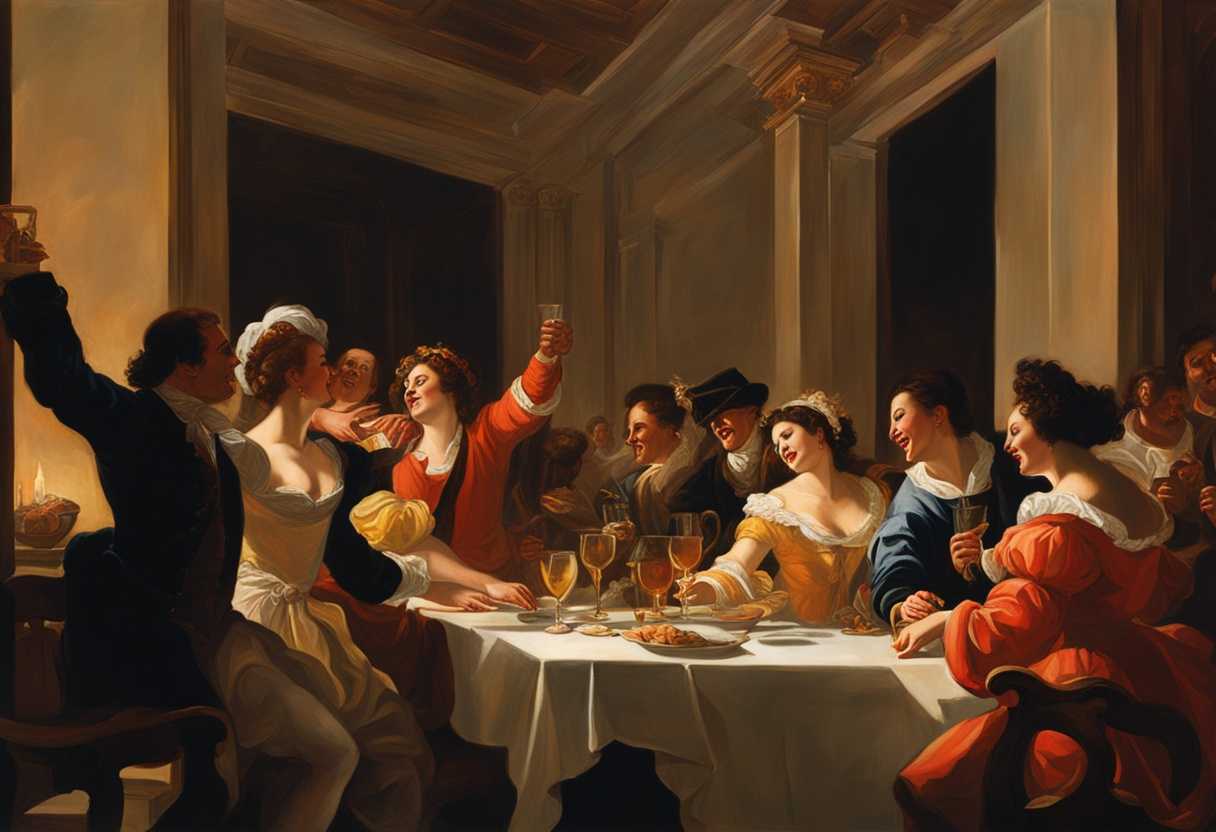
In the Bible, carousing refers to excessive drinking and engaging in revelry or debauchery, often associated with a lack of self-control and moral recklessness. It is typically condemned as part of lists of sinful behaviors that lead one away from a righteous life (see Galatians 5:19-21).
Scripture
20 Be not among drunkards or among gluttonous eaters of meat,
21 for the drunkard and the glutton will come to poverty,
and slumber will clothe them with rags.
Meaning of Carousing in the Bible
The concept of carousing in the Bible is emblematic of the broader themes of excess, moral decay, and the necessity of self-discipline in a faithful life. Carousing is often linked with drunkenness and the indulgence in various forms of revelry, suggesting a lifestyle that prioritizes immediate gratification over spiritual health and moral integrity. In Galatians 5:19-21, the apostle Paul categorizes carousing among the “works of the flesh,” which include sexual immorality, idolatry, and strife, portraying it as contrary to the fruit of the Spirit, such as love, joy, and self-control (Galatians 5:22-23). This indicates that engaging in carousing not only harms individual character but also disrupts community harmony, diverting believers away from their spiritual journey.
Carousing is also addressed in contexts that emphasize spiritual vigilance and the importance of living a life reflective of one’s faith. For example, 1 Peter 4:3 specifically admonishes believers to abstain from “the passions of the flesh,” including carousing, which reflects a broader call to lead a life dedicated to God’s will rather than one consumed by earthly desires. The figure of Jesus often stands in contrast to these behaviors, as seen in His teachings, where He emphasizes sobriety, servitude, and love for others (Matthew 5:16). Ultimately, away from it.
In addition to the passages previously mentioned, the concept of carousing is echoed in the teachings of the Apostle Paul, who frequently admonishes his followers to engage in a life need for vigilance in the pursuit of holiness.
Moreover, the narrative of the Prodigal Son in Luke 15 provides a vivid portrayal of carousing that highlights the consequences of such a lifestyle. The younger son, upon receiving his inheritance, is described as squandering his wealth on reckless living, which includes extravagant feasting and wild parties. This parable exemplifies the dangers inherent in pursuing fleeting pleasures at the expense of one’s relationships and spiritual obligations. Ultimately, the story emphasizes the redemptive possibilities available through repentance and the grace to seek a more meaningful existence anchored in faith and community.
The Dangers of Excessive Indulgence
Carousing in the Bible often signifies a lifestyle characterized by excessive indulgence in pleasures, particularly those associated with drinking and revelry. This behavior is frequently depicted as leading individuals away from a life of righteousness and self-control. The biblical narrative warns that such indulgence can result in moral decay, loss of spiritual focus, and ultimately, separation from God. The emphasis is on the need for moderation and the dangers of allowing temporary pleasures to overshadow one’s spiritual commitments.
The Call to Holiness and Self-Control
In contrast to carousing, the Bible calls believers to a life of holiness and self-control. This theme underscores the importance of living in a manner that reflects one’s faith and commitment to God. Carousing serves as a reminder of the temptations that can lead one astray, prompting reinforcing the idea that true joy and satisfaction come from a relationship with God rather than from worldly distractions.
Community and Accountability
Carousing also highlights the communal aspect of behavior and its impact on relationships within a community. The encouragement in pursuing a life that honors God.
How to Foster Spirituality Over Excessive Indulgence
Fostering spirituality over excessive indulgence is a journey that requires intentionality and reflection. Start by creating space in your life for quiet moments—whether through prayer, meditation, or simply sitting in nature—where you can connect with God and listen for serving others, and engaging in community worship. These practices not only ground you in your beliefs but also help you recognize the fleeting nature of material pleasures. Remember, true fulfillment comes from a deep relationship with God, which often flourishes when we let go of distractions and focus on what truly matters. Embrace this path with grace, knowing that every small step you take toward spiritual growth is a victory in itself.
Bible References to Carousing in Scripture:
Isaiah 5:11-12: 11 Woe to those who rise early in the morning, that they may run after strong drink, who tarry late into the evening as wine inflames them!
12 They have lyre and harp, tambourine and flute and wine at their feasts, but they do not regard the deeds of the Lord, or see the work of his hands.
Galatians 5:19-21: 19 Now the works of the flesh are evident: sexual immorality, impurity, sensuality,
20 idolatry, sorcery, enmity, strife, jealousy, fits of anger, rivalries, dissensions, divisions,
21 envy, drunkenness, orgies, and things like these. I warn you, as I warned you before, that those who do such things will not inherit the kingdom of God.
1 Peter 4:3: 3 For the time that is past suffices for doing what the Gentiles want to do, living in sensuality, passions, drunkenness, orgies, drinking parties, and lawless idolatry.
Ephesians 5:18: 18 And do not get drunk with wine, for that is debauchery, but be filled with the Spirit,
Romans 13:13-14: 13 Let us walk properly as in the daytime, not in orgies and drunkenness, not in sexual immorality and sensuality, not in quarreling and jealousy.
14 But put on the Lord Jesus Christ, and make no provision for the flesh, to gratify its desires.
1 Corinthians 5:11: 11 But now I am writing to you not to associate with anyone who bears the name of brother if he is guilty of sexual immorality or greed, or is an idolater, reviler, drunkard, or swindler—not even to eat with such a one.
Luke 21:34: 34 “But watch yourselves lest your hearts be weighed down with dissipation and drunkenness and cares of this life, and that day come upon you suddenly like a trap.”
Titus 1:6: 6 if anyone is above reproach, the husband of one wife, and his children are believers and not open to the charge of debauchery or insubordination.
1 Thessalonians 5:6-8: 6 So then let us not sleep, as others do, but let us keep awake and be sober.
7 For those who sleep, sleep at night, and those who get drunk, are drunk at night.
8 But since we belong to the day, let us be sober, having put on the breastplate of faith and love, and for a helmet the hope of salvation.

Reverend Ogunlade is a seasoned Church Minister with over three decades of experience in guiding and nurturing congregations. With profound wisdom and a serene approach, Reverend Ogunlade has carried out various pastoral duties, including delivering uplifting sermons, conducting religious ceremonies, and offering sage counsel to individuals seeking spiritual guidance. Their commitment to fostering harmony and righteousness within their community is exemplified through their compassionate nature, making them a beloved and trusted figure among the congregation.