
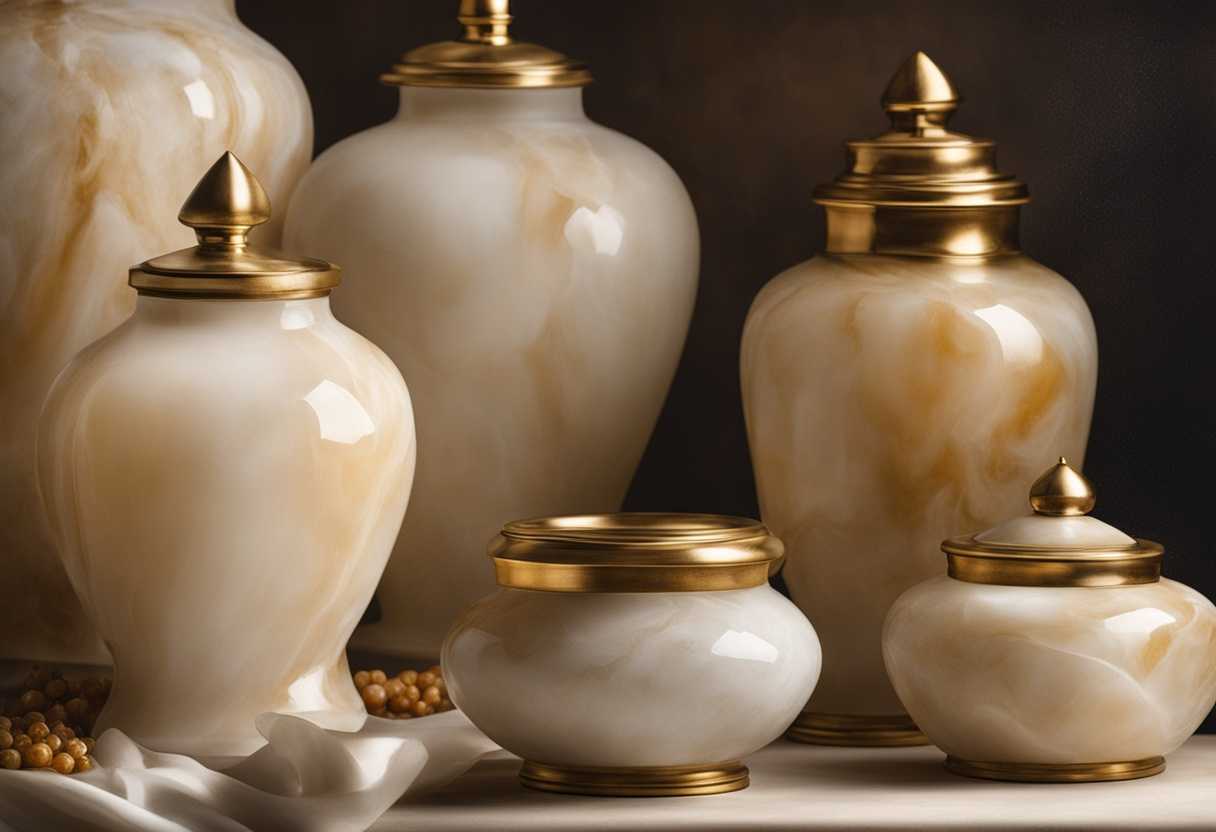
In the Bible, alabaster refers to a fine, translucent stone often used for creating perfume containers and ornamental objects. It symbolizes wealth and beauty, as seen in accounts such as the anointing of Jesus with expensive perfume from an alabaster jar (Matthew 26:7).
Scripture
34 The Lord said to Moses, “Take sweet spices, stacte, and onycha, and galbanum, sweet spices with pure frankincense (of each shall there be an equal part),
35 You shall make of these a sacred anointing oil blended as by the perfumer; it shall be a holy anointing oil.
Alabaster in the Bible: Meaning and Significance
her deep love and reverence for Christ. This event illustrates the theme of sacrificial love, as she willingly gives up something of great value to honor the Lord, serving as a reminder to believers of the importance of prioritizing their relationship with God above material possessions.
Moreover, alabaster is mentioned in offer their finest—be it resources, time, or love—as a fragrant offering to God, mirroring the extravagant generosity of the woman in Matthew 26:7. Through this lens, alabaster becomes a metaphor for personal devotion and the call to live out our faith vibrantly and sacrificially.
In addition to its physical attributes, alabaster also serves as a metaphorical representation of purity and sincerity in the biblical narrative. Its translucence and smoothness evoke images of clarity and extends to the intentions behind those actions, ultimately highlighting the importance of integrity and authenticity in one’s relationship with God.
Alabaster’s role in Scripture also reflects the theme of transformation a literal material but as an enduring symbol of the inner purity and transformative potential of one’s devotion to God.
Symbol of Purity and Value
Alabaster is often associated with purity and value in biblical texts. The material itself is smooth, white, and translucent, which can symbolize the purity of heart and spirit. In a spiritual context, alabaster can represent the preciousness of one’s devotion and the value of offerings made to God. This symbolism extends to the idea that true worship and sacrifice should come from a place of purity and sincerity.
Representation of Sacrifice and Devotion
In biblical narratives, alabaster is frequently linked to acts of profound sacrifice and devotion. The use of alabaster containers for precious oils signifies the importance of giving one’s best to God. This act of breaking open an alabaster jar offer something valuable, reflecting deep love and commitment. It serves as a reminder that true devotion often requires personal sacrifice and the willingness to give up something cherished for a higher purpose.
Connection to Anointing and Healing
Alabaster is also connected to the themes of anointing and healing in the Bible. The precious oils contained within alabaster jars were often used for anointing individuals, symbolizing healing, consecration, and empowerment. This connection highlights the transformative power of anointing, suggesting that through acts of devotion and the use of sacred substances, individuals can experience spiritual renewal and healing.
How to Embrace a Life of Devotion and Purity
Embracing a life of devotion and purity is a beautiful journey that begins in the heart and manifests in our daily actions. It’s about cultivating a deep relationship with God through prayer, just goals to achieve, but a way of living that brings joy, peace, and a deeper understanding of God’s grace.
Bible References to Alabaster in Scripture:
Matthew 26:6-13: 6 Now when Jesus was at Bethany in the house of Simon the leper,
7 a woman came up to him with an alabaster flask of very expensive ointment, and she poured it on his head as he reclined at table.
8 But when the disciples saw it, they were indignant, saying, “Why this waste?
9 For this ointment could have been sold for a large sum and given to the poor.
10 But Jesus, aware of this, said to them, “Why do you trouble the woman? For she has done a beautiful thing to me.
11 For you always have the poor with you, but you will not always have me.
12 in pouring this ointment on my body, she has done it to prepare me for burial.
13 Truly, I say to you, wherever this gospel is proclaimed in the whole world, what she has done will also be told in memory of her.
Mark 14:3-9: 3 And while he was at Bethany in the house of Simon the leper, as he was reclining at table, a woman came with an alabaster flask of ointment of pure nard, very costly, and she broke the flask and poured it over his head.
4 There were some who said to themselves indignantly, “Why was the ointment wasted like that?
5 For this ointment could have been sold for more than three hundred denarii and given to the poor.” And they scolded her.
6 But Jesus said, “Leave her alone. Why do you trouble her? She has done a beautiful thing to me.
7 For you always have the poor with you, and whenever you want, you can do good for them. But you will not always have me.
8 She has done what she could; she has anointed my body beforehand for burial.
9 And truly, I say to you, wherever the gospel is proclaimed in the whole world, what she has done will be told in memory of her.”
Luke 7:37-38: 37 And behold, a woman of the city, who was a sinner, when she learned that he was reclining at table in the Pharisee’s house, brought an alabaster flask of ointment,
38 and standing behind him at his feet, weeping, she began to wet his feet with her tears and wiped them with the hair of her head and kissed his feet and anointed them with the ointment.
John 12:1-8: 1 Six days before the Passover, Jesus therefore came to Bethany, where Lazarus was, whom Jesus had raised from the dead.
2 So they gave a dinner for him there. Martha served, and Lazarus was one of those reclining with him at table.
3 Mary therefore took a pound of expensive ointment made from pure nard, and anointed the feet of Jesus and wiped his feet with her hair. The house was filled with the fragrance of the perfume.
4 But Judas Iscariot, one of his disciples (he who was about to betray him), said,
5 “Why was this ointment not sold for three hundred denarii and given to the poor?”
6 He said this, not because he cared about the poor, but because he was a thief, and having charge of the moneybag he used to help himself to what was put into it.
7 Jesus said, “Leave her alone, so that she may keep it for the day of my burial.”
8 For the poor you always have with you, but you do not always have me.”
2 Corinthians 4:7: 7 But we have this treasure in jars of clay, to show that the surpassing power belongs to God and not to us.
1 Peter 2:4-5: 4 As you come to him, a living stone rejected by men but in the sight of God chosen and precious,
5 you yourselves like living stones are being built up as a spiritual house, to be a holy priesthood, to offer spiritual sacrifices acceptable to God through Jesus Christ.

Reverend Michael Johnson is an experienced Church Minister with a profound expertise in spirituality and guidance. With a serene presence and a compassionate heart, he has faithfully served his congregation for over 20 years, leading them on a spiritual journey towards inner peace and enlightenment. Reverend Johnson’s extensive knowledge of religious philosophies and profound understanding of human nature have made him a trusted confidant and mentor to many, as he seamlessly weaves his profound wisdom into life teachings. Reverend Johnson’s calming demeanor and empathetic nature continue to uplift and heal souls, nurturing a sense of unity and tranquility within his community.