
In the Bible, flies often symbolize decay, corruption, and pestilence. For example, in Exodus 8:21-24, the plague of flies demonstrates God’s power over Egypt’s gods and represents disorder and judgment within the home.
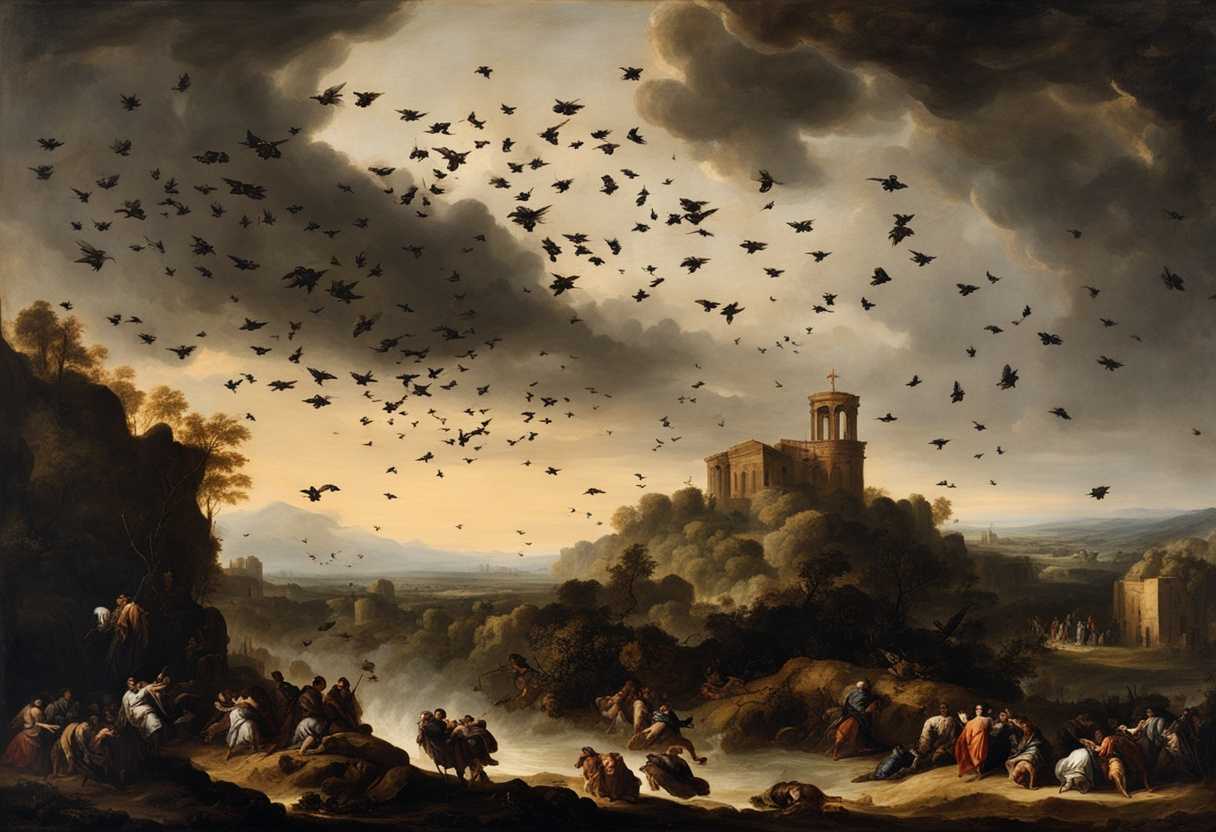
Scripture
20 Then the Lord said to Moses, “Rise up early in the morning and present yourself to Pharaoh, as he goes out to the water, and say to him, ‘Thus says the Lord, “Let my people go, that they may serve me.
21 Or else, if you will not let my people go, behold, I will send swarms of flies on you and your servants and your people, and into your houses. And the houses of the Egyptians shall be filled with swarms of flies, and also the ground on which they stand.
22 But on that day I will set apart the land of Goshen, where my people dwell, so that no swarms of flies shall be there, that you may know that I am the Lord in the midst of the earth.
23 But I will put a division between my people and your people. Tomorrow this sign shall happen.”
24 And the Lord did so. There came great swarms of flies into the house of Pharaoh and into his servants’ houses. Throughout all the land of Egypt the land was ruined by the swarms of flies.
25 Then Pharaoh called Moses and Aaron and said, “Go, sacrifice to your God within the land.”
26 But Moses said, “It would not be right to do so, for the offerings we shall sacrifice to the Lord our God are an abomination to the Egyptians. If we sacrifice offerings abominable to the Egyptians before their eyes, will they not stone us?
27 We must go three days’ journey into the wilderness and sacrifice to the Lord our God as he tells us.”
28 So Pharaoh said, “I will let you go to sacrifice to the Lord your God in the wilderness; only you must not go very far away. Plead for me.”
29 Then Moses said, “Behold, I am going out from you and I will plead with the Lord that the swarms of flies may depart from Pharaoh, from his servants, and from his people, tomorrow. Only let not Pharaoh cheat again by not letting the people go to sacrifice to the Lord.”
30 So Moses went out from Pharaoh and prayed to the Lord.
31 And the Lord did as Moses asked, and removed the swarms of flies from Pharaoh, from his servants, and from his people; not one remained.
32 But Pharaoh hardened his heart this time also, and did not let the people go.
Biblical Significance of Flies in Homes
The presence of flies in the Biblical narrative conveys deeper meanings intertwined with themes of decay, corruption, and divine judgment. In Exodus 8:21-24, the plague of flies is not merely a natural nuisance but a poignant sign of God’s sovereignty and the consequences of disobedience among the Egyptians. The imagery of flies tormenting the Egyptians while sparing the Israelites emphasizes God’s clear demarcation between those who follow Him and those who do not. This dichotomy reflects a greater theological principle: that sin promotes spiritual decay and disorder within one’s life and home, just as an infestation of flies engenders physical filth and discomfort.
Moreover, the symbolism of flies extends beyond mere pestilence to represent moral and spiritual decay. Ecclesiastes 10:1 states, “Dead flies putrefy the perfumer’s ointment and cause it to give off a foul odor; So does a little folly to one esteemed for wisdom and honor.” This verse draws a parallel between undesirable elements—flies and folly—even in that which appears valuable and desirable. Flies, therefore, can symbolize the small, seemingly insignificant sins or disruptions that corrupt and contaminate the home, leading to further decay in relationships and spiritual integrity. Thus, the Biblical significance of flies encapsulates a call to vigilance, urging believers to guard against the subtle yet pervasive forces of sin that can infiltrate and undermine the sanctity of their lives and homes.
In the broader context of Biblical significance, flies may also represent opposition and adversities that intrude into the peace and sanctity of one’s household. In various passages, the presence of flies can be likened to external forces that disturb tranquility and harmony, serving as a metaphor for spiritual battles that believers endure. In this light, flies can symbolize the continual need for vigilance against spiritual adversaries that seek to invade our spiritual homes, potentially leading to disarray and conflict among family members. The imagery serves as a reminder that our internal and external environments are affected by the forces surrounding us, necessitating constant prayer and discernment.
Additionally, the theme of flies in scripture can underscore the importance of purification and cleanliness, both physically and spiritually. Just as a home filled with flies becomes unwelcoming and unpleasant, so too does a heart cluttered with sins and grievances. The process of removing flies, albeit unpleasant, can be likened to the believer’s journey of repentance and renewal, emphasizing the need for self-reflection and the cleansing of one’s inner life. This connection invites individuals to actively seek spiritual hygiene, allowing God’s grace to sweep away what is unclean, reminiscent of a divine intervention that restores order and sanctity. Ultimately, the Biblical significance of flies not only highlights the themes of judgment and decay but also beckons believers to pursue greater holiness within their homes, conscious of the ever-looming danger of spiritual infestation.
Symbol of Corruption and Decay
In biblical literature, flies often symbolize corruption and decay. Their presence can indicate a state of moral or spiritual decline, reflecting the idea that sin and impurity can infiltrate one’s home and life. Just as flies are attracted to decay, so too can negative influences and sinful behaviors take root in an environment that is not guarded against them. This serves as a reminder for individuals to maintain purity and righteousness within their households.
Representation of Judgment and Consequences
Flies can also represent judgment and the consequences of disobedience. In various biblical narratives, the presence of flies is associated with divine judgment, serving as a reminder of the repercussions that follow when one strays from God’s commandments. This symbolism encourages believers to reflect on their actions and the potential outcomes of their choices, emphasizing the importance of living in accordance with divine principles to avoid negative consequences.
Call to Spiritual Vigilance
The presence of flies in the home can be seen as a call to spiritual vigilance. Just as flies can quickly multiply and create an unsanitary environment, so too can small sins or distractions grow if not addressed. This serves as a metaphor for the need to be watchful and proactive in maintaining a healthy spiritual life. Believers are encouraged to be diligent in their faith, ensuring that their homes are places of peace and holiness, free from the distractions and corruptions that can arise if left unchecked.
How to Embrace Growth and Reject Spiritual Decay
Embracing growth in your spiritual journey is a beautiful commitment that requires intentionality and openness to God’s transformative work in your life. Start by immersing yourself in Scripture, allowing the Word to renew your mind and heart daily; it’s in these sacred pages that you’ll find guidance and wisdom to navigate life’s challenges. Surround yourself with a community of believers who encourage and challenge you, as iron sharpens iron (Proverbs 27:17). Remember, growth often comes through trials, so don’t shy away from discomfort; instead, view it as an opportunity to deepen your faith and reliance on God. Regularly reflect on your spiritual health through prayer and self-examination, asking the Holy Spirit to reveal areas where you may be stagnant or complacent. By actively seeking to cultivate virtues like love, patience, and humility, you’ll not only reject spiritual decay but also blossom into the person God created you to be. Embrace this journey with joy, knowing that every step taken in faith brings you closer to the heart of Christ.
Bible References to Flies in the Home:
Ecclesiastes 10:1-3: 1 Dead flies make the perfumer’s ointment give off a stench; so a little folly outweighs wisdom and honor.
2 A wise man’s heart inclines him to the right,
but a fool’s heart to the left.
3 Even when the fool walks on the road, he lacks sense, and he says to everyone that he is a fool.
Isaiah 7:18-19: 18 In that day the Lord will whistle for the fly that is at the end of the streams of Egypt, and for the bee that is in the land of Assyria.
19 And they will all come and settle in the steep ravines, and in the clefts of the rocks, and on all the thornbushes, and on all the pastures.
Psalm 78:45-48: 45 He sent among them swarms of flies, which devoured them, and frogs, which destroyed them.
46 He gave their crops to the caterpillar and the fruit of their labor to the locust.
47 He destroyed their vines with hail and their sycamores with frost.
48 He gave over their cattle to the hail and their flocks to thunderbolts.
Matthew 12:22-28: 22 Then a demon-oppressed man who was blind and mute was brought to him, and he healed him, so that the man spoke and saw.
23 And all the people were amazed, and said, “Can this be the Son of David?”
24 But when the Pharisees heard it, they said, “It is only by Beelzebul, the prince of demons, that this man casts out demons.”
25 Knowing their thoughts, he said to them, “Every kingdom divided against itself is laid waste, and no city or house divided against itself will stand.
26 And if Satan casts out Satan, he is divided against himself. How then will his kingdom stand?
27 And if I cast out demons by Beelzebul, by whom do your sons cast them out? Therefore they will be your judges.
28 But if it is by the Spirit of God that I cast out demons, then the kingdom of God has come upon you.

Reverend Michael Johnson is an experienced Church Minister with a profound expertise in spirituality and guidance. With a serene presence and a compassionate heart, he has faithfully served his congregation for over 20 years, leading them on a spiritual journey towards inner peace and enlightenment. Reverend Johnson’s extensive knowledge of religious philosophies and profound understanding of human nature have made him a trusted confidant and mentor to many, as he seamlessly weaves his profound wisdom into life teachings. Reverend Johnson’s calming demeanor and empathetic nature continue to uplift and heal souls, nurturing a sense of unity and tranquility within his community.