
In the Bible, a convocation refers to a solemn assembly or gathering of people for a religious purpose, often associated with the observance of sacred festivals or worship. It signifies the act of calling together God’s people to worship, as seen in passages such as Leviticus 23, where various feasts are described as holy convocations.
Scripture
16 On the first day you shall hold a holy assembly, and on the seventh day a holy assembly. No work shall be done on those days. But what everyone needs to eat, that alone may be prepared by you.
Biblical Definition of Convocation
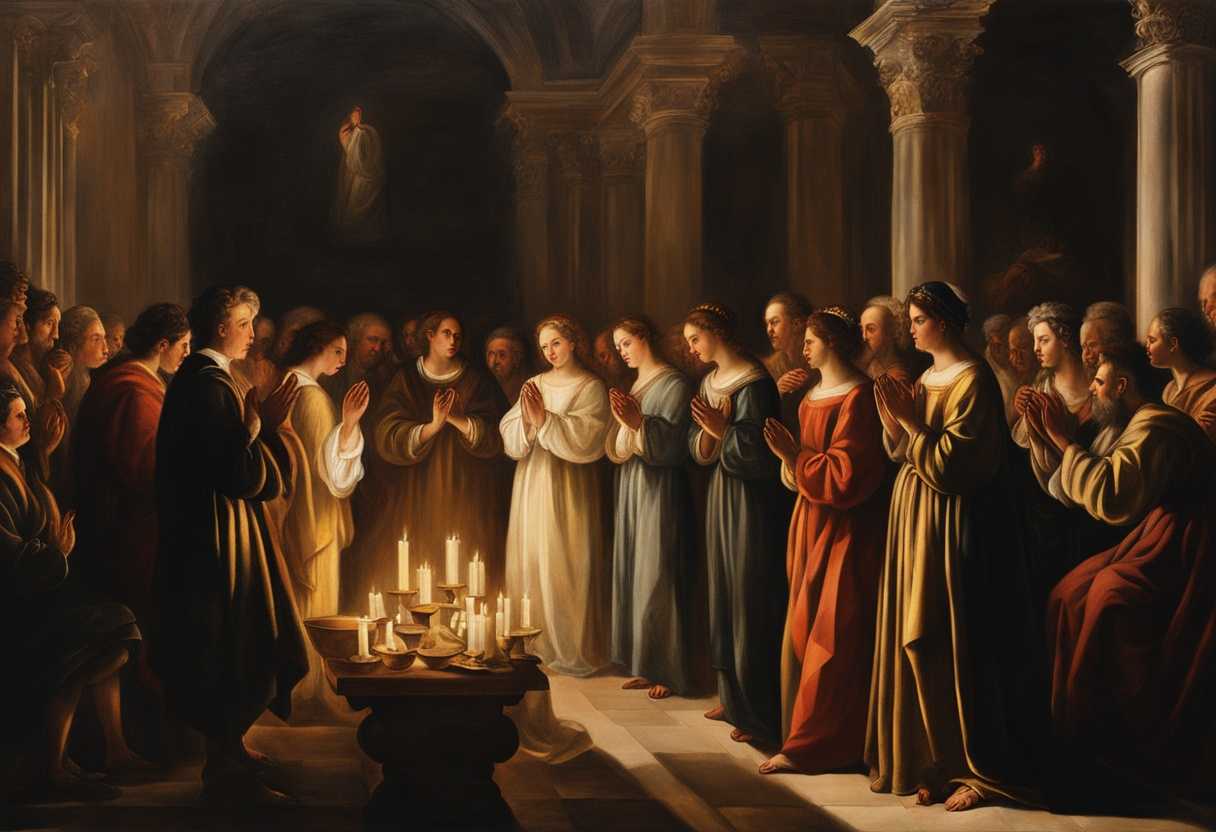
In the Bible, the concept of convocation represents not simply a physical gathering but a deeper spiritual significance—an intentional coming together of God’s people for the purpose of worship, reflection, and community. In Leviticus 23, God commands the Israelites to observe several holy days, such as Passover and the Feast of Unleavened Bread, designating them as “holy convocations” (Lev. 23:2). These gatherings serve as both reminders of God’s faithfulness and opportunities for communal worship, urging the people to remember their history and identity as those chosen by God.
Moreover, the idea of convocation extends beyond the that faith is meant to be lived out in community and shared with others.
The biblical understanding of convocation also a collective remembrance of God’s actions in their lives.
Furthermore, the New the essence of convocation in the biblical narrative encompasses a rich tapestry of corporate worship and shared identity that continues to resonate in the life of contemporary believers.
The Gathering of Believers
In the biblical context, a convocation often refers to a gathering of believers for worship, prayer, and fellowship. This communal aspect emphasizes the importance of unity among the faithful, as they come together the body of Christ, where each member plays a vital role in the spiritual health and growth of the community.
Divine Appointments
Convocations in the Bible can also signify divine appointments set by God for specific purposes, such as worship, teaching, or celebration of significant events. These occasions are that reflect the covenant relationship between God and His people. They serve as moments for the community to remember God’s faithfulness, to express gratitude, and to renew their commitment to His commandments.
Instruction and Edification
Another broader meaning of convocation is the opportunity for instruction and edification within the faith community. These gatherings often include teaching sessions, where leaders equip individuals to live out their faith in practical ways.
How to Cultivate Community Through Worship and Fellowship
Cultivating community through worship and fellowship is a beautiful journey that deepens our faith and strengthens our bonds with one another. As grows richer and your sense of belonging deepens, creating a vibrant tapestry of support and encouragement that mirrors the early church in Acts.
Bible References to Convocation in Scripture:
Leviticus 23:2-4: 2 “Speak to the people of Israel and say to them, These are the appointed feasts of the Lord that you shall proclaim as holy convocations; they are my appointed feasts.
3 “Six days shall work be done, but on the seventh day is a Sabbath of solemn rest, a holy convocation. You shall do no work. It is a Sabbath to the Lord in all your dwelling places.
4 “These are the appointed feasts of the Lord, the holy convocations, which you shall proclaim at the time appointed for them.
Numbers 10:2-3: 2 “Make two silver trumpets. Of hammered work you shall make them, and you shall use them for summoning the congregation and for breaking camp.
3 And when they blow a long blast with the ram’s horn, when you hear the sound of the trumpet, then all the people shall shout with a great shout, and the wall of the city will fall down flat, and the people shall go up, everyone straight before him.”
Deuteronomy 16:8-10: 8 Six days you shall eat unleavened bread, and on the seventh day there shall be a solemn assembly to the Lord your God. You shall do no work on it.
9 You shall count seven weeks. Begin to count the seven weeks from the time the sickle is first put to the standing grain.
10 Then you shall keep the Feast of Weeks to the Lord your God with the tribute of a freewill offering from your hand, which you shall give as the Lord your God blesses you.
Isaiah 1:13-14: 13 Bring no more vain offerings; incense is an abomination to me.
14 Your new moons and your appointed feasts my soul hates; they have become a burden to me; I am weary of bearing them.
Ezekiel 46:3-10: 3 The people of the land shall bow down at the entrance of that gate before the Lord on the Sabbaths and on the new moons.
4 The burnt offering that the prince offers to the Lord on the Sabbath day shall be six lambs without blemish and a ram without blemish.
5 The grain offering with the ram as he shall offer it, and the drink offering with the ram shall be a fourth of a hin, and you shall offer it with the other lamb a fourth of a hin, and a drink offering with it shall be a fourth of a hin.
6 On the day of the new moon he shall offer a bull from the herd without blemish to the Lord.
7 And he shall provide a grain offering, an ephah for the bull and an ephah for the ram, and for the lambs as he is able, together with a hin of oil to an ephah.
8 When the prince enters, he shall enter by the vestibule of the gate, and he shall go out by the same way.
9 “When the people of the land come before the Lord at the appointed feasts, he who enters by the north gate to worship shall go out by the south gate, and he who enters by the south gate shall go out by the north gate. No one shall return by way of the gate by which he entered, but each shall go out straight ahead.”
10 The prince shall enter by the vestibule of the gate from outside, and shall take his stand by the post of the gate. The priests shall offer his burnt offering and his peace offerings, and he shall worship at the threshold of the gate. Then he shall go out, but the gate shall not be shut until evening.
Joel 1:14-15: 14 Consecrate a fast;
call a solemn assembly.
Gather the elders
and all the inhabitants of the land
to the house of the Lord your God,
and cry out to the Lord.
15 Alas for the day! For the day of the Lord is near, and as destruction from the Almighty it comes.
Amos 5:21-23: 21 “I hate, I despise your feasts, and I take no delight in your solemn assemblies.”
22 Even though you offer me your burnt offerings and grain offerings, I will not accept them; and the peace offerings of your fattened animals, I will not look upon them.
23 Take away from me the noise of your songs; to the melody of your harps I will not listen.
Zechariah 8:19: 19 “Thus says the Lord of hosts: The fast of the fourth month and the fast of the fifth and the fast of the seventh and the fast of the tenth shall be to the house of Judah seasons of joy and gladness and cheerful feasts. Therefore love truth and peace.”
Matthew 18:20: 20 For where two or three are gathered in my name, there am I among them.”
Hebrews 10:24-25: 24 And let us consider how to stir up one another to love and good works,
25 not neglecting to meet together, as is the habit of some, but encouraging one another, and all the more as you see the Day drawing near.

Reverend Michael Johnson is an experienced Church Minister with a profound expertise in spirituality and guidance. With a serene presence and a compassionate heart, he has faithfully served his congregation for over 20 years, leading them on a spiritual journey towards inner peace and enlightenment. Reverend Johnson’s extensive knowledge of religious philosophies and profound understanding of human nature have made him a trusted confidant and mentor to many, as he seamlessly weaves his profound wisdom into life teachings. Reverend Johnson’s calming demeanor and empathetic nature continue to uplift and heal souls, nurturing a sense of unity and tranquility within his community.