
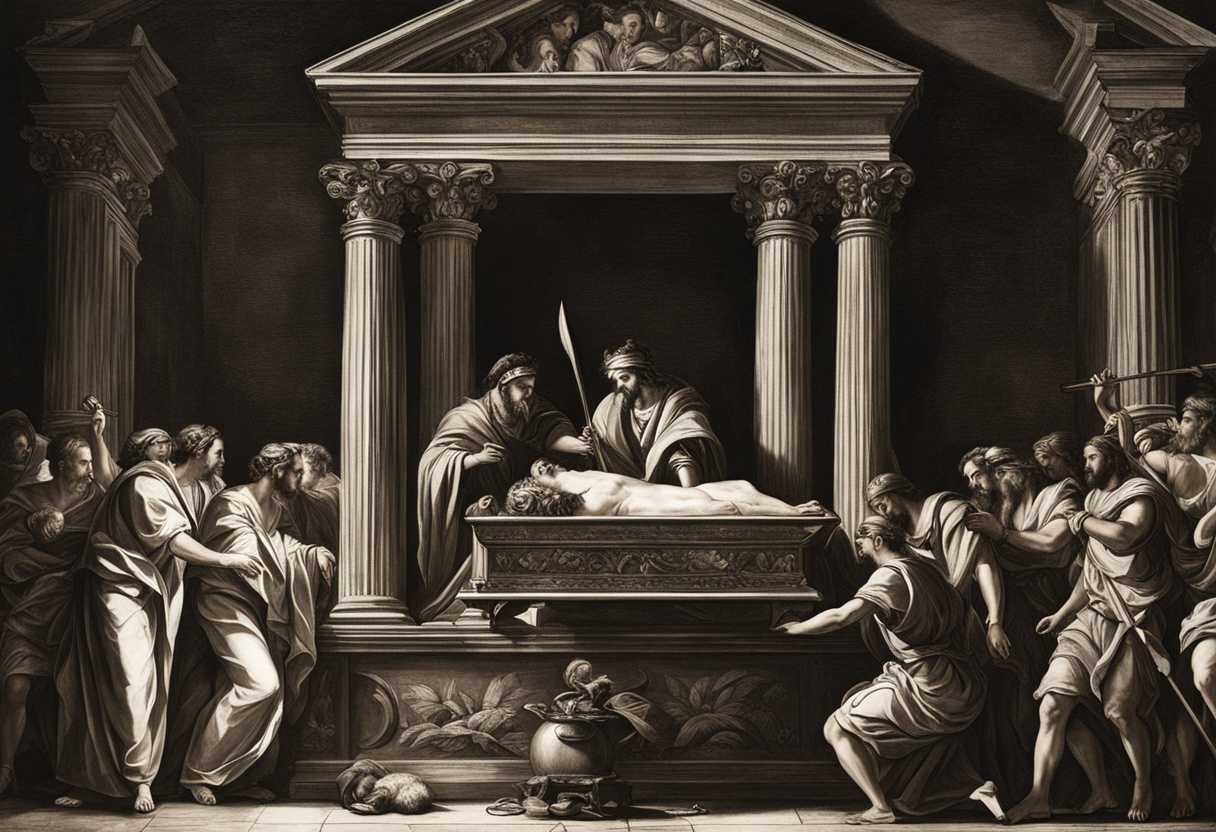
Emerods, mentioned in the Bible (notably in 1 Samuel 5-6), are often identified with tumors or painful growths. They were associated with divine judgment, particularly inflicted upon the Philistines when they captured the Ark of the Covenant.
Scripture
6 The hand of the Lord was heavy against the people of Ashdod, and he terrified and afflicted them with tumors, both Ashdod and its territory.
7 And when the men of Ashdod saw how things were, they said, “The ark of the God of Israel must not remain with us, for his hand is hard against us and against Dagon our god.”
8 So they sent and gathered together all the lords of the Philistines and said, “What shall we do with the ark of the God of Israel?” They answered, “Let the ark of the God of Israel be brought around to Gath.” So they brought the ark of the God of Israel there.
9 But after they had brought it around, the hand of the Lord was against the city, causing a very great panic, and he afflicted the men of the city, both young and old, so that tumors broke out on them.
10 So they sent the ark of God to Ekron. But as soon as the ark of God came to Ekron, the people of Ekron cried out, “They have brought around to us the ark of the God of Israel to kill us and our people.”
11 They sent therefore and gathered together all the lords of the Philistines and said, “Send away the ark of the God of Israel, and let it return to its own place, that it may not kill us and our people.” For there was a deathly panic throughout the whole city. The hand of God was very heavy there.
12 The men who did not die were struck with tumors, and the cry of the city went up to heaven.
Meaning of Emerods in the Bible
In the biblical context, “emerods,” often translated as tumors or hemorrhoids, symbolize not just physical affliction but also a manifestation of divine disfavor and judgment. The specific narrative found in 1 Samuel 5-6 recounts how the Ark of the Covenant, representing God’s presence, was captured by the Philistines. Upon taking the Ark, they experienced severe plagues, described verse encapsulates the theme of divine retribution and serves as a cautionary tale about the consequences of dishonoring God.
The broader indicating an understanding that their suffering had a moral and spiritual dimension. This act reflects the broader biblical theme of repentance and the necessity of acknowledging one’s shortcomings in the face of divine judgment. Ultimately, the affliction of emerods serves as a reminder of the perpetual struggle between divine justice and human rebellion, resonating with the enduring biblical message of accountability before God.
The concept of emerods also evokes a broader theological reflection on the nature of divine judgment and human accountability. Throughout biblical literature, physical afflictions often convey spiritual truths, illustrating the idea that suffering can lead to introspection and transformation. Such themes can be found in other narratives where disabilities or ailments serve as symbols, urging individuals or communities to reconsider their actions in the light of divine expectations. The affliction serves not only as punishment but also as a catalyst for reflecting on one’s relationship with God, emphasizing that through struggle, individuals may find pathways to redemption and reconciliation.
Moreover, the imagery As seen in the overarching narrative of Israel’s history, the affliction of emerods reminds the faithful of the potential consequences of straying from divine statutes, continually inviting reflection, repentance, and the opportunity for renewed commitment to God’s covenant.
Symbol of Divine Judgment
Emerods, often interpreted as tumors or painful swellings, can be seen as a representation of divine judgment in the biblical narrative. Their appearance in the context of the Philistines’ the relationship between humanity and the divine.
Representation of Physical and Spiritual Affliction
Emerods also symbolize the intersection of physical and spiritual affliction. in biblical theology, where the body and spirit are intertwined.
Call to Repentance and Restoration
The affliction of emerods serves as a catalyst for reflection and repentance. In the narrative, the suffering caused by these tumors prompts the Philistines one’s shortcomings and seek a path toward healing and restoration, both physically and spiritually.
How to Embrace Faith Amidst Trials and Tribulations
Embracing faith amidst trials and tribulations can feel daunting, but it’s in these challenging moments that our faith can truly deepen and flourish. When life throws its hardest punches, remember that you are not alone; God walks with you through every storm. Take time to pray and pour out your heart to Him, just as David did in the Psalms, expressing both his anguish and his trust in God’s unfailing love. Surround yourself with a supportive community—friends, family, or a church group—who struggle is an opportunity to grow closer to God and to witness His faithfulness in your life.
Bible References to Emerods in Scripture:
2 Samuel 6:6-7: 6 And when they came to the threshing floor of Nacon, Uzzah put out his hand to the ark of God and took hold of it, for the oxen stumbled.
7 And the anger of the Lord was kindled against Uzzah, and God struck him down there because of his error, and he died there beside the ark of God.
1 Chronicles 10:12: 12 all the valiant men arose and took away the body of Saul and the bodies of his sons, and brought them to Jabesh. And they buried their bones under the oak in Jabesh and fasted seven days.
Jeremiah 30:17: 17 For I will restore health to you,
and your wounds I will heal,
declares the Lord,
because they have called you an outcast:
‘It is Zion, for whom no one cares!’
Revelation 16:2-11: 2 So the first angel went and poured out his bowl on the earth, and harmful and painful sores came upon the people who bore the mark of the beast and worshiped its image.
3 The second angel poured out his bowl into the sea, and it became like the blood of a corpse, and every living thing died that was in the sea.
4 The third angel poured out his bowl into the rivers and the springs of water, and they became blood.
5 “And I heard the angel in charge of the waters say, ‘Just are you, O Holy One, who is and who was, for you brought these judgments.’”
6 “For they have shed the blood of saints and prophets, and you have given them blood to drink. It is what they deserve!”
7 And I heard the altar saying, “Yes, Lord God the Almighty, true and just are your judgments!”
8 The fourth angel poured out his bowl on the sun, and it was allowed to scorch people with fire.
9 They were scorched by the fierce heat, and they cursed the name of God who had power over these plagues. They did not repent and give him glory.
10 The fifth angel poured out his bowl on the throne of the beast, and its kingdom was plunged into darkness. People gnawed their tongues in anguish
11 and cursed the God of heaven for their pain and sores. They did not repent of their deeds.

Reverend Michael Johnson is an experienced Church Minister with a profound expertise in spirituality and guidance. With a serene presence and a compassionate heart, he has faithfully served his congregation for over 20 years, leading them on a spiritual journey towards inner peace and enlightenment. Reverend Johnson’s extensive knowledge of religious philosophies and profound understanding of human nature have made him a trusted confidant and mentor to many, as he seamlessly weaves his profound wisdom into life teachings. Reverend Johnson’s calming demeanor and empathetic nature continue to uplift and heal souls, nurturing a sense of unity and tranquility within his community.