
Biblical remarriage is generally understood as the act of marrying again after a divorce or the death of a spouse, with specific guidelines provided in scriptures such as Matthew 19:9, which indicates that divorce is permissible only in cases of sexual immorality. Additionally, Romans 7:2-3 teaches that a spouse is bound to their partner as long as they live, but if one partner dies, the other is free to remarry without being considered an adulterer.
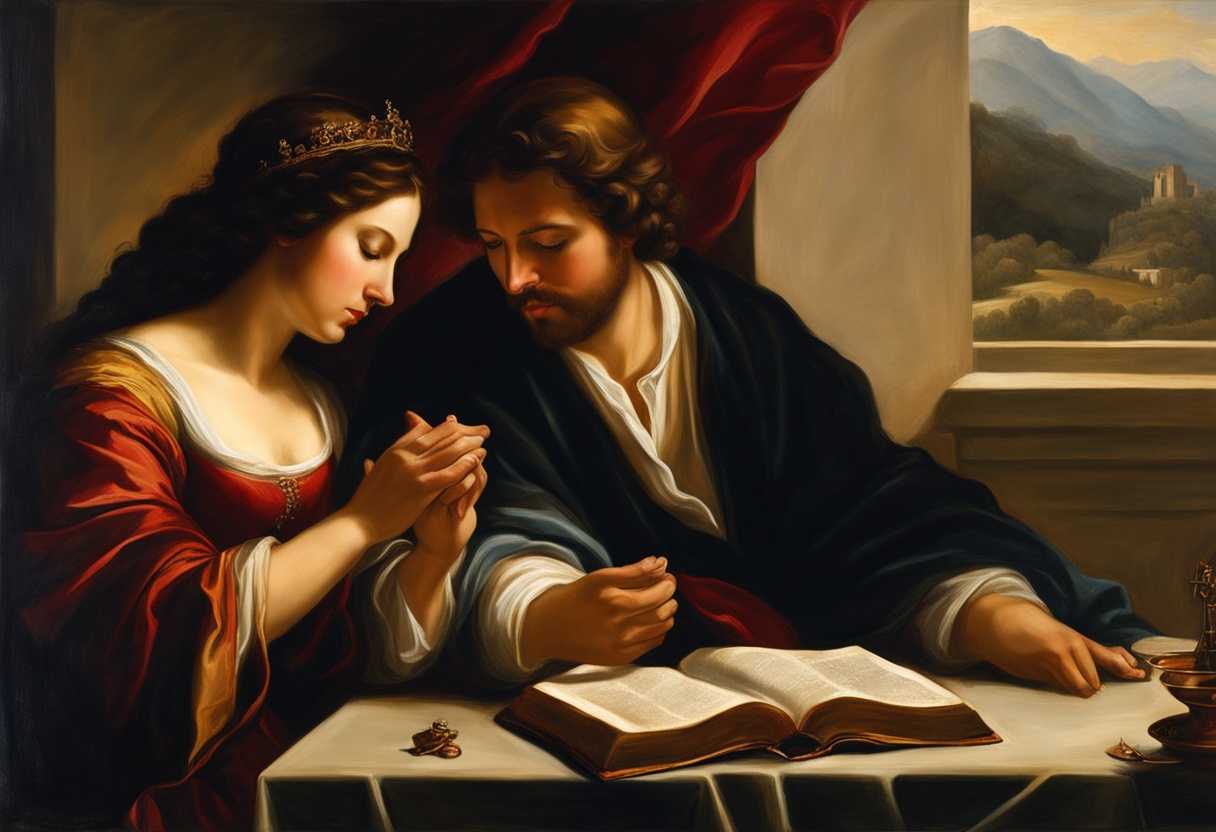
Scripture
3 And Pharisees came up to him and tested him by asking, “Is it lawful to divorce one’s wife for any cause?”
4 He answered, “Have you not read that he who created them from the beginning made them male and female,
5 and said, ‘Therefore a man shall leave his father and his mother and hold fast to his wife, and the two shall become one flesh’?
6 So they are no longer two but one flesh. What therefore God has joined together, let not man separate.”
7 They said to him, “Why then did Moses command one to give a certificate of divorce and to send her away?”
8 He said to them, “Because of your hardness of heart Moses allowed you to divorce your wives, but from the beginning it was not so.
9 And I say to you: whoever divorces his wife, except for sexual immorality, and marries another, commits adultery.”
Biblical Definition of Remarriage
The Bible presents a nuanced perspective on remarriage, emphasizing the sanctity of marriage and the conditions under which remarriage is biblically acceptable. In Matthew 19:9, Jesus articulates that divorce—and by extension, remarriage—should only occur in cases of sexual immorality (Greek: porneia). This stipulation reflects a high view of marriage as a covenant relationship intended to mirror the fidelity of Christ to the Church. Therefore, the allowance for remarriage in the case of marital unfaithfulness underscores the severity of such betrayal, allowing the innocent party the opportunity to seek healing and restoration in a new marriage, should they choose to do so.
Moreover, Romans 7:2-3 outlines another facet of remarriage by asserting that a woman is bound to her husband only while he is alive; upon his death, she is free to remarry without bearing the stigma of adultery. This passage highlights the transition from one covenant relationship to another, reinforcing that death, rather than divorce, liberates an individual from the marital bond. Taken together, these scriptures suggest that the Bible acknowledges the complexity of human relationships and the fallen nature of the world while still affirming the ideal of lifelong commitment in marriage. Remarriage, therefore, is seen as permissible and honorable within specific contexts, inviting believers to reflect on their commitments and the grace available in healing and moving forward in relationships.
Beyond the explicit teachings found in specific verses, the overall biblical narrative reveals a broader understanding of relationships and the nature of commitment. The Old Testament provides insights into the cultural practices surrounding marriage and remarriage, as seen in the stories of Ruth and Boaz. Ruth’s situation exemplifies a form of levirate marriage, intended to maintain family lines and provide for widows. Her eventual remarriage is not only accepted but celebrated, demonstrating God’s provision and favor when decisions align with His intentions for relationships.
Additionally, the wisdom literature, particularly in Proverbs, emphasizes the virtues of fidelity, companionship, and the pursuit of wisdom in relationships. Proverbs 18:22 notes, “He who finds a wife finds what is good and receives favor from the Lord,” which underscores the blessing inherent in finding a suitable partner. If a previous marriage has ended due to the grievous circumstances allowed in Scripture, pursuing a second union is framed not as a failure but rather as an opportunity for restoration and fulfillment in one’s relational journey. Ultimately, the biblical approach to remarriage acknowledges human fallibility while encouraging individuals to seek divine guidance and wisdom in their decisions related to marriage. This holistic view fosters an understanding that remarriage, when approached prayerfully and with sincerity, can be part of God’s redemptive plan in a believer’s life.
The Covenant of Marriage
In the Bible, marriage is often depicted as a sacred covenant between two individuals and God. This covenantal view emphasizes the seriousness and permanence of the marital relationship. Remarriage, therefore, is not merely a social contract but a spiritual commitment that should be approached with reverence. The biblical definition of remarriage suggests that individuals entering into a new marriage must consider the weight of their previous commitments and the implications of forming a new covenant.
Restoration and Redemption
Another broader meaning of remarriage in the biblical context is the theme of restoration and redemption. The Bible frequently illustrates God’s willingness to forgive and restore relationships, which can extend to the realm of marriage. Remarriage can be seen as an opportunity for healing and a fresh start, allowing individuals to experience God’s grace and mercy in their lives. This perspective encourages those who have faced the pain of divorce to seek new beginnings while recognizing the importance of spiritual growth and maturity.
The Role of Forgiveness
Forgiveness plays a crucial role in the biblical understanding of remarriage. The process of moving on from a previous marriage often involves addressing feelings of hurt, betrayal, and disappointment. The Bible teaches the importance of forgiving oneself and others to foster emotional and spiritual well-being. In the context of remarriage, this means that individuals must be willing to let go of past grievances to build a healthy and loving relationship in their new marriage. This emphasis on forgiveness highlights the transformative power of love and grace in the journey of remarriage.
How to Strengthen Faith and Commit to Relationships
Strengthening your faith and committing to relationships is a beautiful journey that intertwines both your spiritual and personal life. Start by dedicating time each day to prayer and reflection, allowing God to guide your thoughts and actions. This practice not only deepens your relationship with Him but also helps you see others through His eyes, fostering compassion and understanding. Engage actively in your community—whether it’s through your church or local outreach programs—where you can build meaningful connections with others who share your values. Remember, relationships require effort; be intentional in showing love and support to those around you. As you nurture these bonds, you’ll find that your faith grows stronger, rooted in the love and grace you extend to others. Embrace this journey with an open heart, and watch how both your faith and relationships flourish.
Bible References to Remarriage Definitions:
Mark 10:2-12: 2 And Pharisees came up and in order to test him asked, “Is it lawful for a man to divorce his wife?”
3 He answered them, “What did Moses command you?”
4 They said, “Moses allowed a man to write a certificate of divorce and to send her away.”
5 And Jesus said to them, “Because of your hardness of heart he wrote you this commandment.
6 But from the beginning of creation, ‘God made them male and female.’
7 ‘Therefore a man shall leave his father and mother and hold fast to his wife,’
8 and the two shall become one flesh.’ So they are no longer two but one flesh.
9 What therefore God has joined together, let not man separate.
10 And in the house the disciples asked him again about this matter.
11 And he said to them, “Whoever divorces his wife and marries another commits adultery against her,
12 And if she divorces her husband and marries another, she commits adultery.”
Luke 16:18: 18 “Everyone who divorces his wife and marries another commits adultery, and he who marries a woman divorced from her husband commits adultery.”
Romans 7:1-3: 1 Or do you not know, brothers—for I am speaking to those who know the law—that the law is binding on a person only as long as he lives?
2 For a married woman is bound by law to her husband while he lives, but if her husband dies she is released from the law of marriage.
3 Accordingly, she will be called an adulteress if she lives with another man while her husband is alive. But if her husband dies, she is free from that law, and if she marries another man she is not an adulteress.
1 Corinthians 7:10-16: 10 To the married I give this charge (not I, but the Lord): the wife should not separate from her husband.
11 (but if she does, she should remain unmarried or else be reconciled to her husband), and the husband should not divorce his wife.
12 To the rest I say (I, not the Lord) that if any brother has a wife who is an unbeliever, and she consents to live with him, he should not divorce her.
13 If any woman has a husband who is an unbeliever, and he consents to live with her, she should not divorce him.
14 For the unbelieving husband is made holy because of his wife, and the unbelieving wife is made holy because of her husband. Otherwise your children would be unclean, but as it is, they are holy.
15 But if the unbelieving partner separates, let it be so. In such cases the brother or sister is not enslaved. God has called you to peace.
16 For how do you know, wife, whether you will save your husband? Or how do you know, husband, whether you will save your wife?
1 Corinthians 7:27-28: 27 Are you bound to a wife? Do not seek to be free. Are you free from a wife? Do not seek a wife.
28 But if you do marry, you have not sinned, and if a betrothed woman marries, she has not sinned. Yet those who marry will have worldly troubles, and I would spare you that.
1 Corinthians 7:39-40: 39 A wife is bound to her husband as long as he lives. But if her husband dies, she is free to be married to whom she wishes, only in the Lord.
40 Yet in my judgment she is happier if she remains as she is. And I think that I too have the Spirit of God.
Deuteronomy 24:1-4: 1 “When a man takes a wife and marries her, if then she finds no favor in his eyes because he has found some indecency in her, and he writes her a certificate of divorce and puts it in her hand and sends her out of his house, and she departs out of his house,”
2 And when she departs out of his house, she goes and becomes another man’s wife,
3 and the latter man hates her and writes her a certificate of divorce and puts it in her hand and sends her out of his house, or if the latter man dies, who took her to be his wife,
4 her first husband, who sent her away, may not take her again to be his wife, after she has been defiled, for that is an abomination before the Lord. And you shall not bring sin upon the land that the Lord your God is giving you for an inheritance.

Reverend Ogunlade is a seasoned Church Minister with over three decades of experience in guiding and nurturing congregations. With profound wisdom and a serene approach, Reverend Ogunlade has carried out various pastoral duties, including delivering uplifting sermons, conducting religious ceremonies, and offering sage counsel to individuals seeking spiritual guidance. Their commitment to fostering harmony and righteousness within their community is exemplified through their compassionate nature, making them a beloved and trusted figure among the congregation.