
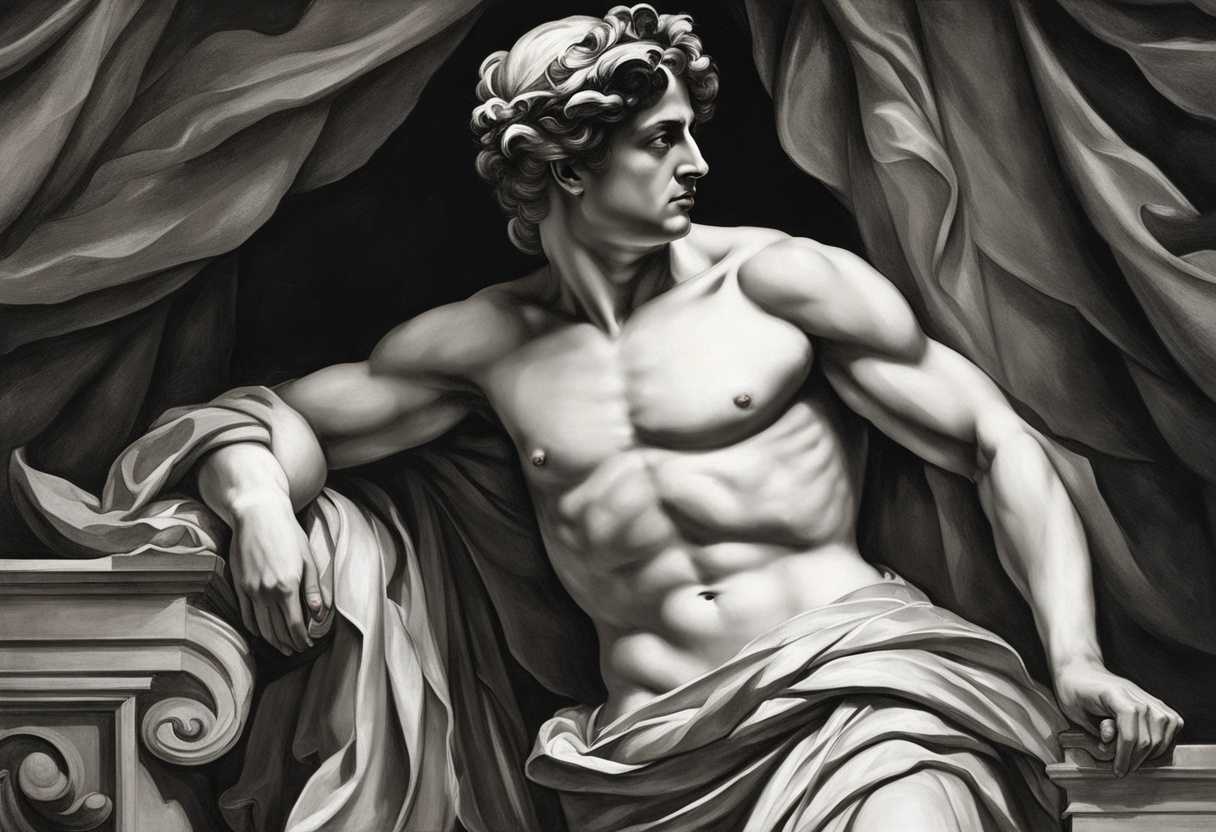
In the Bible, a “proud look” refers to an attitude of arrogance and self-importance, often associated with disdain for others. It is mentioned in Proverbs 6:16-17 as one of the things that the Lord detests, emphasizing the value of humility and the dangers of pride.
Scripture
16 There are six things that the Lord hates, seven that are an abomination to him:
17 haughty eyes, a lying tongue, and hands that shed innocent blood,
18 a heart that devises wicked plans, feet that make haste to run to evil,
19 a false witness who breathes out lies, and one who sows discord among brothers.
Meaning of a Proud Look in Scripture
The concept of a “proud look” in the Bible symbolizes an internal disposition that elevates oneself above others, often resulting in contempt and a lack of empathy. As seen in Proverbs 6:16-17, this inward pride is juxtaposed with the values of humility and reverence for God, marking it as one of the seven abominations to the Lord. Such a look is indicative of a heart that is not only self-satisfied but also dismissive of the inherent dignity and worth of others. This idea is further explored in James 4:6, where it states, “God resists the proud, but gives grace to the humble,” reinforcing the notion that pride creates a barrier to receiving God’s favor and blessings.
Moreover, the Bible underscores the destructive nature of pride throughout its texts. In Proverbs 16:18, it warns, “Pride goes before destruction, and a haughty spirit before a fall,” illustrating that arrogance often leads to one’s downfall, both morally and spiritually. This principle is echoed in the story of Nebuchadnezzar in Daniel 4, where his pride ultimately led to his temporary insanity, demonstrating that the exaltation of one’s self can have severe consequences. Thus, the “proud look” serves as a reminder to cultivate humility and to submit oneself to God’s authority, fostering an attitude of service and love rather than one of superiority and exclusion. This aligns with the teachings of Jesus in Matthew 23:12, where he states, “Whoever exalts himself will be humbled, and whoever humbles himself will be exalted,” emphasizing the divine mandate for humility as an essential virtue in the life of a believer.
In addition to the aforementioned insights, the “proud look” signifies a broader biblical theme concerning the dangers of hubris and the vanity of self-importance. The narrative of the Tower of Babel in Genesis 11 exemplifies this, where humanity’s pride leads them to aspire to ascend to the heavens. Their effort to make a name for themselves underscores how collective arrogance invites divine intervention, resulting in confusion and dispersion. This story serves as a poignant reminder that human attempts to elevate oneself apart from God’s design can lead to chaos and disunity, further illustrating the folly inherent in a proud disposition.
Furthermore, the Psalms often reflect a profound understanding of the consequences of pride. In Psalm 101:5, it proclaims, “Whoever slanders his neighbor secretly, I will destroy. Whoever has a haughty look and an arrogant heart, I will not endure.” This highlights the connection between a proud look and destructive behaviors like slander and contempt. The text suggests that such attitudes alienate individuals from God’s presence and favor, emphasizing that true righteousness and closeness to God require a heart aligned with humility and respect for others. Through various passages, the Bible consistently reiterates that a proud look is not simply an outward expression; it signifies a heart that has turned away from the fundamental call to love and serve others, thus distancing oneself from divine grace and wisdom.
The Dangers of Pride
A proud look often symbolizes an inflated sense of self-worth and superiority over others. In biblical teachings, pride is frequently associated with a lack of humility and an unwillingness to recognize one’s own limitations and need for God. This attitude can lead to destructive behaviors and relationships, as it fosters an environment of arrogance and disdain for others. The Bible warns that such pride can ultimately lead to one’s downfall, as it distances individuals from the grace and guidance of God.
The Contrast of Humility
In contrast to a proud look, the Bible emphasizes the virtue of humility. A humble heart is seen as one that acknowledges its dependence on God and values others. This humility is not about self-deprecation but rather about recognizing one’s place in the grand scheme of creation. The proud look stands in stark opposition to this, as it reflects a heart that seeks to elevate itself above others, disregarding the biblical call to serve and love one another.
The Spiritual Implications
A proud look can also be interpreted as a spiritual barrier that hinders one’s relationship with God. It signifies a heart that is resistant to divine correction and guidance. In biblical narratives, pride often leads to spiritual blindness, where individuals fail to see their need for repentance and transformation. This spiritual arrogance can prevent individuals from experiencing the fullness of God’s love and grace, as they rely on their own understanding rather than submitting to divine wisdom.
How to Cultivate Humility and Strengthen Your Faith
Cultivating humility is a beautiful journey that can profoundly strengthen your faith, and it often begins with a simple yet powerful practice: self-reflection. Take time each day to examine your thoughts and actions, asking yourself how they align with Christ’s teachings. Remember, humility isn’t about thinking less of yourself, but rather thinking of yourself less. Embrace the idea that we are all imperfect beings in need of grace, and this realization can open your heart to deeper connections with others and with God. Surround yourself with a community that encourages vulnerability and accountability, and don’t shy away from serving those in need—acts of kindness can ground you in humility and remind you of the blessings you have. As you grow in humility, you’ll find that your faith becomes more resilient, rooted in the understanding that it’s not about your strength, but about relying on God’s infinite love and wisdom. So, lean into this journey with an open heart, and watch how your faith flourishes in the light of humility.
Bible References to a Proud Look:
Proverbs 16:18-19: 18 Pride goes before destruction,
and a haughty spirit before a fall.
19 It is better to be of a lowly spirit with the poor than to divide the spoil with the proud.
Isaiah 2:11-12: 11 The haughty looks of man shall be brought low,
and the lofty pride of men shall be humbled,
and the Lord alone will be exalted in that day.
12 For the Lord of hosts has a day against all that is proud and lofty, against all that is lifted up—and it shall be brought low;
Isaiah 3:16-17: 16 The Lord said: Because the daughters of Zion are haughty and walk with outstretched necks, glancing wantonly with their eyes, mincing along as they go, tinkling with their feet,
17 therefore the Lord will strike with a scab the heads of the daughters of Zion, and the Lord will lay bare their secret parts.
Isaiah 13:11: 11 I will punish the world for its evil,
and the wicked for their iniquity;
I will put an end to the pomp of the arrogant,
and lay low the pompous pride of the ruthless.
Jeremiah 50:29-32: 29 “Summon archers against Babylon, all those who bend the bow. Encamp around her; let no one escape. Recompense her according to her deeds; do to her according to all that she has done.
30 Therefore her young men shall fall in her squares, and all her soldiers shall be destroyed on that day, declares the Lord.
31 “Behold, I am against you, O proud one, declares the Lord God of hosts, for your day has come, the time when I will punish you.”
32 The proud one shall stumble and fall, with none to raise him up, and I will kindle a fire in his cities, and it will devour all that is around him.
Ezekiel 28:17-19: 17 Your heart was proud because of your beauty;
you corrupted your wisdom for the sake of your splendor.
18 By the multitude of your iniquities, in the unrighteousness of your trade you profaned your sanctuaries; so I brought fire out from your midst; it consumed you, and I turned you to ashes on the earth in the sight of all who saw you.
19 All who know you among the peoples are appalled at you; you have come to a dreadful end and shall be no more forever.”
Daniel 4:28-33: 28 All this came upon King Nebuchadnezzar.
29 At the end of twelve months he was walking on the roof of the royal palace of Babylon,
30 The king answered and said, “Is not this great Babylon, which I have built by my mighty power as a royal residence and for the glory of my majesty?”
31 While the words were still in the king’s mouth, there fell a voice from heaven, “O King Nebuchadnezzar, to you it is spoken: The kingdom has departed from you,
32 and you shall be driven from among men, and your dwelling shall be with the beasts of the field. And you shall be made to eat grass like an ox, and seven periods of time shall pass over you, until you know that the Most High rules the kingdom of men and gives it to whom he will.
33 Immediately the word was fulfilled against Nebuchadnezzar. He was driven from among men and ate grass like an ox, and his body was wet with the dew of heaven till his hair grew as long as eagles’ feathers, and his nails were like birds’ claws.
Obadiah 1:3-4: 3 The pride of your heart has deceived you,
you who live in the clefts of the rock,
in your lofty dwelling,
who say in your heart,
“Who will bring me down to the ground?”
4 Though you soar aloft like the eagle,
though your nest is set among the stars,
from there I will bring you down,
declares the Lord.
Luke 18:9-14: 9 He also told this parable to some who trusted in themselves that they were righteous, and treated others with contempt:
10 “Two men went up into the temple to pray, one a Pharisee and the other a tax collector.”
11 The Pharisee, standing by himself, prayed thus: ‘God, I thank you that I am not like other men, extortioners, unjust, adulterers, or even like this tax collector.
12 I fast twice a week; I give tithes of all that I get.’
13 But the tax collector, standing far off, would not even lift up his eyes to heaven, but beat his breast, saying, ‘God, be merciful to me, a sinner!’
14 I tell you, this man went down to his house justified, rather than the other. For everyone who exalts himself will be humbled, but the one who humbles himself will be exalted.”
James 4:6-10: 6 But he gives more grace. Therefore it says, “God opposes the proud but gives grace to the humble.”
7 Submit yourselves therefore to God. Resist the devil, and he will flee from you.
8 Draw near to God, and he will draw near to you. Cleanse your hands, you sinners, and purify your hearts, you double-minded.
9 Be wretched and mourn and weep. Let your laughter be turned to mourning and your joy to gloom.
10 Humble yourselves before the Lord, and he will exalt you.
1 Peter 5:5-6: 5 Likewise, you who are younger, be subject to the elders. Clothe yourselves, all of you, with humility toward one another, for “God opposes the proud but gives grace to the humble.”
6 Humble yourselves, therefore, under the mighty hand of God so that at the proper time he may exalt you,

Reverend Ogunlade is a seasoned Church Minister with over three decades of experience in guiding and nurturing congregations. With profound wisdom and a serene approach, Reverend Ogunlade has carried out various pastoral duties, including delivering uplifting sermons, conducting religious ceremonies, and offering sage counsel to individuals seeking spiritual guidance. Their commitment to fostering harmony and righteousness within their community is exemplified through their compassionate nature, making them a beloved and trusted figure among the congregation.