
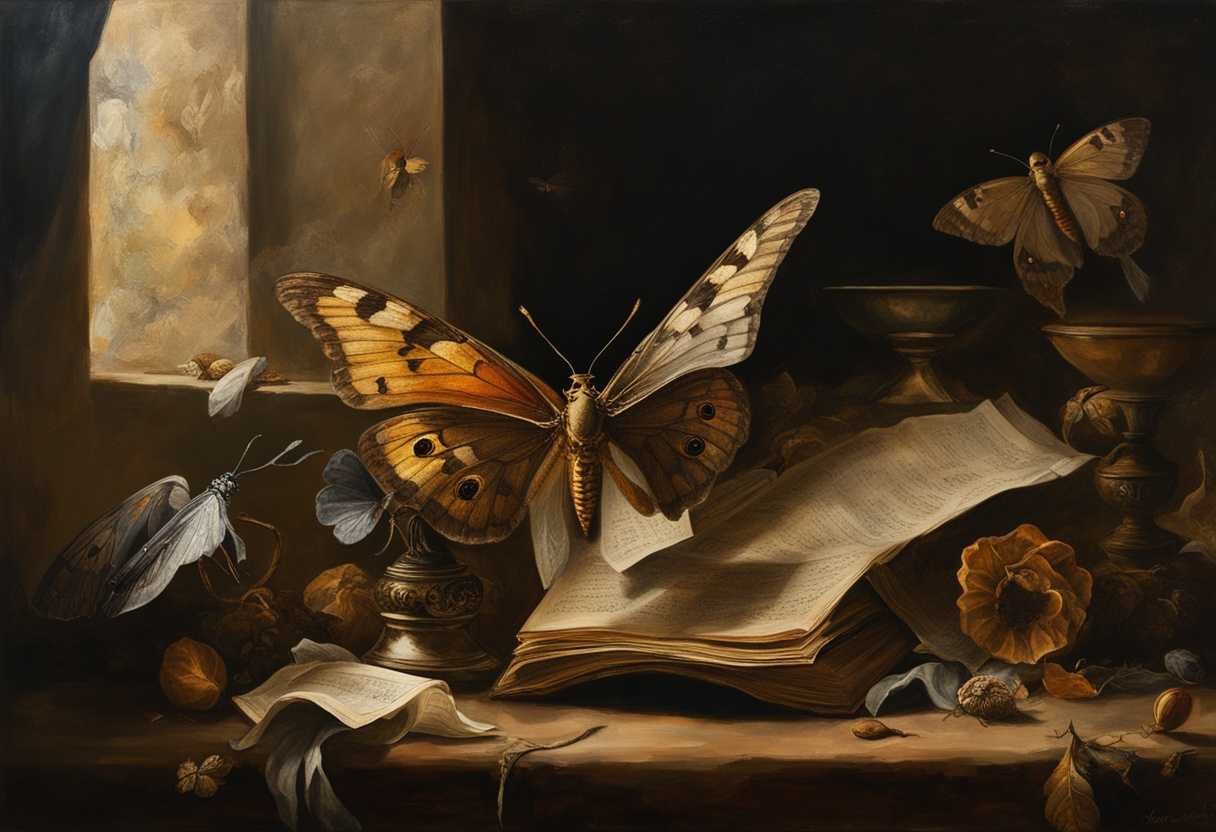
In the Bible, a moth often symbolizes destruction and the ephemeral nature of worldly possessions. For example, in Matthew 6:19-20, it is mentioned that moths can destroy treasures stored on Earth, highlighting the importance of investing in eternal rather than earthly riches.
Biblical Significance of Moths
The concept of the moth in the Bible serves as a poignant reminder of the transience of material wealth and the fragility of human endeavors. In Matthew 6:19-20, Jesus warns against laying up treasures on Earth, where “moth and rust destroy” and “thieves break in and steal.” This verse underscores the impermanence of earthly possessions, emphasizing that all accumulated wealth, status, and material goods are ultimately vulnerable to decay and theft. The moth thus becomes a metaphor for the inevitable degradation that accompanies worldly pursuits, nudging believers toward a focus on spiritual investments that yield eternal dividends, as heavenly treasures are immune to such decay.
Further, the theme of moths as symbols of destruction can also be seen in Job 4:19 and Isaiah 50:9, where they illustrate human frailty and the transient nature of life. Job reflects on the vulnerability of mortals, comparing them to fragile creatures that can be easily consumed, while Isaiah uses moth imagery to depict divine judgment upon human pride and frailty. This imagery evokes a sense of urgency for believers to reassess their priorities and seek a life characterized by faithfulness and reliance on God rather than superficial pursuits. Ultimately, the biblical portrayal of moths invites deeper contemplation on the nature of true wealth, urging individuals to cultivate a relationship with the eternal—a treasure that grows and cannot be destroyed, encouraging a kingdom-focused lifestyle that transcends the temporal.
Beyond the verses already mentioned, the theme of the moth continues to weave through other passages in scripture, reinforcing the lessons of impermanence and caution. In Psalms, there is a subtle acknowledgment of the fleeting nature of life, where human existence is contrasted with the eternal nature of God. The Psalmist reflects on the fragility of human life, suggesting that just as the moth ultimately vanishes, so do human beings when compared to the everlasting nature of God’s creation. This serves as a reminder to approach life with humility and an understanding of our temporal place within God’s vast plan.
Moreover, the prophetic literature often employs the moth as a symbol of divine judgment, further elucidating its role as a representation of decay and destruction. In the context of Israel’s infidelity to God, the imagery of a moth can be seen as a warning of the consequences of straying from faithfulness. Just as moths consume and ravage material items, the prophetic messages highlight how spiritual unfaithfulness can lead to the consumption of one’s spiritual vitality. By illustrating how easily the moth can erode what is considered valuable, the scripture calls for introspection and a return to a committed relationship with God, emphasizing that true preservation of the soul is rooted not in earthly possessions but in abiding faith and obedience to divine instruction. Ultimately, the deeper biblical narrative invites believers toward a path of lasting significance, urging them to forsake the moth-eaten treasures of this world for the richness found in divine fellowship.
The Transience of Material Wealth
In the Bible, the moth often symbolizes the fleeting nature of material possessions. Just as a moth can quickly consume and destroy fabric, so too can earthly treasures be easily lost or diminished. This serves as a reminder to prioritize spiritual wealth over material gain, emphasizing that physical items are temporary and can be taken away at any moment.
The Consequences of Neglect
The presence of moths can also represent the consequences of neglect and decay. In biblical contexts, this can be interpreted as a warning against complacency in one’s spiritual life. Just as moths can silently damage clothing, neglecting one’s faith or moral responsibilities can lead to spiritual deterioration. This highlights the importance of vigilance and care in maintaining one’s relationship with God.
The Call to Spiritual Renewal
Moths can also symbolize the need for transformation and renewal. In nature, moths undergo metamorphosis, which can be seen as a metaphor for spiritual growth and change. This aspect encourages believers to embrace personal transformation, shedding old habits and embracing a new life in faith. It serves as a reminder that, like the moth, individuals can emerge renewed and strengthened through their spiritual journeys.
How to Embrace Transience for Spiritual Growth as a Christian
Embracing transience as a Christian can be a profound journey toward spiritual growth, inviting us to recognize the fleeting nature of life and the importance of living in the present moment. When we acknowledge that our time on earth is limited, we can cultivate a deeper appreciation for our relationships, our faith, and the blessings we often take for granted. Reflecting on scriptures like Ecclesiastes 3:1-8, which reminds us that there is a time for everything, can help us understand that each season of life, whether joyful or challenging, serves a purpose in God’s grand design. By letting go of our attachments to material things and the desire for permanence, we open ourselves to the transformative power of God’s love, allowing it to guide us through change and uncertainty. This mindset not only fosters resilience but also encourages us to live with intention, making every moment count as we seek to embody Christ’s love in a world that is ever-changing.
Bible References to the Meaning of Moths:
Isaiah 50:9-9: 9 Behold, the Lord God helps me; who will declare me guilty?
Isaiah 51:8-8: 8 For the moth will eat them up like a garment,
and the worm will eat them like wool;
but my righteousness will be forever,
and my salvation to all generations.
Hosea 5:12-12: 12 Therefore I am like a moth to Ephraim,
and like dry rot to the house of Judah.
Matthew 6:19-20: 19 “Do not lay up for yourselves treasures on earth, where moth and rust destroy and where thieves break in and steal,
20 but lay up for yourselves treasures in heaven, where neither moth nor rust destroys and where thieves do not break in and steal.
Luke 12:33-34: 33 Sell your possessions, and give to the needy. Provide yourselves with moneybags that do not grow old, with a treasure in the heavens that does not fail, where no thief approaches and no moth destroys.
34 For where your treasure is, there will your heart be also.
James 5:2-3: 2 Your riches have rotted and your garments are moth-eaten.
3 Your gold and silver have corroded, and their corrosion will be evidence against you and will eat your flesh like fire. You have laid up treasure in the last days.

Reverend Ogunlade is a seasoned Church Minister with over three decades of experience in guiding and nurturing congregations. With profound wisdom and a serene approach, Reverend Ogunlade has carried out various pastoral duties, including delivering uplifting sermons, conducting religious ceremonies, and offering sage counsel to individuals seeking spiritual guidance. Their commitment to fostering harmony and righteousness within their community is exemplified through their compassionate nature, making them a beloved and trusted figure among the congregation.