
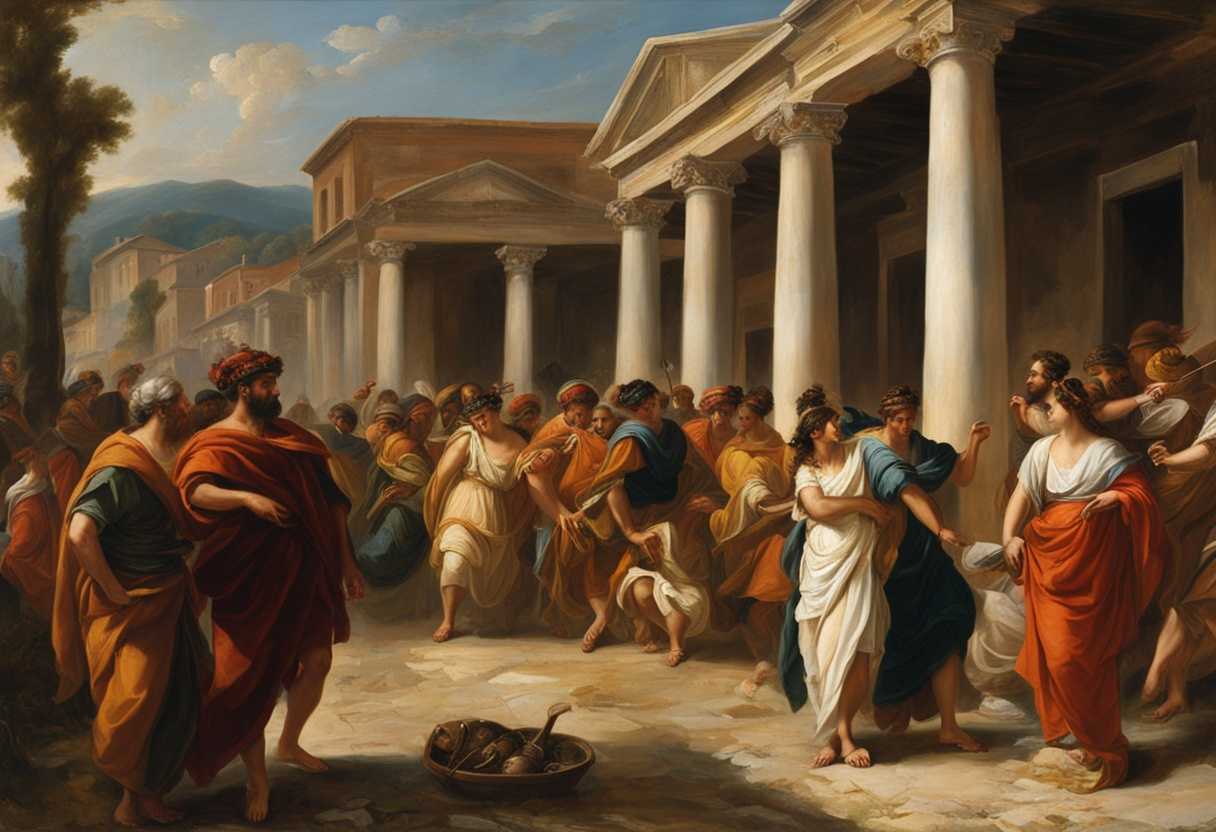
Philippians: Joy In Christ, Unity, And Perseverance
The Epistle to the Philippians, commonly known as Philippians, is one of the letters attributed to the apostle Paul, and it’s included in the New Testament. Paul wrote this letter during his imprisonment, likely in Rome, sometime between 60-62 AD.
Philippi was a prominent Roman colony located in what is now northeastern Greece, near the Aegean Sea. The city had been established centuries earlier by Philip II of Macedon, and it had prospered under Roman rule, serving as an important commercial and military hub.
At the time Philippians was written, the Roman Empire was at the height of its power, with Nero as the reigning emperor. The political landscape was a delicate balance, as Roman authorities maintained control over their territories, occasionally dealing with pockets of unrest and rebellion.
The people of Philippi were a diverse community, comprising both native Greeks and Roman citizens. They were known for their devotion to civic duties and Roman patriotism, as well as their openness to new religious ideas. The Philippian church, founded by Paul during his second missionary journey, was a thriving community of believers, characterized by their generosity, unity, and commitment to the gospel.
The significance of Philippians within Christianity lies in its emphasis on the centrality of Christ, the need for unity and joy in the face of adversity, and the call to live a life worthy of the gospel. Paul’s letter is a powerful testament to the transformative power of the gospel and the Christian’s call to follow Christ, even in the face of persecution and suffering.
The Author of Philippians
The book of Philippians is traditionally attributed to the Apostle Paul. Paul, originally known as Saul, was a highly educated Jewish Pharisee who initially persecuted early Christians before experiencing a dramatic conversion on the road to Damascus. Following his conversion, Paul became one of the most influential figures in the early Christian church, traveling extensively to spread the message of Jesus Christ.
Paul’s motivation for writing the letter to the Philippians stemmed from his deep care and affection for the Christian community in Philippi. Despite facing his own challenges such as imprisonment and persecution, Paul wanted to offer encouragement, exhortation, and guidance to the Philippian believers. He also sought to express his gratitude for their partnership in the gospel and to address some issues within the church, such as unity, humility, and joy in the midst of suffering. Paul likely wrote the letter to the Philippians while under house arrest in Rome, facing uncertainty about his future and the possibility of execution. Despite his own difficult circumstances, Paul’s concern and love for the Philippian believers shone through in his words, reflecting his deep faith in God’s sovereignty and his unwavering commitment to the advancement of the gospel.
Overview of Philippians
The letter of Philippians, written by the apostle Paul, is a treasure trove of encouragement and wisdom for believers. Addressed to the church in Philippi, this epistle brims with themes of joy, gratitude, humility, and unity in Christ. Paul expresses his deep appreciation for the Philippians’ partnership in the gospel in the opening chapter, urging them to stand firm in the face of persecution and live lives worthy of the good news. Moving into the second chapter, he underscores the importance of humility and unity, using Christ’s own example of self-sacrificial love as the model.
Paul then warns against false teachings and legalism in the third chapter, emphasizing the supreme value of knowing Christ and His righteousness. He encourages the believers to press on, striving to grow in their understanding and experience of their Savior.
The final chapter brims with practical wisdom for daily living. Paul exhorts the Philippians to rejoice in the Lord always, to be anxious for nothing, and to focus their minds on what is true, noble, right, pure, lovely, and admirable. He also shares his own contentment, found in the strength of Christ, regardless of his circumstances.
Throughout this beloved letter, the centrality of Christ shines brightly. Philippians reminds us to live out our faith with joy, gratitude, and unwavering devotion, even when faced with trials and difficulties. It is a powerful testament to the transformative power of the gospel.
Key themes of Philippians
Philippians is about Rejoicing
The theme of rejoicing is prominent in the book of Philippians. The apostle Paul encourages the believers in Philippi to rejoice always, even in the midst of trials and challenges. He emphasizes the importance of joy in the Christian life, stating, “Rejoice in the Lord always. I will say it again: Rejoice!” (Philippians 4:4). Paul himself exemplifies this attitude of joy despite his own difficult circumstances, declaring, “I have learned the secret of being content in any and every situation, whether well fed or hungry, whether living in plenty or in want” (Philippians 4:12). This theme of rejoicing is rooted in the believers’ relationship with Christ, as Paul reminds them, “Rejoice in the Lord always. I will say it again: Rejoice!” (Philippians 4:4). The book of Philippians teaches us that true joy comes from knowing and trusting in the Lord, regardless of our circumstances.
Philippians is about Unity
A key theme in the book of Philippians is unity. The apostle Paul emphasizes the importance of believers being of one mind and one spirit, working together in harmony for the sake of the gospel. In Philippians 2:2, Paul urges the Philippians to be like-minded, having the same love, being one in spirit and of one mind. He encourages them to put aside selfish ambition and vain conceit, and to consider others above themselves (Philippians 2:3-4). Paul also uses the example of Christ’s humility and obedience to God as a model for believers to follow in maintaining unity (Philippians 2:5-8). Ultimately, Paul reminds the Philippians that their unity in faith and purpose brings joy and encouragement, and is a powerful testimony to the world of the transformative power of the gospel (Philippians 2:1, 2:28).
Philippians is about Humility
At the heart of the book of Philippians is the theme of humility. In Philippians 2:3-4, it is emphasized that we should do nothing out of selfish ambition or vain conceit, but in humility consider others better than ourselves. This echoes the example of Jesus Christ, who humbled himself and became obedient to death on a cross (Philippians 2:8). The call to humility is a call to imitate Christ’s selfless attitude and to serve others with love and compassion. Throughout the book, Paul encourages the Philippians to have the same mindset as Christ, putting others before themselves and living in unity and humility. Ultimately, humility is portrayed as a virtue that leads to exaltation and joy in the Christian life.
Philippians is about Joy
Philippians is a book in the Bible that talks a lot about joy. In Philippians 4:4, it says, “Rejoice in the Lord always. I will say it again: Rejoice!” This verse shows us that joy is something we should always have because of our relationship with God. Even when facing challenges, we can find joy in knowing that God is with us. In Philippians 4:7, it talks about a peace that surpasses all understanding, which can guard our hearts and minds in Christ Jesus. This peace brings us joy even in difficult times. The book of Philippians reminds us that our joy is not dependent on our circumstances but on our faith in God.
Philippians is about Contentment
For the apostle Paul, contentment was a key theme in his letter to the Philippians. In Philippians 4:11-13, he writes about learning to be content in all circumstances, whether in times of plenty or in times of need, through the strength that comes from Christ. Paul emphasizes the importance of finding satisfaction and peace in God alone, rather than in material possessions or worldly success. He encourages the Philippians to rejoice always and to trust in God’s provision, knowing that true contentment comes from a deep relationship with Christ. This theme of contentment serves as a reminder to focus on spiritual growth and reliance on God, rather than on temporary pleasures or external circumstances.
Important Verses in Philippians:
Philippians 1:6: 6 Being confident of this very thing, that he which hath begun a good work in you will perform it until the day of Jesus Christ:
Philippians 1:21: 21 For to me to live is Christ, and to die is gain.
Philippians 2:3-4: 3 Let nothing be done through strife or vainglory; but in lowliness of mind let each esteem other better than themselves.
4 Look not every man on his own things, but every man also on the things of others.
Philippians 2:5-8: 5 Let this mind be in you, which was also in Christ Jesus:
6 Who, being in the form of God, thought it not robbery to be equal with God:
7 But made himself of no reputation, and took upon him the form of a servant, and was made in the likeness of men:
8 And being found in fashion as a man, he humbled himself, and became obedient unto death, even the death of the cross.
Philippians 2:12-13: 12 Wherefore, my beloved, as ye have always obeyed, not as in my presence only, but now much more in my absence, work out your own salvation with fear and trembling.
13 For it is God which worketh in you both to will and to do of his good pleasure.
Philippians 3:7-8: 7 But what things were gain to me, those I counted loss for Christ.
8 Yea doubtless, and I count all things but loss for the excellency of the knowledge of Christ Jesus my Lord: for whom I have suffered the loss of all things, and do count them but dung, that I may win Christ,
Philippians 3:13-14: 13 Brethren, I count not myself to have apprehended: but this one thing I do, forgetting those things which are behind, and reaching forth unto those things which are before,
14 I press toward the mark for the prize of the high calling of God in Christ Jesus.
Philippians 4:4: 4 Rejoice in the Lord alway: and again I say, Rejoice.
Philippians 4:6-7: 6 Be careful for nothing; but in every thing by prayer and supplication with thanksgiving let your requests be made known unto God.
7 And the peace of God, which passeth all understanding, shall keep your hearts and minds through Christ Jesus.
Philippians 4:13: 13 I can do all things through Christ which strengtheneth me.
Philippians 4:19: 19 But my God shall supply all your need according to his riches in glory by Christ Jesus.

Reverend Michael Johnson is an experienced Church Minister with a profound expertise in spirituality and guidance. With a serene presence and a compassionate heart, he has faithfully served his congregation for over 20 years, leading them on a spiritual journey towards inner peace and enlightenment. Reverend Johnson’s extensive knowledge of religious philosophies and profound understanding of human nature have made him a trusted confidant and mentor to many, as he seamlessly weaves his profound wisdom into life teachings. Reverend Johnson’s calming demeanor and empathetic nature continue to uplift and heal souls, nurturing a sense of unity and tranquility within his community.