
Matthew 27:3 is about the remorse and tragic end of Judas Iscariot, who betrayed Jesus for thirty pieces of silver and later regretted his actions, leading to his ultimate despair and suicide.
3 Then when Judas, his betrayer, saw that Jesus was condemned, he changed his mind and brought back the thirty pieces of silver to the chief priests and the elders,
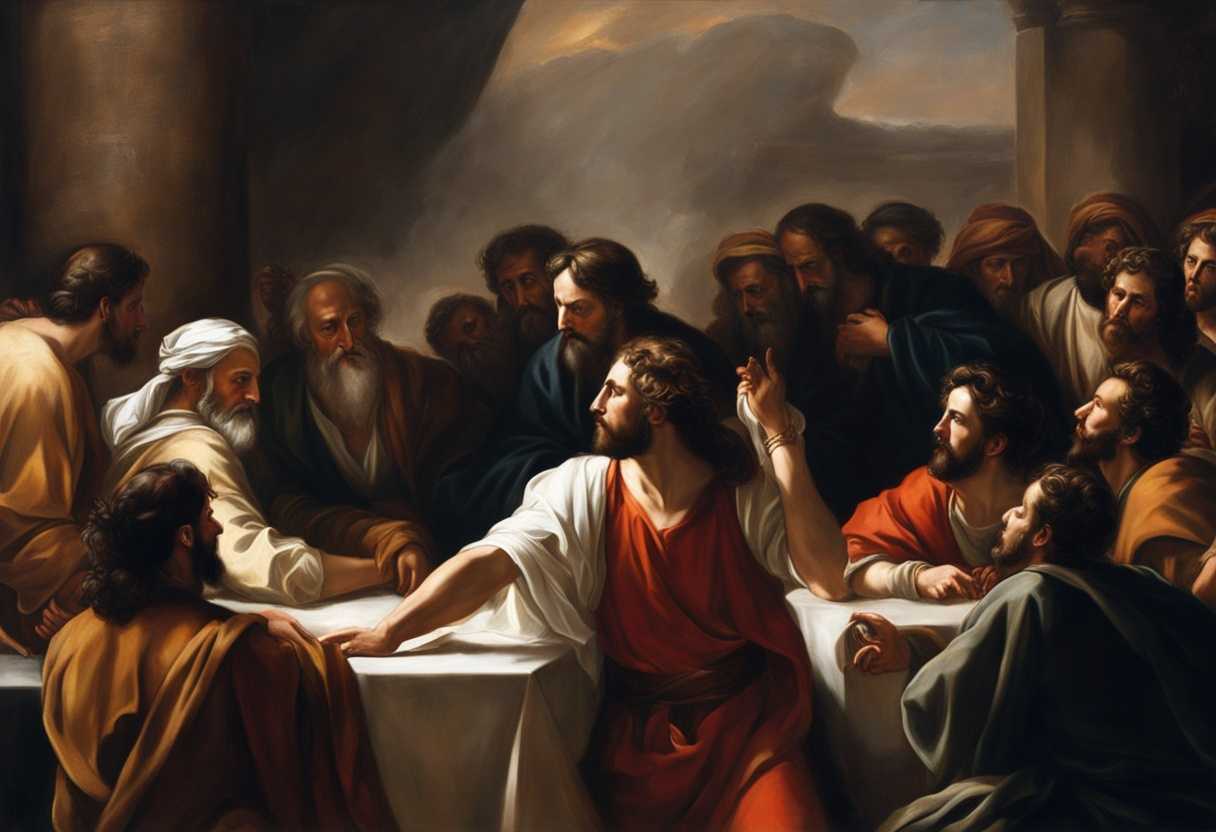
Setting the Scene for Matthew 27:3
The scene in Matthew 27:3 takes place in Jerusalem, shortly after the betrayal of Jesus by Judas Iscariot. Judas, overwhelmed with guilt and remorse for his actions, goes to the chief priests and elders to return the thirty pieces of silver he was given to betray Jesus. The courtyard is bustling with activity as Judas, with tears streaming down his face, approaches the religious leaders to confess his sin.
The chief priests and elders, who had conspired with Judas to arrest Jesus, are taken aback by his sudden change of heart. They are gathered in a semi-circle, their faces a mix of surprise and disdain as they listen to Judas’ confession. The tension in the air is palpable as Judas throws the silver coins at their feet, the sound of metal clinking against stone echoing in the courtyard.
Judas, his heart heavy with regret, stands alone in the center of the courtyard, his eyes downcast in shame. The religious leaders, unmoved by his display of remorse, coldly dismiss him, washing their hands of any responsibility for his actions. The scene captures a moment of betrayal, guilt, and ultimately, the tragic consequences of Judas’ actions.
What is Matthew 27:3 about?
This verse is a powerful example of the consequences of betraying someone we care about and the weight of guilt and remorse on one’s conscience. Judas’ actions of betraying Jesus for thirty pieces of silver ultimately lead to his deep regret and despair. The return of the silver symbolizes his acknowledgment of wrongdoing, but his inability to seek forgiveness or redemption ultimately leads to a tragic end.
Reflecting on this verse prompts us to consider the impact of our actions on others and the importance of seeking forgiveness and making amends when we hurt or betray someone. It also serves as a reminder of the destructive nature of guilt and how holding onto it without seeking resolution can lead to despair and potentially tragic outcomes. Judas’ story challenges us to strive for honesty, integrity, and humility in our relationships, and to always seek redemption and forgiveness when we make mistakes. What lessons can we learn from Judas’ story about the consequences of betrayal and the importance of seeking forgiveness? How can we apply these lessons in our own lives to nurture healthy and authentic relationships with those around us? Reflecting on Judas’ actions can inspire us to always strive for integrity, honesty, and reconciliation in our interactions with others.
Understanding what Matthew 27:3 really means
In the narrative of Judas Iscariot’s betrayal of Jesus for thirty pieces of silver, Matthew 27:3 stands out as a pivotal moment. It occurs after Jesus has been condemned to death, shedding light on Judas’ internal turmoil and regret. To truly grasp the significance of this verse, we must delve into the context of Judas’ actions and his subsequent remorse. Judas’ story serves as a cautionary tale, prompting us to reflect on our own actions and the consequences they may bring.
In Matthew 26:14-16, we witness Judas’ agreement to betray Jesus, setting the stage for his eventual remorse. Acts 1:18-19 further explores the aftermath of Judas’ betrayal, including his tragic end, adding layers to our understanding of his inner turmoil. 2 Corinthians 7:10 contrasts godly sorrow with worldly sorrow, offering insight into Judas’ state of mind and highlighting the importance of genuine repentance.
The themes of remorse and repentance depicted in this verse resonate with people today. Many struggle with feelings of guilt and regret over past actions, much like Judas. By examining Judas’ journey from betrayal to remorse, we are reminded of the significance of seeking true repentance and forgiveness. Betrayal, a timeless issue in human relationships, finds a poignant reflection in Judas’ story, urging us to consider the consequences of our actions and the value of integrity.
Consider a scenario where someone betrays a close friend by spreading false rumors. Initially justifying their actions, they later grapple with overwhelming guilt as the repercussions unfold. This individual’s path from betrayal to remorse mirrors Judas’ experience, underscoring the importance of genuine repentance and seeking reconciliation. Judas’ pivotal moment of realization, captured in the phrase “When Judas, who had betrayed him, saw that Jesus was condemned,” serves as a stark reminder of the weight of our choices and their repercussions. It prompts us to pause and reflect on the potential outcomes of our decisions before acting.
The phrase “He was seized with remorse” encapsulates Judas’ profound emotional response to his actions. Remorse, as more than mere sorrow, signifies a deep acknowledgment of wrongdoing. It can lead to positive transformation through genuine repentance or spiral into destructive despair if forgiveness is not sought. Judas’ symbolic act of returning the thirty pieces of silver signifies his attempt to rectify his betrayal. While material gestures can seek to make amends, true repentance necessitates a change of heart and a pursuit of reconciliation. By contemplating the implications of this verse, we are encouraged to embrace genuine repentance, seek forgiveness, and strive for reconciliation in our own lives.
What does true repentance look like in my life?
True repentance in your life would involve a deep sorrow and regret for any wrongdoing or sin. This sorrow should lead to a genuine desire to turn away from those actions and seek forgiveness from both God and anyone else who may have been affected. True repentance is not just about feeling sorry, but also about taking action to make amends and change your ways.
Repentance is a change of heart and mind that results in a change of actions. It involves humbling yourself before God, acknowledging your mistakes, and seeking His forgiveness and guidance to live a life that is pleasing to Him. True repentance is a continual process of turning away from sin and turning towards God, striving to align your thoughts, words, and deeds with His will. Judas felt deep remorse for his betrayal of Jesus in Matthew 27:3, but his response did not lead to true repentance as he ultimately chose to take his own life instead of seeking forgiveness and restoration. True repentance involves more than just feeling sorry for our sins; it requires genuine transformation and a commitment to follow God’s ways wholeheartedly.
Application
Think of your life as a busy highway, where work and family demand your constant attention. Just like you wouldn’t let your car drift off course, don’t let your soul stray from its path. The story of Judas in Matthew 27:3 warns us about the dangers of betrayal and losing our way. Take this moment to check your spiritual compass and make sure you’re aligned with God’s direction. Will you pause and make sure your actions reflect your faith?

Reverend Michael Johnson is an experienced Church Minister with a profound expertise in spirituality and guidance. With a serene presence and a compassionate heart, he has faithfully served his congregation for over 20 years, leading them on a spiritual journey towards inner peace and enlightenment. Reverend Johnson’s extensive knowledge of religious philosophies and profound understanding of human nature have made him a trusted confidant and mentor to many, as he seamlessly weaves his profound wisdom into life teachings. Reverend Johnson’s calming demeanor and empathetic nature continue to uplift and heal souls, nurturing a sense of unity and tranquility within his community.