
is about a future time of judgment and restoration where God will bring justice to the nations that have mistreated His people, but also offer forgiveness and restoration to those who seek Him.
1 “For behold, in those days and at that time, when I restore the fortunes of Judah and Jerusalem,
2 I will gather all the nations and bring them down to the Valley of Jehoshaphat. And I will enter into judgment with them there, on behalf of my people and my heritage Israel, because they have scattered them among the nations and have divided up my land,
3 They have cast lots for my people; they have traded a boy for a prostitute, and have sold a girl for wine and have drunk it.
4 “What are you to me, O Tyre and Sidon, and all the regions of Philistia? Are you paying me back for something? If you are paying me back, I will return your payment on your own head swiftly and speedily.
5 Because you have taken my silver and my gold, and have carried my rich treasures into your temples,
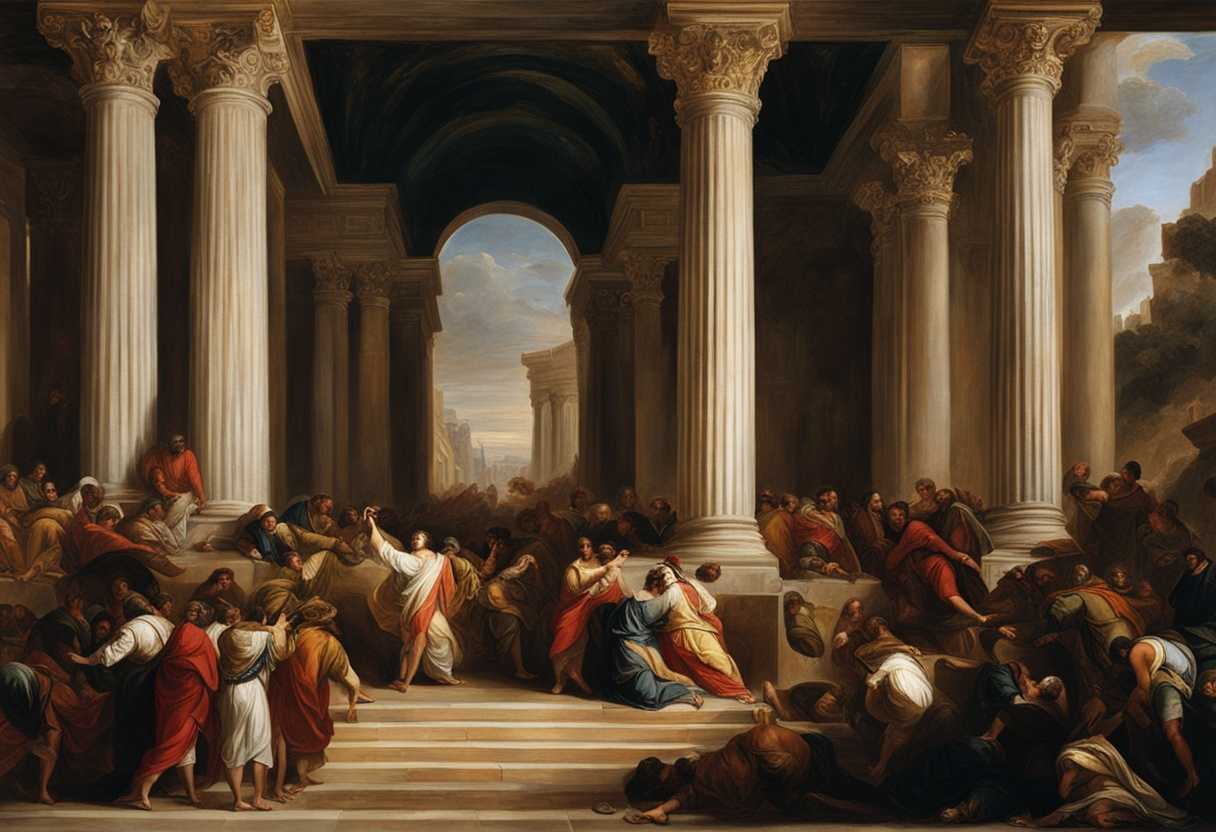
Setting the Scene for Joel 3:1-5
The scene in Joel chapter 3 is set in the Valley of Jehoshaphat, also known as the Valley of Decision. This valley is believed to be a symbolic place where God will judge the nations. The valley is surrounded by mountains, creating a natural amphitheater-like setting. The atmosphere is tense as the nations gather for judgment.
In this scene, the nations are represented by various leaders and people from different regions. They have come to the Valley of Jehoshaphat as a result of the events described in the previous chapters of Joel, where God’s judgment was pronounced on the nations for their sins and mistreatment of His people. The leaders are anxious and fearful, knowing that they are about to face the consequences of their actions.
Among the nations gathered are also the people of Judah and Jerusalem, who are witnessing the events unfolding before them. They are a mix of emotions, feeling both vindicated by God’s judgment on their oppressors and humbled by the realization of their own sins. The scene is a powerful reminder of God’s sovereignty and justice, as the nations stand before Him in the Valley of Decision.
What is Joel 3:1-5 about?
This verse from the book of Joel highlights the concept of divine judgment and restoration. It emphasizes God’s authority over all nations and His ability to bring justice to those who have acted unjustly. Through this passage, we are reminded of the importance of acknowledging our actions and the consequences that may follow. God’s judgment is portrayed as a natural outcome of our choices and behaviors, underscoring the significance of living a righteous and just life. We reflect on this verse, prompting us to consider our own actions and how they align with God’s teachings. It encourages us to strive for righteousness and to be mindful of the impact of our decisions on others and on our relationship with God. The promise of restoration for Israel serves as a beacon of hope, reminding us that even in the midst of judgment, there is always the possibility of redemption and renewal. This verse invites us to contemplate how we can contribute to a more just and harmonious world, guided by the principles of love, compassion, and forgiveness.
Understanding what Joel 3:1-5 really means
The Book of Joel, nestled among the twelve minor prophets in the Old Testament, serves as a poignant call to repentance and a beacon of promise for restoration. Within Joel 3:1-5, we delve into a prophetic vision of the future, where the restoration and judgment of nations unfold, showcasing the unwavering sovereignty and justice of God. The phrase “In those days and at that time” sets the stage for a specific period when God will decisively intervene, often alluding to the profound concept of the “Day of the Lord,” a time marked by both judgment and salvation. This phrase encapsulates a sense of divine timing and purpose, urging us to contemplate the unfolding of God’s plans in His appointed time.
“I will restore the fortunes of Judah and Jerusalem” resonates with a promise of prosperity and well-being for God’s people, symbolizing a profound sense of hope and renewal. It serves as a testament to God’s faithfulness in restoring what was lost and bringing forth a season of abundance. The imagery of gathering all nations and leading them to the Valley of Jehoshaphat, meaning “The Lord Judges,” underscores the divine accountability awaiting nations for their deeds. This vivid portrayal of divine judgment calls attention to the ultimate justice that God will mete out, ensuring that righteousness prevails and wrongdoing is addressed.
As we reflect on the reasons behind God’s judgment, the poignant reminder that “they have scattered my people among the nations and divided up my land” echoes the consequences of mistreating and displacing God’s chosen ones. This serves as a stark warning against oppressing the vulnerable and disregarding the sanctity of God’s people. The interconnectedness of actions and consequences underscores the importance of living in alignment with God’s principles and treating others with compassion and justice.
Drawing parallels with related biblical passages such as Isaiah 2:4, Matthew 25:31-46, and Revelation 20:11-15, we witness a tapestry of divine judgment, peace, and justice woven throughout Scripture. These passages reinforce the overarching theme of God’s righteous judgment and the establishment of peace, urging us to contemplate our actions and their eternal implications. In a world grappling with injustice and turmoil, these timeless truths offer solace and a moral compass to navigate the complexities of life.
In our contemporary context, Joel 3:1-5 holds profound relevance, offering a beacon of hope amidst adversity, a reminder of divine justice, and a clarion call to repentance. Just as the prophecy assures of God’s restoration and justice, believers today can find comfort in the unwavering promises of God, knowing that He sees their struggles and will act in His perfect timing. This passage serves as a poignant reminder of God’s enduring faithfulness and justice, urging us to seek righteousness, trust in His sovereignty, and find solace in His promises, even in the midst of life’s storms.
In conclusion, Joel 3:1-5 stands as a testament to God’s unchanging character, His righteous judgment, and His unfailing promise of restoration. It beckons believers to anchor their faith in God’s sovereignty, embrace His call to righteousness, and find enduring hope in His redemptive plans. As we navigate the complexities of life, may we find solace in the timeless truths encapsulated in this passage, trusting in God’s unfailing love and justice to guide us through every season of life.
How should we respond to injustice and oppression?
We must respond to injustice and oppression with a sense of righteousness and empathy as individuals and communities. When we witness wrongdoing or discrimination, we must not remain silent or complacent, but rather take a stand against it. We uphold the values of fairness and compassion emphasized in the verse by advocating for justice and standing up for the marginalized and oppressed.
Furthermore, it is important to approach situations of injustice and oppression with humility and a willingness to learn and grow. It is essential to educate ourselves about the root causes of injustice and work towards dismantling systems of oppression. We can contribute to creating a more just and equitable society by continuously striving to be better allies and advocates for those who are suffering. A commitment to action and a dedication to making a positive difference ultimately respond to injustice and oppression. We can embody the values of righteousness and compassion highlighted in the verse by speaking out against wrongdoing, using our voices and resources to support those in need, and actively working towards a more just world.
Application
Embrace the call to be warriors of justice and righteousness in a world in need of change. Let’s be the agents of transformation, fighting against oppression and injustice with grace and courage. Are you willing to rise up and make a difference in the midst of challenges?

Reverend Michael Johnson is an experienced Church Minister with a profound expertise in spirituality and guidance. With a serene presence and a compassionate heart, he has faithfully served his congregation for over 20 years, leading them on a spiritual journey towards inner peace and enlightenment. Reverend Johnson’s extensive knowledge of religious philosophies and profound understanding of human nature have made him a trusted confidant and mentor to many, as he seamlessly weaves his profound wisdom into life teachings. Reverend Johnson’s calming demeanor and empathetic nature continue to uplift and heal souls, nurturing a sense of unity and tranquility within his community.