
4 He shall judge between the nations, and shall decide disputes for many peoples; and they shall beat their swords into plowshares, and their spears into pruning hooks; nation shall not lift up sword against nation, neither shall they learn war anymore.
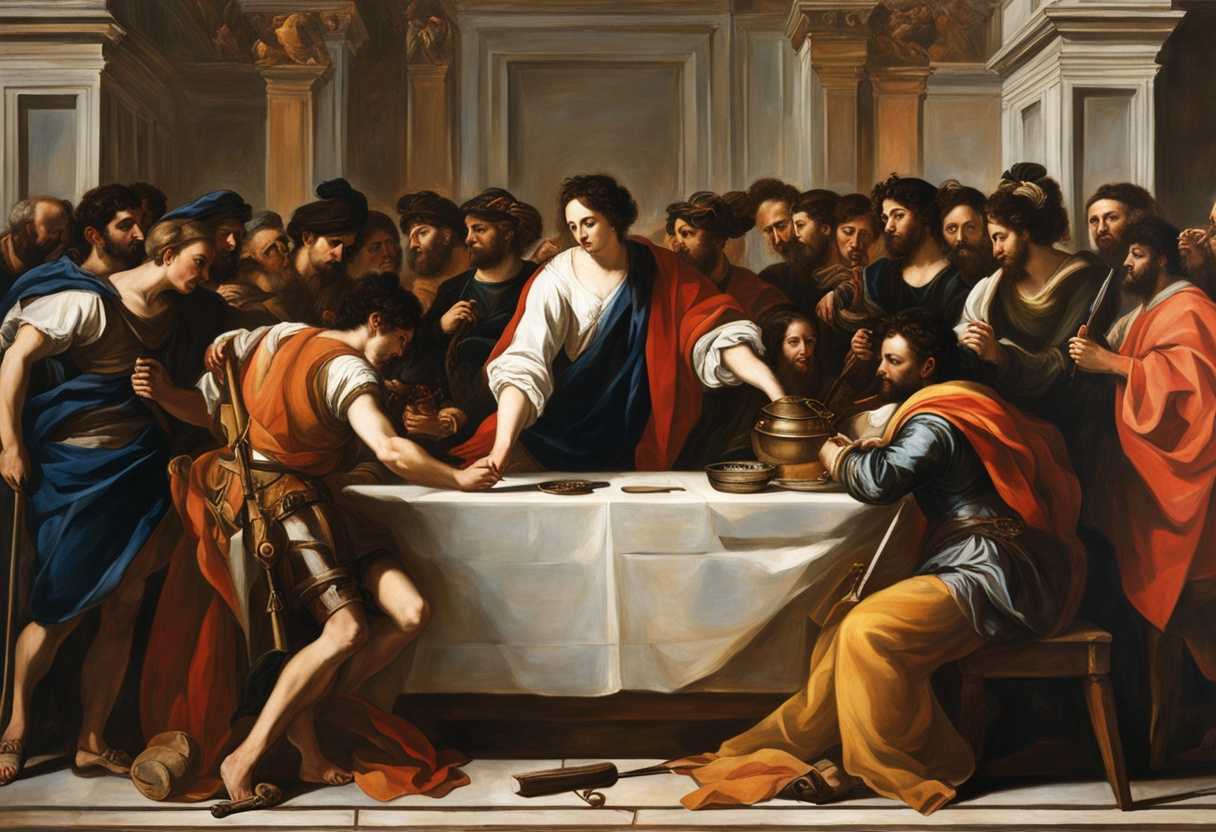
Setting the Scene for Isaiah 2:4
In Isaiah chapter 2, we find a powerful and prophetic scene set in the future where the word of the Lord goes forth from Jerusalem. The setting is a grand and majestic one, with the holy mountain of the Lord’s temple standing tall and prominent. People from all nations are gathered together, drawn by the light and wisdom emanating from this sacred place.
Among those present are the renowned prophets Isaiah and Micah, who have been called to speak the word of the Lord to the nations. They are joined by a diverse group of individuals, representing different cultures and backgrounds, all united in their desire to seek the truth and guidance of the Almighty. The atmosphere is charged with anticipation and reverence as the prophets deliver their message of peace and justice, foretelling a time when swords will be turned into plowshares and spears into pruning hooks.
The surroundings are awe-inspiring, with the beauty of the temple and the surrounding landscape serving as a fitting backdrop for this momentous occasion. The air is filled with a sense of hope and expectation, as the people listen intently to the words of the prophets, knowing that they carry a message of redemption and reconciliation for all who are willing to heed it.
What is Isaiah 2:4 about?
This verse from Isaiah 2:4 speaks to a vision of peace and harmony, where implements of war are transformed into tools for productivity and growth. The act of beating swords into plowshares and spears into pruning hooks symbolizes a shift from conflict and destruction to nurturing the land and sustaining life. It conveys the idea of repurposing resources towards peaceful and constructive pursuits, rather than perpetuating violence and division.
Imagine a world where nations prioritize cooperation and cultivation over aggression and conflict. What would it look like if instead of weapons of war, we focused our efforts on nourishing the earth and fostering flourishing communities? This verse challenges us to consider the transformation that can occur when we choose reconciliation and harmony over strife and discord. It calls us to imagine a future where the tools of destruction are no longer needed because we have chosen the path of peace and unity. Let this vision inspire us to actively work towards building a world where swords are truly turned into plowshares and spears into pruning hooks.
Understanding what Isaiah 2:4 really means
Structure for Commentary:
1. Introduction to the Context
2. Explanation of Key Phrases
3. Cross-Referencing with Other Scriptures
4. Relevance to Contemporary Life
5. Personal Anecdote
6. Call to Reflection and Action
Introduction to the Context:
Isaiah 2:4 is a powerful verse that envisions a future where nations will turn away from conflict and embrace peace. Isaiah, a prophet in the Old Testament, often spoke of a future where God’s kingdom would bring about a transformation in human behavior and society. This particular verse is part of a larger section that describes the establishment of the Lord’s house and the resulting peace and justice.
Explanation of Key Phrases:
The verse contains impactful imagery such as “beat their swords into plowshares” and “nation shall not lift up sword against nation.” These phrases signify the transformation of tools of war into tools of cultivation, symbolizing a shift from destruction to creation. The idea of not learning war anymore suggests a complete renunciation of conflict, emphasizing education and efforts focused on peace and mutual benefit.
Cross-Referencing with Other Scriptures:
We see similar messages in other parts of the Bible. Micah 4:3 almost mirrors Isaiah’s vision, reinforcing the idea that this is a consistent hope in the prophetic literature. Jesus echoes this sentiment in the Beatitudes in the New Testament, particularly stating “Blessed are the peacemakers, for they shall be called children of God” (Matthew 5:9). Paul’s letters also urge believers to “live at peace with everyone” (Romans 12:18).
Relevance to Contemporary Life:
The message of Isaiah 2:4 is profoundly relevant today. The call to transform instruments of war into tools for growth is both a hopeful vision and a practical challenge in a world often marred by conflict and division. This verse encourages us to find ways to foster peace in our communities, emphasizing reconciliation over retaliation, and cooperation over conflict.
Personal Anecdote:
I recall a story from a community service project our church undertook. We partnered with a local organization to convert a dilapidated, abandoned lot into a community garden. Initially, there were disagreements and conflicts among volunteers about how to proceed. However, as we worked together, those conflicts dissipated, replaced by a shared vision of creating something beautiful and beneficial. The transformation of the space mirrored the transformation in our relationships—swords into plowshares, so to speak.
Call to Reflection and Action:
Isaiah 2:4 invites each of us to consider how we can contribute to a more peaceful world. Are there “swords” in your life that need to be beaten into “plowshares”? Perhaps it’s a lingering grudge, a divisive argument, or even a tendency to respond in anger. Reflect on ways you can promote peace and reconciliation in your daily interactions. Let this vision of a peaceful future inspire you to take tangible steps toward making it a reality in the here and now.
How can we turn weapons into tools of peace?
One way to turn weapons into tools of peace is by repurposing them for constructive purposes that benefit society. Instead of using weapons for destruction, they can be transformed into tools for building and creating, such as using metal from dismantled weapons for construction projects or creating art to promote messages of peace and unity.
Another way to shift the purpose of weapons towards peace is through education and advocacy. Individuals and communities can work towards promoting dialogue, reconciliation, and understanding as alternatives to armed conflict by raising awareness about the devastating impact of violence and conflict. People can replace the desire to use weapons for violence with a commitment to resolving conflicts through peaceful means by changing mindsets and fostering a culture of peace. Individuals, communities, governments, and organizations must collectively work towards transforming weapons into tools of peace by actively engaging in disarmament, conflict resolution, and the promotion of peace. We can move towards a world where the tools of war are no longer needed or used by fostering a culture of peace and employing creative and constructive ways to repurpose weapons.
Application
Imagine your life as a garden where you can choose to plant either thorns of conflict or seeds of peace. Isaiah 2:4 calls you to transform your tools of struggle into tools of harmony. In your busy world of work and family, every choice you make helps cultivate either division or unity. Will you be the one who steps up, advocating for peace, bridging gaps, and turning disputes into dialogue? Isn’t it time to start sowing seeds that will grow a future of understanding and reconciliation?

Reverend Michael Johnson is an experienced Church Minister with a profound expertise in spirituality and guidance. With a serene presence and a compassionate heart, he has faithfully served his congregation for over 20 years, leading them on a spiritual journey towards inner peace and enlightenment. Reverend Johnson’s extensive knowledge of religious philosophies and profound understanding of human nature have made him a trusted confidant and mentor to many, as he seamlessly weaves his profound wisdom into life teachings. Reverend Johnson’s calming demeanor and empathetic nature continue to uplift and heal souls, nurturing a sense of unity and tranquility within his community.