
John 18:20-21 is about Jesus acknowledging that he openly taught in synagogues and the temple, implying that his teachings were not done in secret and that those who heard him could testify to the truth of his words.
20 Jesus answered him, “I have spoken openly to the world. I have always taught in synagogues and in the temple, where all Jews come together. I have said nothing in secret.
21 Why do you ask me? Ask those who have heard me what I said to them; they know what I said.”
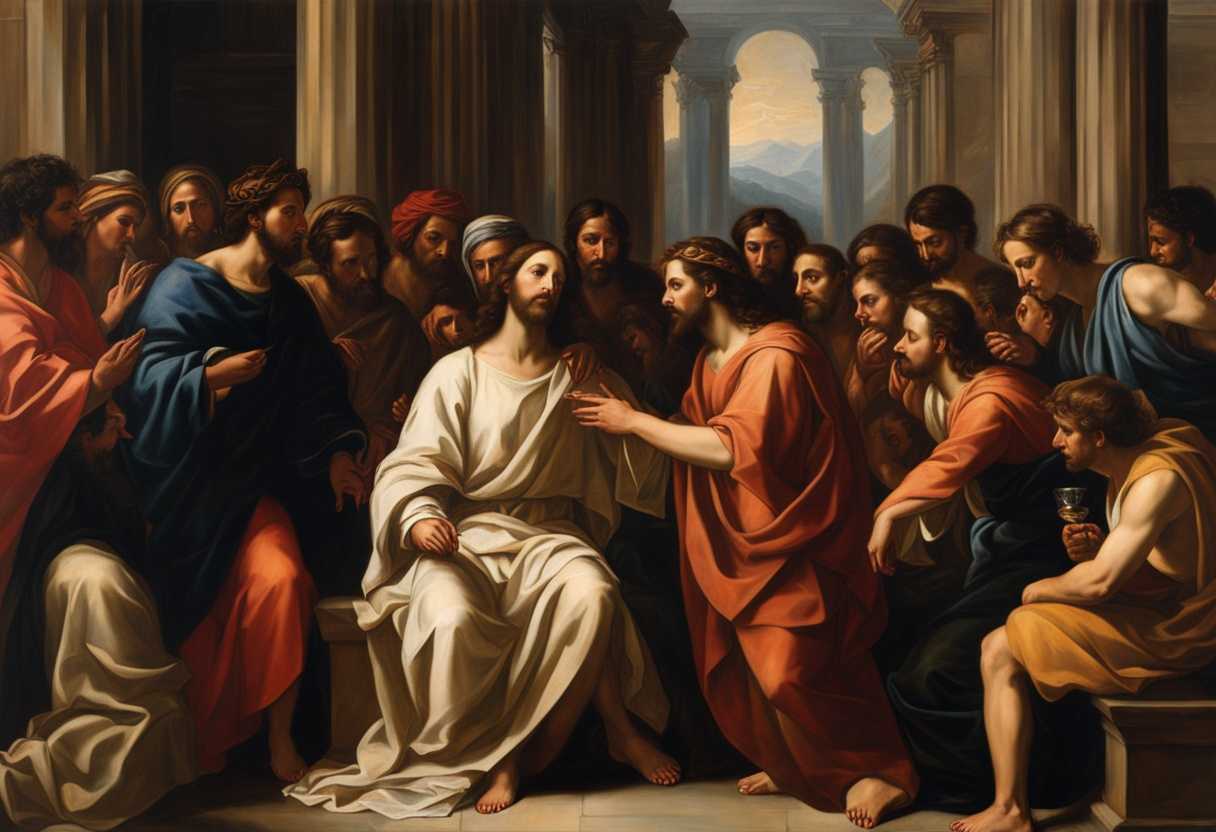
Setting the Scene for John 18:20-21
In John chapter 18, we find Jesus standing before Pontius Pilate in the Praetorium, the governor’s residence in Jerusalem. The scene is tense as the Jewish religious leaders have brought Jesus to Pilate, accusing him of blasphemy and seeking his execution. Pilate, the Roman governor, questions Jesus about the charges brought against him, trying to determine if he is a threat to Roman rule.
Surrounding Jesus and Pilate are a crowd of onlookers, including Roman soldiers, Jewish religious leaders, and curious bystanders. The atmosphere is charged with emotion as the fate of Jesus hangs in the balance. Pilate, torn between his desire to maintain order and his uncertainty about Jesus’ guilt, engages in a dialogue with Jesus, probing him for answers.
As the conversation unfolds, it becomes clear that Jesus’ kingdom is not of this world, and he has come to testify to the truth. Despite Pilate’s attempts to release him, the pressure from the religious leaders and the crowd ultimately leads to Jesus being sentenced to crucifixion. The scene in the Praetorium is a pivotal moment in the Passion narrative, highlighting the clash between earthly power and divine truth.
What is John 18:20-21 about?
Jesus fearlessly stands up for His teachings and confronts those in power in this verse. Jesus challenges the authority figures of His time by speaking openly in the temple, the holiest of places, forcing them to truly reflect on the truth and righteousness of their beliefs and actions. His actions show us the importance of standing up for what we believe in, even if it means facing opposition or criticism from those in power.
Imagine the courage it must have taken for Jesus to challenge the high priest in such a public and sacred space. His actions remind us of the importance of speaking out against injustice and falsehoods, even in the face of adversity. It is a powerful message that encourages us to be brave in our beliefs and to always seek the truth, no matter the consequences. Jesus’ boldness serves as a timeless example for us to always stand up for what is right, no matter the circumstances.
Understanding what John 18:20-21 really means
In the passage from John 18:20-21, we witness a pivotal moment where Jesus, standing before the high priest, asserts the transparency and openness of His teachings. He boldly declares, “I have spoken openly to the world. I always taught in synagogues or at the temple, where all the Jews come together. I said nothing in secret.” These words carry profound significance, emphasizing that Jesus’ message was not veiled in secrecy but was proclaimed openly for all to hear. His ministry was conducted in public spaces, inviting everyone to partake in His teachings and witness His actions.
Jesus’ insistence on the public nature of His ministry challenges us to consider the authenticity and transparency of our own lives. In a world where misinformation and hidden agendas can breed distrust, His example shines brightly as a beacon of honesty and integrity. Just as Jesus lived openly before others, we are called to embrace transparency in our interactions, relationships, and communication. His words urge us to be unafraid of scrutiny, to speak truthfully, and to act with integrity in all aspects of our lives.
Drawing parallels from related biblical passages, we find echoes of Jesus’ call to transparency in the teachings of Paul. In Matthew 5:14-16, Jesus exhorts His followers to be the “light of the world,” illuminating the darkness with their openness and authenticity. Similarly, in Acts 26:26, Paul emphasizes that the events surrounding Jesus were not hidden but were done in the open, reinforcing the public nature of the Gospel. In 2 Corinthians 4:2, Paul underscores the importance of renouncing secret and shameful ways, aligning with Jesus’ commitment to truth and openness.
Consider a community leader who conducts all meetings in public spaces, ensuring that decisions are made transparently and inclusively. This leader’s actions foster trust and unity within the community, mirroring Jesus’ public ministry that invited all to witness His teachings. Reflecting on this illustration, we are prompted to evaluate how we can embody transparency and openness in our own spheres of influence. By living authentically and openly, we can cultivate trust, build stronger relationships, and reflect the light of Christ in a world often shrouded in shadows.
As we contemplate the relevance of Jesus’ words in John 18:20-21 to our lives today, let us ponder how we can be more transparent and open in our daily interactions. Let us strive to be a light that shines brightly, unafraid of revealing our faith and convictions to the world. Embracing the challenge to live openly and authentically, we can embody the values of honesty, integrity, and transparency that Jesus exemplified. May we heed His call to be bearers of light in a world that yearns for truth and sincerity, following His example of openness and love in all that we do.
What does it mean to testify to the truth?
Testifying to the truth means bearing witness to the teachings, principles, and reality of Jesus Christ. It involves sharing and affirming the truth of his message, especially about the Kingdom of God, salvation, and eternal life. By testifying to the truth, we uphold the values and beliefs that Jesus taught and lived by, even in the face of opposition, doubt, or persecution. Jesus was speaking with Pilate about his kingdom and explaining that he came into the world to bear witness to the truth in the context of John 18:20-21. Jesus was clarifying the nature of his mission and the significance of his teachings by testifying to the truth. This act of testifying to the truth ultimately led to his crucifixion and resurrection, demonstrating the power and victory of truth over falsehood and sin. We, as followers of Christ, are also called to testify to the truth in our words and actions, living out the values of love, justice, and righteousness in a world that often opposes or distorts these truths. We continue the legacy of Jesus by standing firm in our faith and sharing the truth of the Gospel, bearing witness to the reality of God’s kingdom and the promise of salvation for all who believe.
Application
Just like Jesus fearlessly shared His teachings, let your words and actions spread love and truth into the world. Be a beacon of light in the darkness, embodying the essence of the Gospel in every aspect of your being. Will you rise up to be a messenger of hope, shining brightly for those who are yet to hear the life-changing Good News?

Reverend Michael Johnson is an experienced Church Minister with a profound expertise in spirituality and guidance. With a serene presence and a compassionate heart, he has faithfully served his congregation for over 20 years, leading them on a spiritual journey towards inner peace and enlightenment. Reverend Johnson’s extensive knowledge of religious philosophies and profound understanding of human nature have made him a trusted confidant and mentor to many, as he seamlessly weaves his profound wisdom into life teachings. Reverend Johnson’s calming demeanor and empathetic nature continue to uplift and heal souls, nurturing a sense of unity and tranquility within his community.