
Genesis 20:14-16 is about how God intervened to protect Abraham and Sarah from being harmed by Abimelech, showcasing God’s sovereignty and faithfulness in safeguarding His chosen ones.
14 Then Abimelech took sheep and oxen, and male servants and female servants, and gave them to Abraham, and returned Sarah his wife to him.
15 And Abimelech said, “Behold, my land is before you; dwell where it pleases you.”
16 To Sarah he said, “Behold, I have given your brother a thousand pieces of silver. It is a sign of your innocence in the eyes of all who are with you, and before everyone you are vindicated.”
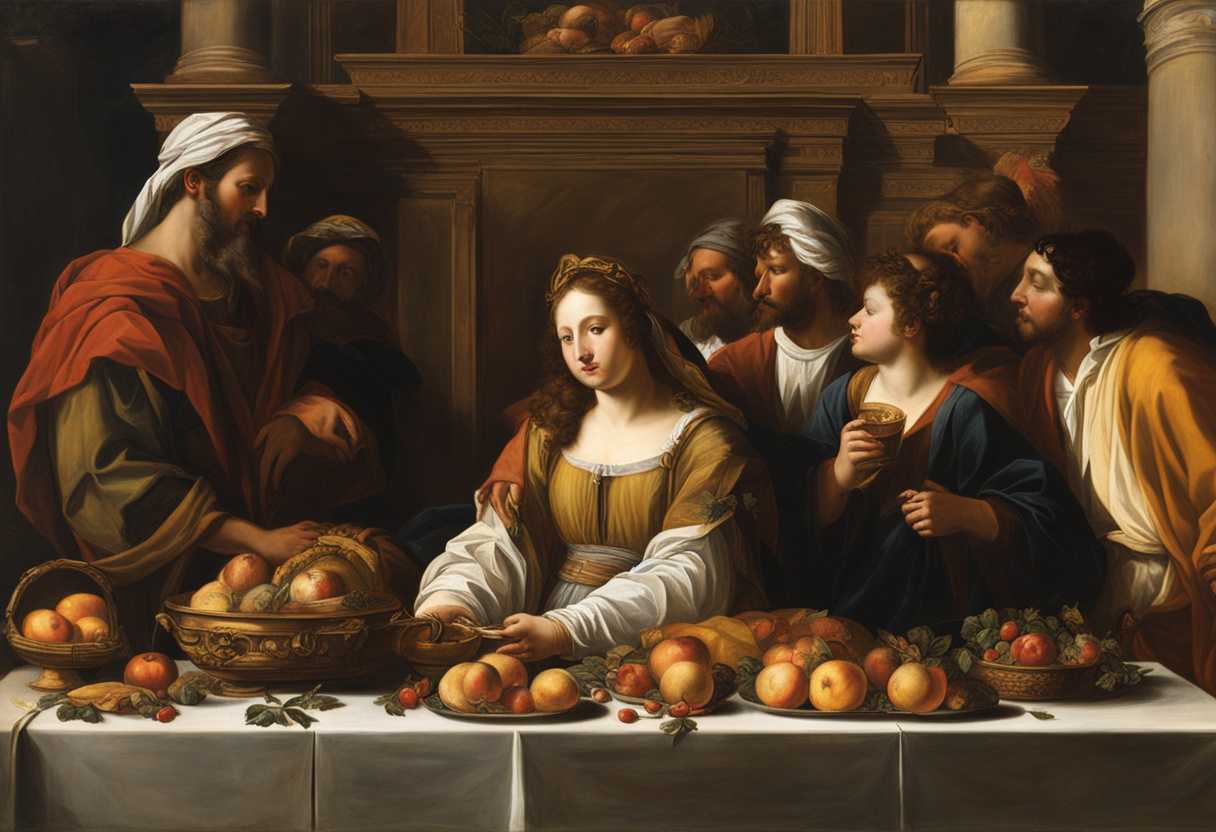
Setting the Scene for Genesis 20:14-16
In Genesis chapter 20, we find Abraham and Sarah journeying to Gerar, a city in the land of the Philistines. As they arrive, they encounter King Abimelech of Gerar. Abraham introduces Sarah as his sister, fearing that the king might kill him to take her as his wife due to her beauty. Unaware that Sarah is actually Abraham’s wife, King Abimelech takes her into his household.
The scene unfolds in the royal court of King Abimelech, a place adorned with rich tapestries and ornate decorations. Abraham and Sarah find themselves in a precarious situation as the truth about their relationship is revealed. The tension in the air is palpable as King Abimelech confronts Abraham about the deception, realizing that he could have unknowingly committed a grave sin by taking another man’s wife.
As the truth comes to light, King Abimelech acts with integrity and returns Sarah to Abraham, along with gifts of sheep, cattle, and servants as a gesture of goodwill. This encounter serves as a test of faith for Abraham and Sarah, highlighting the importance of honesty and trust in their relationship with each other and with God.
What is Genesis 20:14-16 about?
A powerful display of God’s protection and provision is seen in this verse. We witness Abimelech, the king, recognizing God’s favor on Abraham and Sarah after an encounter where God intervened to prevent Abimelech from committing a grave mistake. This act of gift-giving and acknowledgment by Abimelech is not merely a gesture of goodwill but also a recognition of God’s presence and power in Abraham’s life. It serves as a reminder that God’s protection and provision for His people can lead to blessings and favor even from unexpected sources.
Have you ever experienced a situation where God’s intervention led to unexpected blessings or favors in your life? How does this verse challenge us to trust in God’s protection and provision, even in the midst of challenging circumstances? It serves as a reminder that God’s ways are higher than our ways, and His plans for us are always good, even when we may not fully understand them in the moment. Let this verse encourage you to trust in God’s sovereignty and believe that He can turn any situation around for your good, just like He did for Abraham and Sarah.
Understanding what Genesis 20:14-16 really means
In the narrative of Genesis 20:14-16, we witness a pivotal moment where Abimelech, the king of Gerar, seeks to rectify the unintentional wrong done to Abraham and Sarah. This incident unfolds against the backdrop of Abraham’s deception regarding Sarah’s identity, leading to a series of events that culminate in Abimelech’s restitution. The offering of “sheep and cattle and male and female slaves” symbolizes Abimelech’s sincere effort to make amends for the misunderstanding, highlighting the importance of acknowledging and addressing mistakes, even when they arise from a place of ignorance.
Moreover, the substantial sum of “a thousand shekels of silver” presented by Abimelech underscores the gravity of the situation and his earnest desire to set things right. This act of restitution not only serves as a form of compensation but also signifies a commitment to restoring honor and integrity in the relationship between the parties involved. The phrase “vindicated before all who are with you” emphasizes the significance of public acknowledgment in the process of reconciliation, showcasing the value of transparency and accountability in resolving conflicts.
Drawing parallels to other biblical passages, such as Genesis 12:10-20, Exodus 22:1, and Matthew 5:23-24, we discern a recurring theme of restitution, reconciliation, and the ethical imperative to make amends for wrongs committed. These texts collectively underscore the foundational principles of justice, integrity, and humility that guide human interactions and relationships. They remind us of the inherent value of honesty, transparency, and accountability in fostering trust and harmony within communities.
In a contemporary context, the narrative of Abraham, Sarah, and Abimelech resonates with timeless lessons about the significance of restitution, integrity, and public acknowledgment of wrongdoing. It prompts us to reflect on our own actions and attitudes, encouraging us to take responsibility for our mistakes, seek reconciliation with others, and uphold the virtues of honesty and humility in our interactions. By embracing these principles, we not only honor the teachings of Scripture but also contribute to the cultivation of a culture of compassion, understanding, and grace in our daily lives.
Consider a modern-day scenario where a leader publicly acknowledges a mistake, offers restitution, and commits to fostering a culture of transparency and accountability within their organization. This act of humility and integrity not only sets a positive example for others but also paves the way for healing, growth, and reconciliation in the community. Just as Abimelech’s actions exemplified a willingness to make amends and restore trust, so too can we strive to embody these values in our relationships and endeavors, embodying the principles of justice, mercy, and grace that lie at the heart of the Christian faith.
What does it mean to fear God?
To fear God means to have a reverent awe and respect for His power and authority. It involves understanding that God is all-knowing and just, and recognizing that His judgments are righteous and final. Fearing God goes beyond simply obeying His commandments out of duty, but it involves a deep reverence that shapes one’s whole attitude and behavior towards Him. This fear motivates individuals to seek His guidance, obey His instructions, and walk in His ways out of love and respect. Abimelech demonstrates fearing God through his response to a warning from God in a dream in the mentioned verse. Despite not being aware of God’s command initially, Abimelech responds with humility and integrity when confronted with the truth. This fear of God motivates him to rectify his actions and seek God’s forgiveness, demonstrating a deep reverence and respect for God’s authority and power. Fearing God ultimately leads to obedience, humility, and a desire to align one’s actions and thoughts with His will.
Application
Embrace the blueprint of honesty and integrity, much like a well-oiled machine operates seamlessly. Just as a strong foundation keeps a house standing, let your relationships be built on trust and respect. Reflect on your actions and commit to upholding these values in all areas of your life. Remember, in the bustling world of connections, the currency of integrity holds the most value. How will you weave the threads of honesty and trust into the tapestry of your relationships?

Reverend Michael Johnson is an experienced Church Minister with a profound expertise in spirituality and guidance. With a serene presence and a compassionate heart, he has faithfully served his congregation for over 20 years, leading them on a spiritual journey towards inner peace and enlightenment. Reverend Johnson’s extensive knowledge of religious philosophies and profound understanding of human nature have made him a trusted confidant and mentor to many, as he seamlessly weaves his profound wisdom into life teachings. Reverend Johnson’s calming demeanor and empathetic nature continue to uplift and heal souls, nurturing a sense of unity and tranquility within his community.