
Luke 23:50-53 is about Joseph of Arimathea, a member of the Jewish council who did not consent to the decision to crucify Jesus, demonstrating that even in the midst of betrayal and suffering, there are still those who remain faithful and honorable.
50 Now there was a man named Joseph, from the Jewish town of Arimathea. He was a member of the council, a good and righteous man,
51 who had not consented to their decision and action; and he was looking for the kingdom of God.
52 This man went to Pilate and asked for the body of Jesus.
53 Then he took it down and wrapped it in a linen shroud and laid him in a tomb cut in stone, where no one had ever yet been laid.
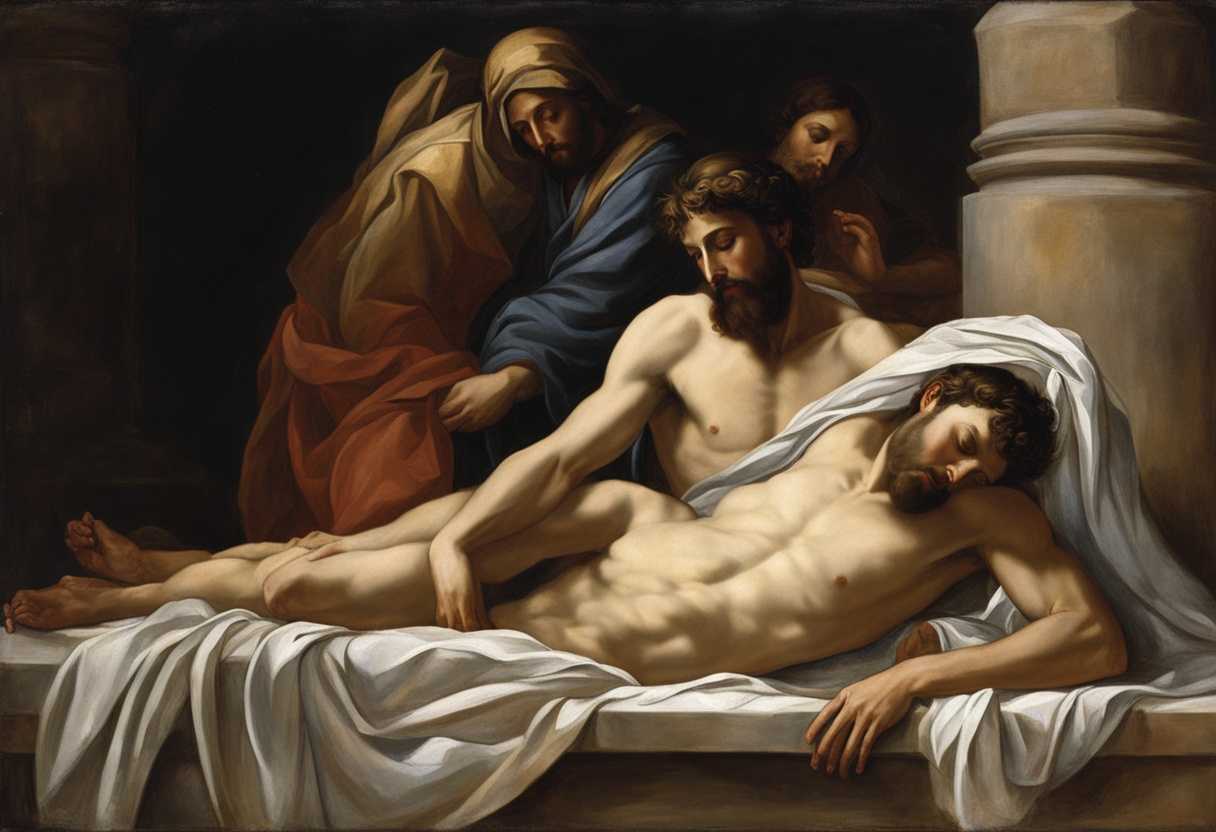
Setting the Scene for Luke 23:50-53
The scene described in Luke 23:50-53 takes place after the crucifixion of Jesus Christ. Joseph of Arimathea, a member of the Jewish council who had not consented to their decision to crucify Jesus, steps forward. He was a wealthy and respected man who was also a disciple of Jesus, though secretly for fear of the other council members. Joseph goes to Pilate, the Roman governor, and asks for Jesus’ body. Pilate grants his request, and Joseph takes down the body from the cross.
Nicodemus, another member of the Jewish council and a Pharisee, joins Joseph. Nicodemus brings a mixture of myrrh and aloes, about seventy-five pounds in weight, to prepare Jesus’ body for burial. Together, Joseph and Nicodemus wrap the body in linen cloths with the spices, following Jewish burial customs. They then place Jesus’ body in a tomb cut out of the rock, which had never been used before. The tomb is located in a garden near the place of crucifixion, called Golgotha, or the Place of the Skull. The scene is filled with sorrow and reverence as these two men, who had previously kept their faith hidden, now openly show their love and respect for Jesus in his death.
What is Luke 23:50-53 about?
Let’s dive into the significance of this verse together. Joseph of Arimathea, a wealthy and influential man, played a crucial role in the burial of Jesus. Joseph fulfilled a prophecy from the book of Isaiah that predicted the Messiah’s burial with the rich after his death by providing his own new tomb for Jesus. This act not only highlighted the fulfillment of ancient prophecies but also demonstrated Joseph’s respect and honor for Jesus, despite the controversial circumstances surrounding his crucifixion.
Think about how Joseph’s actions went against the common beliefs and pressures of his time. Despite potential backlash from religious and political authorities, Joseph chose to do what he believed was right. He showed courage, compassion, and a deep sense of faith by stepping forward to bury Jesus in a proper and dignified manner. This act of kindness and bravery in the face of adversity serves as a powerful reminder of the value of standing up for one’s beliefs and treating others with respect, regardless of the circumstances.
Understanding what Luke 23:50-53 really means
The passage in Luke 23:50-53 introduces us to Joseph of Arimathea, a man of moral integrity and courage, who defied the decision of the Sanhedrin and sought to honor Jesus in his death. Joseph’s actions exemplify themes of courage, devotion, and the fulfillment of prophecy. Described as a “good and upright man,” Joseph’s character is highlighted, emphasizing his position within the Jewish leadership and his dissent from the crucifixion of Jesus. His act of going to Pilate to request Jesus’ body showcases his bravery and respect for the condemned, despite the risks to his own reputation and safety.
Coming from Arimathea, Joseph’s faith and hope in the kingdom of God are evident in his actions. By wrapping Jesus’ body in linen cloth and placing it in a new tomb, Joseph fulfills the prophecy of Isaiah 53:9, where it was foretold that the Messiah would be buried with the rich. This act of care and honor towards Jesus in death symbolizes Joseph’s deep reverence for the Son of God. The parallel accounts in Matthew and Mark, as well as John’s Gospel, further elaborate on Joseph’s role in the burial process, highlighting the significance of his actions in the narrative of Jesus’ crucifixion and resurrection.
Joseph of Arimathea’s story resonates with us today, serving as a reminder of the importance of courage in faith, devotion, and hope. His willingness to stand up for his beliefs, even in the face of opposition, inspires us to uphold our convictions with integrity. The care he showed towards Jesus’ body teaches us about honoring and respecting others, especially in times of suffering and death. Joseph’s patient waiting for the kingdom of God encourages us to live with hope and anticipation for the fulfillment of God’s promises in our lives.
In a modern context, Joseph’s example prompts us to consider scenarios where individuals take a stand against injustice, risking their own well-being for the greater good. Just as Joseph’s actions brought about positive change and inspired others, our own acts of moral courage and integrity can have a lasting impact on those around us. By reflecting on Joseph of Arimathea’s story, we are encouraged to embody qualities of faith, courage, and devotion in our daily lives, standing firm in our beliefs, honoring others, and living with hope for the future.
What is the significance of showing honor to the deceased?
Showing honor to the deceased holds significance in many cultures and religions. It is a way to pay respects, acknowledge the individual’s significance, and honor their memory. Honoring the deceased in the context of the Bible, as seen in Luke 23:50-53, serves as a reminder of the dignity and value of each person, even after death. It recognizes the person’s life, their contributions, and the impact they had on others.
Furthermore, honoring the deceased can also bring comfort to the living. It can provide closure, solace, and a sense of peace knowing that the deceased individual is respected and remembered. It demonstrates compassion, empathy, and the importance of showing love and kindness not only to the living but also to those who have passed on. Showing honor to the deceased upholds the intrinsic worth and humanity of every individual, regardless of their earthly state. It is a gesture of reverence, gratitude, and remembrance that highlights the interconnectedness of humanity and the enduring impact one’s life can have on others.
Application
In the vast tapestry of life, let us channel the courage of Joseph of Arimathea. As we navigate the complexities of the modern world, may we find strength to stand firm in our beliefs and spread compassion. Let’s honor our faith by embracing love and kindness in our interactions with others. Will you take up the mantle of faith and courage, standing steadfast in a world that tests our convictions?

Reverend Michael Johnson is an experienced Church Minister with a profound expertise in spirituality and guidance. With a serene presence and a compassionate heart, he has faithfully served his congregation for over 20 years, leading them on a spiritual journey towards inner peace and enlightenment. Reverend Johnson’s extensive knowledge of religious philosophies and profound understanding of human nature have made him a trusted confidant and mentor to many, as he seamlessly weaves his profound wisdom into life teachings. Reverend Johnson’s calming demeanor and empathetic nature continue to uplift and heal souls, nurturing a sense of unity and tranquility within his community.