
John 19:9-10 is about the interaction between Pilate and Jesus, emphasizing Jesus’ divine nature and authority as the Son of God, contrasting with Pilate’s limited understanding and earthly power.
9 He entered his headquarters again and said to Jesus, “Where are you from?” But Jesus gave him no answer.
10 So Pilate said to him, “You will not speak to me? Do you not know that I have authority to release you and authority to crucify you?”
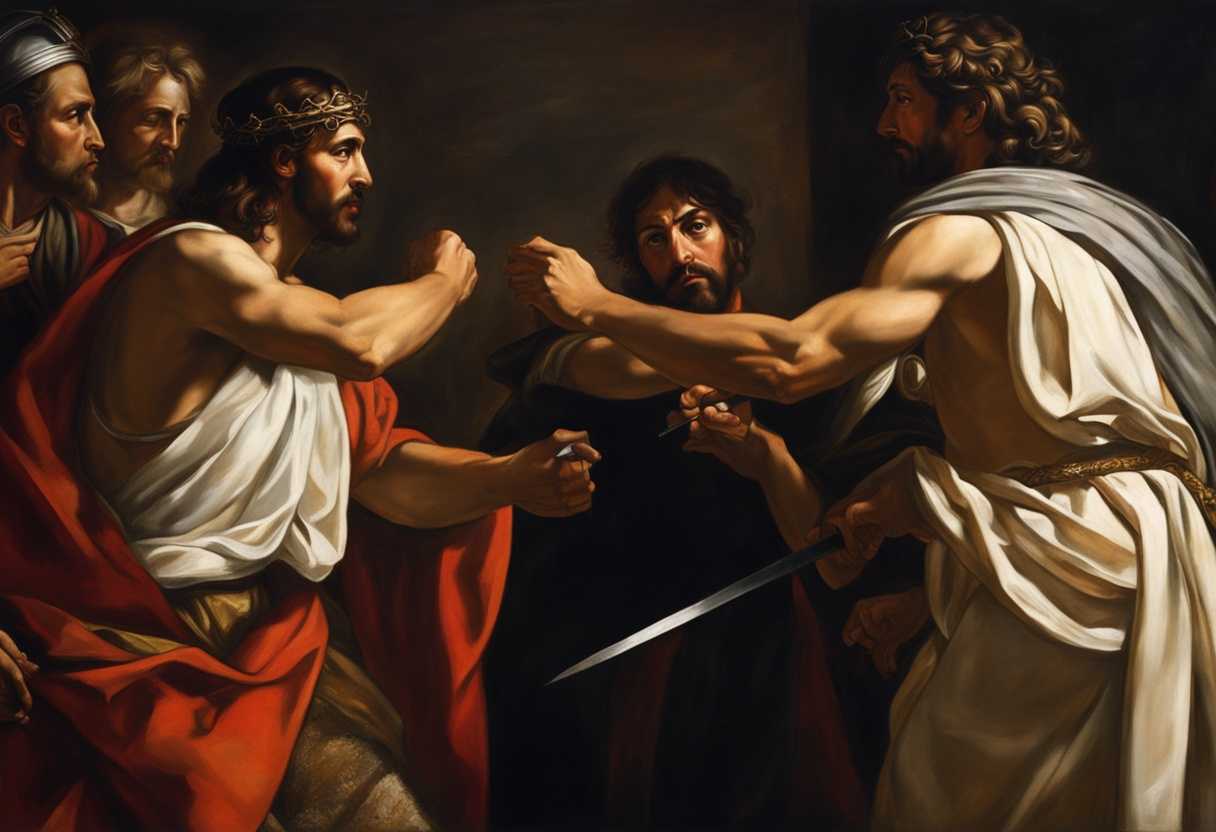
Setting the Scene for John 19:9-10
In John chapter 19, we find ourselves in the midst of a tense and dramatic scene in Jerusalem. The Roman governor, Pontius Pilate, is standing in his judgment hall, known as the Praetorium, facing a shackled and weary Jesus of Nazareth. Pilate, a powerful and conflicted figure, is grappling with the decision of what to do with Jesus, who has been brought before him by the Jewish religious leaders on charges of blasphemy and sedition.
Surrounding them are a throng of onlookers, including Roman soldiers, Jewish officials, and curious bystanders who have gathered to witness the unfolding events. The atmosphere is charged with emotion and intrigue as Pilate questions Jesus, trying to discern the truth of the accusations against him. Jesus, calm and resolute, responds to Pilate’s inquiries with wisdom and authority, leaving the governor unsettled and unsure of how to proceed.
As the conversation between Pilate and Jesus unfolds, the tension in the room is palpable, with the fate of Jesus hanging in the balance. The clash of political power, religious authority, and divine purpose converges in this moment, setting the stage for the pivotal events that will soon follow in the crucifixion and resurrection of Jesus Christ.
What is John 19:9-10 about?
Jesus demonstrates his authority and sovereignty over earthly rulers like Pilate in this powerful verse. Despite being on trial and facing persecution, Jesus stands firm and unwavering, showcasing his divine power and confidence in his mission. This moment challenges us to reflect on how we handle difficult situations in our own lives. Do we remain steadfast and trust in our higher purpose, like Jesus did, even in the face of adversity? It’s a reminder that no matter what challenges we face, we can draw strength from our faith and the authority that comes from standing in alignment with our beliefs. We see a clash between earthly power and divine authority in the confrontation between Jesus and Pilate. Jesus’ calm demeanor in the face of Pilate’s questioning is a powerful illustration of spiritual strength and conviction. This verse prompts us to consider where we place our trust and how we view authority in our own lives. Do we rely solely on worldly power and influence, or do we recognize the ultimate authority that comes from aligning ourselves with our beliefs and principles, just as Jesus did? It serves as a reminder that true power comes from staying rooted in our faith and understanding the sovereignty that comes from standing firm in our beliefs, even when faced with opposition.
Understanding what John 19:9-10 really means
In the intense exchange between Pontius Pilate and Jesus during the events leading to the crucifixion, Pilate’s probing question, “Where do you come from?” reveals his perplexity regarding Jesus’ true identity. This inquiry underscores Pilate’s struggle to comprehend the divine nature of Jesus, a concept beyond his earthly understanding. Jesus’ response, or rather His lack thereof, when He gave Pilate no answer, echoes the prophecy in Isaiah 53:7, portraying His silent submission to God’s will even in the face of interrogation and impending crucifixion. This silence speaks volumes about Jesus’ unwavering obedience and acceptance of the divine plan unfolding before Him.
Pilate’s frustration escalates as he questions Jesus further, “Do you refuse to speak to me?” His astonishment at Jesus’ silence reflects his accustomed authority being challenged by the meek demeanor of the accused. Pilate’s assertion of power, stating, “Don’t you realize I have power either to free you or to crucify you?” underscores his earthly perspective, failing to grasp the spiritual realm of Jesus’ kingdom as highlighted in John 18:36. Jesus’ response to Pilate illuminates the stark contrast between earthly authority and the transcendent sovereignty of God’s kingdom, a truth Pilate struggles to comprehend in his limited human understanding.
The prophetic fulfillment in Jesus’ silence, as foretold in Isaiah 53:7, emphasizes His sacrificial submission to God’s redemptive plan. Jesus’ deliberate choice to remain silent before Pilate, despite having the power to alter His fate, exemplifies His profound obedience and trust in God’s divine purpose. This poignant moment challenges us to reflect on our own responses to authority and our willingness to submit to God’s will, even in the face of adversity.
In a contemporary context, these verses prompt us to reevaluate our understanding of authority and submission. They serve as a poignant reminder that true authority emanates from God and that our actions should reflect His sovereignty. When faced with situations where power dynamics are misused, reflecting on Jesus’ response to Pilate can inspire us to navigate such challenges with grace and reliance on God’s ultimate authority. Likewise, Jesus’ unwavering submission to God’s plan, even unto death, encourages us to trust in God’s guidance and sovereignty in our own lives, especially during times of uncertainty and decision-making.
As we ponder the profound implications of Jesus’ interaction with Pilate, we are called to emulate His example of trust and obedience in the face of adversity. These verses challenge us to align our understanding of authority with God’s divine sovereignty and to embrace a posture of submission to His will, just as Jesus did. In a world where power dynamics often overshadow humility and obedience, the narrative of Jesus before Pilate serves as a timeless reminder of the enduring significance of trusting in God’s ultimate plan and authority.
How do we discern God’s authority in our lives?
Jesus and Pontius Pilate have a conversation in the passage of John 19:9-10. Jesus asserts His authority over the situation by acknowledging that Pilate only has power because it was given to him from above. This can serve as a reminder for us that God’s authority is ultimate and that He is in control of all things, including the leaders and authorities in our lives.
Discerning God’s authority in our lives involves understanding that He is the ultimate source of all power and control. When we submit to His authority, we acknowledge that He is sovereign over every aspect of our lives. We can discern God’s authority by aligning our thoughts and actions with His will, seeking His guidance through prayer and studying His Word, and recognizing the ways in which He is working in and through us.
Additionally, recognizing God’s authority in our lives can also come through seeking counsel from other believers and being open to correction and guidance from those who are walking in alignment with God’s will. We can navigate the challenges and uncertainties of life with confidence in God’s ultimate authority and trust in His plan for our lives as we humble ourselves before Him and commit to following His leading.
Application
Just as a skillful juggler must keep all balls in the air at work and family, we must handle the truth with care and attention. It’s not always easy to face the truth, but avoiding it only leads to a fractured spirit. Let’s be brave enough to confront our beliefs and make choices that align with the truth of Scripture. Are we ready to embrace the truth, no matter how heavy it weighs on our hearts?

Reverend Michael Johnson is an experienced Church Minister with a profound expertise in spirituality and guidance. With a serene presence and a compassionate heart, he has faithfully served his congregation for over 20 years, leading them on a spiritual journey towards inner peace and enlightenment. Reverend Johnson’s extensive knowledge of religious philosophies and profound understanding of human nature have made him a trusted confidant and mentor to many, as he seamlessly weaves his profound wisdom into life teachings. Reverend Johnson’s calming demeanor and empathetic nature continue to uplift and heal souls, nurturing a sense of unity and tranquility within his community.