
Esther 6:6 is about the element of chance and divine intervention in the story of Esther, highlighting how timing and circumstances can play a significant role in fulfilling God’s ultimate plan.
6 So Haman came in, and the king said to him, “What should be done to the man whom the king delights to honor?” And Haman said to himself, “Whom would the king delight to honor more than me?”
Setting the Scene for Esther 6:6
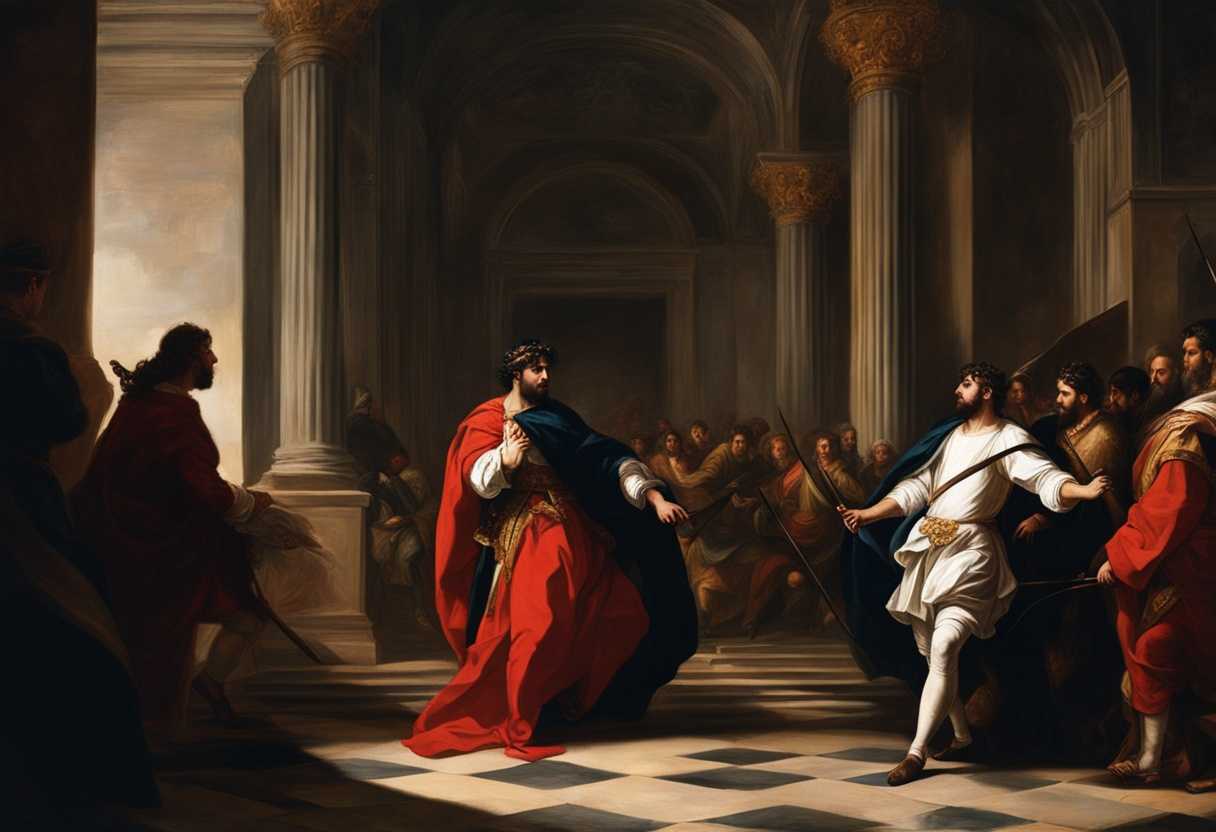
In Esther chapter 6, we find ourselves in the royal palace of King Xerxes in the ancient city of Susa. The scene is set in the early hours of the morning, with the first light of dawn filtering through the ornate windows of the palace. The opulent surroundings are adorned with rich tapestries, golden decorations, and intricate Persian rugs.
Present in the scene are King Xerxes himself, who is restlessly pacing the marble floors of his chamber, and his trusted servant, Haman, who has arrived at the palace to seek the king’s permission to hang Mordecai, a Jewish man who had refused to bow down to him. Little do they know that Queen Esther, who is also in the palace, has just revealed to the king that Mordecai had once saved his life by uncovering a plot to assassinate him.
As the events unfold, the tension in the room is palpable as King Xerxes grapples with the realization of Mordecai’s loyalty and the impending fate of Haman. The stage is set for a dramatic turn of events that will ultimately lead to the downfall of Haman and the deliverance of the Jewish people.
What is Esther 6:6 about?
King Ahasuerus seeks the advice of his advisor, Haman, in this verse from the Jewish book of Esther, marking a pivotal moment in the story. The king’s inquiry of how to honor someone reflects his desire to show appreciation and favor towards a particular individual. However, the irony lies in the fact that the person the king intends to honor is actually Mordecai, a Jewish man whom Haman despises. The king’s question sets the stage for a series of events that ultimately lead to Haman’s downfall and the triumph of the Jewish people.
Imagine being in the king’s court, witnessing this exchange between the king and Haman. Can you feel the tension in the air as Haman is asked to propose a grand gesture of honor, not realizing that it will be for his sworn enemy? This verse serves as a reminder of the unpredictable nature of fate and how even the best-laid plans can unravel in an instant. It also highlights the theme of divine justice at play, as the tables are turned on Haman’s wicked intentions. So, as we reflect on this verse, we are prompted to contemplate the intricacies of destiny, the power of justice, and the importance of remaining humble in the face of unexpected outcomes.
Understanding what Esther 6:6 really means
The Book of Esther unfolds in the opulent setting of the Persian Empire, under the rule of King Xerxes, where Esther, a Jewish woman, rises to become queen. Amidst political intrigue and looming danger, Esther’s cousin Mordecai thwarts a plot against the king’s life, setting the stage for a pivotal moment in Esther 6:6. Here, the antagonist Haman, driven by his malevolent intentions towards the Jews, finds himself unwittingly entangled in a web of his own making.
The key phrase, “What should be done for the man the king delights to honor?” resonates with themes of recognition and honor. It serves as a catalyst for the unfolding drama, as Haman, consumed by his own vanity, presumes the king’s favor is meant for him. His self-centered musings, “Who is there that the king would rather honor than me?” lay bare his hubris and foreshadow the impending reversal of fortunes.
Drawing parallels from other biblical passages, such as Proverbs 16:18 and Luke 14:11, we glean timeless wisdom on the pitfalls of pride and the rewards of humility. The narrative of Haman stands as a cautionary tale, reminding us of the perilous path pride can lead us down and the exalted position humility can bring. In a world that often extols self-promotion, Esther 6:6 prompts introspection on our own attitudes towards recognition and honor.
Consider a modern-day scenario where an overconfident employee assumes they are due a promotion, only to be surpassed by a humble and hardworking colleague. This anecdote mirrors Haman’s downfall, emphasizing the enduring relevance of humility over self-importance. Reflect on your own life—are there areas where pride blinds you to the virtues of humility? How can you cultivate a spirit of service and modesty in a world that often celebrates self-aggrandizement?
As you ponder the implications of Esther 6:6, contemplate how you honor those around you. Do you genuinely uplift others, or is your focus primarily on self-promotion? The dichotomy between Haman’s arrogance and Mordecai’s humility challenges us to reevaluate our interactions with others. By embracing humility and recognizing the worth of those around us, we embody the timeless lessons embedded in this ancient narrative.
How can we recognize and honor God’s timing?
God’s timing orchestrates events in a way that reflects His divine plan, as seen in Esther 6:6. This verse highlights the precise moment when King Xerxes couldn’t sleep and decided to have the court documents read to him, which ultimately led to Mordecai being honored. This intricate timing demonstrates how God works behind the scenes to bring about His will in our lives.
Honoring God’s timing involves having faith in His perfect plan and surrendering our own desires and timelines to Him. When we trust in God’s timing, we acknowledge that He knows what is best for us and that His timing is always better than ours. This means being patient and waiting for God to unfold His purposes in our lives, even when it may not align with our own expectations or timelines.
Recognizing and honoring God’s timing also involves being attentive and obedient to His leading. We too can experience blessings and favor when we align ourselves with God’s timing and purposes, just as God rewarded Mordecai’s obedience and faithfulness at the right moment. We position ourselves to recognize the opportunities God brings our way at the perfect time by staying connected to Him through prayer, reading His word, and seeking His guidance.
Application
Embrace the whispers of destiny in your life, just like Esther embraced hers in Esther 6:6. Pay attention to the signals and signals that the universe sends your way. Today, allow yourself to seize the opportunities presented to you, and step forward with conviction and belief, just like Esther did. Will you heed the call and embrace your divine timing today?

Reverend Michael Johnson is an experienced Church Minister with a profound expertise in spirituality and guidance. With a serene presence and a compassionate heart, he has faithfully served his congregation for over 20 years, leading them on a spiritual journey towards inner peace and enlightenment. Reverend Johnson’s extensive knowledge of religious philosophies and profound understanding of human nature have made him a trusted confidant and mentor to many, as he seamlessly weaves his profound wisdom into life teachings. Reverend Johnson’s calming demeanor and empathetic nature continue to uplift and heal souls, nurturing a sense of unity and tranquility within his community.