
Luke 18:18-22 is about a wealthy young ruler who seeks eternal life but struggles to let go of his material possessions, teaching us the importance of prioritizing spiritual values over worldly wealth.
18 A ruler asked him, “Good Teacher, what must I do to inherit eternal life?”
19 And Jesus said to him, “Why do you call me good? No one is good except God alone.
20 You know the commandments: ‘Do not commit adultery, Do not murder, Do not steal, Do not bear false witness, Honor your father and mother.’”
21 And he said, “All these I have kept from my youth.”
22 When Jesus heard this, he said to him, “One thing you still lack. Sell all that you have and distribute to the poor, and you will have treasure in heaven; and come, follow me.”
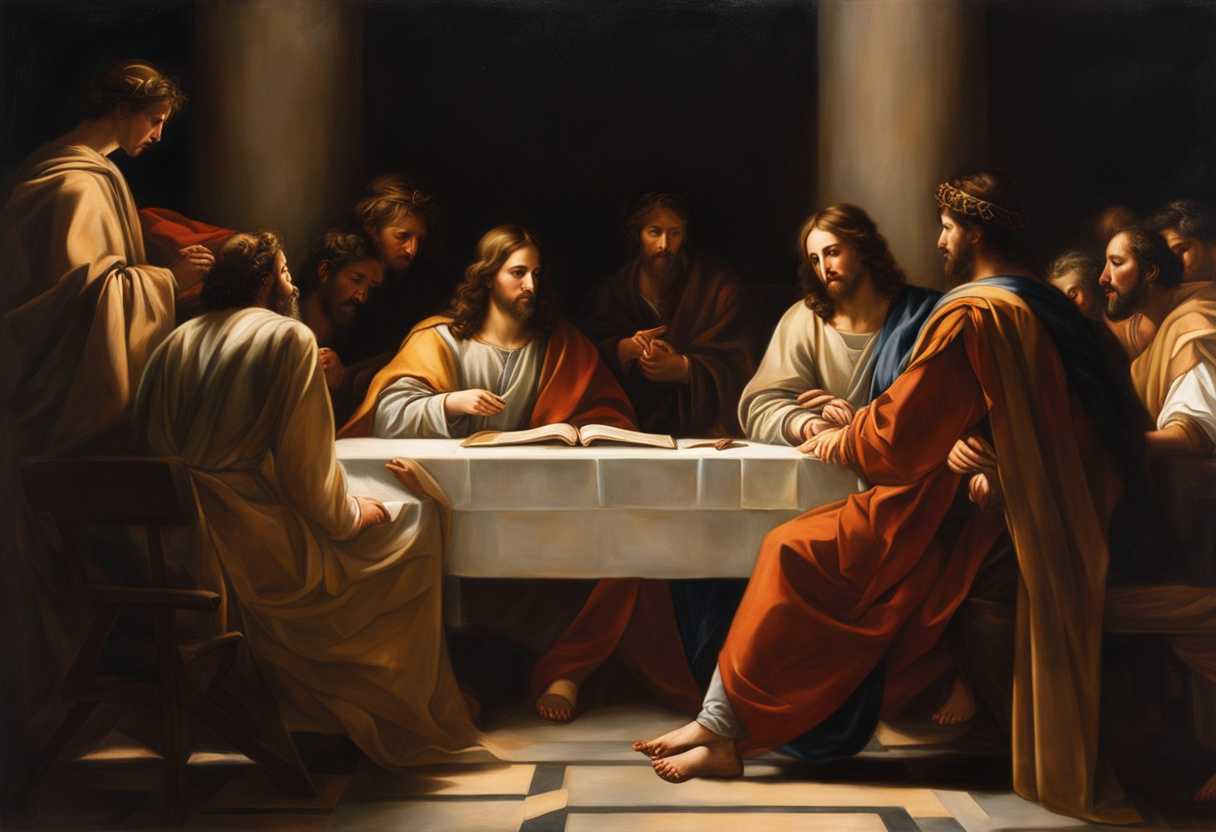
Setting the Scene for Luke 18:18-22
In Luke chapter 18, we find Jesus teaching a crowd of people who have gathered to hear Him speak. Among the crowd is a wealthy ruler, known as the rich young ruler, who approaches Jesus with a question about inheriting eternal life. The man is dressed in fine robes and exudes an air of authority and wealth. He is accompanied by his entourage, who stand a few steps behind him, watching the interaction with curiosity.
The scene takes place in a bustling marketplace in the town square, with vendors selling their wares and people going about their daily activities. The sun is shining brightly, casting a warm glow over the scene. Jesus, dressed in simple robes, sits on a large rock, surrounded by a group of eager listeners hanging on His every word. The rich young ruler approaches Jesus with a sense of urgency, his eyes filled with a mixture of curiosity and longing for answers to his deepest questions about life and eternity. The atmosphere is charged with anticipation as the conversation between Jesus and the rich young ruler unfolds, leading to a profound moment of truth and reflection.
What is Luke 18:18-22 about?
A rich ruler approaches Jesus with a question about how to inherit eternal life in this verse. Instead of giving him a simple answer, Jesus challenges the ruler to let go of his attachment to earthly wealth by selling his possessions and following Him. This teaching highlights the importance of prioritizing spiritual wealth over material possessions when it comes to seeking eternal life.
Imagine the weight of Jesus’ words as He asks the ruler to give up his wealth. This story challenges us to reflect on our own priorities and examine whether we are willing to sacrifice earthly comforts for the riches of spiritual fulfillment. It prompts us to consider whether we are truly ready to follow Jesus with our whole hearts and trust in His guidance. Through this encounter, Jesus teaches us the transformative power of letting go of our attachments and fully committing ourselves to His teachings. We should reflect on this verse and ask ourselves: Are we willing to surrender our worldly possessions and follow Jesus wholeheartedly on the path to eternal life?
Understanding what Luke 18:18-22 really means
In the Gospel of Luke, we encounter a poignant interaction between Jesus and a wealthy young ruler seeking guidance on inheriting eternal life. The ruler’s respectful address to Jesus as “Good Teacher” sets the stage for a profound dialogue that delves into the core of human concerns about the afterlife. His question, “What must I do to inherit eternal life?” encapsulates a universal quest for assurance beyond earthly existence.
Jesus’ response, “Why do you call me good? No one is good—except God alone,” challenges the ruler’s perception of goodness, redirecting attention to God as the ultimate standard of righteousness. This statement not only underscores the divine nature of true goodness but also subtly hints at Jesus’ own divinity, inviting contemplation on the nature of goodness and its source. As Jesus references the commandments, emphasizing moral and ethical standards, he highlights the importance of aligning one’s life with God’s principles.
The pivotal moment arises when Jesus identifies the ruler’s attachment to wealth as a hindrance to spiritual growth. The radical directive to sell everything, give to the poor, and follow Him underscores the call to prioritize heavenly treasures over earthly possessions. This profound invitation challenges the ruler—and readers today—to trust in God wholeheartedly, relinquishing material security for the richness of a relationship with Christ.
Drawing parallels with other biblical passages, such as Matthew 6:19-21 and Mark 10:23-25, reinforces the timeless message of valuing spiritual wealth over material abundance. The warning in 1 Timothy 6:10 against the love of money echoes the dangers of allowing wealth to overshadow faith. In a contemporary context where material success often defines worth, the passage resonates powerfully, urging reflection on the true source of fulfillment and security.
Consider a narrative of a successful individual who discovers greater joy and purpose in philanthropy than in amassing wealth. This anecdote illustrates the transformative power of generosity and service, echoing the passage’s call to prioritize spiritual values over material possessions. As readers engage with this narrative, they are prompted to examine their own lives, identifying potential barriers to a deeper relationship with God and embracing a journey of faith marked by trust and detachment from worldly enticements.
In conclusion, the encounter between Jesus and the rich young ruler serves as a poignant reminder of the importance of wholehearted discipleship and prioritizing God’s kingdom above earthly treasures. It challenges readers to reevaluate their values, fostering a deeper commitment to following Jesus and embodying His teachings in a world often consumed by material pursuits. May this passage inspire a renewed dedication to spiritual growth and a profound trust in God’s provision, guiding hearts towards a life that reflects the values of the Kingdom.
What is holding me back from following Jesus completely?
What may be holding you back from following Jesus completely could be the attachment to material possessions or the fear of letting go of things that are important to you. Jesus instructs the rich young ruler to sell all his possessions and give to the poor in order to fully follow him. This implies that sometimes we may be holding onto things in our lives that hinder us from wholeheartedly committing to Jesus. It could be a reluctance to surrender control or a desire for security in worldly wealth rather than placing our trust completely in God.
Reflecting on this interaction in Luke 18:18-22, it may be worth examining what areas of your life you are not fully surrendering to Jesus. Are there possessions, relationships, or habits that are taking precedence over your relationship with God? You can experience the freedom and fulfillment that comes from following Jesus wholeheartedly by being willing to let go of what holds you back and placing your trust entirely in him. God’s plans for you are far greater than anything you may be clinging onto, and true abundance is found in serving and following Him.
Application
Reflect on the rich ruler in Luke 18:18-22 who couldn’t release his possessions for Jesus. What stands in the way of your full commitment to Christ? Are you willing to let go of all to devote yourself to God’s kingdom? Confront your obstacles and make the bold choice to follow Him with all your heart. Will you take that step towards a deeper connection with Christ, even if it means making sacrifices?

Reverend Michael Johnson is an experienced Church Minister with a profound expertise in spirituality and guidance. With a serene presence and a compassionate heart, he has faithfully served his congregation for over 20 years, leading them on a spiritual journey towards inner peace and enlightenment. Reverend Johnson’s extensive knowledge of religious philosophies and profound understanding of human nature have made him a trusted confidant and mentor to many, as he seamlessly weaves his profound wisdom into life teachings. Reverend Johnson’s calming demeanor and empathetic nature continue to uplift and heal souls, nurturing a sense of unity and tranquility within his community.