
2 Kings 23:4-6 is about King Josiah’s efforts to cleanse Judah of idolatry by removing idols, priests, and shrines dedicated to foreign gods, emphasizing the importance of purifying oneself from sinful influences.
4 And the king commanded Hilkiah the high priest and the priests of the second order and the keepers of the threshold to bring out of the temple of the Lord all the vessels made for Baal, for Asherah, and for all the host of heaven. He burned them outside Jerusalem in the fields of the Kidron and carried their ashes to Bethel.
5 And he deposed the priests whom the kings of Judah had ordained to make offerings in the high places at the cities of Judah and around Jerusalem; those also who burned incense to Baal, to the sun and the moon and the constellations and all the host of the heavens.
6 And he brought out the Asherah from the house of the Lord, outside Jerusalem, to the brook Kidron, and burned it at the brook Kidron and beat it to dust and cast the dust of it upon the graves of the common people.
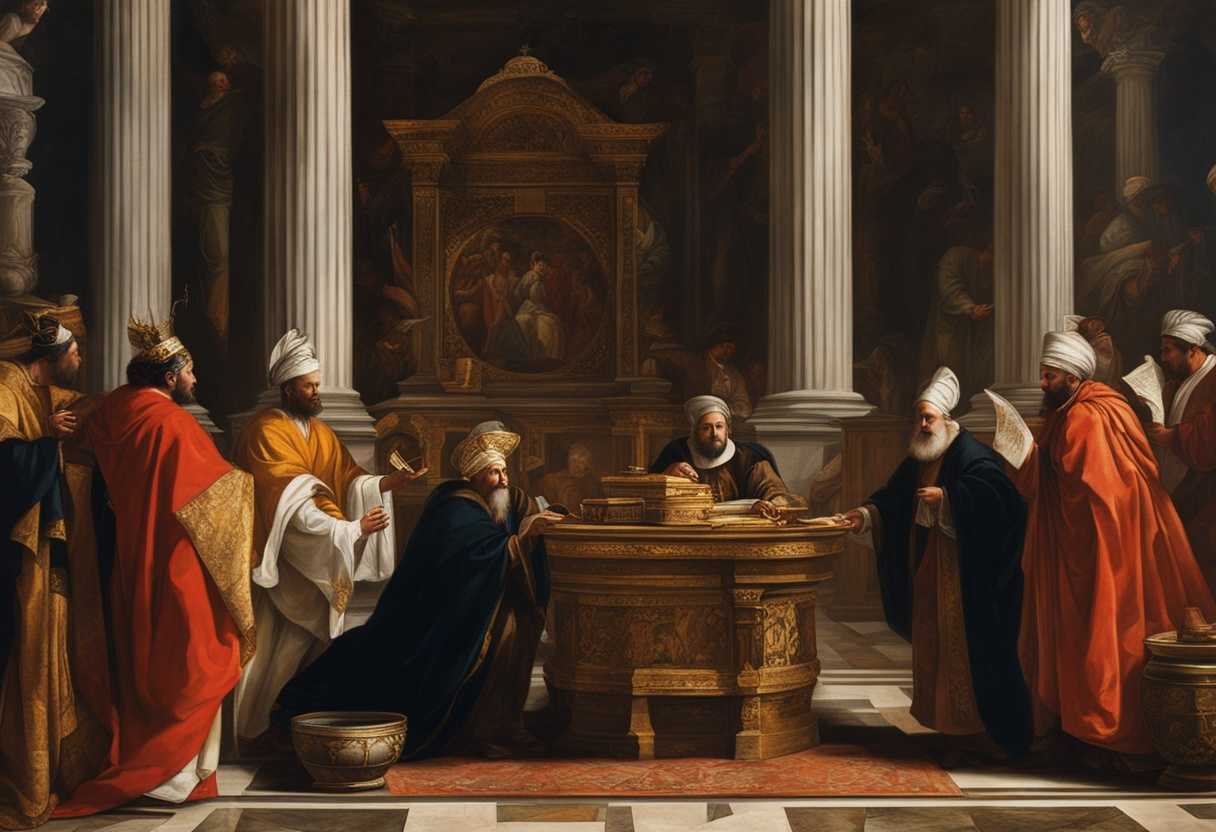
Setting the Scene for 2 Kings 23:4-6
In 2 Kings 23:4-6, we find King Josiah of Judah standing in the temple of the Lord in Jerusalem. Surrounding him are the priests, prophets, and people of Judah who have gathered to witness a significant event. King Josiah, a righteous and devout king, had ordered the restoration of the temple, which had fallen into disrepair due to neglect and idolatry.
As the scene unfolds, King Josiah is holding a scroll in his hands, the recently discovered Book of the Law. This sacred text had been lost and forgotten for many years, but its rediscovery sparked a revival in the hearts of the people. With tears in his eyes, King Josiah reads aloud the words of the Law to the assembled crowd, who listen intently, realizing the extent to which they had strayed from God’s commandments.
The atmosphere in the temple is one of solemnity and repentance as King Josiah leads the people in a covenant renewal ceremony. He vows to follow the Lord with all his heart and soul, and the people pledge to do the same. The idols and altars of foreign gods are destroyed, and the temple is cleansed of all traces of idolatry. This moment marks a turning point for the nation of Judah as they recommit themselves to serving the one true God.
What is 2 Kings 23:4-6 about?
Ah, what a powerful and transformative verse this is. King Josiah’s actions demonstrate a profound shift in the spiritual landscape of Judah. He is not only leading his people back to the path of righteousness but also reclaiming their covenant with the Lord by removing idols and restoring worship to the one true God.
Imagine the courage and conviction it must have taken for King Josiah to dismantle the idols that had taken root in the hearts of the people. His actions remind us of the importance of staying true to our faith and resisting the temptations of false gods and distractions in our lives. Just like King Josiah, we are called to constantly evaluate our spiritual practices and ensure that they are aligned with our devotion to God.
Let King Josiah’s story inspire us to take a closer look at our own lives. Are there any idols that have subtly crept in and taken precedence over our relationship with the Lord? Are we willing to take a bold stand, like King Josiah, and remove these obstacles to deepen our connection with God? May we be encouraged by King Josiah’s example to prioritize worship and devotion to the Lord above all else.
Understanding what 2 Kings 23:4-6 really means
In 2 Kings 23:4-6, we witness King Josiah’s resolute commitment to purifying the worship practices in Judah. Josiah’s reforms were not merely about external changes but about a deep spiritual cleansing of the nation. The removal of idolatrous elements from the temple of the Lord symbolized a return to pure and undivided devotion to God. By eliminating the vessels made for Baal, Asherah, and the host of heaven, Josiah was sending a clear message that true worship must be untainted by any form of idolatry.
The act of burning these idols outside Jerusalem in the fields of the Kidron was a decisive statement of rejection. It ensured that these objects of false worship could never again defile the sacred space of the temple. This radical gesture underscored Josiah’s unwavering commitment to uprooting idolatry from the hearts of the people and restoring the purity of worship. The eradication of idolatrous priests further emphasized the need for spiritual leadership that is wholly devoted to God and His commands.
These verses resonate with broader biblical themes of exclusive worship and spiritual integrity. The commandment in Exodus 20:3-5 to have no other gods besides the Lord echoes Josiah’s actions in removing idolatrous influences. Similarly, Elijah’s confrontation with the prophets of Baal in 1 Kings 18:40 and Jesus cleansing the temple in Matthew 21:12-13 reflect a shared zeal for maintaining the sanctity of worship spaces.
The narrative of Josiah’s reforms holds relevance for believers today. It challenges us to engage in a personal spiritual cleansing, removing anything that competes with our devotion to God. Just as Josiah purged the temple of idols, we are called to rid our lives of distractions, whether they be material possessions, unhealthy relationships, or selfish ambitions. The example of Josiah also highlights the critical role of leaders who exemplify spiritual integrity and lead by a commitment to God alone.
Consider a modern-day parallel: Picture someone decluttering their life, discarding distractions and negative influences to refocus on what truly matters. This intentional act of cleansing brings clarity and renewed purpose, akin to the spiritual renewal experienced by the people of Judah under Josiah’s reforms. By reflecting on Josiah’s actions and applying the principles of spiritual purification to our own lives, we can cultivate a deeper, more authentic relationship with God, free from the idols that seek to divert our worship.
How can we cleanse our lives from idolatry?
To cleanse our lives from idolatry, we must follow the example set in the verse by removing all objects and practices associated with idol worship. We should actively identify and eliminate anything in our lives that takes the place of God, just as King Josiah defiled the high places and broke down the altars and idols. This may involve getting rid of physical items, cutting ties with people or influences that lead us astray, and making a conscious effort to refocus our hearts and minds on God alone.
Additionally, we can cleanse our lives from idolatry by diligently seeking God and His Word. We can strengthen our relationship with God and cultivate a deeper understanding of His will for our lives by immersing ourselves in Scripture, prayer, and fellowship with other believers. Through regular spiritual practices and a commitment to putting God first in all areas of our lives, we can guard against the temptation to idolize anything or anyone above Him. We can cleanse our lives from idolatry and align ourselves more closely with His purposes and plans for us by ultimately seeking to honor and serve God wholeheartedly.
Application
In our journey through life, we face distractions and temptations that can pull us away from God. Let’s clean out the clutter of our hearts and minds, casting away anything that competes for our devotion to Him. Just as King Josiah removed idols to honor God, let’s also be bold and decisive in our commitment to put Him first in everything we do. Are we ready to take a stand, to make a change, and let God be the true ruler of our lives?

Reverend Michael Johnson is an experienced Church Minister with a profound expertise in spirituality and guidance. With a serene presence and a compassionate heart, he has faithfully served his congregation for over 20 years, leading them on a spiritual journey towards inner peace and enlightenment. Reverend Johnson’s extensive knowledge of religious philosophies and profound understanding of human nature have made him a trusted confidant and mentor to many, as he seamlessly weaves his profound wisdom into life teachings. Reverend Johnson’s calming demeanor and empathetic nature continue to uplift and heal souls, nurturing a sense of unity and tranquility within his community.