
Revelation 5:5-7 is about the Lion of the tribe of Judah, who is also the Root of David overcoming and worthy to open the scroll with seven seals because of his sacrificial death and resurrection, symbolizing Jesus Christ as the mighty and victorious Savior.
5 And one of the elders said to me, “Weep no more; behold, the Lion of the tribe of Judah, the Root of David, has conquered, so that he can open the scroll and its seven seals.”
6 And between the throne and the four living creatures and among the elders I saw a Lamb standing, as though it had been slain, with seven horns and with seven eyes, which are the seven spirits of God sent out into all the earth.
7 And he went and took the scroll from the right hand of him who was seated on the throne.
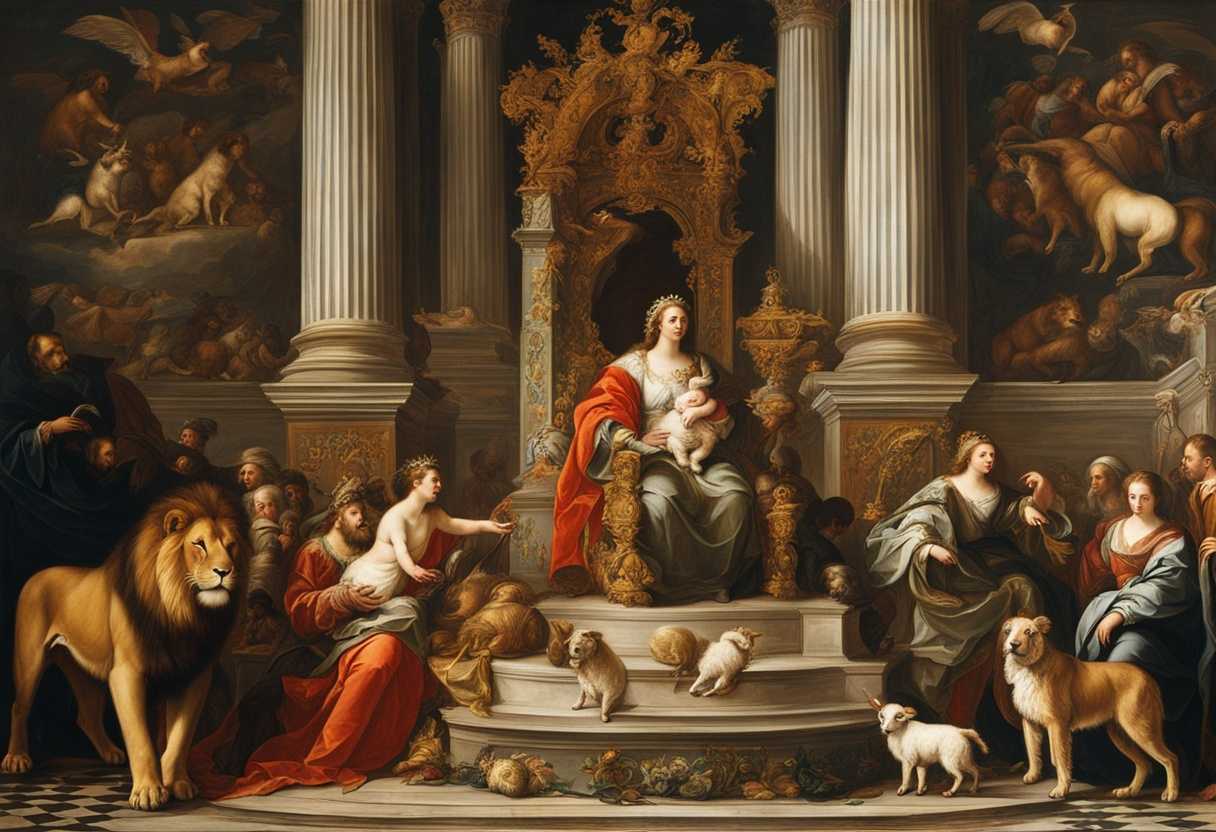
Setting the Scene for Revelation 5:5-7
The scene in Revelation chapter 5 is set in the throne room of heaven. The apostle John, who is the author of the book of Revelation, finds himself in this majestic setting through a vision from God. As he looks around, he sees a great multitude of angels, elders, and living creatures gathered before the throne of God. The atmosphere is filled with awe and reverence as everyone present is worshiping the One seated on the throne.
Among those in the scene is a mighty angel who proclaims with a loud voice, asking who is worthy to open the scroll and break its seals. This scroll contains the future events that will unfold according to God’s plan. In the midst of this momentous occasion, John sees the Lion of the tribe of Judah, who is also the Root of David, stepping forward to take the scroll. This Lion is none other than Jesus Christ, the Lamb who was slain for the redemption of mankind. As Jesus takes the scroll, the heavenly beings burst into songs of praise and adoration, acknowledging His worthiness to carry out God’s divine purposes. The scene is one of heavenly splendor and divine authority, showcasing the central role of Jesus Christ in God’s plan for salvation.
What is Revelation 5:5-7 about?
This verse from the book of Revelation carries deep significance and symbolism. The passage depicts Jesus as the “Lion of Judah,” a powerful and regal image emphasizing His authority, strength, and kingship. The act of opening the scroll signifies the unveiling of God’s divine plan for the world and the fulfillment of His promises. Jesus, the only one worthy to open the scroll, is portrayed as the ultimate and supreme authority over all creation.
Reflecting on this verse prompts us to ponder: What qualities does a lion possess that make it a fitting symbol for Jesus? How does the idea of Jesus being the only one worthy to open the scroll reinforce His unique role as Savior and Redeemer? And how does recognizing Jesus as the “Lion of Judah” inspire us to trust in His power and sovereignty in our own lives? Jesus’ unrivaled authority and majesty should remind us as we meditate on this verse, and we should surrender to His will, knowing that He alone holds the key to unlocking God’s perfect plan for our lives and the world. Jesus, the Lion of Judah, is in control and working all things according to His divine purpose, providing comfort and strength in a world filled with uncertainty and challenges.
Understanding what Revelation 5:5-7 really means
In the Book of Revelation, the apostle John receives a powerful vision that unveils the ultimate triumph of Jesus Christ. This vision holds immense significance for the early Christian community, offering hope and reassurance in the face of persecution and uncertainty.
“The Lion of the tribe of Judah, the Root of David, has triumphed.” This proclamation draws upon Old Testament prophecies, portraying Jesus as the long-awaited Messiah. The imagery of the Lion symbolizes strength and kingship, while the reference to the Root of David establishes Jesus’ rightful place as the King of kings. This declaration assures believers of Jesus’ authority and victory over sin and death, instilling hope and confidence in His ultimate reign.
“He is able to open the scroll and its seven seals.” The symbolism of the sealed scroll, a recurring motif in apocalyptic literature, represents God’s divine plan for the world. Jesus’ ability to open the scroll signifies His unique role in unfolding God’s redemptive purposes. This highlights Jesus’ sovereignty and the assurance that His divine plan will come to fruition, encouraging believers to trust in His control over history and their lives.
“Then I saw a Lamb, looking as if it had been slain, standing at the center of the throne.” The image of the slain Lamb points to Jesus’ sacrificial death on the cross, embodying both vulnerability and victory. His position at the center of the throne underscores His central role in God’s kingdom and His ongoing presence and authority. This portrayal reassures believers of Jesus’ sacrificial love and His continuous reign in their lives.
Cross-references such as Hebrews 7:14, Romans 15:12, and John 1:29 further affirm Jesus’ messianic lineage, His universal significance as the hope for all nations, and His sacrificial role as the Lamb of God. These connections deepen our understanding of Jesus’ multifaceted identity and mission, reinforcing the themes of victory, hope, and sacrificial love present in Revelation.
In today’s world, filled with uncertainty and challenges, this passage offers hope and assurance of Jesus’ ultimate victory and control. It encourages believers to trust in God’s overarching plan, even when circumstances seem perplexing. The reminder of Jesus’ sacrificial love inspires us to emulate His selfless example and live compassionately towards others.
Consider the story of an individual facing a daunting illness who finds solace in knowing that Jesus, the Lion and the Lamb, reigns supreme. Their faith in Jesus’ victory over death and His unwavering presence brings them peace and strength amidst adversity, illustrating the transformative power of trusting in Christ’s sovereignty.
In conclusion, the dual roles of Jesus as the Lion and the Lamb in Revelation 5:5-7 reveal His authority, sacrificial love, and ultimate triumph. As we reflect on these profound truths, may we find hope and strength in the assurance of Jesus’ victory and His enduring love. Let us embrace His example of sacrificial love and live out His teachings in our daily lives, drawing comfort from His presence in every circumstance.
How does Jesus’s sacrifice bring redemption and salvation?
Jesus’s sacrifice brings redemption and salvation through his role as the “Lamb” who was slain. The imagery of the sacrificial lamb signifies Jesus taking on the sins of humanity upon himself, bearing the punishment that was rightfully ours. It was through his sacrificial death that Jesus made atonement for our sins and reconciled us with God. Jesus fulfilled the requirements of the Law and provided a way for us to be saved from the consequences of sin by shedding his blood. His sacrifice is the ultimate demonstration of love and grace, as he willingly laid down his life for us out of his great love for humanity. Through Jesus’s sacrifice, we are offered forgiveness, restoration, and the gift of eternal life with God.
It is through faith in Jesus’s sacrifice that we receive redemption from sin and the promise of salvation. This sacrificial act stands as the cornerstone of Christian belief, serving as the means by which we are justified before God and granted access to the blessings of his kingdom. Jesus’s sacrifice is the ultimate expression of God’s mercy and grace towards us, providing a way for us to be reconciled with him and experience the fullness of his salvation.
Application
Embrace the Lion’s might and the Lamb’s compassion. Submit to His authority and grace, finding strength in His love. Let us walk in obedience, trusting His divine plan. Will you open your heart and surrender to the Lion and the Lamb, letting them guide you to greatness?

Reverend Michael Johnson is an experienced Church Minister with a profound expertise in spirituality and guidance. With a serene presence and a compassionate heart, he has faithfully served his congregation for over 20 years, leading them on a spiritual journey towards inner peace and enlightenment. Reverend Johnson’s extensive knowledge of religious philosophies and profound understanding of human nature have made him a trusted confidant and mentor to many, as he seamlessly weaves his profound wisdom into life teachings. Reverend Johnson’s calming demeanor and empathetic nature continue to uplift and heal souls, nurturing a sense of unity and tranquility within his community.