
In the Bible, the name Terah means “wild goat” or “station” and is associated with the father of Abram (later Abraham) in the Book of Genesis. He is noted for his role in the patriarchal narrative, particularly for leading his family from Ur of the Chaldeans to the land of Canaan.
Scripture
24 When Nahor had lived 29 years, he fathered Terah.
25 When Nahor had lived 29 years, he fathered Terah.
26 When Terah had lived 70 years, he fathered Abram, Nahor, and Haran.
27 Now these are the generations of Terah. Terah fathered Abram, Nahor, and Haran; and Haran fathered Lot.
28 And Haran died in the presence of his father Terah in the land of his kindred, in Ur of the Chaldeans.
29 And Abram and Nahor took wives; the name of Abram’s wife was Sarai, and the name of Nahor’s wife was Milcah, the daughter of Haran, the father of Milcah and Iscah.
30 Now Sarai was barren; she had no child.
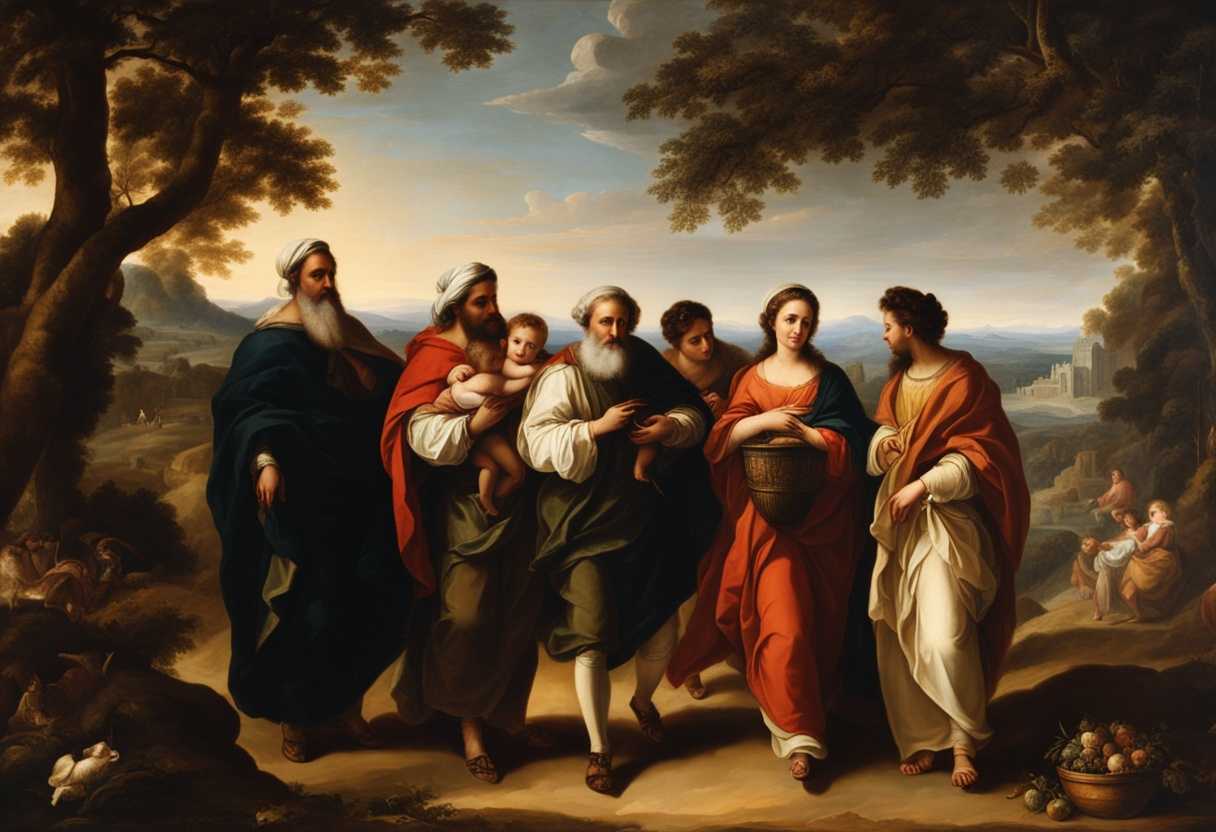
31 Terah took Abram his son and Lot the son of Haran, his grandson, and Sarai his daughter-in-law, his son Abram’s wife, and they went forth together from Ur of the Chaldeans to go into the land of Canaan, but when they came to Haran, they settled there.
32 The days of Terah were 205 years, and Terah died in Haran.
Meaning of Terah in the Bible
The name Terah, which translates to “wild goat” or “station,” carries significant metaphorical implications within the biblical narrative, highlighting themes of restlessness and transition. Terah serves as a figure who initiates a pivotal journey in the formation of the Israelite people, taking his family from Ur of the Chaldeans toward Canaan, as mentioned in Genesis 11:31. This journey is not merely a physical relocation; it represents a move towards a divinely ordained future. In a way, Terah embodies the tension between remaining in the familiar versus pursuing faith in the unknown. His partial journey reflects a station in life, marking a crucial juncture in God’s unfolding plan for humanity, especially as it relates to Abram’s eventual call to continue this journey in Genesis 12:1-3. Moreover, Terah’s actions set the stage for the covenantal promises that will be made to Abraham and later generations. Though Terah does not achieve the full realization of this promise, his leadership in their movement signifies the importance of stepping away from comfort zones and embracing the potential that lies in faith. In this context, Terah can be understood as a foreshadowing figure of those who must grapple with their past while venturing towards a promise that demands deeper trust and courage. His legacy, encapsulated in the namesake meaning, encourages deeper reflection on what it means to transition in faith while navigating the wild terrains of life.
Terah’s name can also be viewed as emblematic of familial legacies and the weight of ancestral influence. As the father of Abram (later Abraham), Terah is pivotal in shaping the identity of the patriarchs of Israel. While his journey toward Canaan halts in Haran, it is through Terah’s lineage that God’s promises to the Israelites begin to take form. This familial connection underscores the biblical theme of covenant, as God later chooses Abram to be the vessel of His divine plan. In this capacity, Terah’s name serves as a symbolic reminder of the interconnectedness of generations; the faith and decisions of one can profoundly affect the destinies of many.
Furthermore, Terah’s narrative reflects the broader theme of human agency within divine providence. While he does not fulfill the journey to Canaan, his actions are part of a divine orchestration that cultivates the groundwork for future revelations. The significance of his name as “wild goat” can imply a sense of untamed potential and uncharted paths; it evokes an image of both freedom and the inherent risk of venturing into the unknown. In this light, Terah’s life can inspire contemplation on the profound tensions inherent in navigating faith while confronting our limitations. Ultimately, while Terah does not complete the journey, his role catalyzes a critical chapter in the unfolding narrative of God’s covenant, illustrating that every transition is layered with opportunity, uncertainty, and the promise of transformation.
The Significance of Terah as a Patriarch
Terah is recognized as the father of Abram (later known as Abraham), a pivotal figure in the biblical narrative. His role as a patriarch signifies the importance of lineage and heritage in the biblical context. The name Terah can be associated with the themes of family, legacy, and the divine plan that unfolds through generations. Terah’s life sets the stage for the covenant that God establishes with Abraham, highlighting the significance of familial relationships in the unfolding of biblical history.
Terah and the Theme of Journey
The name Terah is often linked to the concept of “delay” or “to wander.” This connection can be interpreted as a metaphor for the spiritual journey that many characters in the Bible undertake. Terah’s life reflects the idea of a physical and spiritual journey, as he leaves Ur of the Chaldeans in search of a promised land. This theme resonates throughout the Bible, where journeys often symbolize growth, transformation, and the pursuit of divine purpose. Terah’s wandering can be seen as a precursor to the greater journey of faith that his son Abraham embarks upon.
Terah and the Influence of Idolatry
In the biblical narrative, Terah is described as an idolater, which introduces the theme of faith versus idolatry. His background in a polytheistic culture serves as a contrast to the monotheistic faith that Abraham later embraces. This aspect of Terah’s identity highlights the struggle between traditional beliefs and the call to a new faith. The name Terah, therefore, can symbolize the challenges of leaving behind old ways and the transformative power of faith that leads to a deeper relationship with God.
How to Embrace Faith and Transform Your Life as a Christian
Embracing faith as a Christian is a transformative journey that begins with a sincere heart and a willingness to trust in God’s plan for your life. Start by immersing yourself in Scripture, allowing the Word to guide your thoughts and actions; it’s in those pages that you’ll find wisdom and encouragement for your daily struggles. Prayer is your lifeline—make it a habit to converse with God, sharing your fears, hopes, and gratitude, and listen for His gentle guidance. Surround yourself with a community of believers who uplift and challenge you, as fellowship can ignite your passion for faith. Remember, transformation doesn’t happen overnight; it’s a gradual process of surrendering your will to God and allowing His love to shape you. Embrace the small victories and be patient with yourself, knowing that every step you take in faith brings you closer to the person God created you to be.
Bible References to the Name Terah:
Joshua 24:2-3: 2 And Joshua said to all the people, “Thus says the Lord, the God of Israel: Long ago, your fathers lived beyond the Euphrates, Terah, the father of Abraham and of Nahor; and they served other gods.
3 Then I took your father Abraham from beyond the River and led him through all the land of Canaan, and made his offspring many.
1 Chronicles 1:26-28: 26 Dishan, Ezer, and Dishan.
27 Abram, that is, Abraham.
28 The sons of Abraham: Isaac and Ishmael.
Nehemiah 9:7-8: 7 You are the Lord, the God who chose Abram and brought him out of Ur of the Chaldeans and gave him the name Abraham.
8 You found his heart faithful before you, and made with him the covenant to give to his offspring the land of the Canaanite, the Hittite, the Amorite, the Perizzite, the Jebusite, and the Girgashite. And you have kept your promise, for you are righteous.
Acts 7:2-4: 2 And Stephen said: “Brothers and fathers, hear me. The God of glory appeared to our father Abraham when he was in Mesopotamia, before he lived in Haran,
3 and said to him, ‘Go out from your land and from your kindred and go into the land that I will show you.’
4 Then he went out from the land of the Chaldeans and lived in Haran. And after his father died, God removed him from there into this land in which you are now living.

Reverend Ogunlade is a seasoned Church Minister with over three decades of experience in guiding and nurturing congregations. With profound wisdom and a serene approach, Reverend Ogunlade has carried out various pastoral duties, including delivering uplifting sermons, conducting religious ceremonies, and offering sage counsel to individuals seeking spiritual guidance. Their commitment to fostering harmony and righteousness within their community is exemplified through their compassionate nature, making them a beloved and trusted figure among the congregation.