
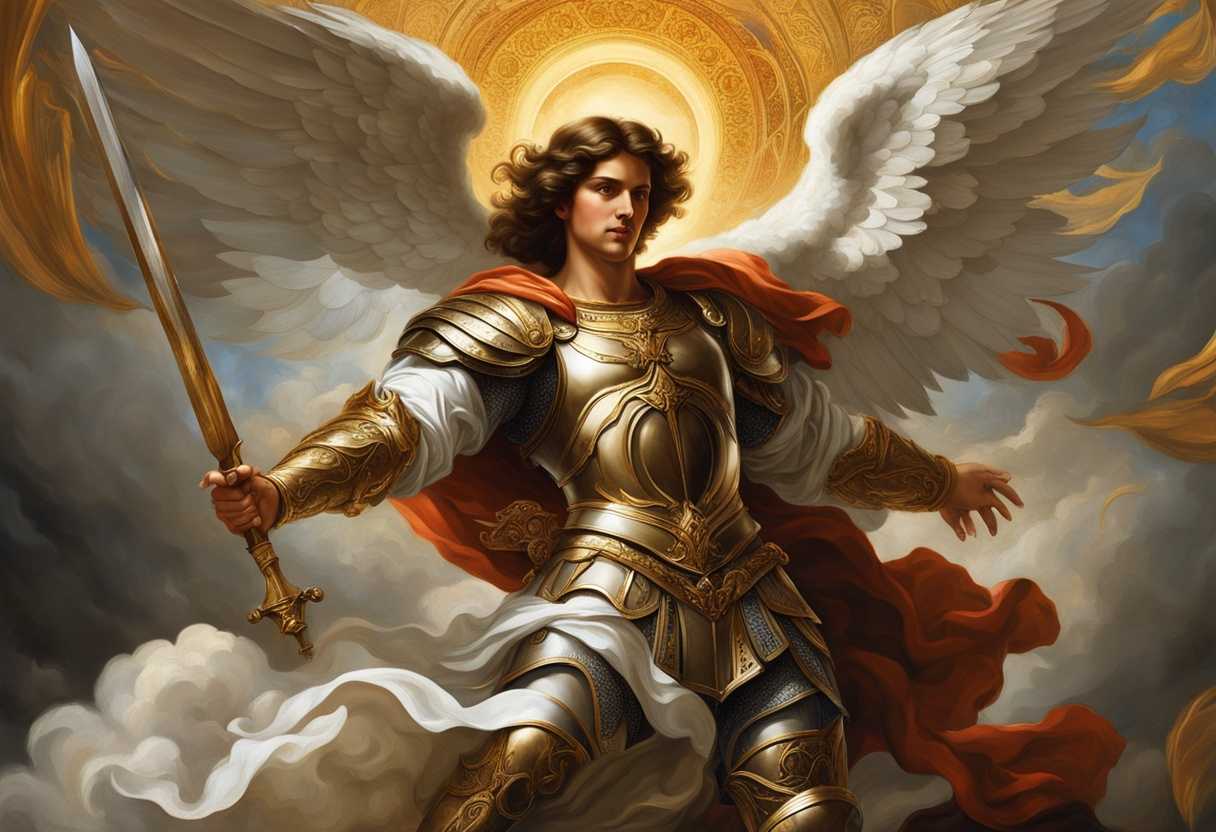
In the Bible, the name Michael means “Who is like God?” It is associated with a chief angelic figure who serves as a protector of Israel and leader in spiritual warfare, notably mentioned in the Book of Daniel and the Book of Revelation.
Scripture
13 The prince of the kingdom of Persia withstood me twenty-one days, but Michael, one of the chief princes, came to help me, for I was left there with the kings of Persia,
14 and came to make you understand what is to happen to your people in the latter days. For the vision is for days yet to come.”
15 When he had spoken to me according to these words, I turned my face toward the ground and was mute.
16 And behold, one in the likeness of the children of man touched my lips. Then I opened my mouth and spoke. I said to him who stood before me, “O my lord, by reason of the vision pains have come upon me, and I retain no strength.
17 How can my lord’s servant talk with my lord? For now no strength remains in me, and no breath is left in me.”
18 Then again one having the appearance of a man touched me and strengthened me.
19 And he said, “O man greatly loved, fear not, peace be with you; be strong and of good courage.” And as he spoke to me, I was strengthened and said, “Let my lord speak, for you have strengthened me.”
20 Then he said, “Do you know why I have come to you? But now I will return to fight against the prince of Persia; and when I go out, behold, the prince of Greece will come.
21 But I will tell you what is inscribed in the book of truth: there is none who contends by my side against these except Michael, your prince.
Meaning of Michael in the Bible
The name Michael, meaning “Who is like God?”, holds profound significance in biblical texts both as a name and as a representation of divine authority and protection. This name encapsulates a rhetorical question that emphasizes God’s unparalleled greatness. In the Book of Daniel, specifically Daniel 10:13 and 12:1, Michael is introduced as a protector and warrior who stands guard over the people of Israel. His role as a celestial defender reflects the assurance of God’s protection over His chosen people, demonstrating that they are not alone in their struggles against oppression and spiritual forces.
Furthermore, Michael’s prominence extends into the Book of Revelation, particularly Revelation 12:7-9, where he leads the heavenly armies against the dragon, symbolizing the ultimate victory of good over evil. This portrayal not only conveys Michael’s importance as an archangel but also highlights the ongoing spiritual battle that characterizes the Christian faith. Ultimately, the name Michael signifies hope, strength, and fidelity to God, inviting believers to reflect on who can truly compare to God in might and majesty. The presence of Michael throughout scripture serves as a reminder of God’s protection and the assurance of spiritual victory for those who remain steadfast in their faith.
The significance of Michael as a name in the Bible extends beyond his specific roles in battle and protection to embody qualities of leadership and advocacy for God’s people. The term “Michael” reflects a divine archetype that represents the righteous defense of humanity against the malevolent forces of chaos and evil. His name, articulating the question “Who is like God?”, serves to remind believers of God’s sovereign and unparalleled nature, encouraging them to trust in His omnipotence. In this context, Michael can be seen as a symbol of steadfastness against adversarial forces, embodying the faithfulness that is crucial for believers navigating their spiritual journeys.
Additionally, Michael’s presence in the biblical narrative signifies the active engagement of divine beings in the affairs of humanity, illustrating how God employs archangels to fulfill His divine purposes. His involvement in pivotal moments in history suggests an ongoing interaction between the celestial realm and the human experience. This relevance is echoed in passages that connect the spiritual warfare manifesting in the heavens to the moral and ethical struggles faced by individuals on earth. In this way, Michael stands as a mediator, bridging the gap between God’s transcendence and His immanence, and reinforcing the belief that divine assistance remains accessible to those who seek God amidst life’s challenges. In this light, Michael embodies hope for the faithful, reinforcing the promise of divine support in their journey toward righteousness and ultimate salvation.
The Divine Protector
The name Michael, which means “Who is like God?”, signifies a role of divine protection and strength. In biblical contexts, Michael is often depicted as a warrior angel, serving as a protector of God’s people. This role emphasizes the belief that God provides guardianship through His heavenly beings, reinforcing the idea that divine assistance is available to those who seek it.
The Advocate of Righteousness
Michael is also seen as an advocate for righteousness and justice. His name embodies the concept of standing up for what is right and opposing evil. This aspect of Michael’s character highlights the ongoing spiritual battle between good and evil, illustrating the importance of moral integrity and the defense of God’s truth in the face of opposition.
The Symbol of Hope
In a broader sense, Michael represents hope for believers. His presence in scripture serves as a reminder of God’s ultimate sovereignty and the assurance that good will triumph over evil. This hope is rooted in the belief that God is actively involved in the affairs of humanity, providing strength and support through His angels, and ultimately leading to victory for those who remain faithful.
How to Live as a Reflective Image of God
Living as a reflective image of God is a beautiful journey that invites us to embody His love, grace, and compassion in our daily lives. To start, we must cultivate a deep relationship with Him through prayer, scripture reading, and worship, allowing His character to shape our hearts and minds. This means actively seeking to love others as He loves us—showing kindness to strangers, forgiving those who hurt us, and serving those in need. It’s about being intentional in our actions, reflecting His light in a world that often feels dark. Remember, it’s not about perfection but about progress; every small act of love and kindness is a step toward mirroring His image. As we strive to live authentically and humbly, we become vessels of His grace, inspiring others to seek Him through our example. So, let’s embrace this calling with joy, knowing that each day is an opportunity to reflect His glory in our unique way.
Bible References to the Name Michael:
Daniel 12:1-2: 1 “At that time shall arise Michael, the great prince who has charge of your people. And there shall be a time of trouble, such as never has been since there was a nation till that time. But at that time your people shall be delivered, everyone whose name shall be found written in the book.”
2 And many of those who sleep in the dust of the earth shall awake, some to everlasting life, and some to shame and everlasting contempt.
Jude 1:9-10: 9 But when the archangel Michael, contending with the devil, was disputing about the body of Moses, he did not presume to pronounce a blasphemous judgment, but said, “The Lord rebuke you.”
10 But these people blaspheme all that they do not understand, and they are destroyed by all that they, like unreasoning animals, understand instinctively.
Revelation 12:7-9: 7 Now war arose in heaven, Michael and his angels fighting against the dragon. And the dragon and his angels fought back,
8 but he was defeated, and there was no longer any place for them in heaven.
9 And the great dragon was thrown down, that ancient serpent, who is called the devil and Satan, the deceiver of the whole world—he was thrown down to the earth, and his angels were thrown down with him.

Reverend Ogunlade is a seasoned Church Minister with over three decades of experience in guiding and nurturing congregations. With profound wisdom and a serene approach, Reverend Ogunlade has carried out various pastoral duties, including delivering uplifting sermons, conducting religious ceremonies, and offering sage counsel to individuals seeking spiritual guidance. Their commitment to fostering harmony and righteousness within their community is exemplified through their compassionate nature, making them a beloved and trusted figure among the congregation.