
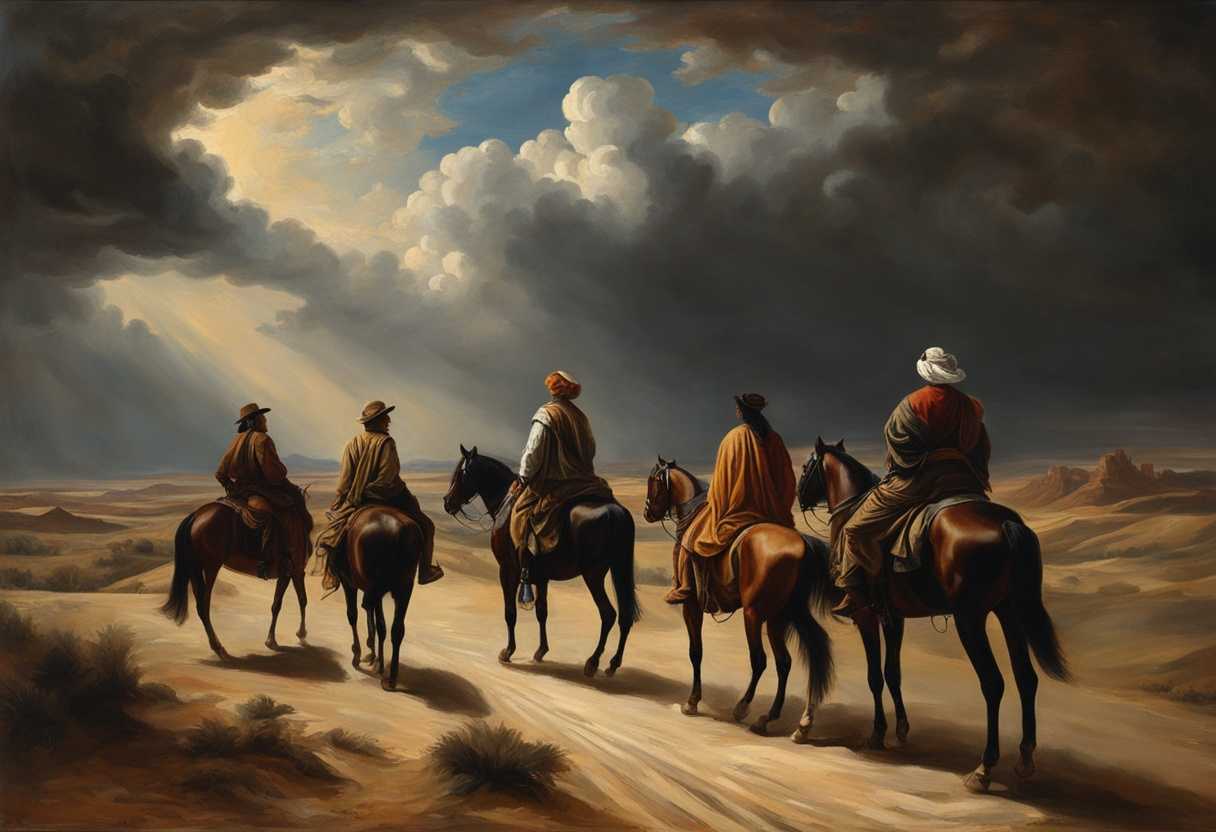
In the Bible, “wander” often refers to moving aimlessly or without purpose, commonly associated with spiritual disobedience or lack of direction, as seen in instances like the Israelites wandering in the desert (Numbers 14:33). It can also symbolize a departure from faith or a wayward life away from God’s guidance (Isaiah 53:6).
Scripture
12 When you work the ground, it shall no longer yield to you its strength. You shall be a fugitive and a wanderer on the earth.
13 Cain said to the Lord, “My punishment is greater than I can bear.
14 Behold, you have driven me today away from the ground, and from your face I shall be hidden. I shall be a fugitive and a wanderer on the earth, and whoever finds me will kill me.
Biblical Meaning of “Wander”
The concept of “wander” in the Bible resonates deeply with themes of spiritual aimlessness and disobedience, manifesting primarily in narratives such as the Israelites’ 40 years in the wilderness (Numbers 14:33). This wandering was not merely a physical journey, but also a profound metaphor for a generation that strayed from God’s covenant and guidance. Their aimless journey resulted from a lack of faith and trust in God, highlighting the consequences of disobedience and the importance of divine direction. It serves as a reminder that without a committed relationship with God, individuals may find themselves lost, both physically and spiritually.
Additionally, wandering is depicted in prophetic literature, as illustrated in Isaiah 53:6, where humanity’s tendency to stray from God is poignantly captured: “All we like sheep have gone astray; we have turned—every one—to his own way.” This verse reflects the broader human condition, illustrating how wandering symbolizes a departure from truth and the search for fulfillment outside of God’s will. It suggests that such departures lead to discontentment and instability, reinforcing the biblical narrative that true purpose and peace can only be found in alignment with God’s divine plan. Collectively, these themes present a theological perspective on wandering as not only a physical state but a spiritual condition that calls believers to seek redemption and return to God’s path.
Wandering in the biblical context often embodies the struggle between divine purpose and human inclination towards waywardness. For example, in the Book of Job, Job’s lamentation reveals a profound sense of aimlessness in suffering and questioning life’s meaning without the clear guidance of the Lord. Job expresses feelings of confusion and despair, akin to wandering in a desert without water, reflecting the emotional turmoil that accompanies a life disconnected from divine wisdom. Such experiences illustrate that spiritual wandering can also be a result of life’s trials, where individuals may feel estranged from God amidst their suffering, prompting a search for understanding and reassurance in faith.
In the New Testament, the theme of spiritual wandering can be found in the parable of the prodigal son (Luke 15:11-32). The younger son’s decision to leave his father’s house represents a conscious choice to wander away from safety and security, seeking fulfillment in a distant land filled with temptation. His journey embodies the universal struggle that many face—a pursuit of independence that ultimately leads to emptiness and despair. However, the profound turning point in the narrative occurs upon his return, highlighting the theme of redemption and the unconditional love of the Father. This motif underscores the biblical understanding of wandering as an invitation for repentance and restoration, reminding believers that straying from God’s path, while painful, can lead to a transformative return to grace and a deeper relationship with the Divine.
Spiritual Disorientation
In the Bible, wandering often symbolizes a state of spiritual disorientation or confusion. This can reflect a person’s distance from God, leading to a lack of direction in life. When individuals stray from their faith or moral compass, they may find themselves lost, both physically and spiritually. This wandering can serve as a metaphor for the struggles of maintaining a faithful life amidst distractions and temptations.
The Journey of Faith
Wandering can also represent the journey of faith itself. Many biblical narratives depict characters who wander as part of their spiritual growth and development. This journey often involves trials and tribulations that ultimately lead to a deeper understanding of God’s purpose. The act of wandering can signify a necessary process of exploration and discovery, where individuals learn to trust in divine guidance and develop resilience in their faith.
Consequences of Rebellion
Wandering in the biblical context can also illustrate the consequences of rebellion against God’s commands. When individuals or communities choose to turn away from divine instruction, they may find themselves in a state of wandering, both literally and metaphorically. This wandering serves as a reminder of the importance of obedience and the potential pitfalls of straying from the path laid out by God. It highlights the need for repentance and the possibility of returning to a right relationship with the divine.
How to Deepen Your Faith and Seek Divine Guidance
Deepening your faith and seeking divine guidance is a beautiful journey that requires both intention and practice. Start by carving out quiet moments in your day for prayer and reflection; this is where you can truly open your heart to God. Consider journaling your thoughts and prayers, as writing can help clarify your feelings and reveal patterns in your spiritual life. Immerse yourself in Scripture, allowing the words to resonate within you and guide your actions. Surround yourself with a community of believers who can support and challenge you in your walk with Christ. Remember, faith is not a destination but a continuous journey—embrace the questions and uncertainties, for they often lead to the most profound insights. Trust that God is always listening and guiding you, even when the path seems unclear.
Bible References to the Meaning of Wander:
Exodus 14:3-4: 3 For Pharaoh will say of the people of Israel, ‘They are wandering in the land; the wilderness has shut them in.’
4 And I will harden Pharaoh’s heart, and he will pursue them, and I will get glory over Pharaoh and all his host, and the Egyptians shall know that I am the Lord.” And they did so.
Numbers 32:13-15: 13 And the Lord’s anger was kindled against Israel, and he made them wander in the wilderness forty years, until all the generation that had done evil in the sight of the Lord was gone.
14 And behold, you have risen in your fathers’ place, a brood of sinful men, to increase still more the fierce anger of the Lord against Israel.
15 For if you turn away from following him, he will again abandon them in the wilderness, and you will destroy all this people.”
Deuteronomy 2:1-3: 1 “Then we turned and journeyed into the wilderness in the direction of the Red Sea, as the Lord told me. And for many days we traveled around Mount Seir.
2 And the Lord spoke to me, saying,
3 You have been traveling around this mountain country long enough. Turn northward.
Psalm 107:4-7: 4 Some wandered in desert wastes, finding no way to a city to dwell in;
5 Hungry and thirsty, their soul fainted within them.
6 Then they cried to the Lord in their trouble, and he delivered them from their distress.
7 He led them by a straight way till they reached a city to dwell in.
Proverbs 21:16-18: 16 One who wanders from the way of good sense will rest in the assembly of the dead.
17 Whoever loves pleasure will be a poor man; he who loves wine and oil will not be rich.
18 The wicked is a ransom for the righteous,
and the traitor for the upright.
Isaiah 53:6-8: 6 All we like sheep have gone astray;
we have turned—every one—to his own way;
and the Lord has laid on him
the iniquity of us all.
7 He was oppressed, and he was afflicted,
yet he opened not his mouth;
like a lamb that is led to the slaughter,
and like a sheep that before its shearers is silent,
so he opened not his mouth.
8 By oppression and judgment he was taken away; and as for his generation, who considered that he was cut off out of the land of the living, stricken for the transgression of my people?
Jeremiah 14:10-12: 10 Thus says the Lord concerning this people: “They have loved to wander thus; they have not restrained their feet; therefore the Lord does not accept them; now he will remember their iniquity and punish their sins.”
11 The Lord said to me: “Do not pray for the welfare of this people.
12 Though they fast, I will not hear their cry, and though they offer burnt offering and grain offering, I will not accept them. But I will consume them by the sword, by famine, and by pestilence.
Ezekiel 34:5-6: 5 So they were scattered, because there was no shepherd, and they became food for all the wild beasts.
6 My sheep were scattered; they wandered over all the mountains and on every high hill. My sheep were scattered over all the face of the earth, with none to search or seek for them.
Matthew 18:12-14: 12 What do you think? If a man has a hundred sheep, and one of them has gone astray, does he not leave the ninety-nine on the mountains and go in search of the one that went astray?
13 And if he finds it, truly, I say to you, he rejoices over it more than over the ninety-nine that never went astray.
14 So it is not the will of my Father who is in heaven that one of these little ones should perish.
Hebrews 3:10-12: 10 Therefore I was provoked with that generation, and said, ‘They always go astray in their heart; they have not known my ways.’
11 As I swore in my wrath, ‘They shall not enter my rest.’”
12 Take care, brothers, lest there be in any of you an evil, unbelieving heart, leading you to fall away from the living God.
James 5:19-20: 19 My brothers, if anyone among you wanders from the truth and someone brings him back,
20 let him know that whoever brings back a sinner from his wandering will save his soul from death and will cover a multitude of sins.

Reverend Ogunlade is a seasoned Church Minister with over three decades of experience in guiding and nurturing congregations. With profound wisdom and a serene approach, Reverend Ogunlade has carried out various pastoral duties, including delivering uplifting sermons, conducting religious ceremonies, and offering sage counsel to individuals seeking spiritual guidance. Their commitment to fostering harmony and righteousness within their community is exemplified through their compassionate nature, making them a beloved and trusted figure among the congregation.