
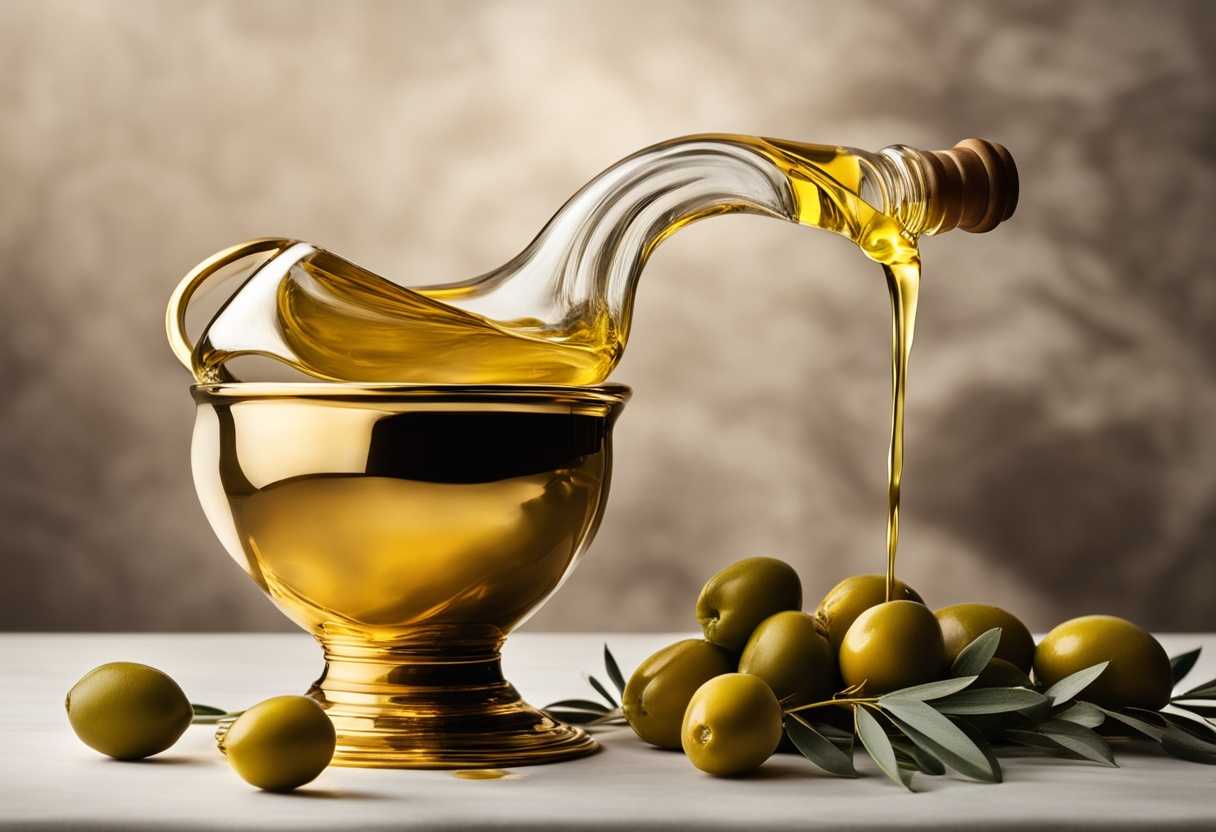
In the Bible, olive oil symbolizes purity, anointing, and the Holy Spirit. It was used for anointing priests and kings, as well as in religious ceremonies, representing God’s presence and blessing (Exodus 30:25-30).
Scripture
20 “You shall command the people of Israel that they bring to you pure beaten olive oil for the light, that a lamp may regularly be set up to burn.
21 In the tent of meeting, outside the veil that is before the testimony, Aaron and his sons shall tend it from evening to morning before the Lord. It shall be a statute forever to be observed throughout their generations by the people of Israel.
Biblical Significance of Olive Oil
Olive oil holds profound significance in the Bible, symbolizing purity, divine presence, and the anointing power of the Holy Spirit. It was not only a crucial ingredient in offerings and ceremonial practices, as seen in Exodus 30:25-30, where God commands Moses to prepare a holy anointing oil using olive oil mixed with spices. This consecrated oil was used to anoint priests (Aaron and his sons, Exodus 30:30) and kings (such as David in 1 Samuel 16:13), signifying their divine appointment and the empowerment bestowed upon them by God for their priestly and royal duties. The anointing with olive oil thus represented the transfer of God’s authority and the establishment of a covenant relationship, marking a person as set apart for divine service.
Moreover, olive oil also symbolizes the vitality and sustenance offered by God’s Spirit. In Zechariah 4:2-6, the vision of the olive trees, which supply continuous oil to the menorah, illustrates the idea that God’s Spirit continuously empowers and illuminates His people. Similarly, in James 5:14, the practice of anointing the sick with olive oil highlights its role in healing and restoration, further associating it with God’s compassion and intervention. Thus, olive oil encapsulates themes of holiness, empowerment, healing, and the perennial presence of the Holy Spirit, making it a potent symbol throughout the biblical narrative. The use of olive oil underscores the interplay between the sacred and the everyday, reminding believers of God’s active involvement in their lives.
In addition to its critical role in anointing and healing, olive oil embodies the blessings of abundance and divine provision within the Scriptures. The olive tree is often associated with peace and prosperity, as reflected in the narratives of the Promised Land, where it flourished among other crops. In Deuteronomy 8:8, it describes the land of Canaan as a place “with wheat and barley, vines and fig trees, pomegranates, a land of olive oil and honey,” emphasizing the significance of olive oil as a symbol of the richness and favor of God bestowed upon His people. This portrayal highlights olive oil not only as a physical sustenance issue but also as a representation of God’s covenant faithfulness and agricultural blessing to Israel, reinforcing the idea of reliance on God’s gifts.
Moreover, the olive branch, another symbol closely associated with olive oil, represents hope and reconciliation. In Genesis 8:11, a dove returns to Noah with an olive leaf, signaling the end of the flood and the restoration of life. This motif of the olive tree as a sign of peace continues through scripture, linking the production of olive oil to themes of renewal and unity. In Romans 11:17, Paul uses the metaphor of the olive tree to discuss the inclusion of Gentiles into the promise of God, illustrating the relationship between root and branches, Jewish believers and the newly grafted-in Gentiles. Thus, olive oil, coupled with its broader symbolism, speaks deeply to themes of community, God’s sustaining grace, and the hope found within the redemptive narrative woven throughout the Bible.
Symbol of Anointing and Divine Selection
Olive oil in the Bible often represents the act of anointing, which signifies God’s choice and empowerment of individuals for specific roles or tasks. This practice of anointing with oil is a physical manifestation of the Holy Spirit’s presence and blessing, marking individuals such as kings, priests, and prophets. The use of olive oil in these sacred rituals underscores the importance of divine approval and the transformative power of God’s calling in the lives of those chosen for leadership and service.
Representation of Abundance and Blessing
Olive oil is frequently associated with prosperity and the blessings of God. In agricultural societies, the olive tree was a symbol of wealth and sustenance, and its oil was a valuable commodity. The abundance of olive oil signifies God’s provision and favor, reflecting the richness of the land and the blessings bestowed upon His people. This connection to abundance serves as a reminder of God’s generosity and the importance of gratitude for His gifts.
Symbol of Healing and Restoration
In biblical contexts, olive oil is also linked to healing and restoration. It is used in various rituals and practices that promote physical and spiritual well-being. The application of olive oil is seen as a means of invoking God’s healing power, illustrating the belief that divine intervention can bring about restoration in times of illness or distress. This aspect of olive oil emphasizes the holistic nature of God’s care for His creation, addressing both physical needs and spiritual wholeness.
How to Embrace Holiness for a Fulfilling Christian Life
Embracing holiness is a beautiful journey that invites us to draw closer to God and reflect His love in our daily lives. It begins with a sincere desire to know Him more deeply, which can be nurtured through prayer, reading Scripture, and engaging in community worship. As we cultivate this relationship, we start to recognize the areas in our lives that need transformation—habits, thoughts, and actions that may not align with His will. Remember, holiness isn’t about perfection; it’s about progress and a heart willing to change. Surround yourself with fellow believers who encourage you, hold you accountable, and inspire you to live out your faith authentically. As you take small, intentional steps toward holiness, you’ll find that it not only enriches your own life but also becomes a beacon of hope and love to those around you. Embrace this journey with grace, knowing that God is with you every step of the way.
Bible References to Olive Oil Significance:
Leviticus 24:1-4: 1 The Lord spoke to Moses, saying,
2 “Command the people of Israel to bring you pure oil from beaten olives for the lamp, that a light may be kept burning regularly.
3 Outside the veil of the testimony, in the tent of meeting, Aaron shall arrange it from evening to morning before the Lord regularly. It shall be a statute forever throughout your generations.
4 He shall arrange the lamps on the lampstand of pure gold before the Lord regularly.
Deuteronomy 8:7-8: 7 For the Lord your God is bringing you into a good land, a land of brooks of water, of fountains and springs, flowing out in the valleys and hills,
8 a land of wheat and barley, of vines and fig trees and pomegranates, a land of olive trees and honey,
1 Kings 17:12-16: 12 And she said, “As the Lord your God lives, I have nothing baked, only a handful of flour in a jar and a little oil in a jug. And now I am gathering a couple of sticks that I may go in and prepare it for myself and my son, that we may eat it and die.”
13 And Elijah said to her, “Do not fear; go and do as you have said. But first make me a little cake of it and bring it to me, and afterward make something for yourself and your son.
14 For thus says the Lord, the God of Israel, ‘The jar of flour shall not be spent, and the jug of oil shall not be empty, until the day that the Lord sends rain upon the earth.’”
15 She went and did as Elijah said. And she and he and her household ate for many days.
16 The jar of flour was not spent, neither did the jug of oil become empty, according to the word of the Lord that he spoke by Elijah.
2 Kings 4:1-7: 1 Now the wife of one of the sons of the prophets cried to Elisha, “Your servant my husband is dead, and you know that your servant feared the Lord, but the creditor has come to take my two children to be his slaves.”
2 And Elisha said to her, “What shall I do for you? Tell me; what have you in the house?” And she said, “Your servant has nothing in the house except a jar of oil.”
3 Then he said, “Go outside, borrow vessels from all your neighbors, empty vessels and not too few.
4 Then go in and shut the door behind yourself and your sons and pour into all these vessels. And when one is full, set it aside.”
5 So she went from him and shut the door behind herself and her sons. And as she poured they brought the vessels to her.
6 When the vessels were full, she said to her son, “Bring me another vessel.” And he said to her, “There is not another.” Then the oil stopped flowing.
7 Then she came and told the man of God. And he said, “Go, sell the oil and pay your debts, and you and your sons can live on the rest.”
Psalm 23:5: 5 You prepare a table before me in the presence of my enemies; you anoint my head with oil; my cup overflows.
Isaiah 1:6: 6 From the sole of the foot even to the head,
there is no soundness in it,
but bruises and sores
and raw wounds;
they are not pressed out or bound up
or softened with oil.
Jeremiah 11:16-17: 16 The Lord once called you ‘a green olive tree, beautiful with good fruit.’ But with the roar of a great tempest he will set fire to it, and its branches will be consumed.
17 The Lord of hosts, who planted you, has decreed disaster against you, because of the evil that the house of Israel and the house of Judah have done, provoking me to anger by making offerings to Baal.
Ezekiel 16:13-14: 13 Thus you were adorned with gold and silver, and your clothing was of fine linen and silk and embroidered cloth. You ate fine flour and honey and oil. You grew exceedingly beautiful and advanced to royalty.
14 And your renown went forth among the nations because of your beauty, for it was perfect through the splendor that I had bestowed on you, declares the Lord God.
Hosea 14:5-7: 5 I will be like the dew to Israel;
he shall blossom like the lily;
he shall take root like the trees of Lebanon;
6 his shoots shall spread out;
his beauty shall be like the olive,
and his fragrance like Lebanon.
7 They shall return and dwell beneath my shadow;
they shall flourish like the grain;
they shall blossom like the vine;
their fame shall be like the wine of Lebanon.
Zechariah 4:1-6: 1 And the angel who talked with me came again and woke me, like a man who is awakened out of his sleep.
2 And he said to me, “What do you see?” I said, “I see, and behold, a lampstand all of gold, with a bowl on the top of it, and seven lamps on it, with seven lips on each of the lamps that are on the top of it.
3 And there are two olive trees by it, one on the right of the bowl and the other on its left.”
4 Then I said to the angel who talked with me, “What are these, my lord?”
5 Then the angel who talked with me answered and said to me, “Do you not know what these are?” And I said, “No, my lord.”
6 Then he said to me, “This is the word of the Lord to Zerubbabel: Not by might, nor by power, but by my Spirit, says the Lord of hosts.
Matthew 25:1-13: 1 “Then the kingdom of heaven will be like ten virgins who took their lamps and went to meet the bridegroom.”
2 Five of them were foolish, and five were wise.
3 For when the foolish took their lamps, they took no oil with them,
4 but the wise took flasks of oil with their lamps.
5 As the bridegroom was delayed, they all became drowsy and slept.
6 But at midnight there was a cry, ‘Here is the bridegroom! Come out to meet him.’
7 Then all those virgins rose and trimmed their lamps.
8 And the foolish said to the wise, ‘Give us some of your oil, for our lamps are going out.’
9 But the wise answered, saying, ‘Since there will not be enough for us and for you, go rather to the dealers and buy for yourselves.’
10 And while they were going to buy, the bridegroom came, and those who were ready went in with him to the marriage feast, and the door was shut.
11 Afterward the other virgins came also, saying, ‘Lord, lord, open to us.’
12 But he answered, ‘Truly, I say to you, I do not know you.’
13 Watch therefore, for you know neither the day nor the hour.
Mark 6:12-13: 12 So they went out and proclaimed that people should repent.
13 And they cast out many demons and anointed with oil many who were sick and healed them.
Luke 7:46: 46 You did not anoint my head with oil, but she has anointed my feet with ointment.
James 5:14-15: 14 Is anyone among you sick? Let him call for the elders of the church, and let them pray over him, anointing him with oil in the name of the Lord.
15 And the prayer of faith will save the one who is sick, and the Lord will raise him up. And if he has committed sins, he will be forgiven.

Reverend Michael Johnson is an experienced Church Minister with a profound expertise in spirituality and guidance. With a serene presence and a compassionate heart, he has faithfully served his congregation for over 20 years, leading them on a spiritual journey towards inner peace and enlightenment. Reverend Johnson’s extensive knowledge of religious philosophies and profound understanding of human nature have made him a trusted confidant and mentor to many, as he seamlessly weaves his profound wisdom into life teachings. Reverend Johnson’s calming demeanor and empathetic nature continue to uplift and heal souls, nurturing a sense of unity and tranquility within his community.