
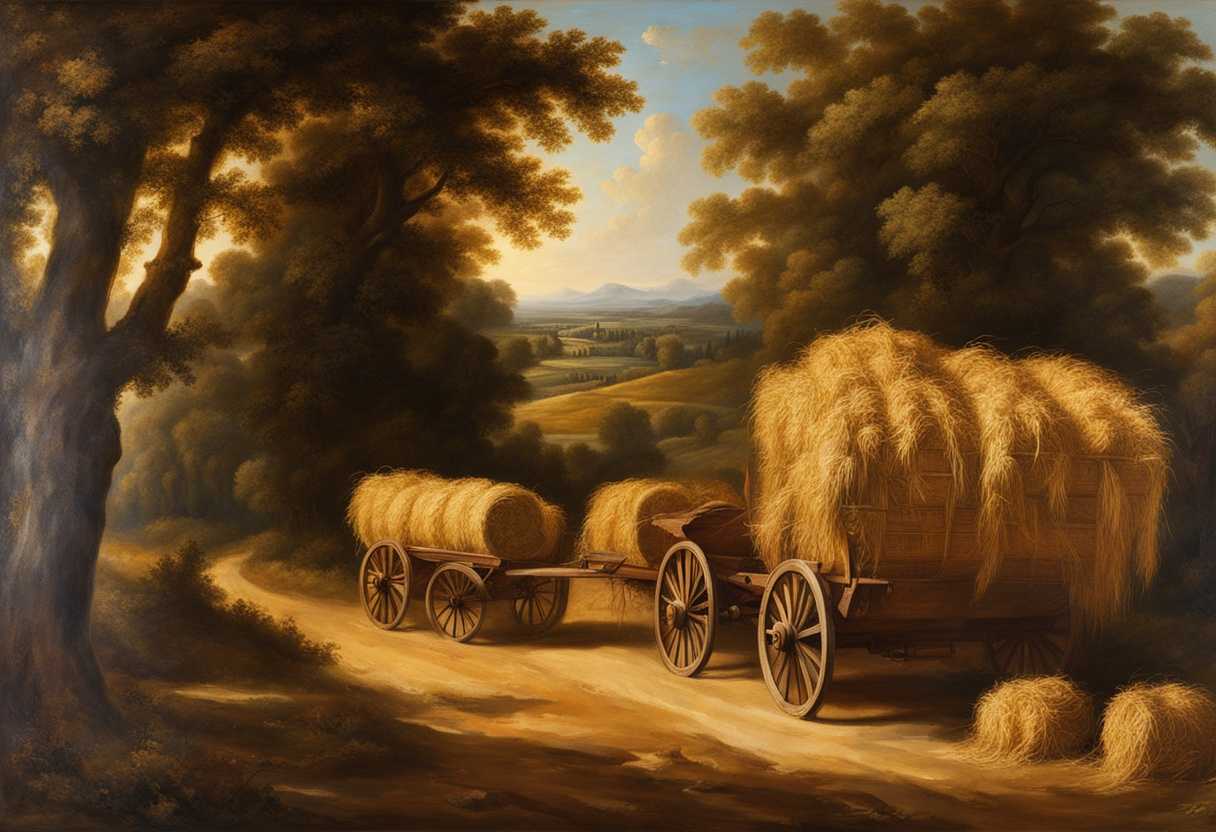
The term “cor” in the Bible generally refers to a unit of measurement for grain, equivalent to about 220 liters or roughly 6 bushels. It is mentioned in the context of agricultural produce and offerings, highlighting the value and abundance of what is being measured.
Scripture
22 The food of his table, the seating of his officials, and the attendance of his servants, and their clothing, his cupbearers, and his burnt offerings that he offered at the house of the Lord, there was no more breath in her.
23 ten fat oxen, and twenty pasture-fed cattle, a hundred sheep, besides deer, gazelles, roebucks, and fattened fowl.
Meaning of “Cor” in the Bible
In the Bible, the term “cor” appears primarily in the context of agricultural assessments, indicating the importance of grain measurements in the ancient Near Eastern economy (2 Chronicles 2:10, 2 Chronicles 27:5). The use of specific units like the cor underscores a societal framework that placed immense value on agricultural produce, grain being a staple in the diet of the people. This reflects God’s provision and the sustenance He offers, symbolizing not only physical nourishment but also spiritual sustenance. For instance, the abundance represented by measures like the cor can be connected to God’s blessings and the flourishing life that comes from obedience to Him (Deuteronomy 28:5-6).
Moreover, the idea of “cor” can be expanded to symbolize the larger theological concept of God’s generosity and abundance in the believer’s life. It reminds us of Jesus’ teachings on provision and abundance, as seen in the feeding of the 5,000 (John 6:1-14), where the little that was available was transformed into plenty. Thus, “cor,” while a literal unit of measurement, encompasses a broader spiritual truth about how God measures blessing—beyond what we can physically count or comprehend, emphasizing the importance of faith in receiving and recognizing divine provision in all aspects of life.
Beyond its agricultural implications, the term “cor” can also be seen as representative of human responsibility in the stewardship of resources that God entrusts to His people. In a society that primarily relied on agriculture, the proper management and assessment of grain would have significant ramifications for the community’s well-being. This stewardship not only involved measuring and distributing food accurately but also ensuring that families were cared for and that no one was left in need. Such principles are mirrored in teachings throughout Scripture, emphasizing the call for justice and care for the vulnerable among God’s people.
Additionally, “cor” can serve as a metaphor for spiritual growth and maturity within communities of faith. Just as physical grain must be cultivated, harvested, and measured, the spiritual “grain” in a believer’s life requires diligent cultivation through prayer, scripture study, and fellowship. The concept can be paralleled with parables of sowing seeds in fertile ground (e.g., the Parable of the Sower), where a person’s response to God’s word determines the yield of their spiritual fruit. Thus, every measure of “cor” becomes reflective of a believer’s journey toward obedience and the fruitfulness that God produces in their lives, underlining that spiritual abundance is cultivated through faithful action and commitment to God’s will.
Symbol of Generosity and Provision
In biblical contexts, “cor” can be associated with the idea of abundance and generosity. It often represents the provision of resources, whether in the form of food, wealth, or blessings. This concept emphasizes the importance of sharing and the divine provision that sustains communities and individuals. The act of giving, as symbolized by “cor,” reflects a deeper spiritual principle of stewardship and gratitude towards God’s gifts.
Representation of Community and Unity
The term “cor” can also signify the collective effort and unity within a community. In various biblical narratives, the sharing of resources and the coming together of individuals for a common purpose highlight the strength found in community. This notion underscores the importance of collaboration and mutual support among believers, fostering a sense of belonging and shared responsibility in fulfilling God’s mission.
Connection to Worship and Sacrifice
Additionally, “cor” may be linked to the themes of worship and sacrifice in the biblical tradition. It can represent the offerings made to God, symbolizing devotion and reverence. The act of giving, whether through material goods or acts of service, is seen as a form of worship that honors God. This connection emphasizes the spiritual significance of sacrifices made in faith, reflecting a heart aligned with divine purposes.
How to Cultivate a Christ-Centered Heart and Life
Cultivating a Christ-centered heart and life is a beautiful journey that begins with intentionality and openness to God’s transformative love. Start by immersing yourself in Scripture, allowing the Word to shape your thoughts and actions; consider setting aside time each day for prayer and reflection, inviting the Holy Spirit to guide you in understanding and applying biblical truths. Surround yourself with a community of believers who encourage and challenge you in your faith, as fellowship can deepen your understanding of Christ’s teachings and help you grow in love and service. Remember, it’s not about perfection but about progress—embracing grace when you stumble and celebrating the small victories along the way. As you seek to embody Christ’s love in your daily interactions, you’ll find that your heart begins to reflect His, leading you to a life that radiates hope, compassion, and joy to those around you.
Bible References to the Meaning of “Cor”:
2 Chronicles 2:9-10: 9 And who among the wise men of Solomon’s time can interpret the meaning of the king’s words?
10 And see that you have with you the skilled men, whom I have assigned to work with you in building the house for my name.
Ezekiel 45:13-14: 13 “This is the offering that you shall make: one sixth of an ephah from each homer of wheat, and one sixth of an ephah from each homer of barley,”
14 And the prescribed portion of oil, of the bath of oil, shall be a tenth of a bath from each cor (the cor, like the homer, contains ten baths).

Rev. François Dupont is a dedicated church minister with a wealth of experience in serving spiritual communities. With a calm and serene demeanor, he has been devoted to sharing the message of love, compassion, and tolerance for over two decades. Through his thoughtful sermons, compassionate counseling, and unwavering support, Rev. Dupont has touched the lives of countless individuals, allowing them to find solace and strength during difficult times. His serene presence and deep understanding of the human condition make him a trusted guide for those seeking spiritual nourishment and guidance.