
In the Bible, particularly in Genesis 1:2, “empty and void” refers to a state of formlessness and desolation before God’s creative activity, indicating a lack of order and life. It highlights the contrast between chaos and the subsequent creation and organization that God brings forth.
Scripture
1 In the beginning, God created the heavens and the earth.
2 The earth was without form and void, and darkness was over the face of the deep. And the Spirit of God was hovering over the face of the waters.
“Empty and Void” Meaning in the Bible
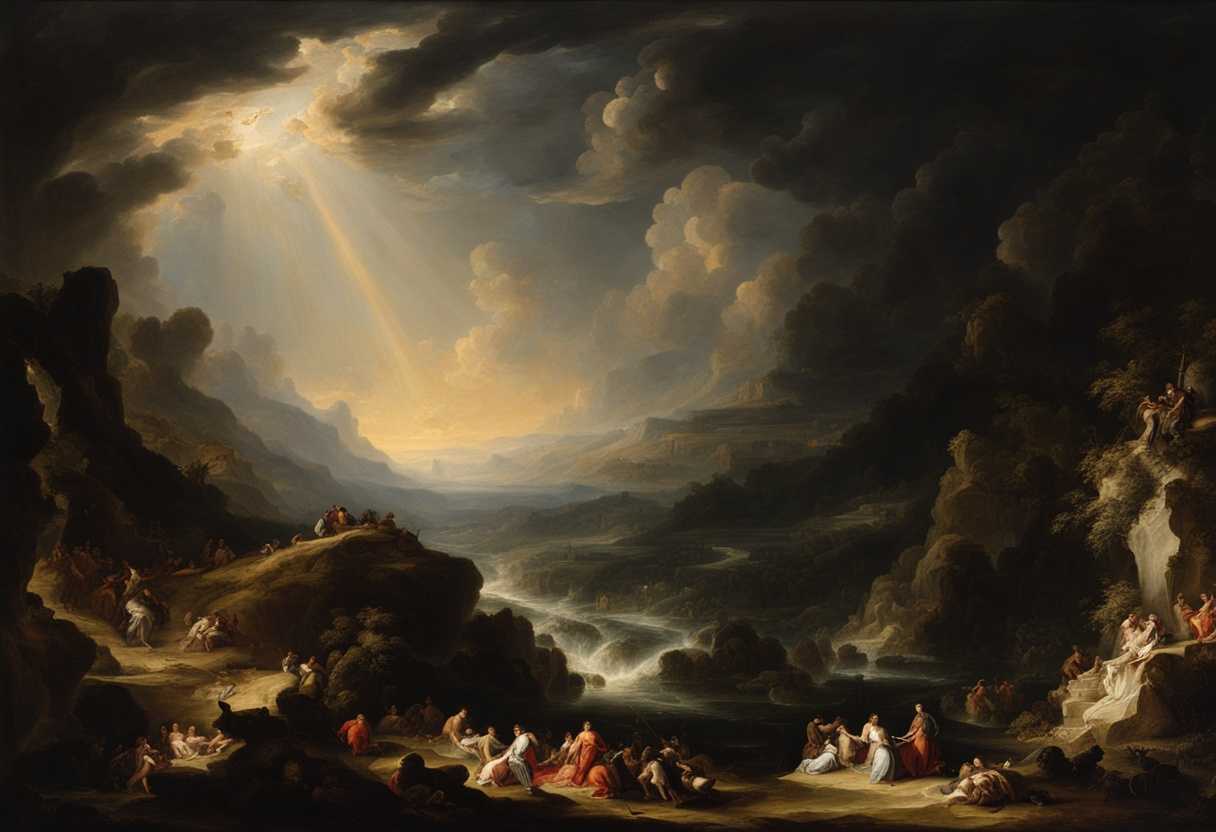
The phrase “empty and void,” originating from the Hebrew terms “tohu va-bohu,” in Genesis 1:2 encapsulates a profound theological significance that resonates throughout biblical narratives. This description of the pre-creation state emphasizes a world that is formless and unfilled, symbolizing chaos and disorder. In this initial moment, there is no structure, purpose, or life— a stark contrast to the vibrant cosmos that God will create. This theme of transformation from desolation to order reflects God’s sovereignty and power as He speaks the world into existence, bringing forth light, land, and life (Genesis 1:3-31). The transition from “tohu va-bohu” to a well-ordered and purposeful creation serves to reaffirm the idea that God is the ultimate creator who can infuse order and meaning into a seemingly chaotic existence.
Moreover, the broader implication of “empty and void” extends beyond the physical creation narrative, inviting theological reflections on human existence and spiritual life. Throughout the Bible, the imagery of emptiness and void is often associated with spiritual desolation or existential crises. For instance, in Ecclesiastes, the repeated proclamations of “vanity of vanities” echo the futility found in a life disconnected from divine purpose (Ecclesiastes 1:2). Furthermore, in prophetic literature, such as Isaiah 34:11, God’s judgment can render a land “desolate,” illustrating the ramifications of turning away from divine order. The redemptive work of Jesus Christ ultimately confronts the emptiness of human existence, promising to fill the void with purpose, hope, and salvation (John 10:10). Thus, “empty and void” not only sets the stage for creation but also frames the ongoing narrative of God’s restoration of order and life amid chaos in both the natural and spiritual realms.
The concept of “empty and void” also permeates the prophetic literature of the Bible, where it signifies more than just physical desolation; it often serves as a metaphor for spiritual barrenness and judgment. In Jeremiah, for example, the imagery of a land made void reflects not only a physical devastation but also the spiritual disarray resulting from the people’s sin and rebellion against God. This contrast emphasizes how turning away from divine commandments can lead to a state of emptiness, where not just the land, but the heart of the people becomes desolate. The prophets frequently challenge the people to recognize this emptiness and urge them to repent, striving toward restoration and a return to faithful relationship with God.
The New Testament also takes up this theme, particularly in the letters of Paul, who speaks of the believer’s life prior to encountering Christ as being void of meaning and purpose. For instance, Paul highlights the transformative power of faith, indicating that believers once lived “in the futility of their minds” (Ephesians 4:17), drawing a parallel to the emptiness described in the Hebrew Scriptures. Through the grace of God, this void can be filled with the truth and love found in Christ—this narrative arc from void to fulfillment embodies the redemptive purpose of God’s plan for humanity. Each mention of emptiness in scripture pushes believers to recognize their dependence on God, urging them toward a life that embraces the fullness of divine grace that transforms the heart and infuses existence with meaning. Thus, “empty and void” not only recalls the initial chaos before creation but also serves as a poignant reminder of the continual need for spiritual renewal and the hope found in God’s redemptive work throughout the biblical canon.
The State of Creation Before Order
In biblical texts, the phrase “empty and void” often signifies a state of chaos or formlessness that precedes divine order and creation. This concept reflects the idea that before God intervenes, there exists a lack of structure and purpose. It serves as a reminder of the transformative power of divine action, where God brings forth life, order, and meaning from a state of emptiness. This theme emphasizes the belief that God can create beauty and purpose from nothingness, highlighting His sovereignty over creation.
Spiritual Desolation and Human Condition
The terms “empty” and “void” can also be interpreted in a spiritual context, representing a state of desolation or emptiness in the human soul. This interpretation suggests that without a relationship with God, individuals may experience a profound sense of lack or meaninglessness in their lives. The emptiness reflects a longing for fulfillment that can only be satisfied through spiritual connection and divine presence. This understanding encourages believers to seek a deeper relationship with God to fill the void in their lives.
The Promise of Renewal and Restoration
Another broader meaning of “empty and void” relates to the themes of renewal and restoration found throughout the Bible. The initial state of emptiness can be seen as a precursor to God’s promise of redemption and new beginnings. This perspective highlights the hope that even in times of desolation or barrenness, God is capable of bringing forth new life and purpose. It serves as a reminder that what may seem empty or void can be transformed into something vibrant and full of potential through divine intervention.
How to Embrace Renewal in Your Christian Walk
Embracing renewal in your Christian walk is a beautiful journey that invites you to continually seek a deeper relationship with God. Start by carving out intentional time for prayer and reflection, allowing His presence to wash over you and reveal areas in your life that need transformation. Dive into Scripture with an open heart, letting the Word challenge and inspire you; perhaps consider journaling your thoughts and prayers to track your spiritual growth. Surround yourself with a community of believers who encourage and uplift you, as fellowship can be a powerful catalyst for renewal. Remember, it’s not about perfection but progress—each day is a new opportunity to turn back to God, to shed old habits, and to embrace the fresh mercies He offers. Trust in His promise that He is always at work within you, shaping you into the person He created you to be.
Bible References to “Empty and Void”:
Isaiah 24:1-3: 1 Behold, the Lord will empty the earth and make it desolate,
and he will twist its surface and scatter its inhabitants.
2 And it shall be, as with the people, so with the priest; as with the slave, so with his master; as with the maid, so with her mistress; as with the buyer, so with the seller; as with the lender, so with the borrower; as with the creditor, so with the debtor.
3 The earth shall be utterly empty and utterly plundered; for the Lord has spoken this word.
Jeremiah 4:23-26: 23 I looked on the earth, and behold, it was without form and void; and to the heavens, and they had no light.
24 I looked on the mountains, and behold, they were quaking,
and all the hills moved to and fro.
25 I looked, and behold, there was no man, and all the birds of the air had fled.
26 I looked, and behold, the fruitful land was a desert, and all its cities were laid in ruins before the Lord, before his fierce anger.
Isaiah 34:8-11: 8 For the Lord has a day of vengeance,
a year of recompense for the cause of Zion.
9 And the streams of Edom shall be turned into pitch,
and her soil into sulfur;
her land shall become burning pitch.
10 Night and day it shall not be quenched; its smoke shall go up forever. From generation to generation it shall lie waste; none shall pass through it forever and ever.
11 But the hawk and the porcupine shall possess it,
the owl and the raven shall dwell in it.
He shall stretch the line of confusion over it,
and the plumb line of emptiness.
Zephaniah 1:2-3: 2 “I will utterly sweep away everything
from the face of the earth,” declares the Lord.
3 “I will sweep away man and beast;
I will sweep away the birds of the heavens
and the fish of the sea,
and the rubble with the wicked.
I will cut off mankind
from the face of the earth,” declares the Lord.
2 Kings 21:12-14: 12 therefore thus says the Lord, the God of Israel: Behold, I am bringing upon Jerusalem and Judah such disaster that the ears of everyone who hears of it will tingle.
13 And I will stretch over Jerusalem the measuring line of Samaria, and the plumb line of the house of Ahab, and I will wipe Jerusalem as one wipes a dish, wiping it and turning it upside down.
14 And I will forsake the remnant of my heritage and give them into the hand of their enemies, and they shall become a prey and a spoil to all their enemies,
Nahum 2:10-11: 10 She is empty, void, and waste; the heart melts, and the knees tremble; anguish is in all loins; all faces grow pale!
11 The queen is stripped; she is carried off, her slave girls lamenting, moaning like doves and beating their breasts.
Job 26:7-14: 7 He stretches out the north over the void
and hangs the earth on nothing.
8 He binds up the waters in his thick clouds, and the cloud is not split open under them.
9 He covers the face of the full moon
and spreads over it his cloud.
10 He has inscribed a circle on the face of the waters at the boundary between light and darkness.
11 The pillars of heaven tremble and are astounded at his rebuke.
12 By his power he stilled the sea;
by his understanding he shattered Rahab.
13 By his wind the heavens were made fair; his hand pierced the fleeing serpent.
14 Behold, these are but the outskirts of his ways, and how small a whisper do we hear of him! But the thunder of his power who can understand?
Psalm 107:33-34: 33 He turns rivers into a desert, springs of water into thirsty ground.
34 a fruitful land into a salty waste, because of the evil of its inhabitants.
Isaiah 45:18-19: 18 For thus says the Lord, who created the heavens (he is God!), who formed the earth and made it (he established it; he did not create it empty, he formed it to be inhabited!): “I am the Lord, and there is no other.
19 I did not speak in secret, in a land of darkness; I did not say to the offspring of Jacob, ‘Seek me in vain.’ I the Lord speak the truth; I declare what is right.

Reverend Michael Johnson is an experienced Church Minister with a profound expertise in spirituality and guidance. With a serene presence and a compassionate heart, he has faithfully served his congregation for over 20 years, leading them on a spiritual journey towards inner peace and enlightenment. Reverend Johnson’s extensive knowledge of religious philosophies and profound understanding of human nature have made him a trusted confidant and mentor to many, as he seamlessly weaves his profound wisdom into life teachings. Reverend Johnson’s calming demeanor and empathetic nature continue to uplift and heal souls, nurturing a sense of unity and tranquility within his community.