
3 And God said, “Let there be light,” and there was light.
4 And God saw that the light was good.
5 God called the light Day, and the darkness he called Night. And there was evening and there was morning, the first day.
6 And God said, “Let there be an expanse in the midst of the waters, and let it separate the waters from the waters.”
7 And God made the expanse and separated the waters that were under the expanse from the waters that were above the expanse. And it was so.
8 And God called the expanse Heaven. And there was evening and there was morning, the second day.
9 And God said, “Let the waters under the heavens be gathered together into one place, and let the dry land appear.” And it was so.
10 God called the dry land Earth, and the waters that were gathered together he called Seas. And God saw that it was good.
11 And God said, “Let the earth sprout vegetation, plants yielding seed, and fruit trees bearing fruit in which is their seed, each according to its kind, on the earth.” And it was so.
12 The earth brought forth vegetation, plants yielding seed according to their own kinds, and trees bearing fruit in which is their seed, each according to its kind. And God saw that it was good.
13 And there was evening and there was morning, the third day.
14 And God said, “Let there be lights in the expanse of the heavens to separate the day from the night. And let them be for signs and for seasons, and for days and years,
15 and let them be lights in the expanse of the heavens to give light upon the earth.” And it was so.
16 And God made the two great lights—the greater light to rule the day and the lesser light to rule the night—and the stars.
17 And God set them in the expanse of the heavens to give light on the earth,
18 to rule over the day and over the night, and to separate the light from the darkness. And God saw that it was good.
19 And there was evening and there was morning, the fourth day.
20 And God said, “Let the waters swarm with swarms of living creatures, and let birds fly above the earth across the expanse of the heavens.”
21 So God created the great sea creatures and every living creature that moves, with which the waters swarm, according to their kinds, and every winged bird according to its kind. And God saw that it was good.
22 And God blessed them, saying, “Be fruitful and multiply and fill the waters in the seas, and let birds multiply on the earth.”
23 And there was evening and there was morning, the fifth day.
24 And God said, “Let the earth bring forth living creatures according to their kinds—livestock and creeping things and beasts of the earth according to their kinds.” And it was so.
25 And God made the beasts of the earth according to their kinds and the livestock according to their kinds, and everything that creeps on the ground according to its kind. And God saw that it was good.
26 Then God said, “Let us make man in our image, after our likeness. And let them have dominion over the fish of the sea and over the birds of the heavens and over the livestock and over all the earth and over every creeping thing that creeps on the earth.”
27 So God created man in his own image,
in the image of God he created him;
male and female he created them.
28 And God blessed them. And God said to them, “Be fruitful and multiply and fill the earth and subdue it, and have dominion over the fish of the sea and over the birds of the heavens and over every living thing that moves on the earth.”
29 And God said, “Behold, I have given you every plant yielding seed that is on the face of all the earth, and every tree with seed in its fruit. You shall have them for food.
30 And to every beast of the earth and to every bird of the heavens and to everything that creeps on the earth, everything that has the breath of life, I have given every green plant for food.” And it was so.
31 And God saw everything that he had made, and behold, it was very good. And there was evening and there was morning, the sixth day.
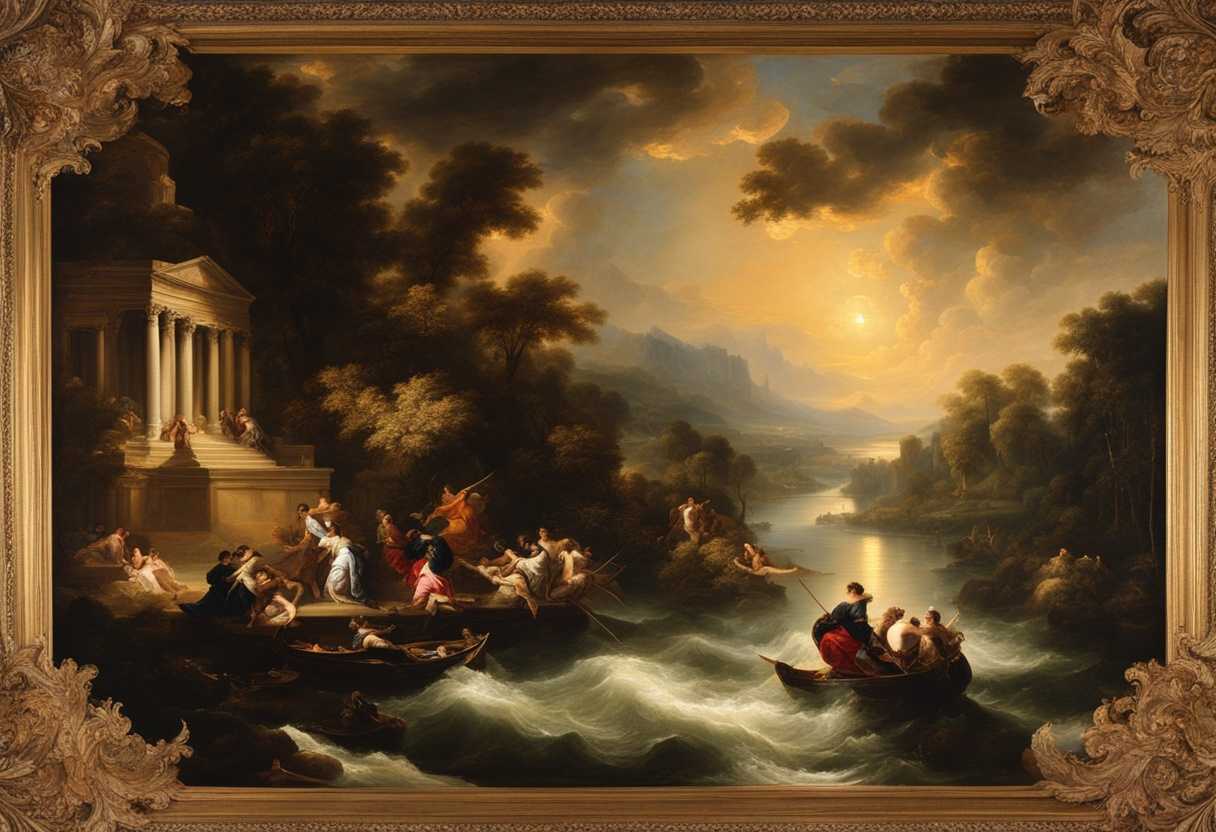
Setting the Scene for Genesis 1:3-31
In Genesis chapter 1, we find ourselves at the beginning of time, where God is creating the world. The scene is set in a vast expanse of darkness and void, with only the Spirit of God hovering over the waters. As God speaks, light bursts forth, separating the darkness from the light. The first day has begun.
God continues to create, separating the waters to form the sky and the seas, and then commanding the land to appear. The earth is covered with lush vegetation, and the skies are filled with birds of every kind. The waters teem with fish and other sea creatures, while the land is populated with animals of all shapes and sizes. Finally, God creates humankind in His own image, male and female, to rule over the earth and all its creatures.
In this magnificent scene, we witness the power and creativity of God as He brings order out of chaos and fills the world with life. The stage is set for the unfolding drama of creation, with God’s masterpiece, humanity, at the center of it all.
What is Genesis 1:3-31 about?
Isn’t it awe-inspiring to think about the immense power and creativity of God, who could bring the entire world into existence in just six days? This verse from the Bible illustrates the sheer magnitude of God’s capabilities and the intentionality behind each step of creation. From the formation of light to the shaping of the land and the introduction of living beings, every aspect of the world was carefully crafted by the divine hand of God. We can marvel at the intricate design and order present in the world around us as we reflect on this verse, knowing that it is all part of God’s grand plan. It serves as a reminder of God’s sovereignty and the incredible beauty found in his work. Furthermore, this verse highlights the value of creation and the importance of stewardship, encouraging us to take care of the world that God has so lovingly created for us.
Understanding what Genesis 1:3-31 really means
Structure for Commentary:
- Introduction and Context: Briefly introduce the passage and set the context of its placement in the Bible.
- Breakdown of Key Phrases: Analyze specific phrases and their meanings.
- Related Biblical Passages: Refer to other relevant scriptures that add depth to the understanding of this passage.
- Relevance Today: Explain how the message in this passage applies in contemporary times.
- Anecdotal Illustration: Use a modern-day story or analogy to illustrate the passage’s message.
- Conclusion and Reflection: Summarize the key points and encourage the reader to reflect on their application.
Commentary on Genesis 1:3-31
Introduction and Context:
Genesis 1:3-31 details the creation narrative, describing how God formed the world and everything in it over six days. This foundational passage sets the tone for the entire Bible, showing God as the supreme creator and the intentional design behind existence. Each step of creation reveals God’s power, wisdom, and purposeful planning.
Breakdown of Key Phrases:
“Let there be light.” This phrase marks the beginning of creation. Light here signifies revelation and the dispelling of chaos, symbolizing the divine initiation of order.
“And God saw that it was good.” This recurring phrase in the passage underscores the perfection and intentionality of God’s creation. Each element, from light to living creatures, is declared good, reflecting God’s satisfaction and the inherent value in what He made.
“So God created mankind in his own image.” This emphasizes human beings’ unique place in creation, bearing the divine image and having responsibilities and privileges differing from other creatures.
Related Biblical Passages:
John 1:1-5 provides a New Testament echo of Genesis, where Christ is depicted as the divine Word through whom all things were made. This passage reinforces the idea that creation was a deliberate act through a divine Logos.
Psalm 19:1 states, “The heavens declare the glory of God; the skies proclaim the work of his hands.” This verse complements Genesis by showing that creation continuously reveals God’s glory and craftsmanship. It is easy to overlook the spiritual significance of creation in a world dominated by scientific understanding and technological advancement. This passage reminds us that the world and life have intrinsic worth, given by a purposeful Creator. Recognizing humanity as made in God’s image calls us to a greater ethical standard in how we treat each other and the environment. Our actions should reflect the stewardship and care befitting our unique role in creation.
Anecdotal Illustration:
Imagine you receive a hand-crafted gift from a loved one, meticulously designed with your preferences in mind. Its value exceeds that of any mass-produced item because of the intention and care involved. Similarly, God’s creation isn’t a random occurrence but a carefully crafted masterpiece, each part playing a crucial role, including you.
Conclusion and Reflection:
Genesis 1:3-31 isn’t just about the origins of the world; it’s about the ongoing relationship between Creator and creation. Reflect on how the declarations of goodness and the divine image in this passage apply to your own life. How do you contribute to the goodness around you? You can acknowledge and honor the image of God in others and the world in what ways?
Reflect on these questions in your daily life and seek to embody the principles of divine craftsmanship and stewardship that are at the heart of this passage.
What does it mean to be made in God’s image?
Being made in God’s image signifies that humans reflect God’s nature and possess qualities that resemble His character. This includes attributes such as creativity, intelligence, self-awareness, and the capacity for moral reasoning. Humans, made in God’s image, are granted inherent dignity, worth, and purpose. It also implies a special relationship with God, as He has chosen to create humanity in a unique way that sets us apart from the rest of creation.
Furthermore, being made in God’s image carries the responsibility of representing Him on Earth. This means reflecting His love, justice, mercy, and goodness in our interactions with others and in our stewardship of the world. It also entails seeking to grow in likeness to God by developing virtues and living in harmony with His will. Being made in God’s image ultimately points to the inherent value and significance of every human being, regardless of their differences or circumstances.
Application
Imagine your life as a blank canvas, ready to be painted with purpose and joy. Just as God created the world in Genesis, you too can create moments of kindness, love, and change in your daily life. At work, at home, with family, reshape your world with intention and action. Don’t just exist—create. Will you let the light of your actions shine and make a difference today?

Reverend Michael Johnson is an experienced Church Minister with a profound expertise in spirituality and guidance. With a serene presence and a compassionate heart, he has faithfully served his congregation for over 20 years, leading them on a spiritual journey towards inner peace and enlightenment. Reverend Johnson’s extensive knowledge of religious philosophies and profound understanding of human nature have made him a trusted confidant and mentor to many, as he seamlessly weaves his profound wisdom into life teachings. Reverend Johnson’s calming demeanor and empathetic nature continue to uplift and heal souls, nurturing a sense of unity and tranquility within his community.