
2 Kings 4:8-17 is about how the prophet Elisha blesses a childless woman with a son as a reward for her hospitality, demonstrating that God’s miracles are a testament to His grace and mercy.
8 One day Elisha went on to Shunem, where a wealthy woman lived, who urged him to eat some food. So whenever he passed that way, he would turn in there to eat food.
9 And she said to her husband, “Behold now, I know that this is a holy man of God who is continually passing our way.
10 Let us make a small room on the roof with walls and put there for him a bed, a table, a chair, and a lamp, so that whenever he comes to us, he can go in there.”
11 One day he came there, and he turned into the chamber and rested there.
12 And he said to Gehazi his servant, “Call this Shunammite.” When he had called her, she stood before him.
13 And he said to him, “Say now to her, ‘See, you have taken all this trouble for us; what is to be done for you? Would you have a word spoken on your behalf to the king or to the commander of the army?’” She answered, “I dwell among my own people.”
14 And he said, “What then is to be done for her?” Gehazi answered, “Well, she has no son, and her husband is old.”
15 And he said, “Call her.” And when he had called her, she stood in the doorway.
16 And he said, “At this season, about this time next year, you shall embrace a son.”
17 But the woman conceived, and she bore a son about that time the following spring, as Elisha had said to her.
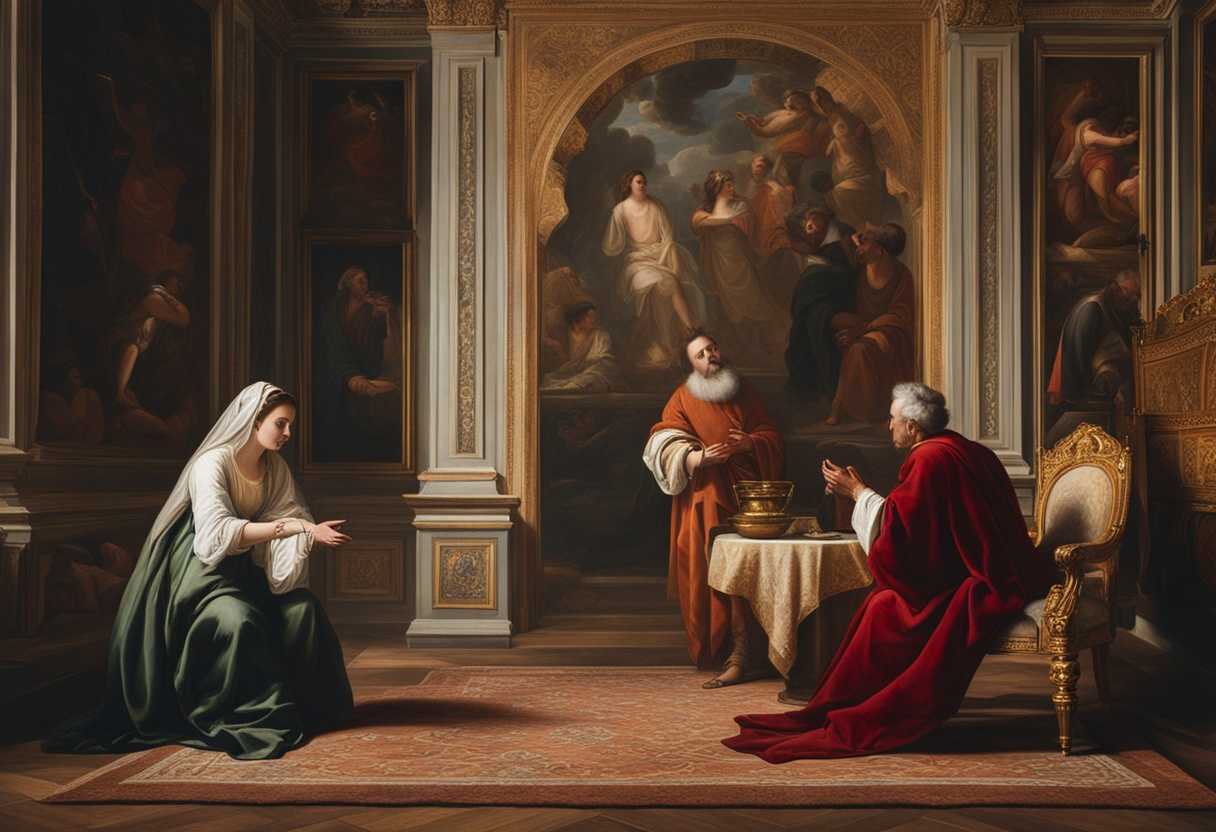
Setting the Scene for 2 Kings 4:8-17
In 2 Kings chapter 4, we find the prophet Elisha on his travels, passing through the town of Shunem. As he walks through the streets, he is greeted by a wealthy and hospitable woman who resides there. This woman, known as the Shunammite woman, recognizes Elisha as a holy man of God and invites him to dine at her home. Impressed by his presence and wisdom, she persuades him to stop by whenever he is in the area, offering him a place to rest and refresh himself.
The scene unfolds in the Shunammite woman’s home, a spacious and well-appointed dwelling that reflects her status in the community. As Elisha becomes a frequent guest in her home, the woman and her husband prepare a small upper room for him to stay in, furnished with a bed, a table, a chair, and a lamp. This gesture of hospitality and respect towards the prophet highlights the reverence and honor they hold for him. Over time, a close bond forms between Elisha and the Shunammite woman, as she and her husband come to regard him as a holy man and seek his blessings.
One day, Elisha expresses his gratitude to the woman for her kindness and offers to speak on her behalf to the king or the commander of the army. However, the woman humbly declines, stating that she is content with her family and does not seek any favors. Elisha, sensing her unspoken desire for a child, prophesies that she will embrace a son within the year. The scene captures the deep faith and hospitality of the Shunammite woman, as well as the prophetic power and compassion of Elisha, setting the stage for the miraculous birth of a son in the chapters that follow.
What is 2 Kings 4:8-17 about?
This verse illustrates the powerful connection between kindness and blessings in biblical teachings. Elisha’s act of helping the Shunammite woman conceive a son serves as a poignant reminder of the spiritual principle of reaping what one sows. It highlights the significance of showing generosity and hospitality towards others as a means of attracting positivity and abundance into one’s life. Elisha exemplifies the concept of divine intervention in response to selfless acts of kindness by assisting the woman in her desire to have a child. This verse prompts us to reflect on the importance of empathy, compassion, and care for others in a broader sense. It encourages us to consider how our actions towards those around us can have far-reaching consequences and how simple acts of kindness can lead to unexpected blessings. Furthermore, it challenges us to contemplate the ways in which we can emulate Elisha’s example by extending a helping hand to those in need, thus creating a ripple effect of generosity and goodwill in the world. Our actions can have a profound impact on both ourselves and those we encounter in our lives, ultimately serving as a reminder.
Understanding what 2 Kings 4:8-17 really means
The passage in 2 Kings 4:8-17 unveils a captivating narrative of Elisha and the Shunammite woman, showcasing a profound display of faith, hospitality, and divine intervention. The Shunammite woman’s discernment and reverence for Elisha as a holy man of God are evident in her words, “I know that this man who often comes our way is a holy man of God.” Her recognition of Elisha’s spiritual authority sets the stage for the remarkable events that unfold.
In a gesture of remarkable generosity and care, the Shunammite woman proposes to build a room for Elisha, equipped with essentials for his comfort. Her willingness to go above and beyond in providing for Elisha exemplifies the virtues of hospitality and selflessness. This act of kindness not only reflects her character but also sets the foundation for the blessings that follow.
Elisha, moved by the Shunammite woman’s hospitality, blesses her with a prophecy that she will bear a son within the year. Despite the seeming impossibility due to her age and barrenness, Elisha’s words serve as a testament to God’s power to fulfill His promises. The fulfillment of this prophecy underscores the theme of divine intervention and the faithfulness of God in bringing forth life from barrenness.
Drawing parallels to other biblical passages such as Genesis 18:10-14, 1 Samuel 1:19-20, and Luke 1:13-17, the story of the Shunammite woman resonates with the overarching theme of God’s ability to grant the desires of the faithful and bring forth miracles in unexpected ways. These connections emphasize the timeless nature of God’s promises and His miraculous works throughout history.
For contemporary audiences, the narrative of the Shunammite woman serves as a poignant reminder of the enduring principles of faith, generosity, and trust in God’s providence. Her story prompts believers to remain steadfast in their faith, to extend hospitality and kindness to others, and to hold onto hope in the face of challenging circumstances. The account of the Shunammite woman’s unwavering faith and the subsequent blessings she receives offer a beacon of encouragement for individuals navigating their own trials and uncertainties.
In conclusion, the story of Elisha and the Shunammite woman stands as a testament to the transformative power of faith, the beauty of hospitality, and the unfailing nature of God’s promises. It inspires us to cultivate a spirit of generosity, to trust in God’s timing and provision, and to remain open to the miraculous interventions that He orchestrates in our lives. Just as the Shunammite woman experienced the fulfillment of God’s promise in unexpected ways, may we too embrace the journey of faith with unwavering trust in His faithfulness.
How can our faith influence God’s blessings?
Our faith can influence God’s blessings by demonstrating our trust and dependence on Him. The Shunammite woman showed great faith by generously providing for Elisha and making a room for him in the story of 2 Kings 4:8-17. This act of faith and hospitality not only demonstrated her trust in God but also her recognition of Elisha as a true prophet. She was blessed with the promise of a son despite her old age and barrenness because of her faith and actions.
Similarly, when we demonstrate our faith through actions that align with God’s will and show our trust in Him, we open ourselves up to receiving His blessings. Our faith acts as a conduit for God’s blessings to flow into our lives, as we align ourselves with His purposes and seek His guidance. Our faith can also lead to unexpected blessings and opportunities that God has planned for us, just as the Shunammite woman’s faith led to the fulfillment of her long-awaited desire for a child.
Therefore, let us strengthen our faith by trusting in God’s promises, obeying His commandments, and displaying acts of kindness and generosity towards others. We demonstrate our reliance on God and invite His blessings into our lives by doing so, knowing that He is faithful to fulfill His promises to those who believe in Him.
Application
Embrace the lesson from 2 Kings 4:8-17 and unlock the power of hospitality and generosity in your life. Like the Shunammite woman, let’s open our doors and hearts to those in need, spreading kindness and love in the modern world. Take action now, reach out and make a difference in someone’s life today. Will you be the beacon of light for others in their time of need?

Reverend Michael Johnson is an experienced Church Minister with a profound expertise in spirituality and guidance. With a serene presence and a compassionate heart, he has faithfully served his congregation for over 20 years, leading them on a spiritual journey towards inner peace and enlightenment. Reverend Johnson’s extensive knowledge of religious philosophies and profound understanding of human nature have made him a trusted confidant and mentor to many, as he seamlessly weaves his profound wisdom into life teachings. Reverend Johnson’s calming demeanor and empathetic nature continue to uplift and heal souls, nurturing a sense of unity and tranquility within his community.