
Hebrews 9:11-12 is about how Jesus, as the ultimate high priest, entered the Most Holy Place once for all with His own blood, achieving eternal redemption and freeing believers from the bondage of sin.
11 But when Christ appeared as a high priest of the good things that have come, then through the greater and more perfect tent (not made with hands, that is, not of this creation)
12 he entered once for all into the holy places, not by means of the blood of goats and calves but by means of his own blood, thus securing an eternal redemption.
Setting the Scene for Hebrews 9:11-12
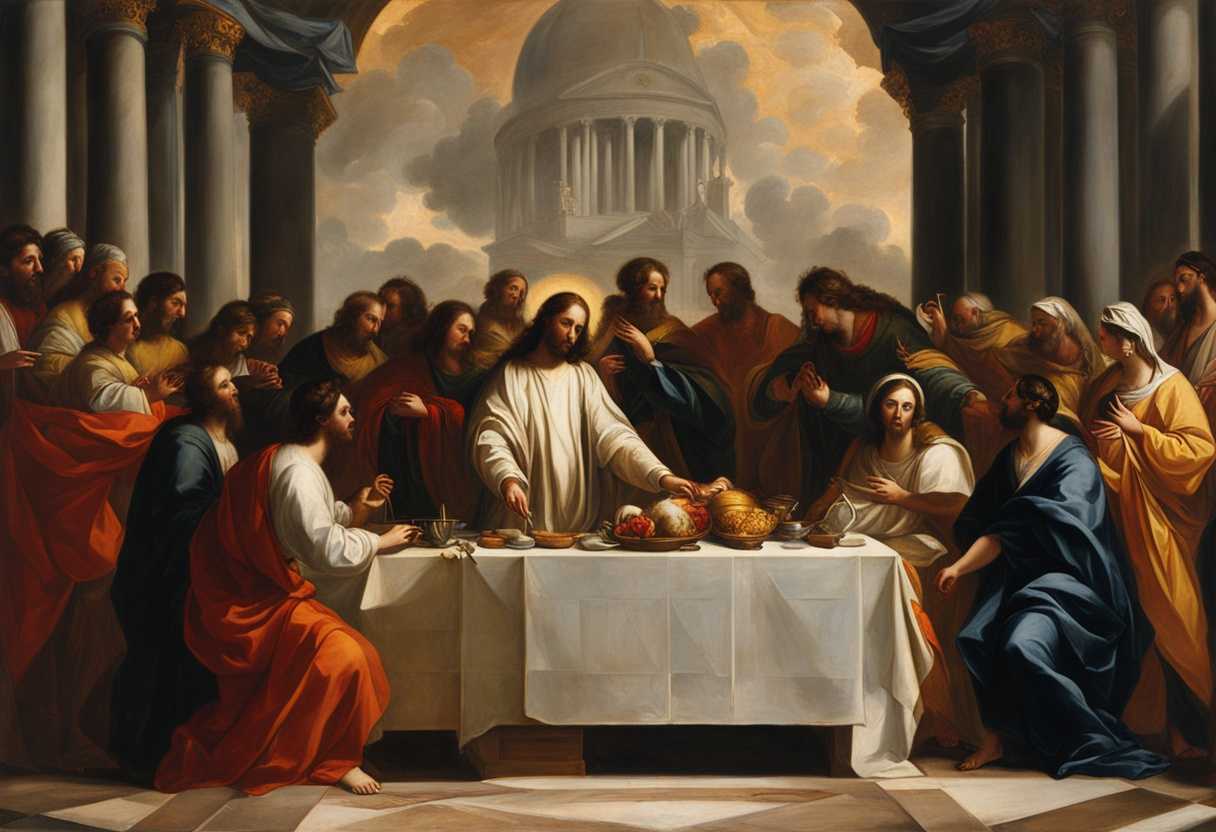
In Hebrews chapter 9, the scene is set in the heavenly realm, where Jesus Christ, the high priest, is entering the Most Holy Place. The author describes how Christ, the perfect and ultimate sacrifice, enters the heavenly tabernacle not made with human hands, but with His own blood, securing eternal redemption for all believers. The setting is one of awe and reverence, as Christ’s sacrifice is portrayed as the fulfillment of the Old Testament sacrificial system.
Surrounding Jesus in this scene are angels and heavenly beings, witnessing this momentous event. The atmosphere is one of solemnity and significance, as the eternal plan of salvation is being carried out. The author of Hebrews paints a vivid picture of Christ’s atoning work, highlighting the superiority of His sacrifice over the temporary and symbolic sacrifices of the Old Covenant.
As the high priest of the new covenant, Jesus stands alone in His role as the mediator between God and humanity, offering Himself as the perfect sacrifice to cleanse believers from sin once and for all. The scene in Hebrews 9 captures the essence of Christ’s redemptive work and the eternal hope that believers have in Him.
What is Hebrews 9:11-12 about?
This powerful verse from the Bible speaks of the profound impact of Christ’s sacrifice and journey into the Most Holy Place. Christ achieved something monumental by entering this sacred space – eternal redemption for all who believe in him. This redemption is not temporary or limited; it is everlasting and complete. Just imagine the weight of this truth – the idea that through Christ’s sacrifice, we are offered not just a momentary reprieve from sin, but a permanent release and restoration of our relationship with God.
What a profound expression of love and grace this verse embodies – the idea that through Christ’s act, we are granted eternal redemption, a gift beyond measure or comprehension. It invites us to reflect on the depth of Christ’s sacrifice and the magnitude of the redemption he offers us. It prompts us to consider the significance of this event in our own lives and how it shapes our understanding of faith and salvation. Let this verse resonate in your heart and soul, reminding you of the incredible gift of eternal redemption that is available to all who believe in Christ.
Understanding what Hebrews 9:11-12 really means
The Book of Hebrews was penned to Jewish Christians well-versed in the Old Testament sacrificial system, aiming to illuminate the superiority of Christ’s sacrifice. In Hebrews 9:11-12, the focus is on Christ as the High Priest, ushering in the era of “good things that are now already here.” This phrase underscores Christ’s pivotal role as the ultimate mediator between humanity and God, surpassing the functions of the Old Testament high priests. While they entered the earthly tabernacle, Christ transcended to the heavenly tabernacle, symbolizing the divine and perfect nature of His sacrifice.
The passage highlights the stark contrast between the old sacrificial system, reliant on the blood of animals, and Christ’s singular act of atonement through His own blood. By entering the Most Holy Place once for all, Christ’s sacrifice is depicted as final and all-encompassing, securing eternal redemption for believers. This eternal redemption signifies not just a temporary reprieve but a permanent solution to the separation caused by sin, offering believers unwavering assurance of salvation through Christ.
Drawing parallels to related passages such as Leviticus 16, Hebrews 4:14-16, John 1:29, and 1 Peter 1:18-19, the significance of Christ’s sacrificial role is further emphasized. These passages collectively paint a vivid picture of Jesus as the compassionate High Priest, the sacrificial Lamb of God, and the unblemished offering that secures our redemption. Understanding these connections deepens our appreciation for the completeness and sufficiency of Christ’s sacrifice.
Today, the message of Hebrews 9:11-12 resonates profoundly, offering believers assurance of salvation, freedom from guilt, and direct access to God through Christ. By grasping the finality and efficacy of Christ’s sacrifice, individuals can find solace in knowing that their redemption is secure, not by their own efforts but by the finished work of Christ. This truth liberates believers from the burden of guilt and empowers them to approach God boldly, confident in the righteousness imputed through Christ.
Consider the story of an individual weighed down by past mistakes, grappling with guilt until encountering the transformative truth of Christ’s sacrifice. Through understanding the sufficiency of Christ’s atonement, this person experiences a profound shift, embracing freedom from guilt and finding assurance in the completeness of Christ’s redemptive work. This anecdote serves as a poignant reminder of the life-changing power inherent in comprehending and embracing the message of Hebrews 9:11-12.
In conclusion, Hebrews 9:11-12 illuminates the unparalleled role of Christ as the High Priest and the efficacy of His ultimate sacrifice. As readers reflect on the assurance and freedom offered through Christ’s redemptive work, may they be inspired to embrace the eternal redemption extended to them. Let us heed the call to anchor our faith in the finished work of Christ, finding peace, assurance, and unfettered access to God through the High Priest who offered Himself once for all.
How can we approach God with a clean conscience?
According to Hebrews 9:11-12, we can approach God with a clean conscience through the blood of Jesus Christ. This means that we can come before God free from guilt, shame, and the burden of our sin because Jesus’ sacrifice on the cross has cleansed us from all unrighteousness. We are able to stand before God justified and forgiven by accepting and trusting in Christ’s atoning sacrifice for our sins.
Having a clean conscience before God is not something we can achieve through our own efforts or good deeds. It is only possible through faith in Jesus Christ and what He has done for us on the cross. We, as believers, can confidently approach God, knowing that the redeeming power of Christ’s blood has made us clean and righteous in His sight. This assurance allows us to have a relationship with God based on grace and mercy rather than fear and condemnation.
Application
Delve into Hebrews 9:11-12 and soak in the sacrifice made for you. Let this love ignite a fire in your soul to lead a life of thanks and submission to God. Embrace the challenge to mirror Jesus, sharing love and kindness in the digital world and at home. Are you ready to light up the world with love as He did?

Reverend Michael Johnson is an experienced Church Minister with a profound expertise in spirituality and guidance. With a serene presence and a compassionate heart, he has faithfully served his congregation for over 20 years, leading them on a spiritual journey towards inner peace and enlightenment. Reverend Johnson’s extensive knowledge of religious philosophies and profound understanding of human nature have made him a trusted confidant and mentor to many, as he seamlessly weaves his profound wisdom into life teachings. Reverend Johnson’s calming demeanor and empathetic nature continue to uplift and heal souls, nurturing a sense of unity and tranquility within his community.