
21 Israel journeyed on and pitched his tent beyond the tower of Eder.
Setting the Scene for Genesis 35:21
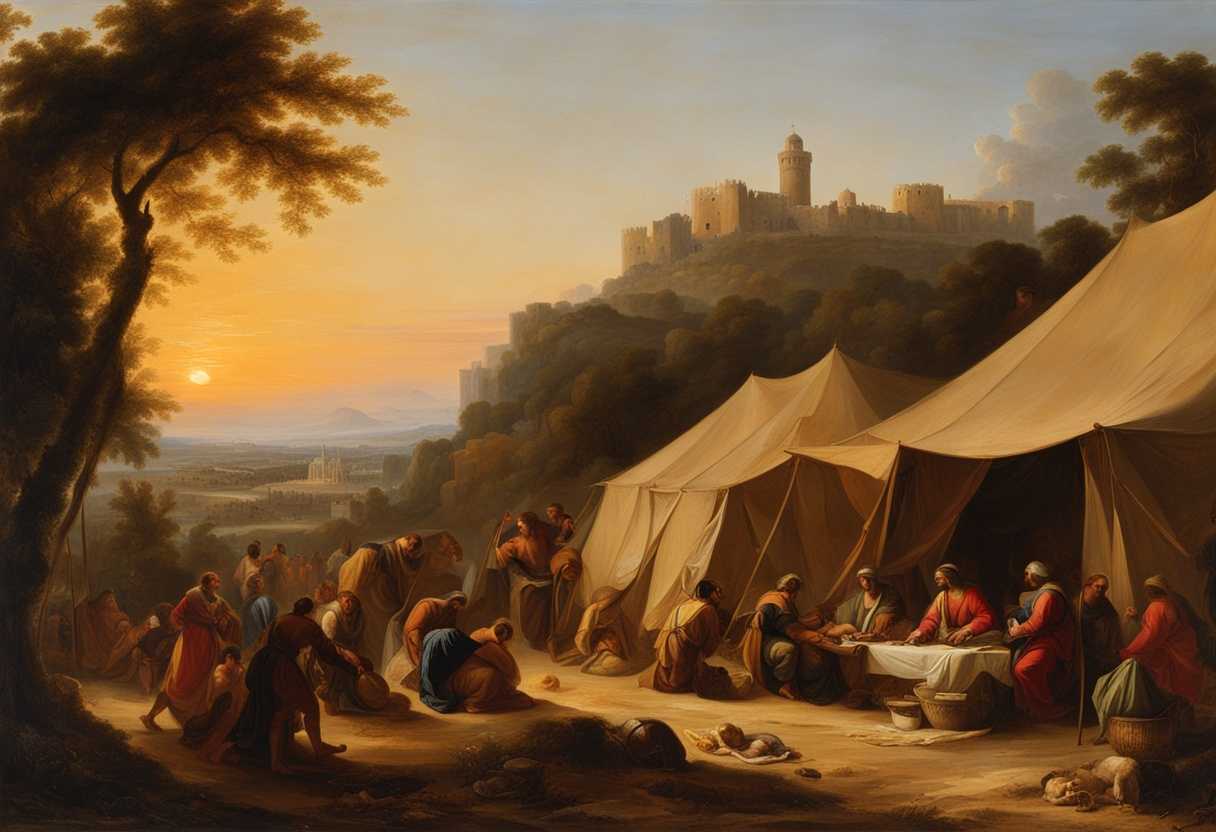
In Genesis 35:21, we find Jacob and his family on a journey. They are traveling from Bethel, where Jacob had built an altar to God, towards Ephrath, which is also known as Bethlehem. The scene is set in the rugged terrain of ancient Canaan, with rocky paths and sparse vegetation surrounding them as they make their way through the land.
Jacob is accompanied by his wives, Leah and Rachel, his children, and his servants. The group is weary from their travels, but their spirits are lifted by the sense of purpose and the knowledge that they are following God’s guidance. As they walk, the sun begins to set, casting a warm glow over the landscape and creating long shadows that stretch out before them.
Despite the challenges they have faced and the uncertainties that lie ahead, there is a sense of unity and determination among the group. They are bound together by their shared faith and their trust in God’s promises. As they continue their journey, they are reminded of the importance of staying true to their beliefs and relying on God’s guidance in all things.
What is Genesis 35:21 about?
Oh, the profound sorrow that must have filled Jacob’s heart upon losing his beloved Rachel during the birth of their son! This verse brings to light the harsh reality of life and the fragility of human existence. It reminds us of the pain and suffering that can come with childbirth, even in the midst of joy and new life.
Have you ever experienced a moment of overwhelming grief or loss? Can you imagine the depth of Jacob’s sorrow as he faced the death of his beloved wife in such a heart-wrenching circumstance? This verse serves as a poignant reminder of the complexities of life and the unpredictable nature of our mortal journey. It prompts us to reflect on the fleeting nature of life and the importance of cherishing our loved ones while we have them.
Let this verse be a gentle nudge to hold our dear ones close, to cherish each moment we have with them, and to appreciate the gift of life despite its inherent challenges and tragedies. It is a poignant reminder of the love and loss that are intertwined in the human experience, urging us to find solace in the midst of pain and to embrace the preciousness of every breath we take.
Understanding what Genesis 35:21 really means
Let’s explore the layers and implications of Genesis 35:21 for our lives today. Our structure will include: an introduction to the verse, the context within the biblical narrative, theological reflections, comparative passages, contemporary relevance, and a concluding thought. Jacob makes a geographical movement in Genesis 35:21. Phrases like “Israel moved on again” can seem routine, but they hold deeper meaning. This verse follows dramatic events in Jacob’s life, such as the death of his beloved wife Rachel.
Context within the Biblical Narrative:
To understand this verse, we need to recall the surrounding chapters. Chapter 35 of Genesis narrates several critical moments, including Jacob’s return to Bethel, the death of his family members, and the tragic loss of Rachel in childbirth. Placing this movement right after such heavy events suggests a resilience and continued trust in God’s direction. Jacob’s journey is part of the overarching narrative encompassing God’s covenant with his people, extending from Abraham to Isaac and now Jacob (see Genesis 12:1-3, Genesis 26:3-5).
Theological Reflections:
“Israel moved on again” indicates Jacob’s new identity and mission. Renamed Israel by God (Genesis 32:28), Jacob’s actions now represent not just his personal journey but the destiny of a nation. This teaches us about the importance of spiritual perseverance and transformation. Despite life’s hardships, our faith journey requires us to move forward, continuing in God’s promises.
Comparative Passages:
Parallel passages such as Exodus 14:15, where God commands the Israelites “Tell the people to move on,” echo a similar call to action. It speaks to the ongoing journey of faith and the trust required in following God’s will. Likewise, Hebrews 11:8, recounting Abraham’s obedience to move without knowing his destination, provides rich insight into the theme of faithful movement.
Contemporary Relevance:
Today, many of us experience moments that feel like losses or setbacks, much like Jacob did. The verse’s relevance shines through in our own lives as we navigate the challenges and changes before us. It encourages us not to become stagnant in sorrow or fear but to move forward, trusting that God has a purpose. A person loses their job but uses it as an opportunity to pursue a passion that leads to a more fulfilling career. It’s a modern testament to the resilience and forward movement seen in Jacob’s story. Genesis 35:21 is a powerful reminder of the journey we are on as believers. It speaks to the faith required to keep moving, despite the trials encountered along the way. We gain valuable insights into how to live out our faith actively and persistently by viewing Jacob’s physical journey as a metaphor for our spiritual journey.
This passage stands as a beacon of hope, urging us to keep progressing, trusting in God’s promises, and moving forward in our spiritual and personal lives. How will this understanding inspire your movement and growth in your faith today?
Why did Rachel die giving birth to Benjamin?
Rachel died giving birth to Benjamin because it was a very difficult and painful labor. The verse indicates that as Rachel was in the throes of childbirth, she was struggling and experiencing severe complications that ultimately led to her passing. The intensity of the situation is highlighted by the fact that as she was nearing the end of her life, she named her newborn son “Ben-Oni,” meaning “son of my trouble or sorrow.”
The verse portrays a heartbreaking scene where Rachel, despite the joy of bringing new life into the world, was faced with the grim reality of her own mortality. The naming of Benjamin by his father Jacob signifies a turning point from sorrow to strength, as Jacob chose to name him “Benjamin,” meaning “son of the right hand,” suggesting a sense of honor and blessing in the midst of tragedy. The death of Rachel in childbirth serves as a poignant reminder of the fragility of life and the bittersweet mixture of joy and sorrow that can accompany the miracle of childbirth.
Application
In the rush of our daily grind, let’s pause and remember that life is fleeting. Prioritize your family and friends like you would a crucial deadline. Show love and appreciation today—don’t wait for tomorrow. Your relationships are the most valuable assets you have. How will you show your loved ones they matter today?

Reverend Michael Johnson is an experienced Church Minister with a profound expertise in spirituality and guidance. With a serene presence and a compassionate heart, he has faithfully served his congregation for over 20 years, leading them on a spiritual journey towards inner peace and enlightenment. Reverend Johnson’s extensive knowledge of religious philosophies and profound understanding of human nature have made him a trusted confidant and mentor to many, as he seamlessly weaves his profound wisdom into life teachings. Reverend Johnson’s calming demeanor and empathetic nature continue to uplift and heal souls, nurturing a sense of unity and tranquility within his community.