
2 So Jacob said to his household and to all who were with him, “Put away the foreign gods that are among you and purify yourselves and change your garments.
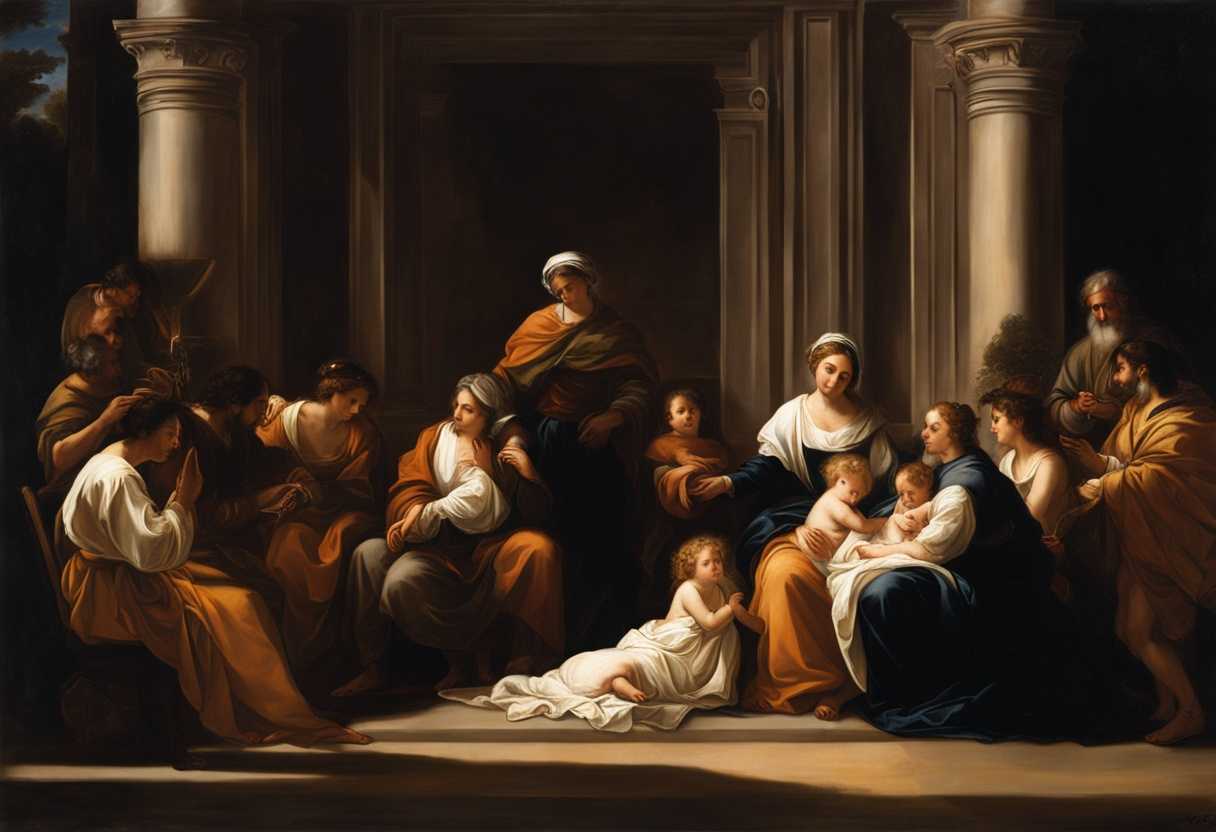
Setting the Scene for Genesis 35:2
In Genesis chapter 35, we find Jacob and his household preparing to journey to Bethel as instructed by God. The scene is set in the early morning light, with the camp bustling with activity as Jacob’s sons, wives, and servants pack up their belongings and prepare the animals for the journey. The air is filled with the sounds of bleating sheep, clucking chickens, and the clatter of pots and pans being packed away.
Jacob, now a seasoned patriarch, stands at the center of the camp, giving out instructions and blessings to his children. His beloved wife Rachel, heavily pregnant with their youngest son Benjamin, sits nearby, watching over their other children playing in the dust. The older brothers, Reuben, Simeon, Levi, and Judah, are busy securing the tents and loading supplies onto the camels.
As the sun rises higher in the sky, the camp slowly comes to life, ready to embark on this important journey to Bethel. The atmosphere is charged with anticipation and reverence as they prepare to seek God’s presence and build an altar at the place where God first appeared to Jacob. The scene is one of unity, purpose, and faith as Jacob and his household set out on this significant spiritual pilgrimage.
What is Genesis 35:2 about?
Jacob is urging his family to eliminate any idols or foreign gods that they may have been holding onto in this verse. Jacob emphasizes the importance of worshiping the one true God and following His commandments by instructing his household to purify themselves. This action signifies a recommitment to their faith and a desire to live a life dedicated to God alone.
Imagine the significance of Jacob’s words for his family. How would they have felt being called to remove these foreign gods from their midst? Think about the sense of cleansing and renewal that would come from purifying themselves in preparation for a deeper connection with God. Jacob’s household is not only physically cleansing their space but also spiritually renewing their commitment to worshiping God alone by heeding Jacob’s instruction. Reflect on how this act of purification can symbolize a fresh start and a reaffirmation of their faith as a family unit. We can also consider the relevance of this verse for our own lives as we contemplate it. Are there any “foreign gods” or distractions that we need to rid ourselves of in order to fully devote ourselves to God? How can we undergo a spiritual purification process to draw closer to Him and strengthen our faith? Just as Jacob’s household was called to cleanse themselves of idols, we too can take this as a reminder to continuously assess our own spiritual lives and make sure that we are wholeheartedly dedicated to serving the one true God.
Understanding what Genesis 35:2 really means
Structure of the Commentary:
- Introduction to the Verse
- Explanation of Key Phrases
- Cross-References with Other Biblical Passages
- Relevance to Modern Life
- Anecdote for Practical Application
- Closing Reflection
Introduction to the Verse:
Genesis 35:2 presents a command by Jacob to his household as they prepare to return to Bethel. This verse is pivotal because it addresses themes of purification, idolatry, and renewal. Jacob instructs his family to discard foreign gods and purify themselves, setting a foundational moment for spiritual rededication.
Explanation of Key Phrases:
The phrase “put away the foreign gods” is notable. The family had absorbed idols and elements from other cultures, which ‘foreign gods’ refers to in this context. It’s a directive to eliminate distractions and false attachments. Similarly, “purify yourselves” emphasizes internal and external cleansing, indicating a holistic approach to righteousness. Finally, “change your clothes” symbolizes transformation and a fresh start, leading to a deeper connection with God.
Cross-References with Other Biblical Passages:
This theme of purification and dismissal of idolatry is echoed throughout the Bible. Joshua 24:14-15, for instance, reiterates the call to “put away the gods your ancestors worshiped. Believers are encouraged in James 4:8 in the New Testament to “cleanse your hands, you sinners; and purify your hearts, you double-minded.”” These passages collectively stress the importance of dedicating oneself entirely to God, free from external corruption.
Relevance to Modern Life:
Though we no longer worship physical idols, modern life is filled with metaphorical ‘foreign gods’. These can be materialism, social status, or even technology. Like Jacob’s household, we are often distracted by these ‘idols.’ Jacob’s instruction urges us to regularly assess what we prioritize and ensure that these priorities align with our faith. Purification today may involve a re-evaluation of our values and commitments. A person committed to their faith but overwhelmed by work pressures should be considered. Not unlike a foreign god, success and career demands can dominate their life, pulling them away from spiritual practices. Reflecting on Jacob’s command, they might decide to ‘purify’ their schedule by setting aside time for prayer and community engagement. This modern form of ‘changing clothes’ represents a realignment of life’s focuses and priorities.
Closing Reflection:
Genesis 35:2 is more than a historical command; it’s a timeless reminder of the need for constant renewal and dedication to our faith. We can navigate modern ‘idols’ and distractions more effectively by understanding the underlying themes and applying them to current life. Have you ever taken a moment to identify and ‘put away’ what might be diverting you from a deeper relationship with God? How might you undergo a process of purification today? Let this verse inspire you to continually seek spiritual clarity and renewal. The verse becomes not only historical but also deeply relevant, encouraging introspection and practical action in our everyday spiritual journey by expounding on these ideas.
How can we cleanse ourselves for God’s presence?
We should put away any idols or things that draw us away from God in order to cleanse ourselves for His presence. We need to rid ourselves of anything that hinders our relationship with God and causes us to stray from His path. We create room for God’s presence to dwell within us by removing these distractions and purifying our hearts and minds.
Cleansing ourselves for God’s presence also involves consecrating ourselves and making a conscious effort to draw closer to Him. This may include engaging in acts of worship, prayer, and seeking His guidance in all aspects of our lives. When we actively seek God’s presence and align our hearts with His will, we invite Him to dwell in us and transform us from the inside out. We ultimately commit to cleansing ourselves for God’s presence by living a life that is pleasing to Him daily. We can purify ourselves and make ourselves vessels worthy of His presence by seeking forgiveness for our sins, walking in obedience to His word, and cultivating a relationship with Him through prayer and study of the scriptures.
Application
Think of your life as a cluttered desk. Genesis 35:2 urges us to clear away distractions—just as Jacob told his family to rid themselves of foreign gods. Those distractions are the modern-day chaos that pulls you away from what truly matters. Will you declutter your heart today and refocus on what really counts?

Reverend Michael Johnson is an experienced Church Minister with a profound expertise in spirituality and guidance. With a serene presence and a compassionate heart, he has faithfully served his congregation for over 20 years, leading them on a spiritual journey towards inner peace and enlightenment. Reverend Johnson’s extensive knowledge of religious philosophies and profound understanding of human nature have made him a trusted confidant and mentor to many, as he seamlessly weaves his profound wisdom into life teachings. Reverend Johnson’s calming demeanor and empathetic nature continue to uplift and heal souls, nurturing a sense of unity and tranquility within his community.