
1 Now Sarai, Abram’s wife, had borne him no children.
2 And Sarai said to Abram, “Behold now, the Lord has prevented me from bearing children. Go in to my servant; it may be that I shall obtain children by her.” And Abram listened to the voice of Sarai.
3 Then Sarai, Abram’s wife, took Hagar the Egyptian, her servant, and gave her to Abram her husband as a wife.
4 And he went in to Hagar, and she conceived. And when she saw that she had conceived, she looked with contempt on her mistress.
5 And Sarai said to Abram, “May the wrong done to me be on you! I gave my servant to your embrace, and when she saw that she had conceived, she looked on me with contempt. May the Lord judge between you and me!”
6 But Abram said to Sarai, “Behold, your servant is in your power; do to her as you please.” Then Sarai dealt harshly with her, and she fled from her.
7 The angel of the Lord found her by a spring of water in the wilderness, the spring on the way to Shur.
8 And he said, “Hagar, servant of Sarai, where have you come from and where are you going?” She said, “I am fleeing from my mistress Sarai.”
9 The angel of the Lord said to her, “Return to your mistress and submit to her.”
10 The angel of the Lord also said to her, “I will surely multiply your offspring so that they cannot be numbered for multitude.”
11 And the angel of the Lord said to her, “Behold, you are pregnant and shall bear a son. You shall call his name Ishmael, because the Lord has listened to your affliction.
12 He shall be a wild donkey of a man, his hand against everyone and everyone’s hand against him, and he shall dwell over against all his kinsmen.”
13 So she called the name of the Lord who spoke to her, “You are a God of seeing,” for she said, “Truly here I have seen him who looks after me.”
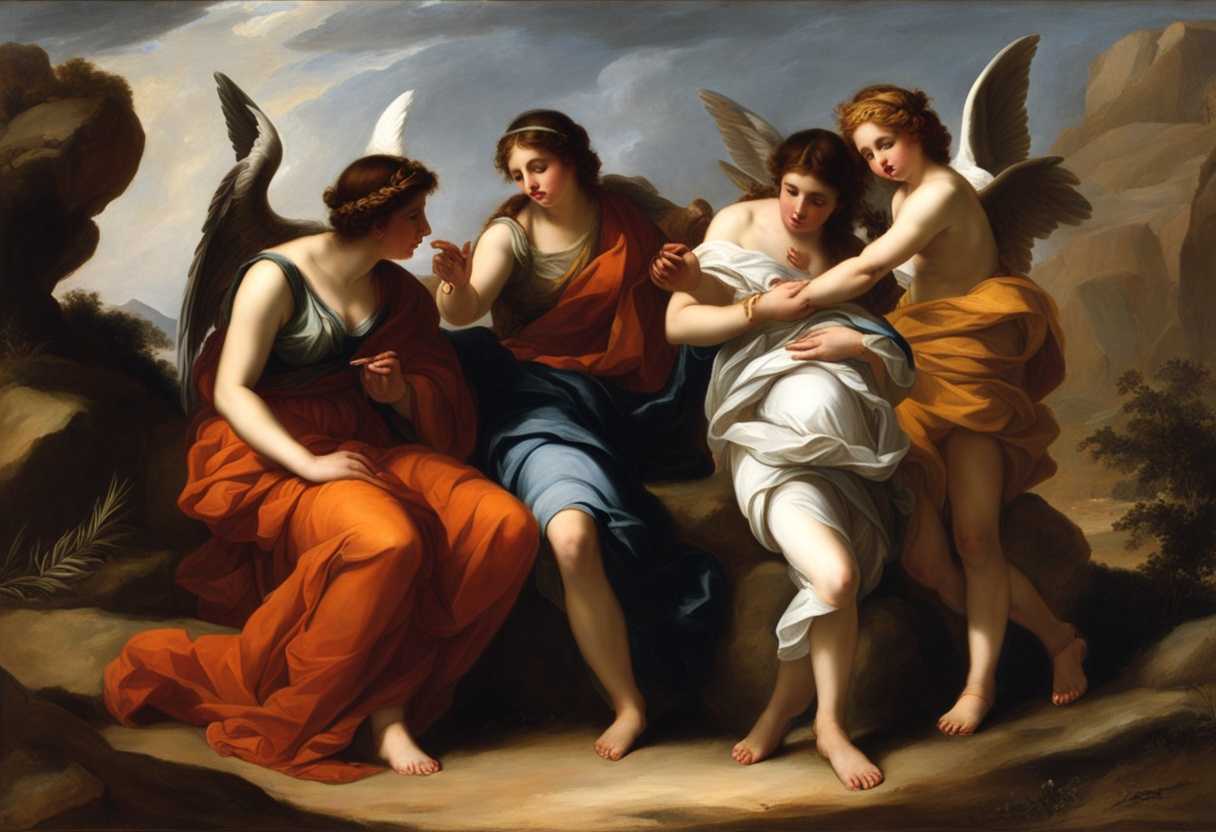
Setting the Scene for Genesis 16:1-13
In Genesis 16:1-13, we find ourselves in the midst of a complex and emotional situation involving Abram (later known as Abraham), his wife Sarai (later known as Sarah), and their Egyptian maidservant, Hagar. The scene is set in the ancient land of Canaan, where Abram and Sarai have been living as they wait for the fulfillment of God’s promise to make Abram a great nation.
Sarai, who has been unable to bear children, suggests to Abram that he take Hagar as a second wife in order to have offspring through her. Hagar, a young and likely vulnerable woman, finds herself in the middle of this arrangement, torn between her loyalty to Sarai and her new role as a wife to Abram. The tension and complexity of the situation are palpable as Hagar becomes pregnant with Abram’s child, leading to feelings of jealousy and mistreatment from Sarai.
As the story unfolds, we witness Hagar fleeing into the wilderness after facing harsh treatment from Sarai. It is in this desolate and lonely place that Hagar encounters the angel of the Lord, who comforts her, assures her of God’s plan for her and her unborn child, and instructs her to return to Sarai. This poignant scene captures the human drama, pain, and ultimately, the divine intervention that are woven throughout the narrative of the Bible.
What is Genesis 16:1-13 about?
Let’s delve into the powerful story of Hagar in Genesis 16:1-13. Hagar, a servant to Sarai, finds herself in a challenging situation, pregnant with Abram’s child. Feeling mistreated, she flees into the wilderness. God meets her there in the midst of her distress and solitude. This encounter with God reveals His unending love and care for all His children, regardless of their circumstances or social status. God’s presence in the most unexpected places and His ability to see us in our moments of desperation remind us as we reflect on this narrative. Hagar’s story teaches us about the inclusivity of God’s grace and His willingness to meet us wherever we are. It challenges us to consider how we, like Hagar, can find solace in God’s presence during times of struggle and uncertainty. Have you ever felt like Hagar, lost and alone? How might this story inspire you to seek God’s presence in the midst of your own wilderness experiences?
Understanding what Genesis 16:1-13 really means
Structure of Commentary:
1. Introduction and Context
2. Key Phrases and Detailed Meanings
3. Cross-references with Other Bible Passages
4. Contemporary Relevance
5. Anecdote and Reflection
6. Final Encouragement and Questions for Consideration
**1. The narrative of Genesis 16:1-13 introduces us to Abram, Sarai, and Hagar. Sarai, unable to bear children, suggests that Abram have a child with Hagar, her Egyptian maidservant. This decision sets off a series of events involving human frailty, divine intervention, and ultimately, God’s ever-present care. We need to delve into the emotions, cultural norms, and the divine promises intertwined within the story to understand this passage.
2. Key Phrases and Detailed Meanings:
Several phrases in this passage are particularly rich in meaning. The first is “The LORD has kept me from having children.” This reflects Sarai’s deep anguish and her interpretation of her situation as a divinely imposed barrenness. Another key phrase is “Hagar, servant of Sarai, where have you come from, and where are you going?” This question from the angel of the LORD to Hagar not only acknowledges her plight but prompts her to reflect on her identity and future. Lastly, “You are the God who sees me,” captures Hagar’s awe at being acknowledged and cared for by God in her distress.
3. Cross-references with Other Bible Passages:
The theme of God seeing and caring for the marginalized resonates throughout the Bible. For example, in Psalm 139:1-4, the psalmist celebrates that God knows and perceives us fully. Jesus’ interaction with the Samaritan woman at the well in the New Testament (John 4:1-26) similarly demonstrates God’s attention to those whom society overlooks. These passages reinforce the idea that God’s omnipresence and omniscience include a personal and caring relationship with every individual.
4. Contemporary Relevance:
Today, many individuals feel invisible or marginalized in society. They might be overwhelmed by personal struggles or societal pressures that make them feel unattended and unvalued. This passage reminds us that God sees beyond our circumstances and values each person. It encourages us to trust in His omnipresent care and feel emboldened by His recognition of our worth.
**5. Maria, a woman who felt abandoned by her family and lost in a city far from home, is the subject of the story. She often felt that her struggles went unnoticed until one day a kind stranger helped her and spoke words of encouragement. Maria realized in that moment that someone had seen her plight; she hadn’t been invisible. Similarly, Hagar’s acknowledgment by God exemplifies how divine care can come even in our most desperate moments.
**6. We must ask ourselves in reflecting on Genesis 16:1-13: How do we treat those whom society overlooks? Do we acknowledge and care for the marginalized as God does? Let this passage inspire you to see others through God’s eyes, offer compassion, and recognize that your value is always seen by God.
Take time to ponder the significance of being seen by God, and how that can transform your understanding of worth and dignity. Challenge yourself to be a beacon of divine care in someone else’s life today. You prove that everyone is indeed seen and valued by emulating the same divine care God showed Hagar.
What does it mean to trust God’s promises fully?
Trusting God’s promises fully means having unwavering faith in His plans and believing that He will fulfill what He has promised, even when circumstances seem impossible. Trusting God’s promises fully in the context of the story of Hagar in Genesis 16 involves recognizing that God’s plan for our lives is greater than our current situation or struggles. Hagar’s story teaches us that even when we feel forgotten or overlooked, God sees us and hears our cries. Trusting in God’s promises means surrendering our doubts and fears to Him, knowing that He is faithful to His word.
Furthermore, fully trusting God’s promises involves obeying His commands and timing, even when it may not make sense in the natural realm. Hagar’s journey reminds us that God’s ways are higher than ours, and His timing is always perfect. When we trust God’s promises fully, we are willing to submit to His will and follow His guidance, even when it requires stepping out in faith or waiting patiently for His timing to unfold. Trusting God’s promises entails believing in His goodness, wisdom, and faithfulness, regardless of the challenges or uncertainties we may face.
Application
Think of Hagar’s encounter with God as a moment in our bustling lives where we choose to truly see someone in need. Just as we juggle work meetings and family dinners, let’s not miss the quiet cries for help from those around us. Take a moment to offer compassion and support to someone who feels forgotten or overwhelmed. Your small act can make a world of difference. How will you reach out and make a change in someone’s life today?

Reverend Michael Johnson is an experienced Church Minister with a profound expertise in spirituality and guidance. With a serene presence and a compassionate heart, he has faithfully served his congregation for over 20 years, leading them on a spiritual journey towards inner peace and enlightenment. Reverend Johnson’s extensive knowledge of religious philosophies and profound understanding of human nature have made him a trusted confidant and mentor to many, as he seamlessly weaves his profound wisdom into life teachings. Reverend Johnson’s calming demeanor and empathetic nature continue to uplift and heal souls, nurturing a sense of unity and tranquility within his community.